Sales engagement tools are what turn a list of contacts into a repeatable outreach motion — sequencing emails, calls, and tasks, then tracking what actually gets replies. As response rates on plain text keep falling, the best engagement stacks now pair sequencing with differentiation. This guide covers what sales engagement tools are, the leading platforms by use case, and where video fits.
Updated July 2026 · Written by Abe Dearmer
Key Takeaways
- Sales engagement tools sequence and track multi-touch outreach across email, phone, and social — turning ad-hoc follow-up into a system.
- They’re distinct from sales-intelligence tools: intelligence finds the contacts, engagement runs the outreach to them.
- Reply rates on text-only outreach keep sliding — a typical B2B sequence now needs far more touches to book one meeting than a few years ago.
- Adding video to a sequence is the highest-leverage differentiator; video outreach can lift replies several-fold over text alone.
- Pick an engagement platform that fits your motion (enterprise vs cold-email-first) and integrates a video layer.
What are sales engagement tools?
Sales engagement tools are platforms that plan, execute, and track multi-step outreach across channels — email, phone, LinkedIn, and tasks — usually as automated “sequences” or “cadences.” They tell reps who to contact next, on which channel, with which message, and then report what’s working, so outreach becomes a measurable system rather than scattered manual follow-up.
They matter because persistence and consistency drive pipeline, and both are hard to sustain by hand. A typical B2B sequence now requires far more touches to book a single meeting than it did a few years ago, so the platform that keeps reps organized across all those touches is central to modern outbound.
Engagement vs sales intelligence
Sales engagement tools are often confused with sales-intelligence tools, but they do opposite halves of the job. Sales-intelligence platforms (like ZoomInfo or Apollo’s data side) find and supply the contacts; sales-engagement platforms run the outreach to those contacts and track responses. Most teams need one of each — clean data is wasted without a system to work it, and a great sequencer is useless pointed at bad data.
“82% of video marketers report that video delivers a positive ROI.” — Wyzowl, State of Video Marketing 2026
Best sales engagement tools by use case
Match the platform to your motion and company size.
| Tool | Best for | Motion |
|---|---|---|
| Outreach | Enterprise sequencing + analytics | Outbound at scale |
| Salesloft | Enterprise, full revenue workflow | Outbound + deal execution |
| HubSpot Sales Hub | SMB/mid-market, CRM-native | Inbound + outbound |
| Apollo | Data + engagement in one | SMB all-in-one |
| lemlist / Smartlead | Cold email, deliverability | Startup/agency outbound |
| Sendspark | Video layer for any sequence | Differentiation |
Where video fits in engagement
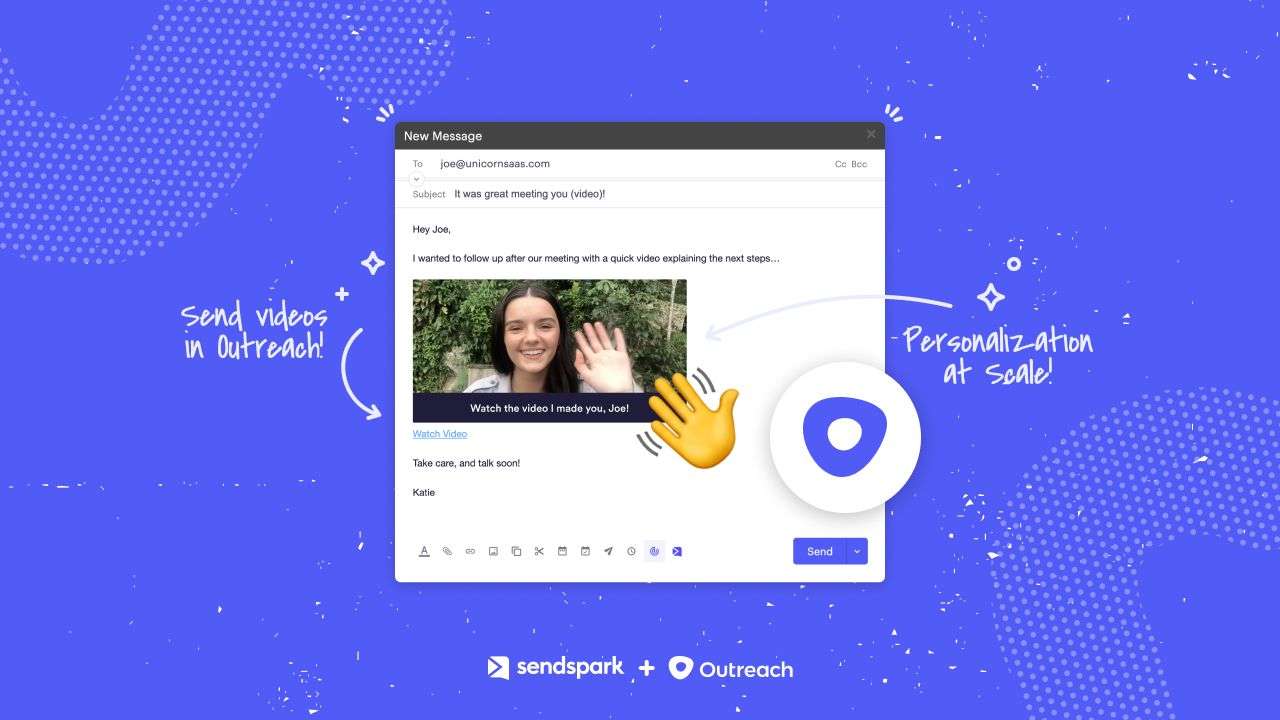
Video fits as the differentiation layer that sits on top of your sequencer. An engagement platform gets your message delivered consistently; a personalized video is what gets it opened and answered when every competitor is running similar sequences. As text reply rates decline, adding a personalized video step is one of the most reliable ways to lift a sequence’s performance.
Advanced strategy
Add a personalized video step to your best sequence — record one video and let AI personalize it per prospect, embedded directly in the cadence — rather than sending yet another text-only follow-up.
Record One Video. AI Personalizes Thousands.
Sendspark is the AI video personalization platform for B2B sales. Record once, and AI voice cloning generates thousands of individually personalized videos with dynamic backgrounds and personalized thumbnails — each prospect hears their name, sees their website, in your voice. Sales teams see 2-3x more replies.
Get Started NowHow to choose a sales engagement tool
Choose a sales engagement tool by matching it to your motion and CRM first. Enterprise teams running high-volume outbound lean toward Outreach or Salesloft; CRM-native teams often start with HubSpot Sales Hub; startups and agencies focused on cold email pick deliverability-first tools like lemlist or Smartlead. Whatever the core platform, confirm it integrates cleanly with your CRM and can incorporate a video step — differentiation is now part of the job, not an add-on.
Common mistake
Don’t buy an engagement platform to send more of the same email. More volume of undifferentiated text won’t fix a falling reply rate — a better message and format will.
Sales engagement best practices
A sales engagement tool amplifies your process — good or bad — so the process has to be sound first. The best-performing teams keep sequences multi-channel (email, phone, and social, not email alone), personalize the opening rather than blasting identical templates, and cap volume in favor of relevance. More touches only help when each touch earns attention; identical text touches train prospects to ignore you.
Build sequences around the prospect’s context, not your calendar. Trigger outreach on real signals — a role change, a funding round, product usage — and lead with why you’re reaching out now. Use the platform’s analytics to kill steps that never get replies and double down on the ones that do, and treat deliverability as a first-class concern: warm domains, clean lists, and sensible sending limits protect every message that follows.
How to measure sales engagement
Measure sales engagement on outcomes, not activity. Emails sent and calls logged feel productive but don’t indicate progress; reply rate, meetings booked per 100 contacts, and sequence-to-opportunity conversion do. Watch the trend, because response rates are structurally declining — if yours is falling despite steady volume, the fix is a better message or a new format, not more sends.
Attribute to pipeline, not just replies. A sequence that generates many low-quality replies can look better than one that books fewer but larger meetings, so tie engagement metrics back to opportunities and closed-won. Test one variable at a time — subject line, channel mix, or adding a video step — so you learn what actually moved the number, then standardize the winners across the team.
Frequently Asked Questions
What is a sales engagement tool?
A sales engagement tool plans, automates, and tracks multi-step outreach across email, phone, and social — organizing sequences so reps know who to contact next and which messages are working. It turns manual follow-up into a measurable system.
What’s the difference between sales engagement and sales intelligence?
Sales intelligence tools find and supply contact data; sales engagement tools run the outreach to those contacts and track responses. Most teams use one of each — data plus a system to work it.
What are the best sales engagement platforms in 2026?
Outreach and Salesloft lead the enterprise segment, HubSpot Sales Hub suits CRM-native SMB and mid-market teams, Apollo bundles data with engagement, and lemlist or Smartlead lead cold-email-first outbound. Add a video layer like Sendspark for differentiation.
Do sales engagement tools include video?
Most include basic video linking, but purpose-built personalization — recording one video and auto-tailoring it per prospect — comes from a dedicated video tool that integrates with your sequencer.
How do I improve reply rates with a sales engagement tool?
Beyond consistent sequencing, the biggest lever is differentiation: add a personalized video step. As text reply rates fall, a personalized video gives prospects a human reason to open and respond that another text email can’t.
Which sales engagement tool is best for small teams?
Small teams often do well with HubSpot Sales Hub (CRM-native) or Apollo (data plus engagement in one), paired with a lightweight video tool. Start with what integrates with your existing CRM to reduce setup friction.
How is a sales engagement tool different from a CRM?
A CRM is the system of record for contacts, deals, and history; a sales engagement tool is the system of action that executes and tracks outreach on top of it. They work together — the engagement tool runs sequences and syncs activity back to the CRM. Some CRMs (like HubSpot) include engagement features natively.
Can I add video to Outreach or Salesloft?
Yes. Dedicated video tools like Sendspark integrate with major engagement platforms, so you can add a personalized video step directly inside an Outreach or Salesloft sequence. This pairs the platform’s sequencing and analytics with the differentiation that lifts reply rates.
Do small teams need a sales engagement tool?
Even small teams benefit once outreach becomes repetitive to manage by hand. A CRM-native option like HubSpot Sales Hub or an all-in-one like Apollo keeps setup light, and adding a video layer helps a small team punch above its weight by standing out in crowded inboxes.
Sources & References
- Wyzowl — State of Video Marketing 2026: 82% of video marketers report positive ROI.
- Overloop — Sales prospecting and engagement benchmarks, incl. rising touches-per-meeting (2026).
- Woodpecker — Cold email statistics based on 20M+ emails: reply-rate trends (2026).
Make your sequences impossible to ignore.
Your engagement platform gets the message delivered; Sendspark gets it opened. Add a personalized video step — record once, personalize for every prospect — and turn a falling reply rate around.
Start free with Sendspark