Sales outreach is the proactive process of contacting prospects to start qualified business conversations — across email, phone, video, social media, and direct mail. It is the engine of B2B pipeline generation: 82% of new sales opportunities at high-growth companies trace back to a deliberate outreach touchpoint, according to Salesforce’s State of Sales. In 2026, the bar is higher than ever: average cold-email reply rates sit between 1% and 3%, but reps who run structured, multi-channel cadences with personalized video are seeing 8% to 12%. This guide unpacks what sales outreach is, the channels that actually move pipeline, and the AI-driven tactics top teams are using to stand out. For more cold-outbound formats, see our outreach email templates that consistently land replies.
Key Takeaways
- Sales outreach is the proactive contact process reps use to start qualified conversations with prospects across email, phone, video, and social channels.
- Single-touch cold emails average a 1-3% reply rate; structured multi-touch cadences see 8-12%, making sequencing the single biggest lever for pipeline.
- The five core outreach channels are email, phone, LinkedIn/social, video, and direct mail — top reps coordinate all five in one cadence.
- AI video personalization is the fastest-growing format because it combines the trust of a human face with the scale of automated email.
- A repeatable 8-12 touchpoint cadence over 14-21 days outperforms volume-only spray-and-pray by 3-4x in reply rate.
What Is Sales Outreach? The Direct Definition
Sales outreach is the deliberate, rep-initiated process of contacting potential buyers to introduce a product, qualify interest, and progress them into a sales conversation. It covers cold and warm contact across email, phone, video, LinkedIn, and direct mail. Unlike marketing — which casts a net to many — outreach is one-to-one, owned by individual sales reps, and measured by replies, meetings, and pipeline.
The simplest way to think about it: marketing brings prospects to you (inbound), and outreach is how reps go to prospects directly (outbound). Most modern sales motions blend both. A marketing-qualified lead (MQL) who downloads a whitepaper still needs a rep to send a personalized follow-up — that follow-up is outreach. So is the cold LinkedIn message to a VP of Sales at a target account.
Inbound Outreach vs. Outbound Outreach
Inbound outreach happens after a prospect signals interest — they downloaded a guide, attended a webinar, or visited your pricing page. The rep’s job is to convert that signal into a conversation, usually within 5 minutes per Harvard Business Review research, before the lead goes cold.
Outbound outreach starts cold. The rep selects a target account, builds a list of contacts in that account, and initiates contact with no prior signal. This is harder, but it’s how reps build pipeline in a market where only 3% of buyers are actively shopping at any given time.
Why Sales Outreach Matters in 2026
Buyer attention is more fragmented than ever. Gartner research shows the average B2B buying group now includes 6 to 10 decision-makers, each consuming content from multiple sources. Sales outreach is how reps cut through that noise — by reaching the right person, at the right account, with a message tied to their specific business context.
The Five Channels of Modern Sales Outreach
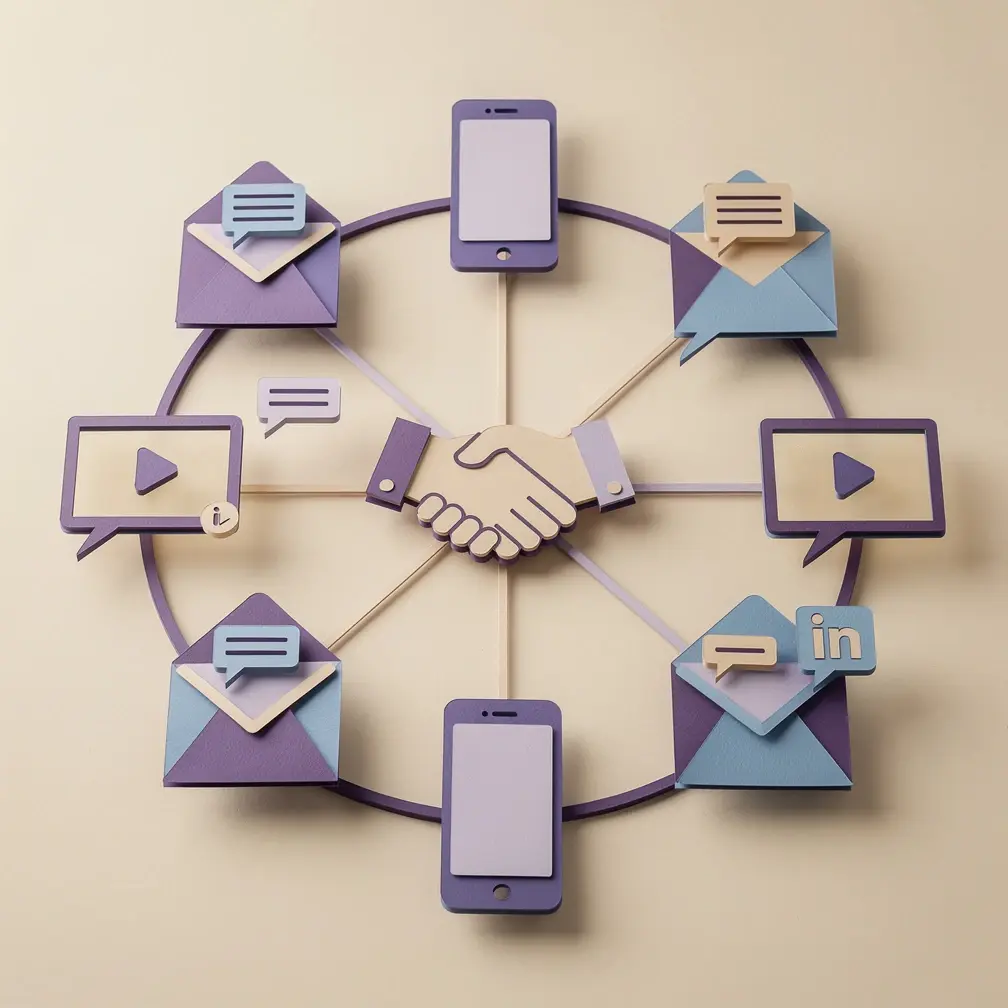
The five core sales outreach channels are email, phone, LinkedIn (or social), video, and direct mail. Each channel has a distinct strength — email scales, phone builds urgency, social warms accounts, video creates trust, and direct mail breaks pattern. Top-performing reps don’t pick one; they sequence all five into a coordinated cadence so each touch reinforces the others.
Channel Comparison at a Glance
| Channel | Avg. Reply Rate | Best Use | Effort per Touch |
|---|---|---|---|
| 1-3% cold, 8-15% nurture | Scaled introduction, follow-up, content sharing | Low (with templates) | |
| Phone | 1-2% connect rate | Pattern interruption, urgent follow-up, late-stage | High |
| LinkedIn / Social | 5-10% acceptance, 15-25% reply on connect | Account warming, content engagement, social proof | Medium |
| Video | 2-3x text email reply rate | Differentiation, complex pitches, mid-funnel demo | Low with AI personalization |
| Direct mail / gifting | 10-25% reply when paired with email | Enterprise accounts, champion appreciation, ABM | Very high |
Email Is Still the Backbone
Email remains the default outreach channel because it scales: a rep can send 50 personalized emails in the time one cold call takes to complete. The trade-off is saturation. The average B2B inbox receives 121 emails per day, per HubSpot sales statistics, so plain-text templates blend into the noise. To stand out, the message must reference something specific to the prospect — a recent funding round, a product launch, a LinkedIn post they engaged with.
Video Outreach Is the Fastest-Growing Channel
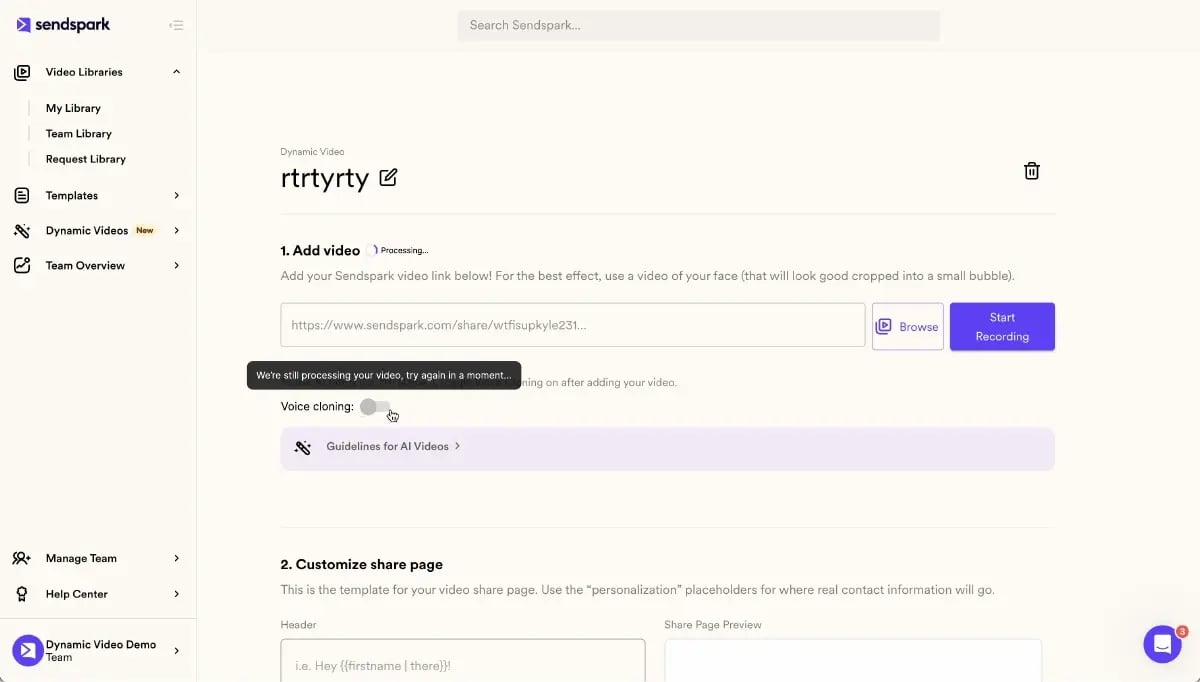
Sales video — short, personalized clips embedded in an email or LinkedIn message — has become the breakout outreach format because it solves the personalization-at-scale problem. With AI-personalized video, a rep records one base video, and the platform clones their voice to swap in each prospect’s name and shows the prospect’s website as a dynamic background. The result is a video that feels 1:1 — sent at email speed.
Pro tip
Don’t put video in every touch of your cadence. Use it on the second or third touchpoint — after a text email has anchored context — for a 2-3x lift in reply rate over video-first sequences.
LinkedIn and Social Are for Warming, Not Closing
LinkedIn outreach works best as an account-warming layer that runs in parallel with email and phone. The play: engage with a prospect’s posts for two weeks before sending a connection request, then follow up with an InMail or email that references the post. This soft-touch approach lifts connect rates from the 20% baseline to 40-60%. See our breakdown of multi-channel outreach strategy for the full sequencing playbook.
How Sales Outreach Works: The Cadence Framework
Sales outreach works through a cadence — a pre-planned sequence of touchpoints across multiple channels, spaced over time, designed to give a prospect repeated chances to engage. A standard B2B cadence is 8 to 12 touchpoints over 14 to 21 days, mixing email, video, phone, and LinkedIn. Cadences exist because Gong’s conversation research shows reps who give up after one or two touches close 80% less pipeline than those who run the full sequence.
What a Cadence Looks Like in Practice
Here is a representative 14-day, 9-touch cadence for an enterprise SaaS prospecting motion. The principle: alternate channels, vary message length, and escalate from text-only to AI-personalized video by touch 3.
| Day | Channel | Touch Goal |
|---|---|---|
| Day 1 | Introduce yourself + reason for outreach (3 sentences) | |
| Day 2 | View profile, like a recent post | |
| Day 3 | Send a relevant resource (no ask) | |
| Day 5 | Video email | 30-sec AI-personalized video referencing their company |
| Day 7 | Phone | Live call + voicemail |
| Day 9 | Connection request with personalized note | |
| Day 11 | Case study from a peer company | |
| Day 13 | Phone | Final call attempt |
| Day 14 | Permission-to-close email (“Should I close the loop?”) |
Notice the cadence does not lead with the hardest ask. The first three touches build context and credibility. Only by touch 4 (the video email) is there an explicit conversation request. By touch 9, the prospect has seen the rep five times across three channels — well above the threshold required for name recognition.
Record One Video. AI Personalizes Thousands.
Sendspark is the AI video personalization platform for B2B sales. Record once, and AI voice cloning generates thousands of individually personalized videos with dynamic backgrounds and personalized thumbnails — each prospect hears their name, sees their website, in your voice. Sales teams see 2-3x more replies.
Get Started NowCommon Cadence Mistakes
The most expensive cadence mistake is giving up too soon. Outreach.io’s benchmark data shows reps stop after 2-3 touches on average, but 80% of meetings book on touch 5 or later. The second mistake is using the same channel repeatedly — five emails in a row train the prospect to mark you as spam. The third is over-personalizing the wrong thing: referencing a prospect’s hobby is creepy; referencing their recent funding round is research.
Common mistake
Sending the same generic message across every channel. Each channel has a different reading mode — a LinkedIn message that copies your email opener will get ignored. Rewrite for the medium.
Sales Outreach Best Practices That Drive Replies
The best sales outreach in 2026 is short, specific, and personalized — but personalization is being redefined by AI. Top-performing reps lead with a one-sentence reason for outreach tied to the prospect’s specific business context, use AI video for the second or third touch, time messages to land Tuesday-Thursday between 9-11am local time, and measure reply rate, not send volume. Skip the long monologue; lead with the relevance.
Personalization at Scale Has Changed
“Hi , I noticed …” is no longer personalization — it’s a tell that you used a template. Modern personalization references a specific signal: a recent hire, a tech-stack change spotted on a job listing, a product launch covered in the press, a LinkedIn post they wrote. The signal proves the rep read about the prospect; the rest of the email can be a template.
AI flips the trade-off between personalization quality and scale. With video personalization tooling, a rep records one 30-second video and the AI generates a unique version for each prospect — same script, but the prospect hears their own name and sees their own website behind the rep. The marginal cost of a personalized touch drops to near zero. Read our deep-dive on B2B sales outreach strategies for a step-by-step framework.
Subject Lines and Send Timing
Subject lines should be 3-7 words, lowercase, and curiosity-driven — not value-pitched. “quick question about your Q2 plan” outperforms “BOOST your sales pipeline by 300%” by 4-5x in open rate. Send Tuesday, Wednesday, or Thursday between 9am and 11am local time; avoid Mondays (inbox overload) and Fridays (mental checkout).
Advanced strategy
Combine intent-based outreach with AI video. When intent data flags an account researching your category, fire a personalized video the same hour — that combination has produced 4-6x reply rates in field tests.
Metrics That Actually Predict Pipeline
The metrics that matter for sales outreach are reply rate, meeting-set rate, and meetings-to-opportunity conversion — not opens, clicks, or sends. Opens are a vanity signal (image-pixel blockers and Apple Mail Privacy Protection inflate them by 40-60%). Reply rate is the truth: it captures whether the message actually moved the prospect to act.
Sales Outreach Tools and Tech Stack in 2026
A modern outreach tech stack has five layers: CRM (HubSpot or Salesforce), sales engagement platform (Outreach, SalesLoft, Apollo), data enrichment (Clay, ZoomInfo), AI video personalization (Sendspark), and analytics. The CRM is the source of truth for accounts and contacts; the engagement platform runs the cadence; enrichment feeds it fresh contact data; video creates differentiation; analytics closes the loop on what actually generates pipeline.
The Core Stack
| Layer | Purpose | Example Tools |
|---|---|---|
| CRM | Source of truth for accounts, contacts, deals | HubSpot, Salesforce |
| Sales Engagement | Cadence execution, dialer, email sequencing | Outreach, SalesLoft, Apollo |
| Data Enrichment | Contact data, intent signals, account scoring | Clay, ZoomInfo, 6sense |
| AI Video Personalization | Voice cloning + dynamic backgrounds at scale | Sendspark |
| Analytics | Attribution, cadence performance, rep coaching | Gong, native CRM dashboards |
How AI Has Changed the Stack
Two AI shifts are reshaping the outreach stack in 2026. First, generative AI handles first-draft email writing — reps now edit AI drafts instead of writing from scratch, freeing 5-7 hours per week. Second, AI voice cloning makes personalized video a same-time-cost as a templated email. The economic gap between “personal” and “scaled” has collapsed, and reps who haven’t adopted both are losing pipeline to those who have.
Where to Start If You’re Building From Scratch
If you’re building an outreach stack from zero, the priority order is: CRM first (HubSpot or Salesforce), then sales engagement platform, then AI video personalization. Data enrichment and analytics come fourth and fifth — get the workflow live before you add intelligence layers. Tools without process produce expensive noise. For pricing and team size guidance, see the Sendspark pricing page.
Sales Outreach in One Table
| Question | Short Answer |
|---|---|
| What is sales outreach? | The proactive process of contacting prospects to start qualified sales conversations. |
| How does it differ from marketing? | Marketing is one-to-many; outreach is one-to-one and owned by individual reps. |
| What channels does it use? | Email, phone, LinkedIn/social, video, and direct mail. |
| How many touchpoints does it take? | 8-12 touches over 14-21 days for a typical B2B cadence. |
| What’s the biggest pipeline lever? | Consistency of cadence + relevance of message, not volume. |
| Where does AI fit? | Email drafting, voice cloning for video, intent scoring, and follow-up timing. |
Frequently Asked Questions
What is sales outreach in simple terms?
Sales outreach is when a sales rep proactively contacts potential customers to start a conversation. It usually happens through email, phone, LinkedIn messages, or short personalized videos. The goal is to turn a stranger into a qualified buying conversation, not to close a deal on the first touch.
What is the difference between sales outreach and marketing?
Marketing creates demand at scale through ads, content, and events — it pulls prospects toward you. Sales outreach is the opposite: a rep directly contacts a specific prospect, one at a time, to start a conversation. Marketing is one-to-many; outreach is one-to-one. Most B2B teams run both together.
How many outreach touches does it take to book a meeting?
On average, 8 to 12 touchpoints across multiple channels are needed to book a meeting with a cold B2B prospect. Most meetings book on touch 5 or later, but the majority of reps quit after 2-3 touches — leaving 70%+ of their potential pipeline on the table. The fix is a documented cadence the rep runs every time.
What is a sales outreach cadence?
A cadence is a pre-planned sequence of outreach touchpoints, spaced over time and rotating across channels. A typical B2B cadence runs 8-12 touches over 14-21 days, mixing email, video, phone, and LinkedIn. The cadence forces consistency: even when a rep is busy, the prospect still gets the next planned touch.
Is cold email still effective for sales outreach in 2026?
Yes — but only when paired with other channels and personalized beyond merge tags. Plain templated cold email averages a 1-3% reply rate. Cold email layered with LinkedIn engagement, AI-personalized video, and a phone touch sees 8-12%. Email is still the backbone of outreach; it just no longer works alone.
How is AI changing sales outreach?
AI has changed outreach in three ways: it drafts the first version of emails (saving 5-7 hours/week per rep), it clones a rep’s voice for personalized video at scale, and it scores prospect intent so reps know who to contact first. The net effect is that personalized, multi-channel outreach now costs about the same as templated cold email.
What metrics should I track for sales outreach?
Track reply rate, meeting-set rate, and meetings-to-opportunity conversion. Opens and clicks are vanity metrics — they’ve been inflated 40-60% by image-pixel blockers and Apple Mail Privacy Protection since 2021. Reply rate is the only honest signal of whether your message moved the prospect to act.
Sources & References
- Salesforce — “82% of new sales opportunities at high-growth companies originate from outbound outreach” (2024)
- Gartner — “The average B2B buying group now includes 6-10 decision-makers” (2024)
- Harvard Business Review — “Companies that contact inbound leads within 5 minutes are 100x more likely to qualify them” (2011)
- HubSpot Sales Statistics — “The average B2B inbox receives 121 emails per day” (2024)
- Gong Labs — “Reps who stop after 2 touches close 80% less pipeline than those who complete the full cadence” (2023)
Record One Video. AI Personalizes Thousands.
Sendspark is the AI video personalization platform for B2B sales. Record once, and AI voice cloning generates thousands of individually personalized videos with dynamic backgrounds and personalized thumbnails — each prospect hears their name, sees their website, in your voice. Sales teams see 2-3x more replies.
Get Started NowSales outreach in 2026 is no longer a volume game — it’s a relevance and consistency game. The reps generating outsized pipeline are the ones who run a documented multi-channel cadence, lead with prospect-specific context, and use AI video to bring personalization to scale. Pick one cadence, run it every day, measure reply rate, and iterate weekly. That is the entire playbook.