“Do more video” is not a plan — knowing which type of video to make, for which goal, is. Different video formats do different jobs: some attract strangers, some convert buyers, some retain customers. This guide breaks down the main types of video content, what each is best for, where it fits in the funnel, and how to produce enough of them without a studio.
Updated July 2026 · Written by Abe Dearmer
Key Takeaways
- Video content isn’t one thing — each type (explainer, demo, testimonial, short-form, and more) does a specific job in the funnel.
- 91% of businesses use video marketing in 2026, so the edge comes from format-to-goal fit, not from simply making video (Wyzowl).
- Short-form earns roughly 2.5x the engagement of long-form and is rated the most effective social format by 85% of marketers (Sprout Social).
- Decision-stage formats — demos and testimonials — convert fastest; 64% of consumers are more likely to buy after a video testimonial.
- The constraint is usually production volume; repurposing and personalization let one recording serve several formats.
What counts as video content?
Video content is any video created to reach, persuade, or retain an audience — from a 15-second social clip to a 40-minute webinar. In a marketing and sales context, it spans awareness content that attracts strangers, consideration content that educates prospects, decision content that converts buyers, and retention content that keeps customers. Each of those goals calls for a different format.
The category is now universal: 91% of businesses use video marketing in 2026, according to Wyzowl. That ubiquity is exactly why choosing the right type matters — everyone is making video, so the advantage goes to teams who match format to goal rather than producing generic clips.
Why does the type of video matter?
The type of video matters because format determines whether a video does its job. A short-form social clip built to earn reach will not convert a bottom-funnel buyer, and a five-minute demo will not stop a scroll on TikTok. Matching format to intent is what separates video that drives results from video that just exists.
The data shows how sharply formats differ. Short-form video earns about 2.5x the engagement of long-form and is the most effective social format for 85% of marketers, per Sprout Social — while at the decision stage, 64% of consumers say they are more likely to buy after watching a video testimonial. Same medium, very different jobs.
“91% of businesses use video as a marketing tool in 2026.” — Wyzowl, State of Video Marketing 2026
10 types of video content and when to use each
Here are the core formats, mapped to the job they do best.
| Type | Best for | Funnel stage |
|---|---|---|
| Short-form social | Reach, discovery | Awareness |
| Explainer | Fast comprehension | Awareness / consideration |
| How-to / tutorial | Search, education | Consideration |
| Thought leadership | Authority, trust | Consideration |
| Webinar | Depth, lead capture | Consideration |
| Demo | Showing the outcome | Decision |
| Testimonial / case study | Social proof | Decision |
| Personalized outreach | Booking meetings | Decision / outreach |
| Onboarding | Activation | Retention |
| Product update | Adoption, retention | Retention |
How to choose the right type
Choose the type of video by starting from the goal and the stage, not the format. Ask what you need the viewer to do next: discover you, understand you, believe you, or stay with you. That answer points to the format — awareness goals call for short-form and explainers, decision goals call for demos and testimonials, retention goals call for onboarding and update videos.
Pro tip
Start where returns are fastest: decision-stage demos and testimonials. Prove ROI there, then reinvest into awareness formats that take longer to compound.
How to produce more video content
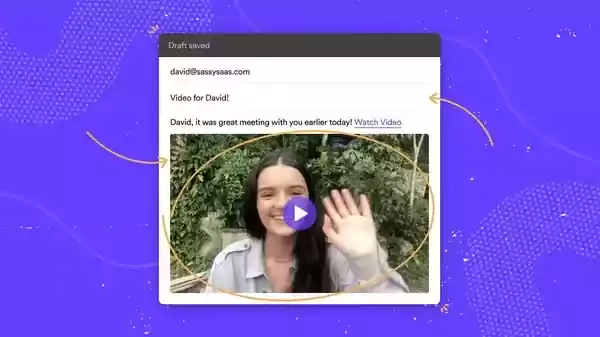
Produce more video content by repurposing, not by multiplying shoots. One recording can become several assets — a webinar becomes clips and a how-to; a demo becomes a social teaser and a landing-page video. For the decision and outreach stages, AI video personalization lets one base recording become thousands of tailored versions, so the highest-effort format scales without re-recording each one.
Advanced strategy
Treat personalized outreach video as a content source: the base videos your reps record can be repurposed into explainers and social clips, so one production effort feeds several formats.
Record One Video. AI Personalizes Thousands.
Sendspark is the AI video personalization platform for B2B sales. Record once, and AI voice cloning generates thousands of individually personalized videos with dynamic backgrounds and personalized thumbnails — each prospect hears their name, sees their website, in your voice. Sales teams see 2-3x more replies.
Get Started NowHow to build a video content plan
A video content plan turns this list of formats into a schedule you can actually run. Start by auditing which funnel stages you already cover and which have gaps — most teams over-invest in awareness clips and under-invest in decision-stage demos and testimonials. Fill the gaps in order of return: decision first, then consideration, then awareness.
Then set a realistic cadence per format. Short-form can be weekly because it’s cheap to produce; demos and testimonials might be monthly because they depend on customers and product moments. Assign one owner and one metric per format so nothing becomes orphan content. Finally, plan for repurposing from the start: script a webinar knowing you’ll cut three social clips and a how-to from it, so one production effort populates several formats.
How to measure video content
Measure each format against the job you assigned it, not a single universal metric. Awareness formats live or die on reach and engagement rate; consideration formats on watch-through and leads captured; decision formats on conversion and pipeline influenced. Judging a top-of-funnel short-form clip on conversions — or a demo on view count — leads to the wrong conclusions and the wrong cuts.
Benchmark within a format and platform, never across them: a 3% engagement rate is strong on one platform and weak on another. Review on a regular cadence, double down on the formats returning the most for the effort, and retire the ones that consistently underperform their job. That discipline is what keeps a growing content library efficient instead of sprawling.
Frequently Asked Questions
What are the main types of video content?
The core formats are short-form social, explainers, how-to/tutorials, thought leadership, webinars, demos, testimonials and case studies, personalized outreach, onboarding, and product-update videos. Each maps to a different funnel stage and goal.
Which type of video content converts best?
At the decision stage, demos and testimonials convert best — 64% of consumers say they’re more likely to buy after a video testimonial, and pages with a product video convert notably higher than those without. For reach rather than conversion, short-form wins.
What type of video should I make first?
Start at the decision stage with a demo or a customer testimonial, because those return fastest and prove ROI. Once that’s working, expand upward into explainers and short-form for awareness.
Is short-form or long-form video better?
They serve different goals. Short-form earns about 2.5x the engagement of long-form and is best for reach; long-form (webinars, deep tutorials) is better for depth and lead capture. A complete strategy uses both.
How many types of video do I need?
Enough to cover your active funnel stages — typically one awareness format, one consideration format, one decision format, and personalized outreach. Repurposing lets you cover several with fewer shoots.
How do I make personalized video at scale?
Use an AI video personalization platform: record one base video and generate tailored versions per recipient. This makes the decision and outreach formats — the ones that usually don’t scale — repeatable across a full list.
How often should I post video content?
Consistency matters more than volume. A sustainable cadence — for example weekly short-form plus a monthly demo or testimonial — beats an unsustainable burst. Set the cadence per format based on how expensive each is to produce, and use repurposing so one recording feeds several slots without multiplying the workload.
What type of video content is easiest to start with?
Screen-recorded demos and self-recorded talking-head videos are the easiest to start with — they need no studio, just a clear script and clean audio. They also happen to sit at the high-converting decision stage, so they’re a fast way to prove video’s value before investing in animation or short-form production.
Sources & References
- Wyzowl — State of Video Marketing 2026: 91% of businesses use video; 85% persuaded to buy by video.
- Sprout Social — Social media video statistics 2026: short-form ~2.5x engagement; 85% call it most effective.
- Wyzowl — Power of testimonials: 64% more likely to buy after a video testimonial (2026).
The one video type most teams skip: personalized.
Most formats speak to everyone; personalized video speaks to one person, at scale. Record once with Sendspark and let AI tailor it to each prospect — the decision-stage format that actually books meetings.
Start free with Sendspark