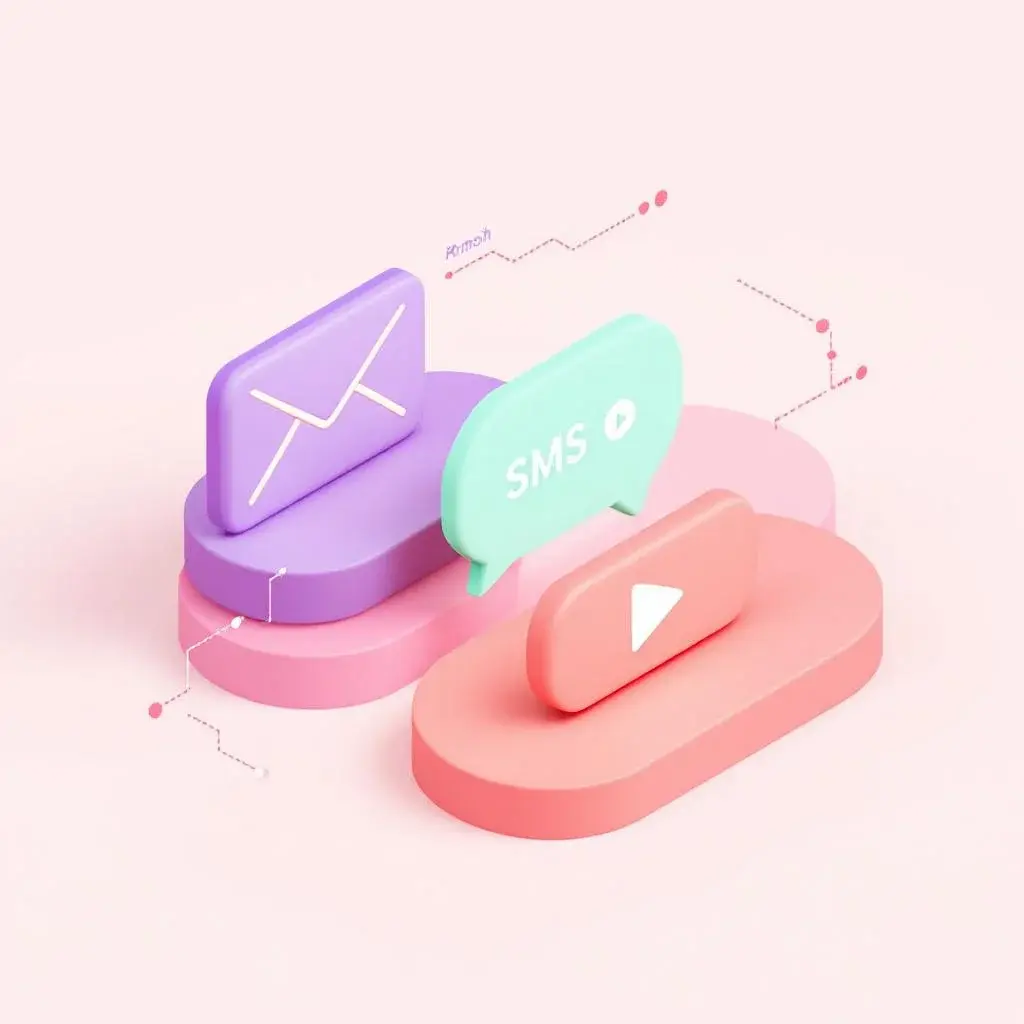
Cold email reply rates in B2B sales are hovering around 1-3% in 2025. Prospects ignore text emails, skim SMS, and delete generic outreach without thinking twice. The teams consistently booking more meetings aren’t sending more emails — they’re using more channels. Specifically, they’re combining email, SMS, and AI-personalized video into coordinated sequences that meet prospects across the touchpoints they actually respond to.
This guide breaks down how email and SMS marketing work together, why video has become the critical third channel in modern B2B outreach, and how to build a multichannel sequence that gets real replies.
See our roundup of the video in account-based marketing.
Key Takeaways
- Combining email and SMS in B2B outreach improves prospect experience and drives faster responses — SMS has a 98% open rate vs. ~20% for email.
- AI-personalized video is the third channel most B2B teams are missing — AI-personalized video generates 200-300% more replies than text email alone.
- A 9-touch multichannel sequence (AI-personalized video → SMS → email → video → SMS) consistently outperforms any single-channel approach.
- Tools like Sendspark let you record one video and automatically personalize it with each prospect’s name, company, and website — eliminating the time cost of individual recordings.
- All three channels — email, SMS, and video — should integrate with your CRM and sales engagement platform to track response data and trigger follow-ups automatically.
What Is Email and SMS Marketing?
Email and SMS marketing is the practice of using both channels together in a coordinated outreach strategy — email for longer, context-rich messages and SMS for short, high-urgency nudges. In B2B sales, the combination works because the two channels address different buyer behaviors: email gets read during scheduled work time, while SMS gets seen immediately, regardless of inbox habits.
Email is the workhorse. It lets you share detailed proposals, case studies, video demos, and follow-ups with full context. Most B2B buyers expect to receive business communications via email, and it remains the most widely used channel for professional outreach.
SMS adds urgency and immediacy that email can’t replicate. According to Salesforce’s State of Connected Customer report, 68% of consumers say messaging is the most convenient way to stay in touch with businesses. For B2B prospects specifically, a well-timed SMS can resurface a conversation that went cold on email. If you’re combining SMS with video specifically, our guide to SMS video marketing covers how thumbnail previews and per-recipient tracking actually work over text.
The key difference between B2C and B2B email and SMS marketing: in B2C, you’re nurturing large subscriber lists with promotional content. In B2B, you’re running targeted, personalized outreach to specific decision-makers in specific companies. The sequences are shorter, the personalization bar is higher, and the goal is a booked meeting — not a sale at checkout.
5 Reasons to Combine Email and SMS in Your B2B Outreach
Combining email and SMS works because the two channels reinforce each other at different stages of the buyer’s attention cycle. Email builds context and credibility; SMS creates urgency and surfaces buried threads. Together, they reach the same prospect across more touchpoints — which research consistently shows is necessary to book a meeting in B2B sales.
1. Permission-based outreach means a higher-quality contact list
SMS requires explicit opt-in, which filters your list to prospects who’ve shown genuine interest. This matters in B2B because you’re not sending to thousands of cold contacts — you’re building a targeted list of ideal-fit buyers who’ve engaged with your content, visited your website, or responded to a prior outreach.
When prospects consent to SMS communication, they’re acknowledging your brand. That context makes every follow-up message land differently than a cold text from an unknown number.
2. SMS gets faster responses than email
The numbers here are stark. The average email open rate in B2B outreach sits around 20-25%, with reply rates of 1-3%. SMS open rates exceed 98%, with most messages read within three minutes of receipt, according to Statista’s SMS marketing research.
For B2B sales specifically, that immediacy matters when you’re trying to schedule a call, confirm a meeting, or follow up on a proposal. A one-line SMS asking “Did the proposal make sense? Happy to jump on a quick call” will get a faster response than the same message buried in someone’s inbox.
3. Multichannel presence builds a better prospect experience
Your prospects move between channels constantly throughout their workday. Showing up in their inbox, their messages app, and (as you’ll see below) their video player creates repeated touchpoints that build familiarity. Familiarity lowers resistance.
RAIN Group’s research on B2B sales touchpoints found it takes an average of 8 touches to book a meeting with a cold prospect. Relying on a single channel makes hitting that number take much longer — or impossible if the prospect doesn’t engage with email at all.
4. Cost-effective coverage with high ROI
Email remains one of the cheapest marketing channels per contact, and SMS costs a fraction of a cent per message at scale. When paired, the incremental cost of adding SMS to an existing email sequence is minimal — but the impact on reply rates can be significant.
For B2B teams with dedicated SDRs running targeted sequences, the ROI of adding SMS typically shows up within the first month of consistent use, as formerly silent prospects begin responding to the channel combination.
5. Longer sequences build sustained prospect relationships
B2B buying cycles are long. A prospect might not be ready to buy today but could be the right fit in six months. A multichannel sequence with email and SMS lets you stay present without being intrusive — occasional SMS check-ins combined with value-add email content keeps you top of mind without burning the relationship.
Common mistake
Don’t send SMS without prior email context. Cold SMS to B2B prospects without any prior engagement feels invasive and often triggers unsubscribes. Always warm up with email first, then use SMS to follow up on conversations already in progress.
Record Once, Personalize at Scale
Stop recording the same video over and over. Sendspark uses AI to personalize your videos with each prospect's name and website — automatically. Sales teams see 2-3x more replies.
Get Started NowWhy AI-Personalized Video Is the Missing Third Channel
Email and SMS address two layers of B2B outreach — depth and urgency. But there’s a third layer both channels fail at: human connection at scale. A text email, no matter how well-written, still feels like a text email. AI-personalized video breaks through that pattern. Sales teams using video messaging in their outreach see 200-300% more email replies compared to text-only sequences.
Why text email and SMS still fall short
The problem with relying purely on email and SMS isn’t their individual effectiveness — it’s the saturation. According to HubSpot’s email marketing research, the average office worker receives over 120 emails per day. Most never get opened. SMS is better but still text-based — it can nudge, but it can’t persuade a skeptical prospect the way a human face and voice can.
Video changes that equation. When a prospect sees a short, personalized video from a real person explaining exactly why they’re reaching out and what problem they solve, the conversion dynamic shifts. You’ve moved from interruption to introduction.
What AI-personalized video means in practice
The old objection to video outreach was time. Recording a custom video for every prospect in your sequence isn’t realistic if you’re running outreach at scale. AI-personalized video solves this.
With Sendspark’s AI Personalized Video, you record one video once — your pitch, your demo, your introduction. Sendspark’s AI then automatically creates a personalized version for each prospect, inserting their name, their company name, and showing their own website as the video background. The prospect sees a video that feels made specifically for them, even though it was created in minutes.
The AI voice cloning feature takes this further — your cloned voice delivers a personalized greeting for every recipient without additional recording sessions. One sales rep can reach hundreds of prospects with personalized video in the time it previously took to record 10.
How video integrates into your email + SMS sequence
Video doesn’t replace email or SMS — it enhances them. The most effective approach is to use a personalized video as the hook in your first outreach email, then use SMS and follow-up emails to reinforce the message. The AI-personalized video creates the memorable first impression; SMS and email do the follow-up work.
A typical first-touch AI-personalized video subject line: “Quick [First Name], made you a 60-second video”. The email body contains a thumbnail screenshot of the video (with the prospect’s website visible in the background) and a short CTA. Click-through rates on this format are dramatically higher than on text-only emails.
You can find more examples in our collection of personalized video email examples that increase conversions, or learn how to write compelling subject lines in our guide to video email subject lines that increase open rates.
Pro tip
Use Sendspark’s combined video feature to pair a short personalized intro (your face, their name) with a reusable demo or product walkthrough. This gives every prospect a personalized first impression without requiring you to re-record your demo for each one. Check out our complete guide to sending video through email for full setup instructions.
How to Build a Multichannel Email, SMS, and Video Sequence
A multichannel outreach sequence is a planned series of touches across email, SMS, and video that moves a prospect from cold to booked meeting. The best sequences alternate channels to maintain presence without repetition, and each touch adds something new — not just another “Did you see my last email?”
Here’s a proven 9-touch sequence template for B2B sales teams:
| Day | Channel | Message Type | Goal |
|---|---|---|---|
| Day 1 | Email (+ Video) | Personalized AI-personalized video with AI intro | First impression, establish relevance |
| Day 3 | SMS | “Did the video make sense? Happy to answer Qs” | Surface the email, prompt a response |
| Day 5 | Value-add: case study or relevant stat | Build credibility, provide evidence | |
| Day 8 | Email (+ Video) | Second personalized video — different angle | Re-engage visually with new perspective |
| Day 11 | SMS | “Quick question: is [pain point] something you’re dealing with?” | Qualify intent, invite dialogue |
| Day 14 | Social proof: customer story or testimonial | Reduce risk perception | |
| Day 18 | Breakup email: “Should I close your file?” | Trigger a final response from fence-sitters | |
| Day 21 | SMS | “No worries if now isn’t the right time — mind if I check back in 3 months?” | Keep future door open |
| Day 30+ | Email (quarterly) | Nurture: product updates, relevant content | Maintain visibility for future timing |
This sequence works because each touch serves a specific purpose. You’re not just sending more messages — you’re providing different types of value through different channels in a coordinated rhythm.
Personalization tips for each channel:
- Email: Reference the prospect’s specific company, recent news, or a connection you share. Use their first name in the subject line.
- SMS: Keep it to 160 characters. Reference the specific email or video you sent. Make it feel like a text from a colleague, not a broadcast.
- Video: Show their website in the background. Mention something specific about their business in the first 10 seconds. Use Sendspark’s sales prospecting tools to automate personalization at scale.
For best results, integrate all three channels with your sales engagement platform. Sendspark connects natively with Outreach, SalesLoft, and Apollo, so video views and clicks automatically trigger next steps in your sequence.
Best Platforms for B2B Multichannel Outreach
Building an effective email, SMS, and video stack requires tools that work together. The right combination depends on your team size, existing CRM, and whether you’re managing outbound sequences or marketing campaigns. Here’s how the main options stack up across all three channels:
| Platform | Channel | Best For | Key Strength |
|---|---|---|---|
| Outreach | Email + SMS | Enterprise SDR teams | Advanced sequence automation, AI insights |
| SalesLoft | Email + SMS + Calls | Mid-market revenue teams | Conversation intelligence, CRM sync |
| Apollo | Email + SMS | SMB and growth-stage teams | Built-in prospecting data + sequencing |
| Salesmsg / Aloware | SMS | Teams wanting dedicated SMS + CRM integration | Two-way SMS, HubSpot/Salesforce native |
| Sendspark | Video + Email | B2B teams doing personalized video outreach | AI personalization at scale, CRM-native analytics |
| HubSpot (Sales Hub) | Email + SMS + Video | Teams already using HubSpot CRM | All-in-one with full contact attribution |
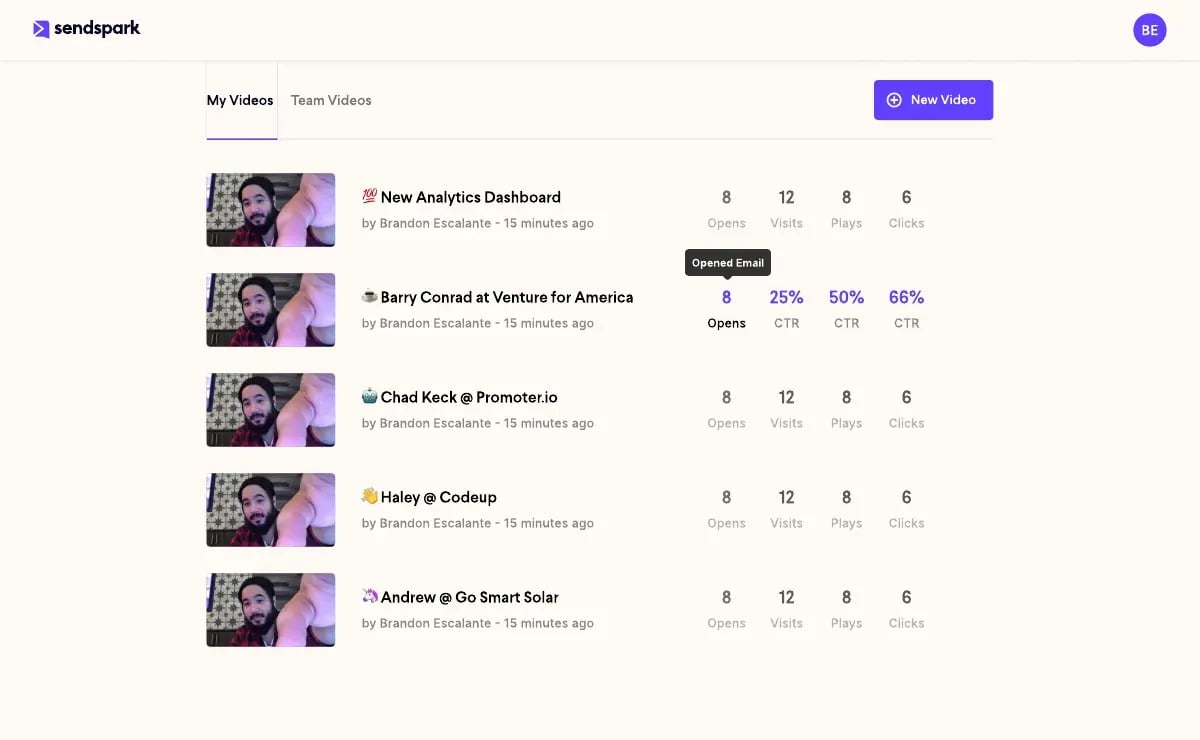
Most B2B teams use a combination: a sales engagement platform for email + SMS sequencing, and a dedicated video tool like Sendspark for personalized video outreach that integrates back into their CRM. The video analytics in Sendspark show exactly who watched, for how long, and whether they clicked — giving you the right signal to trigger the next touch in your sequence.
Check out our guide on power dialers and email integration to learn more.
“The teams seeing the best results aren’t necessarily sending more messages — they’re sending the right message through the right channel at the right moment.” — A consistent pattern observed across high-performing B2B outreach teams
One more tactic worth testing: when a prospect watches 80%+ of your video, that’s the strongest buying signal you’ll see from a cold outreach touch. Configure your CRM to automatically trigger an SMS follow-up when that view threshold is reached. Acting on high video engagement in real time — rather than waiting for the next scheduled sequence step — typically drives a significant jump in reply rates.
Frequently Asked Questions
What is email and SMS marketing?
Email and SMS marketing is a multichannel outreach strategy that uses both email and text messaging in coordinated campaigns. Email provides depth and context — detailed pitches, case studies, and demos. SMS provides immediacy — short, timely nudges that prompt faster responses. In B2B sales, combining both channels improves meeting book rates compared to either channel alone.
How do I combine SMS and email marketing for B2B outreach?
Start with an email (ideally containing a personalized video) as your first touch. Follow up with a brief SMS 2-3 days later referencing the email. Alternate channels throughout your sequence — typically email for value-add content and SMS for quick check-ins. Keep SMS messages under 160 characters, reference your prior email, and always give the prospect an easy way to opt out.
Does adding video to email and SMS marketing improve results?
Yes — significantly. Sales teams using personalized video in their email outreach see 200-300% more replies compared to text-only emails. Adding video as the first touch in a sequence makes the subsequent SMS and email follow-ups more effective because the prospect already has a visual impression of who you are. AI-personalized video tools like Sendspark make this scalable by automating personalization across your entire prospect list.
How often should I send SMS vs email in a B2B sequence?
A typical B2B sequence uses 5-6 emails and 2-3 SMS messages over 18-21 days. SMS should supplement email, not replace it — use texts to surface buried emails, confirm meeting times, or ask a quick qualifying question. More than 3 SMS messages in a cold sequence risks feeling intrusive. Always space SMS messages at least 3-4 days apart.
What is the best email and SMS marketing platform for B2B?
The best combination for most B2B sales teams is a sales engagement platform (Outreach, SalesLoft, or Apollo) for email and SMS sequencing, plus a dedicated video tool like Sendspark for personalized video outreach. If you’re starting out, Apollo provides email, SMS, and prospecting data in one tool, making it the most cost-effective entry point for smaller teams.
How do I measure the results of my email and SMS outreach?
Track open rates, click rates, reply rates, and meeting book rates for each channel separately. For video, track view rate, completion rate, and post-view click-throughs. The most important metric is reply rate by channel — this tells you which touchpoint in your sequence is driving conversations. Most sales engagement platforms provide this by default; Sendspark’s video analytics layer in per-recipient video engagement data.
Is combining email and SMS marketing compliant with regulations?
Yes, if you follow the relevant regulations. For email in B2B contexts, CAN-SPAM (US) and GDPR (EU/UK) require an opt-out mechanism and accurate sender information. SMS requires explicit opt-in consent under TCPA (US) and similar laws in other jurisdictions. Never send cold SMS to contacts who haven’t given consent. In practice, B2B SMS outreach works best when the prospect has already engaged with you via email or a web form.
Sources & References
- Salesforce State of Connected Customer — “68% of customers say messaging is the most convenient way to stay in touch” (2024)
- Statista — SMS Marketing Statistics — SMS open rates exceed 98%, most messages read within 3 minutes (2024)
- RAIN Group — What It Takes to Win in B2B Sales — Average 8 touches required to book a meeting with a cold B2B prospect (2024)
- HubSpot — Email Marketing Statistics — Average office worker receives 120+ emails per day; B2B email reply rates 1-3% (2025)
- Sendspark — Video Prospecting Guide — Sales teams using personalized video see 200-300% more replies vs text-only email (2026)
Record Once, Personalize at Scale
Stop recording the same video over and over. Sendspark uses AI to personalize your videos with each prospect's name and website — automatically. Sales teams see 2-3x more replies.
Get Started NowTopics: Tips & Tricks