Most B2B sales teams argue about inbound vs outbound as if they have to pick a side. They don’t. But understanding the real differences — what each approach costs, how fast it works, and when it breaks down — is the first step to building a pipeline that actually hits quota. Here’s everything you need to know to make the right call for your team.
Updated August 2026
Key Takeaways
- Inbound sales attract buyers who seek you out through content and SEO; outbound sales proactively target specific prospects through cold email, calls, and video outreach.
- Outbound gives you full control over timing and targeting — critical for hitting short-term pipeline goals or entering new markets quickly.
- According to Gartner, 75% of B2B buyers now prefer a self-serve experience for at least part of their buying journey, making inbound content essential even for outbound-first teams.
- AI-powered video outreach has closed the reply-rate gap — Sendspark customers report 200-300% more replies compared to plain text cold emails.
- The most effective B2B teams combine both: inbound content warms the market, outbound engages the right prospects at exactly the right moment.
- AI agents are now reshaping both sides at once: Gartner projects 40% of enterprise apps will carry task-specific AI agents by the end of 2026, and G2 found 51% of B2B software buyers now start research in an AI chatbot instead of Google.
What Is Inbound Sales?
Inbound sales is a strategy where prospects come to you. A buyer discovers your product through a blog post, a Google search, a LinkedIn connection, or a referral — and reaches out because they’re already interested. Your sales team then picks up a warm conversation rather than starting from scratch.
The inbound model depends on content doing the heavy lifting before a salesperson ever gets involved. A prospect reads your guide on “how to book more meetings,” decides you understand their problem, and books a demo. By the time your AE jumps on the call, the buyer has already sold themselves halfway.
Primary Inbound Sales Channels
- Organic search (SEO) — Blog posts, landing pages, and guides that rank for keywords your buyers search
- Content marketing — Case studies, webinars, newsletters, and thought leadership that build trust over time
- Social media — LinkedIn posts, industry communities, and social proof that attract passive buyers
- Referrals and word-of-mouth — Existing customers or partners recommending you to their network
- Paid search / PPC — Ads that intercept high-intent buyers actively searching for solutions like yours
According to HubSpot’s marketing research, inbound leads cost on average 61% less than outbound leads. That cost advantage comes with a trade-off: inbound takes 6-12 months to build traction. It’s a compounding asset, not a quick fix.
The Inbound Buyer Journey
Inbound prospects move through a predictable arc. They become aware of a problem, then consider solutions by consuming content, then decide when they’re ready. Your job is to show up at each stage with the right content — and then make it effortless for them to start a conversation when they’re ready to buy.
Pro tip
Don’t wait for inbound leads to convert on their own. The fastest-growing teams use outbound tactics to re-engage inbound leads who’ve gone quiet — a personalized video follow-up can restart a stalled conversation in minutes.
What Is Outbound Sales?
Outbound sales is a strategy where your team proactively contacts prospects — people who haven’t raised their hand yet. Instead of waiting for buyers to find you, your reps identify target accounts, build lists, and reach out directly through cold email, cold calling, LinkedIn messages, or video prospecting. You control who you target, when you reach out, and how often you follow up.
The core advantage of outbound is speed and precision. You can build a list of 200 ideal accounts today and start conversations this week. You don’t need to wait for SEO to rank or content to compound. That’s why early-stage companies and teams entering new markets almost always lean on outbound first.
Primary Outbound Sales Channels
- Cold email — Personalized email sequences sent to targeted prospects who haven’t engaged with you yet
- Cold calling — Phone-based outreach, typically most effective in SMB and mid-market segments
- LinkedIn outreach — Direct messages and connection requests to warm up prospects before a formal pitch
- Video prospecting — Personalized video messages sent via email, reducing the anonymity of cold outreach
- Direct mail — Physical mailers or gifts for high-value ABM accounts where standing out matters
The biggest challenge with outbound has always been cutting through inbox noise. According to Salesforce’s State of Sales, 72% of B2B sales reps missed quota in the most recent reporting period — and crowded inboxes are a leading factor. Plain text cold emails get ignored. That’s why video outreach has become a critical differentiator for outbound-first teams.
How Video Outreach Changes the Outbound Math
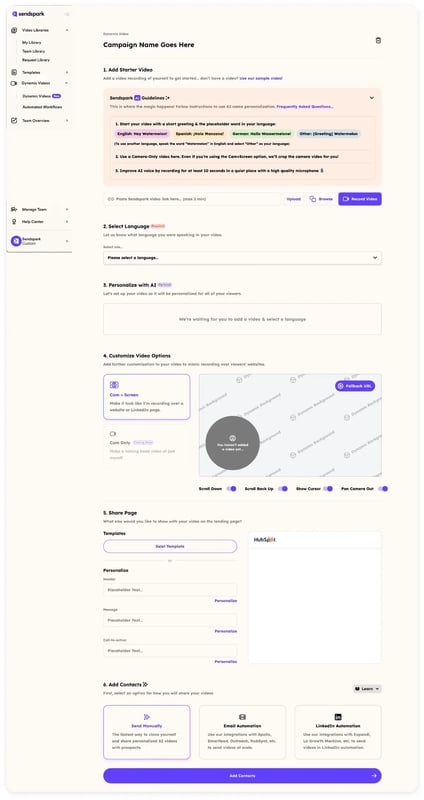
A personalized video message stands out in a way that text simply can’t. When a prospect sees their name, their company logo, or their own website in your video thumbnail, they stop and watch. Sendspark’s AI personalization lets you record one video and automatically personalize it for every prospect on your list — their name, their website, even a custom intro spoken in your cloned voice. Sales teams using this approach see 2-3x more replies on outbound prospecting campaigns compared to standard email sequences.
Inbound vs Outbound Sales: Key Differences
The core difference between inbound and outbound sales comes down to who initiates contact. Inbound is pull-based — buyers come to you when they’re ready. Outbound is push-based — you reach prospects before they’re actively looking. Both approaches work, but they excel in different situations, at different costs, and on different timelines.
| Factor | Inbound Sales | Outbound Sales |
|---|---|---|
| Who initiates | Buyer reaches out | Seller reaches out |
| Lead intent | High — actively seeking solution | Low to medium — not searching yet |
| Time to first lead | 6-12 months (SEO/content) | Days to weeks |
| Cost per lead | Lower (after ramp-up) | Higher (time + tools) |
| Targeting control | Low — whoever finds your content | High — choose exact accounts and personas |
| Scalability | High (content scales indefinitely) | Medium (limited by headcount) |
| Personalization | Low (same content for everyone) | High (tailored per prospect) |
| Best for | Growing brand, long-term pipeline | New markets, fast pipeline, ABM |
Lead Quality and Intent
Inbound leads typically have higher intent because they sought you out. They’ve read your content, visited your pricing page, or watched your demo video — signals that show they’re actively evaluating solutions. Outbound leads start with lower intent. They weren’t searching for you when you reached out, so building trust is a higher-friction process.
That said, “higher intent” doesn’t always mean “better fit.” An inbound lead who found you through a generic blog post might be in the wrong industry, the wrong size company, or the wrong stage of the buying cycle. Outbound gives you the ability to target your exact ICP from the start.
Cost and Time Investment
Inbound requires a significant upfront investment in content, SEO, and design — typically 6-12 months before you see consistent lead flow. Once it’s working, the cost per lead drops dramatically because the content keeps generating traffic without additional spend. Outbound costs are more immediate: SDR salaries, prospecting tools, and outreach platforms. But you get results faster, which matters when you’re working toward a quarterly number.
Scalability and Speed
A well-ranked blog post can generate inbound leads for years with minimal maintenance. Outbound scales differently — you’re limited by how many reps you have and how many prospects each rep can work in a day. AI tools like automated video personalization have significantly increased outbound throughput, letting a single rep run highly personalized campaigns at the scale previously requiring a full team.
Record One Video. AI Personalizes Thousands.
Sendspark is the AI video personalization platform for B2B sales. Record once, and AI voice cloning generates thousands of individually personalized videos with dynamic backgrounds and personalized thumbnails — each prospect hears their name, sees their website, in your voice. Sales teams see 2-3x more replies.
Get Started NowWhen to Use Inbound vs Outbound Sales
Neither approach is universally better. The right choice depends on your company stage, budget, sales cycle length, and how well-known your brand already is. Here’s a practical framework for making the call.
Choose Inbound When
- You have an established brand — buyers are already searching for you or your category
- Your sales cycle is 3+ months — buyers want to research and educate themselves before talking to a rep
- You can invest in content long-term — you have the budget and patience for a 6-12 month ramp
- Your product has broad market appeal — enough search volume exists to make SEO worth the effort
- You’re in a well-defined category — buyers know what to search for when they have the problem you solve
Choose Outbound When
- You’re entering a new market — no one knows you exist yet, so you can’t wait for inbound
- You have short-term revenue targets — board pressure, fundraising runway, or quarterly quotas require results now
- You’re targeting a niche ICP — your buyer is a CFO at a 200-person fintech company; inbound can’t precisely target this
- Your product is new or complex — buyers don’t know they have the problem yet; you need to create demand, not capture it
- You’re in a competitive market — waiting for buyers to find you means competitors get there first
According to Gartner’s research on the B2B buying journey, 75% of B2B buyers now prefer a rep-free experience for at least part of their buying process. This has pushed inbound content strategies up the priority list — even for outbound-first teams. Buyers are doing their research before they engage with your reps, so what they find during that research shapes whether they take your outbound outreach seriously.
Common mistake
Startups often go all-in on inbound from day one because it sounds scalable and cost-efficient. But inbound without brand awareness takes 12+ months to generate meaningful pipeline. If you need revenue in the next 90 days, outbound is your fastest path to pipeline.
Company Stage Guide
| Stage | Recommended Approach | Rationale |
|---|---|---|
| Pre-PMF / Seed | Outbound first | Need fast feedback and early customers |
| Series A / Early growth | Outbound-led, start inbound | Drive short-term revenue, plant inbound seeds |
| Series B–C / Scaling | Equal weight on both | Inbound starts yielding, outbound fills gaps |
| Growth / Established | Inbound-led, targeted outbound | Brand equity makes inbound highly efficient |
How to Combine Inbound and Outbound Sales
The strongest B2B sales engines don’t choose between inbound and outbound — they use both in a coordinated way. The approach is sometimes called “allbound” or “hybrid prospecting.” The core idea: inbound content warms up the market, and outbound engages the right prospects before they’re ready to convert on their own.
The Hybrid Prospecting Workflow
Here’s how high-performing teams connect the two:
- Build inbound content that maps to your buyer’s pain points (blog posts, case studies, comparison pages)
- Use intent data to identify who’s consuming that content or visiting your pricing page
- Launch outbound sequences to those warm accounts — people who’ve been exposed to your brand but haven’t converted
- Personalize outbound based on inbound signal — “I noticed you read our guide on X” is far more relevant than a cold pitch
- Route converted inbound leads to the same sales motion as your outbound leads, so nothing falls through the cracks
This workflow tends to outperform running inbound and outbound as separate, disconnected programs: reps who know what a prospect has already engaged with can open with something relevant instead of a blind pitch, which is a meaningfully warmer starting point than cold outreach alone.
Video Prospecting as the Bridge
Video outreach is one of the most effective tools for bridging inbound and outbound. When a prospect has read your content but hasn’t converted, a personalized video message cuts through in a way a templated email can’t. You can record a video that references their specific context — the article they read, the feature they explored, the case study that applies to their industry.
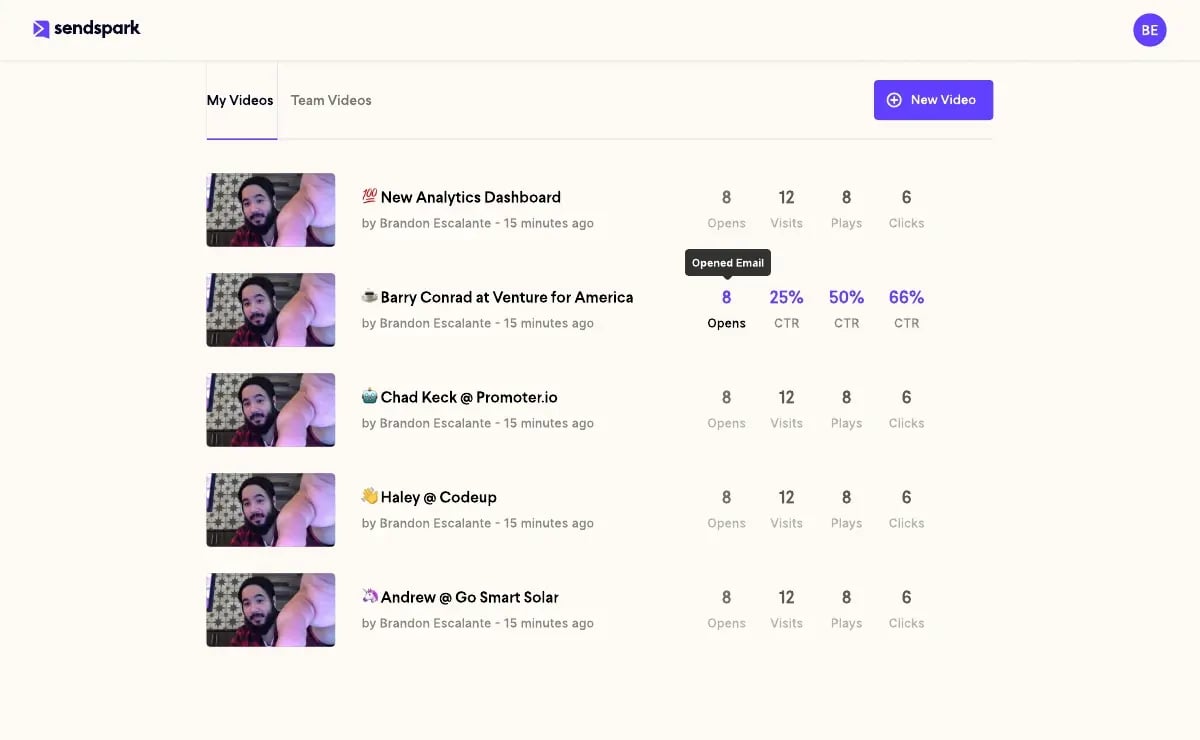
With AI-powered video personalization, you record one core video and Sendspark personalizes it for every prospect: their name in the intro, their company’s website as the background, their industry-specific framing. One rep can run this across hundreds of accounts. You can then track opens, views, and click-throughs in Sendspark’s video analytics — giving you the same intent data for outbound that inbound teams get from page views.
For a deeper look at how to build a high-converting outbound email sequence, see our complete guide to cold email campaigns. And for structuring your outreach cadence across channels, sales cadence best practices covers the multi-touch sequencing logic in detail.
Connecting Outbound to Your CRM
The final piece is making sure outbound activity data flows back into your inbound CRM workflow. When a prospect responds to an outbound video, that engagement should trigger the same nurture sequences as an inbound form fill. Sendspark’s HubSpot integration syncs video play data, watch time, and CTA clicks back to the contact record — so your revenue team has a complete view of every touchpoint, regardless of whether the contact came in through inbound or outbound.
“The best SDRs don’t think of inbound and outbound as different jobs. They use inbound content to understand what their buyers care about, then use outbound to start conversations with those exact buyers before a competitor does.”
Real-World Tools by Channel
The right tools make each motion easier to execute. Inbound teams typically lean on content and SEO platforms, while outbound teams need engagement and personalization tools built for volume.
- Inbound tools: HubSpot for blogging, SEO, and lead nurturing; Google Search Console to track what’s actually ranking; Canva or Descript for turning written content into visual and video formats.
- Outbound tools: Sales engagement platforms like Outreach and SalesLoft for sequencing; LinkedIn Sales Navigator for account and contact research; Sendspark for sending personalized video messages that scale across an entire prospect list.
Proof It Works: Customer Results
Two Sendspark customers show what happens when video closes the gap between inbound and outbound. Qwilr added personalized video to its outbound messaging and saw a 3x increase in reply rates. Hipersa embedded video into its follow-up sequences and cut its sales cycle time nearly in half. Both results came from adding a personalized touch at exactly the volume a growing sales team needs.
Inbound vs Outbound: Summary Comparison
| Dimension | Inbound Sales | Outbound Sales | Hybrid / Allbound |
|---|---|---|---|
| Speed to pipeline | Slow (6-12 months) | Fast (days to weeks) | Fast short-term, strong long-term |
| Lead intent | High | Low to medium | Medium to high (intent-targeted) |
| Targeting precision | Low | High | High |
| Long-term cost | Low (compounding) | High (ongoing spend) | Balanced |
| Rep time required | Low per lead | High per lead | Medium (automation helps) |
| Best fit | Established brands with content budget | Early-stage or new-market teams | Series B+ B2B SaaS teams |
If you’re building out your outbound B2B strategy from scratch, our guide to B2B sales outreach strategies covers sequencing, messaging, and tooling in depth.
How AI Agents Are Blurring the Line Between Inbound and Outbound in 2026
AI agents are erasing the line between inbound and outbound from both directions at once. Agentic outbound tools let one rep run personalized outreach across thousands of prospects without touching each message, while buyers now get answers from an AI chatbot instead of clicking through to a website — so inbound content has to earn a citation, not just a ranking.
Agentic Outbound: AI Agents Doing the Prospecting
According to Gartner, 40% of enterprise applications will carry task-specific AI agents by the end of 2026, up from less than 5% in 2025. In sales, that shows up as AI SDR agents that research an account, draft outreach, and trigger a send with no rep touching the message. Sendspark’s own Agentic Workflows follow this pattern for video: a signal in your CRM or outreach tool — a new lead, a list add, an email domain — triggers a personalized video send automatically, so the outbound work happens between the moments a rep actually needs to step in.
That’s a different job than a fully autonomous AI SDR platform like 11x or Artisan, which decides who to contact and writes the outreach copy itself — see AI SDR vs. AI video personalization for how the two categories fit together instead of competing.
Advanced strategy
Chain your triggers instead of running them in isolation: a new-lead signal in HubSpot can kick off a personalized video, and a reply or watch event can automatically hand the contact to a rep for a live follow-up. That combination keeps agentic scale without losing the human handoff at the moment it matters most.
Sendspark’s Agentic Workflows: how a CRM signal automatically triggers a personalized video send.
Answer Engines: How Inbound Research Now Happens Off-Site
The buyer side of inbound is changing just as fast. G2’s April 2026 “Answer Economy” report found that 51% of B2B software buyers now start their research in an AI chatbot rather than Google, up from 29% just a year earlier. A prospect can get a full answer about inbound vs outbound sales, or about which tool fits their team, without ever visiting your blog — a shift often called answer engine optimization (AEO) or zero-click research.
For inbound teams, this doesn’t make content less important — it makes structure more important. Content still needs to earn the click when a buyer is ready to go deeper, but it also needs to be citable by AI answer engines during the zero-click phase: answer-first sections, named sources, and structured comparisons like the tables in this guide. Outbound teams benefit from the same shift in reverse — when a prospect has already gotten answers from an AI chatbot, a well-timed, personalized video follow-up is what turns that research into a conversation.
The practical takeaway: build inbound content that AI answer engines can cite, and use agentic, signal-triggered outbound to reach the buyers those answer engines never send your way.
Frequently Asked Questions
What is the difference between inbound and outbound sales?
Inbound sales is a strategy where prospects contact you after discovering your brand through content, search, or referrals. Outbound sales is a strategy where your team proactively contacts prospects who haven’t engaged with you yet, using channels like cold email, cold calling, or LinkedIn outreach. The key difference is who initiates contact: the buyer in inbound, the seller in outbound.
Which is better: inbound or outbound sales?
Neither is universally better. Inbound produces higher-intent leads at a lower long-term cost per lead, but takes 6-12 months to build meaningful volume. Outbound generates pipeline faster and with more targeting precision, but requires ongoing investment in time and tooling. Most effective B2B teams run both in parallel, using outbound to hit short-term targets while inbound builds long-term pipeline.
Is inbound vs outbound sales relevant for B2B SaaS specifically?
Yes — and the distinction matters more in B2B SaaS than in most industries. B2B SaaS buyers typically do significant self-serve research before engaging a rep (Gartner’s research shows 75% prefer rep-free experiences for part of the journey), making inbound content highly valuable. At the same time, the specificity of an ideal customer profile in B2B SaaS makes outbound targeting extremely precise, giving outbound a clear advantage for reaching exact personas.
How much does inbound lead generation cost compared to outbound?
According to HubSpot’s marketing research, inbound leads cost on average 61% less than outbound leads — but that figure reflects the long-run cost after inbound has scaled. In the first 6-12 months, inbound requires significant upfront investment in content, SEO, and design. Outbound has more immediate costs (SDR salaries, tools) but generates pipeline faster, making short-term cost comparisons less meaningful than long-term ROI analysis.
What is “allbound” sales?
Allbound sales (also called hybrid prospecting) is an approach that combines inbound and outbound tactics in a coordinated way. Rather than running the two in isolation, allbound teams use inbound content to warm up target accounts, then deploy outbound sequences to those engaged prospects. Intent signals from inbound (page visits, content downloads) trigger more relevant, personalized outbound outreach — improving connect rates and reply rates significantly.
How does video outreach fit into outbound sales?
Video outreach is one of the highest-performing outbound channels for B2B sales teams. A personalized video message stands out in an inbox full of text emails — prospects are far more likely to watch a short video than read another templated cold email. AI-powered tools like Sendspark let reps record once and automatically personalize each video with the prospect’s name, company, and website, combining the impact of personalization with the scale of automation.
When should an early-stage startup use inbound vs outbound sales?
Early-stage startups almost always need outbound first. Inbound requires 6-12 months of content investment before generating meaningful pipeline — time most startups don’t have when chasing initial revenue. Outbound lets you identify specific target accounts and start conversations within days. As the business scales and brand awareness builds, layering in an inbound content strategy creates a more sustainable, lower-cost acquisition channel alongside outbound.
How are AI agents changing inbound and outbound sales in 2026?
AI agents are automating both sides of the equation. On outbound, agentic tools now research accounts and trigger personalized outreach — including video — without a rep manually building each message. On inbound, more buyers get answers from AI chatbots before ever visiting a website, so content has to be structured for AI answer engines to cite, not just for search rankings. Teams that adapt both sides at once see the biggest gains.
Sources & References
- HubSpot Marketing Statistics — “Inbound leads cost on average 61% less than outbound leads” (2024)
- Salesforce State of Sales — “72% of B2B sales reps missed quota in the most recent reporting period” (2024)
- Gartner B2B Buying Journey Research — “75% of B2B buyers now prefer a rep-free experience for at least part of their buying process” (2024)
- Gartner Newsroom — “40% of enterprise applications will feature task-specific AI agents by the end of 2026, up from less than 5% in 2025” (2025)
- G2, “The Answer Economy: How AI Search Is Rewiring B2B Software Buying” — “51% of B2B software buyers now begin their software research with an AI chatbot more often than with Google, up from 29% in April 2025” (2026)
Record One Video. AI Personalizes Thousands.
Sendspark is the AI video personalization platform for B2B sales. Record once, and AI voice cloning generates thousands of individually personalized videos with dynamic backgrounds and personalized thumbnails — each prospect hears their name, sees their website, in your voice. Sales teams see 2-3x more replies.
Get Started Now