
Most IT services lead generation advice stops at “use ABM and post on LinkedIn.” That’s not why your pipeline is thin. The real problem is that IT purchases route through six to ten skeptical stakeholders, and a single generic pitch (or a single generic video) can’t move a CIO, a CTO, and procurement at the same time.
Updated September 2026
Key Takeaways
- IT buying committees typically involve 6-10 stakeholders, and Gong Labs research found multi-threading (engaging 3+ buyer-side stakeholders) boosts win rates by 130% on deals over $50K.
- RAIN Group data shows it takes an average of 8 touchpoints to land an initial meeting – but top performers need only 5, largely because they personalize instead of blasting the same message.
- HubSpot’s 2026 State of Marketing report found 61% of marketers still call high-quality lead generation their single biggest challenge, with median cost-per-lead rising year over year.
- AI voice cloning and dynamic backgrounds now make it practical to send a uniquely personalized video to every member of an IT buying committee from a single recording, instead of one generic video for the whole deal.
- Intent data (Bombora, Leadfeeder), ABM landing pages, and layered outreach sequences remain the foundation – the fresh angle is what happens after a prospect clicks through.
Why IT Services Lead Generation Is Different
IT services lead generation is harder than typical B2B lead gen because the buying committee is larger, more technical, and more skeptical of vendor claims – and the sales cycle routinely stretches past 90 days across six or more stakeholders. A generic “book a demo” campaign that works for a simpler product category falls flat here because no single message can satisfy a CIO worried about scalability, a CTO worried about integration risk, and a finance lead worried about total cost of ownership.
Whether you’re an MSP, a cloud consultant, or a cybersecurity vendor, the challenge is structurally the same: reach a group of technical decision-makers who each arrive with their own priorities, without sounding like every other vendor pitching the same “digital transformation” language. That means the strategies that work aren’t really “IT-specific tactics” so much as an unusually disciplined application of segmentation, intent data, and personalization – applied to a buyer who will punish anything generic.
Understanding Your Ideal Client and the IT Buying Committee
Before any campaign works, get specific about who’s actually in the room. IT buying committees typically include the CIO (scalability and risk), the CTO or technical lead (integration and architecture fit), a procurement lead (contract terms), and often a finance stakeholder (total cost of ownership) – and each one needs a different outreach angle, not a shared generic pitch.
Frameworks like Jobs to Be Done or buyer-persona mapping help align messaging to the real business problem each stakeholder owns, rather than a single feature list aimed at nobody in particular. LinkedIn Sales Navigator remains the fastest way to find these roles by title, industry, and company size, and to filter by useful buying signals – tech stack (companies running AWS or Azure), recent headcount growth in IT roles, or a newly posted security or infrastructure position. Layering in intent-data platforms like Bombora or Leadfeeder, which surface companies actively researching terms like “cloud migration” or “managed security services,” lets you sync real buying signals into your CRM instead of guessing which accounts are actually in-market. If you’re building this out from scratch, our B2B lead generation strategy guide covers the segmentation and enrichment groundwork in more depth, and how to qualify sales leads once they start coming in.
The Challenges of Reaching IT Buyers
IT buyers are harder to reach than most B2B audiences because they’re trained to spot risk, they’re fielding dozens of vendor pitches a week, and the deal is rarely owned by one person. Add in heightened security scrutiny around any new vendor relationship, and it’s easy to see why flashy claims and generic outreach get deleted on sight.
Four specific obstacles show up again and again: skepticism (generic pitches read as noise, not signal), pitch overload (IT leaders are inundated), multi-threaded deals (five or more people need to say yes), and security concerns (unfamiliar vendors face extra vetting before anyone will engage). The fix isn’t a single trick – it’s speaking their language (latency, SLAs, compliance, tech stack, not vague “benefits”), building credibility through case studies and peer proof, and warming up outreach through layered campaigns that combine a LinkedIn touch, a retargeting ad, an email, and a short video before you ever ask for a meeting.
Common mistake
Sending the same “here’s what we do” pitch to every stakeholder on a buying committee. A CIO and a procurement lead are evaluating completely different risks – one generic message satisfies neither.
Top Strategies for IT Services Lead Generation
The highest-performing IT services lead generation programs combine five tactics: targeted account-based marketing, technical-buyer SEO, disciplined LinkedIn prospecting, short and relevant cold email, and a website built to convert rather than just explain. None of these are exotic – the difference is execution discipline, not tactic selection.
Account-based marketing (ABM) works especially well for IT companies chasing high-value contracts. Build a target list of ideal accounts, enrich it with tech-stack and intent data, and design outreach around the specific vertical – a “cloud consulting for fintech” landing page converts better than a one-size-fits-all page. Tools like Mutiny or Instapage can personalize landing-page content dynamically based on who’s visiting.
SEO for technical buyers captures the research-stage traffic that never reaches a sales rep. Most IT buyers start with search, so ranking for bottom-funnel, long-tail queries – “Azure vs. AWS for startups,” “MSP for fintech SOC 2 compliance” – puts you in front of intent, not just awareness. Pair that content with clear, low-commitment CTAs like checklists, audits, or calculators.
LinkedIn prospecting is the most important channel for IT lead gen outside of search, and most reps still use it wrong by connecting and immediately pitching. Comment on a target’s posts first, then send a short, specific message offering help – and use short video to explain your offer in a way plain text can’t. This is a core piece of a broader sales prospecting motion, not a standalone tactic.
Cold email still works when it’s short and relevant: three sentences, dynamic variables for company and role, a short video link for differentiation, and three to five follow-ups over two weeks – our B2B lead generation email templates are a useful starting point for the structure. RAIN Group’s prospecting research puts the average at 8 touchpoints to land an initial meeting, with top performers needing only 5 – the gap is almost entirely personalization quality, not volume.
Conversion-focused websites stop explaining and start converting: live chat for real-time engagement, video CTAs that put a face (or a personalized voice) on the offer, and visible proof – logos, testimonials, results metrics – instead of jargon.
Record One Video. AI Personalizes Thousands.
Sendspark is the AI video personalization platform for B2B sales. Record once, and AI voice cloning generates thousands of individually personalized videos with dynamic backgrounds and personalized thumbnails -- each prospect hears their name, sees their website, in your voice. Sales teams see 2-3x more replies.
Get Started NowPersonalizing at Scale for IT’s Multi-Threaded Buying Committee
A single generic outreach video doesn’t move a five-person IT buying committee – it takes a genuinely different message for the CIO, the CTO, and procurement, which is exactly why AI voice cloning and dynamic backgrounds now matter: they let you record one video and generate a distinct, individually personalized version for every stakeholder without re-recording anything.
Two things changed since the original strategies above became standard practice. First, Google’s AI Overviews and other zero-click search surfaces now intercept a growing share of an IT buyer’s research before a single link gets clicked – Gartner’s own sales research shows buyers complete the bulk of their journey through independent, self-directed information gathering, so content and video increasingly need to earn attention directly in the feed or the SERP, not after a click-through. Second, buying committees haven’t shrunk; if anything, continued vendor-security scrutiny has made every additional stakeholder more cautious about a message that clearly wasn’t written for them.
This is where buying committee personalization becomes a practical tactic instead of a nice idea. Record a single walkthrough of your managed-services offering, and AI voice cloning plus a personalized thumbnail can retarget the same core message with the CIO’s company name and scalability framing in one version, and procurement’s contract-and-SLA framing in another – without hiring a production team or re-recording a single take. Gong Labs research backs the underlying logic here directly: multi-threading a deal (actively engaging three or more buyer-side stakeholders) boosts win rates by 130% on deals over $50,000, which is precisely the kind of multi-threaded, high-value deal that defines IT services sales.
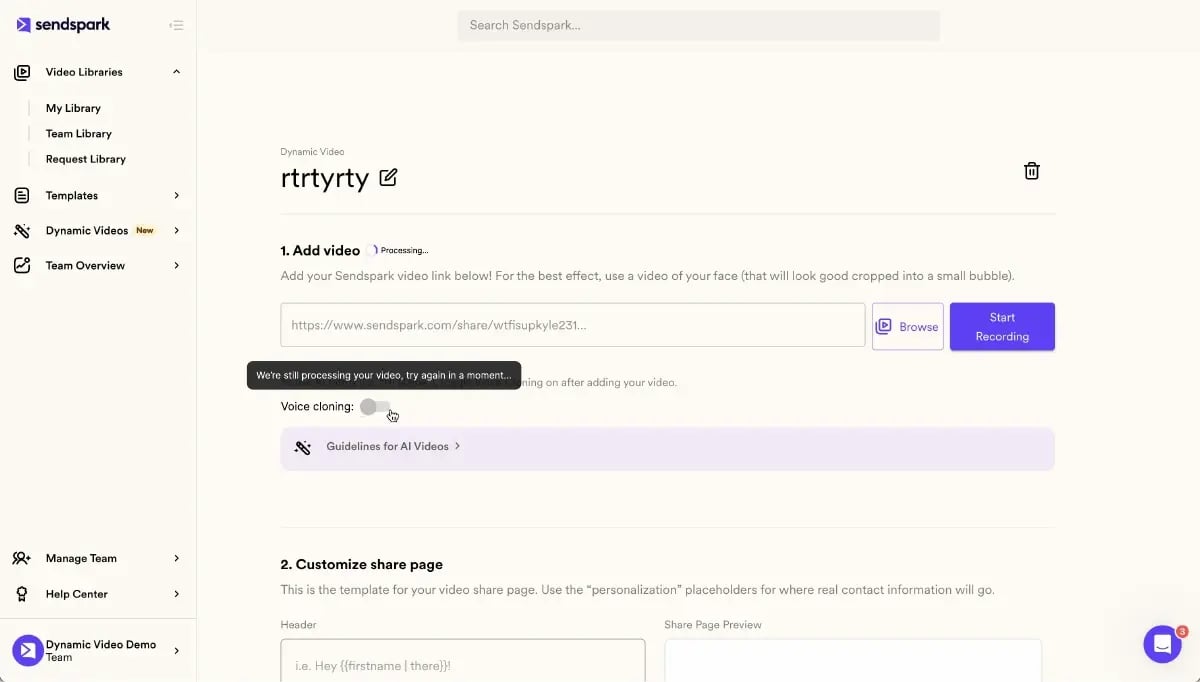
Track watch-through rate per stakeholder, not just open rate – it tells you which persona actually watched to the CTA versus which one bounced in the first five seconds, which is a far more honest signal of committee-level interest than a generic email open. Pair a personalized video with a lightweight digital sales room – a single link housing the video, a case study relevant to that stakeholder’s role, and pricing – and you’ve replaced a scattered PDF-and-email thread with one place every buying-committee member can return to on their own schedule, which matters given how much of the IT buying journey now happens without a rep in the room. Our comprehensive guide to AI video personalization for outbound sales walks through the full setup, and Sendspark’s video personalization tools are built specifically for this record-once, personalize-at-scale workflow. If you’re earlier in the process, our complete guide to video prospecting covers how to work video into outbound before you get to the buying-committee stage.
Advanced strategy
Build one “hub” video per offering, then generate stakeholder-specific cuts with different opening lines (one addressing scalability for the CIO, one addressing SLAs for procurement) rather than writing entirely separate scripts – it keeps the message consistent while still feeling personal to each viewer.
Best Tools for IT Lead Generation
A full-stack IT lead generation toolkit covers six jobs: outreach, prospecting, video personalization, technical SEO, on-site engagement, and intent data – and no single tool does all six well, which is why the “scenario walkthrough” below stitches several together. Sendspark’s video personalization plans start at a level most teams can test alongside their existing stack – see Sendspark pricing for the current tiers.
| Purpose | Tool Options | Best For |
|---|---|---|
| Email Outreach | Smartlead, Outreach.io | Cold email sequences, nurture cadences |
| LinkedIn Prospecting | Sales Navigator | Finding and filtering decision-makers by role and signal |
| Video Personalization | Sendspark | AI voice cloning and dynamic backgrounds to personalize one video per buying-committee stakeholder |
| Technical SEO | Ahrefs, Surfer SEO | Bottom-funnel keyword targeting, on-page optimization |
| Website Engagement | Warmly, RB2B | Identifying and engaging anonymous site visitors |
| Intent Data | Bombora, Leadfeeder | Surfacing accounts actively researching your category |
| Personalization at Scale | Mutiny, Clay, Instantly | Dynamic landing pages, enrichment, sequencing |
How These Tools Work Together: A Scenario Walkthrough
Here’s a full campaign selling managed IT services to growing law firms, stitching every tool above into one sequence instead of running each in isolation.
Prospect building: Use Sales Navigator to find firms with 50-250 employees actively hiring for IT roles, then enrich the list with Clay to surface tech stack, recent job postings, and leadership contacts. From there, apply the same prospect evaluation criteria you’d use for any high-value B2B deal to prioritize the accounts most likely to convert.
Warm the audience: Upload the enriched list to LinkedIn Ads for brand-awareness impressions, and build a landing page tailored to law firms specifically – compliance support, response time, and cost savings up front.
Intent scoring: Layer in Bombora or Leadfeeder data to prioritize the accounts already researching managed IT or compliance topics, so outreach starts with the warmest names first.
Outreach sequence: Day 1, a short intro email with a clear value prop. Day 3, a follow-up with a relevant case study. Day 6, a Sendspark video personalized with the firm’s name and a scalability or compliance angle matched to the recipient’s role. Day 9, a LinkedIn message with a video CTA.
Website conversions: When a prospect clicks through, a Warmly pop-up offers a free 15-minute consult, and hot leads route directly to a calendar link instead of a generic contact form.
This flow combines research, role-based personalization, and light automation – it builds familiarity and trust before the first live conversation even happens, which matters enormously with a buyer group that completes most of its evaluation without a sales rep present.
Common Pitfalls and How to Avoid Them
Most failed IT lead generation campaigns share the same handful of mistakes: generic messaging sent to everyone, skipped research, over-automation with no real substance, and weak calls to action – all of which are fixable without adding headcount.
Sending generic outreach: one-size-fits-all messaging doesn’t work with IT buyers who can spot a template instantly. Skipping research: if an email doesn’t reference something specific about the recipient’s industry, role, or company, it gets deleted. Over-automating with no substance: personalization tools are only as good as what you say with them – swapping in a first name isn’t personalization. Weak CTAs: “let me know if you’re interested” isn’t a call to action; offer a demo, an audit, or a custom quote instead.
Frequently Asked Questions
How do IT services companies generate qualified leads?
IT services companies generate qualified leads by combining account-based marketing with intent data (Bombora, Leadfeeder), technical-buyer SEO for bottom-funnel search terms, disciplined LinkedIn prospecting, and short, personalized outreach sequences. The strongest programs layer these together rather than relying on any single channel.
What lead generation strategies work best for MSPs and IT resellers?
MSPs and IT resellers see the best results from vertical-specific ABM campaigns, intent-data-triggered outreach, and case-study-driven cold email sequences that reference a prospect’s specific compliance or infrastructure needs. Personalized video, especially cuts tailored to different buying-committee stakeholders, consistently outperforms generic email-only sequences.
How is IT services lead generation different from typical B2B lead gen?
IT services lead generation involves a larger, more technical buying committee – typically six to ten stakeholders including CIOs, CTOs, and procurement – and longer sales cycles shaped by security vetting. Messaging has to speak to compliance, integration risk, and total cost of ownership rather than generic benefits language.
What tools help generate leads for managed IT and IT hardware companies?
A full-stack toolkit typically includes Sales Navigator for prospecting, Smartlead or Outreach.io for email sequencing, Bombora or Leadfeeder for intent data, Ahrefs or Surfer SEO for technical-buyer content, and Sendspark for personalizing outreach video across every stakeholder on a deal.
How can IT companies personalize outreach to an entire buying committee?
Record one core video explaining the offering, then use AI voice cloning and dynamic backgrounds to generate stakeholder-specific versions – a scalability-focused cut for the CIO, a compliance-focused cut for procurement – without re-recording. Pairing each version with a lightweight digital sales room keeps everything in one place stakeholders can revisit independently.
How long does it take to see results from IT services lead generation?
Given multi-threaded deals and security vetting, most IT services companies see meaningful pipeline movement in 60-90 days of consistent execution, though initial meetings from well-targeted, personalized outreach can land within the first few weeks. RAIN Group research shows top performers need only 5 touchpoints to land that first meeting, versus an average of 8.
What’s the best way to follow up with IT services leads without sounding automated?
Reference something specific in every follow-up – a recent job posting, a tech-stack signal, or a detail from a prior touchpoint – rather than a generic “just checking in” message. A short personalized video on the second or third follow-up consistently reads as more human than another templated email.
Sources & References
- Gong Labs – “Multi-threading boosts win rates by 130% in deals over $50K” (2026)
- RAIN Group Center for Sales Research – “It takes an average of 8 touchpoints to land an initial meeting; top performers need only 5” (2025)
- HubSpot 2026 State of Marketing Report – “61% of marketers say generating high-quality leads is their single biggest challenge” (2026)
- HubSpot Blog – overview of modern lead generation tooling and category best practices (2026)
Record One Video. AI Personalizes Thousands.
Sendspark is the AI video personalization platform for B2B sales. Record once, and AI voice cloning generates thousands of individually personalized videos with dynamic backgrounds and personalized thumbnails -- each prospect hears their name, sees their website, in your voice. Sales teams see 2-3x more replies.
Get Started NowTopics: Tips & Tricks