Product-led growth (PLG) is now the dominant go-to-market motion in B2B SaaS — and for good reason. According to OpenView Partners, PLG companies reach $100M ARR twice as fast as sales-led companies and trade at 2x the revenue multiples. But getting PLG right requires more than a free trial signup page. It demands a deliberate strategy across every stage: acquisition, activation, retention, and expansion.
Learn more about Sendspark partner program.
Learn more about 500 Startups virtual program.
This guide breaks down what product-led growth actually means, how top SaaS companies execute it, and where video fits as a force multiplier at each stage of the PLG flywheel.
Learn more about growth experiments framework.
Key Takeaways
- PLG (product-led growth) is a go-to-market strategy where the product itself drives customer acquisition, activation, retention, and expansion — reducing reliance on a large sales team.
- PLG companies grow 2x faster and achieve higher revenue multiples than purely sales-led peers, according to OpenView Partners research.
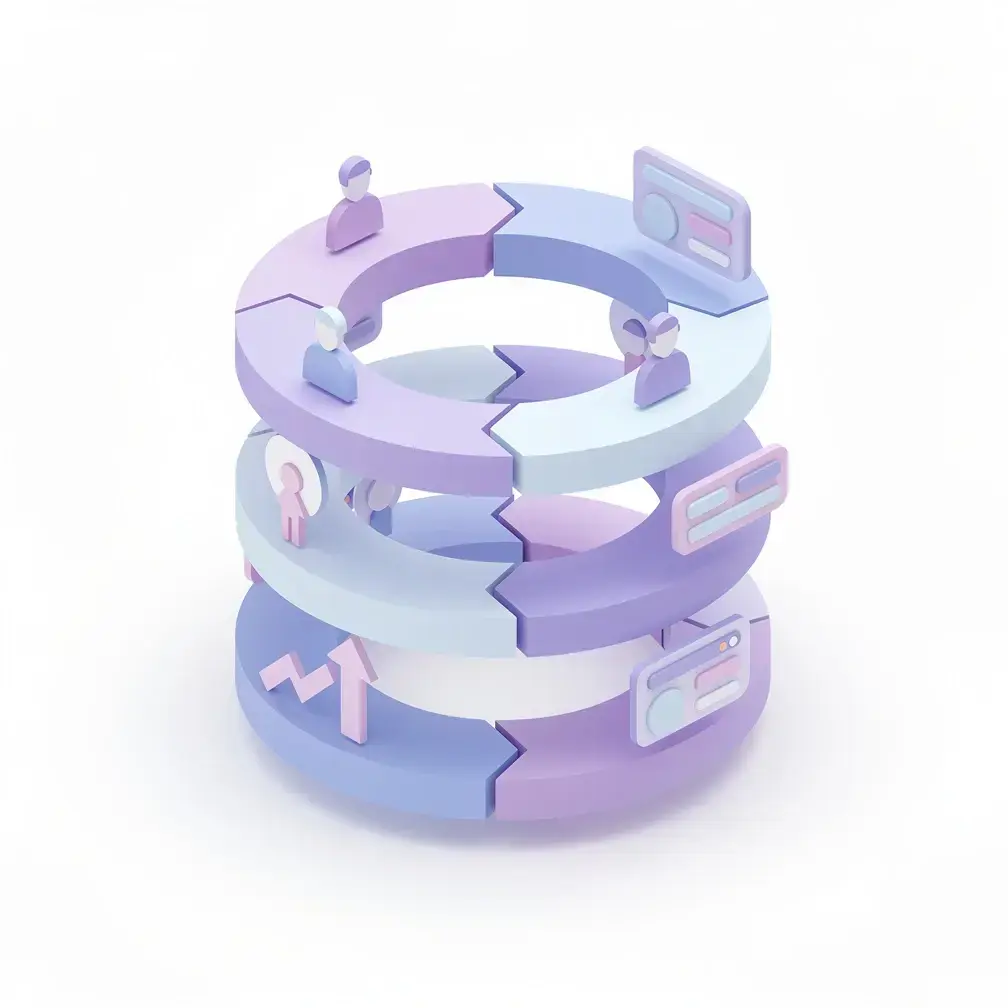
- The PLG flywheel has four stages: Acquisition → Activation → Retention → Expansion. Each stage has distinct tactics, metrics, and levers.
- Video accelerates every PLG stage — from personalized outreach that drives self-serve signups to onboarding walkthroughs that cut time-to-value.
- The most effective modern PLG motions combine product-led acquisition with targeted video outreach for expansion and enterprise upsells.
What Is Product-Led Growth?
Product-led growth (PLG) is a go-to-market strategy where the product itself is the primary driver of customer acquisition, activation, retention, and expansion. Instead of relying on a sales team to find prospects and convince them to buy, PLG companies let users discover, adopt, and champion the product on their own — often starting with a free trial or freemium tier. The product does the selling.
The term was coined by OpenView Partners in 2016, though the pattern existed earlier in companies like Dropbox and Atlassian. The definition has sharpened since then: PLG is not just “offering a free plan.” It’s designing the entire product experience to create genuine first-value moments, viral sharing mechanics, and natural upgrade pathways — without requiring a sales rep in the loop.
PLG meaning in practice: a new user signs up for free, experiences the core value of the product within minutes (the “aha moment”), starts using it regularly, then either upgrades themselves or becomes the internal champion who gets their company to buy seats. The product creates demand from the bottom up, not the top down.
Why has PLG become the dominant SaaS strategy? Three forces drove it:
- Buyer empowerment — according to Gartner research, B2B buyers now complete 57-70% of their decision process before ever speaking to a salesperson. They want to try before they buy.
- Cost efficiency — customer acquisition cost (CAC) is dramatically lower when the product sells itself versus paying SDRs to prospect manually.
- Network effects — products like Slack and Figma become more valuable as more people use them, creating organic viral growth.
Pro tip
PLG doesn’t mean “no sales.” Most successful PLG companies evolve into a hybrid “PLG + sales-assist” motion — the product handles top-of-funnel acquisition while sales focuses on expansion, enterprise deals, and accounts that stall in self-serve.
PLG vs. Sales-Led Growth: Key Differences
PLG and sales-led growth (SLG) differ fundamentally in where the growth engine lives. In SLG, humans generate demand — SDRs cold-email, AEs demo, and CS teams onboard. In PLG, the product generates demand — users discover it, try it, and spread it. The difference shapes every aspect of the business: team structure, hiring, pricing, product roadmap, and metrics.
Neither model is universally better. Choosing between PLG and SLG (or a hybrid) depends on product complexity, deal size, and target buyer persona. Here’s how they compare across the dimensions that matter most:
| Dimension | Product-Led Growth (PLG) | Sales-Led Growth (SLG) |
|---|---|---|
| Growth engine | Product experience + viral loops | Sales team outreach + demos |
| First touch | Self-serve signup / freemium | SDR cold outreach / marketing MQL |
| Primary qualifier | Product Qualified Lead (PQL) | Marketing Qualified Lead (MQL) |
| Time-to-value | Minutes to hours (self-serve) | Days to weeks (demo → onboarding) |
| CAC | Low (product-driven acquisition) | High (SDR/AE salaries + quota) |
| Works best for | Horizontal SaaS, SMB/mid-market, ACV <$50K | Enterprise, complex implementations, ACV >$100K |
| Key metric | PQL conversion rate, NRR | Pipeline coverage, win rate, ACV |
According to McKinsey research, companies with a strong PLG motion grew 2x faster than their SLG-only peers over a 5-year period and commanded significantly higher enterprise valuations. But the researchers also found that PLG-only companies struggle at $50M+ ARR when they need to crack enterprise accounts — which is why PLG + sales-assist is increasingly the dominant pattern.
In the PLG + sales-assist (also called “product-led sales” or PLS) model: the product handles self-serve acquisition and SMB, while sales reps focus on Product Qualified Accounts (PQAs) — companies with high product usage signals that indicate readiness for an enterprise conversation.
Product-Led Growth Examples: How SaaS Companies Do It
The best PLG companies built a single product mechanic that simultaneously creates value for the current user and generates new user acquisition — often called the “viral loop.” Understanding how top PLG companies engineered their loops reveals the principles you can apply to your own strategy.
Slack: Bottom-Up Team Adoption
Slack’s PLG mechanic is simple: one team member joins, invites their team, and the entire company gradually migrates from email to Slack. The product becomes more valuable as more teammates join (network effect). A free tier lets teams start without budget approval, and the upgrade trigger is natural — when the team hits the free message limit, they’ve already proven value to themselves.
Dropbox: Viral Referral Loop
Dropbox’s “invite a friend, get 500MB extra storage” loop is one of the most cited PLG examples in history. It works because the incentive (more storage) is directly tied to the core product value (storing files). Every new user had a reason to share, and sharing delivered value immediately. This loop drove Dropbox from 100,000 to 4 million users in 15 months without paid advertising.
Calendly: Link-as-Distribution
Every Calendly scheduling link sent to a recipient is also a product discovery moment. The recipient sees “Powered by Calendly,” clicks it, and is one step away from signing up. The product distributes itself through every single use — without the user doing anything extra. Calendly reportedly acquired 50% of its users through this shared-link discovery mechanism.
Figma: Collaborative Real-Time Editing
Figma made design files shareable and simultaneously editable in the browser. The viral loop: a designer shares a Figma link with a non-designer (PM, developer, stakeholder), who needs to sign up to comment. Each collaboration event pulls in a new potential user. This mechanic helped Figma reach $200M ARR with sales reps handling only the largest enterprise deals.
Common mistake
Many teams copy PLG tactics (freemium, viral loops) without first designing the underlying value delivery. A free plan only drives growth if users experience genuine value fast enough to tell others. Nail time-to-value before building the sharing mechanic.
Record Once, Personalize at Scale
Stop recording the same video over and over. Sendspark uses AI to personalize your videos with each prospect's name and website — automatically. Sales teams see 2-3x more replies.
Get Started NowThe PLG Framework: Four Phases of Product-Led Growth
The PLG flywheel runs through four stages — Acquisition, Activation, Retention, and Expansion — and each stage has distinct levers, tactics, and metrics. Growth compounds when each stage feeds the next: activated users retain and expand, which generates word-of-mouth that feeds acquisition. The goal is to engineer each stage intentionally, not hope it happens organically.
Phase 1: Acquisition — Let the Product Attract Users
PLG acquisition relies on reducing friction to try the product. The primary mechanisms are freemium (permanent free tier with feature limits), free trial (full access for 14-30 days), or both. The goal is to lower the cost-of-entry enough that users will try without budget approval or lengthy procurement. Distribution tactics that work in PLG acquisition: SEO-driven content (people searching for solutions find your product), integrations that appear in partner app stores, and product-led outbound — where sales identifies high-fit accounts and sends targeted outreach to accelerate a self-serve motion.
Phase 2: Activation — Engineer the “Aha Moment”
Activation is where most PLG companies fail or win. Activation means a user reaches the first-value milestone — the moment they’ve experienced enough of the product’s core promise to understand why it matters. Slack’s activation moment is sending 2,000 messages (historically). Dropbox’s is uploading the first file. Your job is to identify this moment empirically (through cohort analysis), then redesign onboarding to get users there as fast as possible. The metric is Time-to-Value (TTV).
Phase 3: Retention — Build the Habit Loop
Retained users are the ones who form a regular usage habit. Retention mechanics include: in-app education (tooltips, feature walkthroughs), email sequences triggered by usage behavior, notifications that bring users back, and expanding use cases that keep the product fresh. The north star metric is typically Daily Active Users (DAU) / Monthly Active Users (MAU) ratio, often called the “stickiness ratio.” Products with DAU/MAU above 20% tend to have strong retention.
Phase 4: Expansion — Turn Users Into Revenue
Expansion is how PLG companies monetize. Expansion comes from three sources: (1) Tier upgrades — users hitting limits and upgrading, (2) Seat expansion — individual users inviting colleagues, and (3) Upsell to higher plans — often triggered by a sales rep identifying a Product Qualified Account (PQA) showing high usage signals. Net Revenue Retention (NRR) above 120% is the hallmark of a well-functioning PLG expansion engine, according to OpenView’s PLG benchmark research.
The flywheel closes when expanded users become advocates who refer new users — feeding acquisition and starting the cycle again.
How Video Accelerates Every Stage of PLG
Video is one of the highest-leverage tools in a PLG stack because it can be deployed at every stage — from personalized acquisition outreach to expansion upsells — with compounding returns when combined with AI personalization at scale. Here’s how video maps to each PLG phase.
Acquisition: Personalized Video Drives Self-Serve Signups
Even in PLG, not all acquisition is passive inbound. Many PLG companies run “product-led outbound” — targeting high-fit accounts who haven’t discovered the product yet. Personalized video is the highest-performing outbound channel for this motion. According to Sendspark customer data, personalized video outreach at scale generates a 50% higher click-through rate than text-only emails. When your goal is to drive a self-serve trial signup, a 30-second video that shows exactly what the product does — personalized with the prospect’s name and company website in the background — converts at dramatically higher rates than generic email copy.
The AI Intros feature in Sendspark lets you record once and automatically personalize that video for hundreds of prospects — showing each person’s website as the background, with an AI-generated voice intro using their name. This is product-led outbound at scale.
Activation: Demo and Onboarding Videos Cut Time-to-Value
New users who receive a personalized onboarding video — instead of a generic automated email sequence — activate at meaningfully higher rates. Instead of hoping users find the right features on their own, a short screen-recording video that shows exactly where to click to reach the “aha moment” cuts TTV dramatically. According to the Video for Revenue Benchmark Report, onboarding videos in B2B SaaS reduce time-to-value by an average of 40%. That directly improves your activation rate — the single most important leading indicator of retention.
Retention: Customer Success Videos Build Loyalty
Quarterly Business Review (QBR) videos, feature release walkthroughs, and personalized check-in videos from a CSM keep customers engaged with the product. Rather than sending a link to a product changelog or a calendar invite for a generic webinar, a 2-minute personalized video that shows the customer’s own account data in the screen recording makes retention touchpoints feel personal and valuable. This maps directly to the Customer Success use case.
Expansion: Video Outreach for Upsells and Seat Expansion
When a PLG user or team reaches a usage threshold that signals readiness for an upgrade, video is the most effective outreach channel. Your sales rep identifies a Product Qualified Account — say, a team of 5 using the free plan heavily — and sends a personalized video summarizing their usage data and showing what they’d unlock on the next tier. This “product-led sales” motion, where video personalizes the upgrade conversation with data the prospect already knows (their own usage), is where AI video personalization delivers its highest ROI.
Sales teams using Sendspark for PLG expansion outreach report a 200-300% increase in email reply rates and 40-50% more meetings booked compared to text-only outreach for the same upgrade campaigns. The pattern is consistent: when you combine product usage data (what the team does in your app) with a personalized video that references it, conversion improves significantly.
“The best PLG expansion motion isn’t just ‘email the person when they hit a limit.’ It’s a personalized conversation that uses their product data to show them exactly what they’re missing. Video makes that conversation feel human, not automated.”
For a step-by-step playbook on deploying video in your sales outreach alongside PLG, see How to Build a Video-First Sales Strategy. And for the team actually booking meetings with PLG-assist outreach, how top-performing SDRs use video to book more meetings covers the tactical setup.
PLG Metrics: What to Measure at Each Stage
PLG success requires tracking a different set of metrics than traditional SaaS — ones that reflect product behavior rather than pipeline activity. The core framework organizes metrics by funnel stage, with one north star metric per stage and supporting signals that explain why the north star is moving up or down.
| PLG Stage | North Star Metric | Supporting Metrics | Benchmark (Top PLG) |
|---|---|---|---|
| Acquisition | Sign-up conversion rate | Organic traffic, referral rate, CAC | >5% homepage → signup |
| Activation | Activation rate (% reaching aha moment) | Time-to-value (TTV), onboarding completion | >40% within 7 days |
| Retention | DAU/MAU ratio (stickiness) | D30 retention, churn rate, NPS | >20% DAU/MAU |
| Expansion | Net Revenue Retention (NRR) | PQL conversion rate, seat expansion rate | >120% NRR |
| Virality | Viral coefficient (K-factor) | Invites sent per user, invite acceptance rate | K > 0.5 (strong flywheel) |
The Product Qualified Lead (PQL) metric deserves special attention because it’s the bridge between product analytics and sales action. A PQL is a user or account that has reached a product usage threshold — defined by your team — that correlates with high conversion probability. Common PQL signals include: hitting a usage limit, inviting multiple teammates, completing a key workflow, or returning to the product 5+ times in a week.
According to OpenView’s PLG benchmarks, companies that define and actively work their PQL pipeline convert free users to paid at 2-3x the rate of companies that use MQL-only sales qualification. The key is routing high-signal PQLs to a sales-assist motion — ideally with personalized video outreach that references the prospect’s specific usage data via video analytics integration with your CRM.
For teams using HubSpot or Salesforce, you can surface PQL data directly in your CRM and trigger Sendspark video sequences automatically when accounts cross usage thresholds. The HubSpot integration makes this setup straightforward — no custom engineering required.
Frequently Asked Questions
What is product led growth?
Product-led growth (PLG) is a go-to-market strategy where the product itself drives customer acquisition, activation, retention, and expansion — rather than relying primarily on a sales team. Users discover, try, and buy the product with minimal sales involvement. PLG companies typically offer freemium or free trial tiers and design the product to create natural upgrade paths and viral sharing loops.
What is PLG in SaaS?
In SaaS, PLG (product-led growth) means building a product that sells itself — through self-serve trials, freemium tiers, viral sharing mechanics, and frictionless onboarding. PLG SaaS companies like Slack, Dropbox, Figma, and Calendly reached scale with significantly lower sales costs than traditional enterprise SaaS companies because the product drove bottom-up adoption inside target companies.
For teams building a PLG product without a full engineering team, no-code platforms accelerate the path from idea to App Store. Adalo lets entrepreneurs and business teams design, build, and publish custom database-driven apps to the Apple App Store, Google Play Store, and web from a single project using a visual multi-screen canvas — no code or developers required.
What are examples of product led growth companies?
The most-cited PLG examples are Slack (team messaging with bottom-up adoption), Dropbox (viral referral loop — invite a friend, get storage), Calendly (scheduling links as distribution), Figma (collaborative editing pulls in non-designer stakeholders), Zoom (freemium video meetings with viral link sharing), and Notion (team workspaces with free-forever personal tier). All of these companies built a product mechanic where using the product naturally exposes it to new potential users.
How does video fit into a product led growth strategy?
Video accelerates every stage of the PLG flywheel. In acquisition, personalized video outreach drives self-serve signups at 50% higher click-through rates than text emails. In activation, short onboarding videos reduce time-to-value by helping users reach their “aha moment” faster. In retention, customer success videos (QBRs, feature walkthroughs) keep users engaged. In expansion, AI-personalized video for upsell outreach converts Product Qualified Accounts into paid upgrades at 200-300% higher reply rates.
What is the difference between PLG and sales-led growth?
In product-led growth, the product is the primary acquisition channel — users discover and try the product through self-serve, freemium, or free trial. In sales-led growth, humans drive acquisition — SDRs cold-outreach prospects, AEs demo, and CS teams onboard. PLG has lower CAC and scales faster for horizontal SaaS products. Sales-led growth works better for complex enterprise deals with high ACV and long procurement cycles. Most successful PLG companies evolve into a hybrid “PLG + sales-assist” model once they exceed $20-50M ARR.
How do you build a product led growth strategy?
Building a PLG strategy starts with identifying your product’s “aha moment” — the first-value milestone that predicts long-term retention. Then redesign onboarding to get users there as fast as possible. Add a freemium or free trial tier that lets users experience the aha moment without budget approval. Build a viral sharing mechanic tied to your core product value. Finally, define Product Qualified Lead (PQL) signals and route high-intent PQLs to a sales-assist motion for expansion and enterprise conversion.
What metrics matter most for product led growth?
The five most important PLG metrics are: (1) Activation rate — percentage of new users who reach the aha moment within 7 days; (2) Time-to-Value (TTV) — how fast new users experience core product value; (3) Net Revenue Retention (NRR) — whether existing customers expand over time, ideally above 120%; (4) Product Qualified Lead (PQL) conversion rate — how many high-usage free users convert to paid; and (5) viral coefficient (K-factor) — how many new users each existing user generates through sharing or invitations.
Record Once, Personalize at Scale
Stop recording the same video over and over. Sendspark uses AI to personalize your videos with each prospect's name and website — automatically. Sales teams see 2-3x more replies.
Get Started NowReady to add video to your PLG stack? Start a free Sendspark trial and record your first AI-personalized video in under 10 minutes.
Topics: Video