
Updated September 2026
Pharma sales AI tools have moved past personalization and prediction into something bigger: agents that take action inside your CRM, and AI roleplay simulations that get reps ready for a skeptical HCP before they ever pick up the phone. Veeva began rolling out its own AI Agents commercially in December 2025, and the average pharma rep now completes 21 AI roleplay sessions a year, up from 13 just twelve months ago.
This guide breaks down the pharma sales AI stack for 2026 — the established categories (video messaging, predictive engagement, territory optimization) and the two categories reshaping rep readiness right now: agentic AI and AI roleplay training. We’ll also cover what the new joint FDA-EMA AI guidance means for any pharma team using generative tools to touch rep-facing content.
Key Takeaways
- Veeva began commercially rolling out Veeva AI Agents in December 2025, with expansion across R&D and quality functions through 2026 — built on Anthropic and Amazon Bedrock models and trained on life-sciences-specific terminology like MSL and formulary access.
- AI roleplay training usage nearly doubled: the average pharma rep completed 21 roleplay sessions in 2025 versus 13 the year before, and reps who complete 10+ roleplays a year score higher on live HCP calls.
- The FDA and EMA jointly published “Guiding Principles of Good AI Practice in Drug Development” on January 14, 2026 — a reminder that an AI-drafted promotional claim is exactly as violative as a human-drafted one if it overreaches.
- Video messaging still drives measurably higher engagement than plain email for HCP outreach, with personalized video platforms like Sendspark reporting open rates that can exceed 60%.
- Life sciences AI spending nearly doubled year over year (from $114M to $207M in projected 12-month spend per KPMG’s Q1 2026 survey), yet only 13% of life sciences executives report measurable improvement at scale — a real deployment-vs-impact gap worth planning around.
Why the Pharma Industry Is Turning to AI for Sales
Pharma sales teams are turning to AI because in-person access to doctors keeps shrinking while the stakes per call keep rising. McKinsey estimates up to 38% of pharmaceutical commercial activities can be automated with AI, covering everything from territory planning to HCP segmentation and content creation — and that gap between rep capacity and rep expectations is exactly what’s driving budget.
Doctors are busier, in-person visits are harder to secure, and reps often have seconds to make their point if they get through the door at all. Traditional CRM systems and static email sequences can’t flex fast enough. AI adds agility and scale without losing the personal touch that still moves a specialty brand’s awareness.
But budget growth and results aren’t moving together. KPMG’s 2026 AI Quarterly Pulse Survey found average projected 12-month AI spending among life sciences leaders nearly doubled, from $114 million in Q1 2025 to $207 million in Q1 2026. Deloitte’s June 2026 midyear Life Sciences Outlook found 71% of executives say AI deployment has advanced — but only 13% report measurable improvement at scale. Commercial teams that pick specific, well-scoped use cases (rep readiness, personalized outreach, territory routing) are the ones actually closing that gap, not the ones buying AI broadly and hoping it sticks.
Top Types of AI Tools in Pharma Sales
Five categories of AI tools now show up consistently in pharma commercial tech stacks: AI video messaging, predictive engagement, content personalization, territory optimization, and conversation intelligence — each solving a different piece of the access-and-compliance puzzle reps face every day.
1. AI Video Messaging Platforms
Video has become essential when in-person visits get delayed or canceled outright. Personalized video messages let reps demonstrate product benefits and build a stronger memory with providers than a text email ever could.
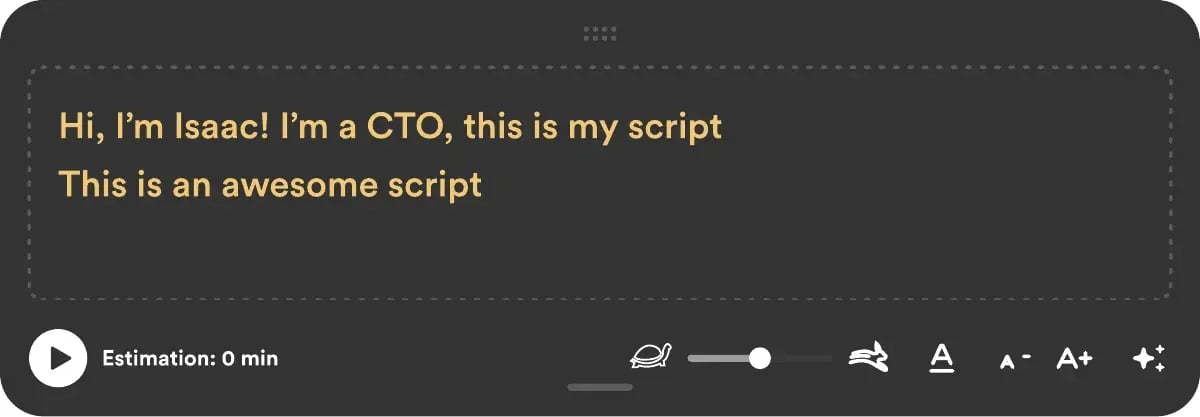
Sendspark, for instance, gives reps tools to record ultra-personalized video messages — with AI intros and dynamic visuals — that land directly in an HCP’s inbox or LinkedIn feed. AI-generated scripts from voice-friendly teleprompters help reps speak naturally, even when they’re covering complex molecule data.
Platforms like Sendspark also let marketing pre-approve messages before they go out, which matters in a regulated industry where every claim needs a paper trail. See why video messages consistently beat plain emails in our AI-powered video prospecting guide, or explore Sendspark’s broader sales prospecting solution for outreach beyond pharma.
Pro tip
Build a small library of pre-approved video intros by therapeutic area before your reps start recording 1:1 messages. It cuts MLR review time dramatically because the base template is already cleared — reps are only personalizing the last 15-20 seconds per HCP.
2. Predictive Engagement Engines
AI-driven engagement engines analyze past behavior to predict when a healthcare provider is most likely to respond, then suggest the ideal time to call or email. Platforms that integrate with Veeva or Salesforce can feed these insights straight into a rep’s dashboard and adjust playbook sequencing in real time — think of it as a scheduling assistant that also understands call fatigue and licensing restrictions.
3. Content Personalization & NLG (Natural Language Generation)
Medical sales content is dense, and reps need to adapt it instantly based on specialty, prior prescriptions, and patient history. AI tools generate compliant, personalized follow-up messages or product briefs at scale, using templates that legal and medical affairs pre-approved. Check out our guide on outbound personalization tactics for the broader B2B version of this playbook.
A good example is AI-generated video scripts: with Sendspark’s script and teleprompter features, pharma reps auto-generate pitches tailored to different HCP personas, then record a personalized video in minutes instead of hours.
4. AI-Powered Territory Optimization
When you’re covering a sprawling metro or multiple hospital systems, knowing where and when to focus your time matters as much as what you say. AI tools use prescription trends, formulary access data, and geography to suggest smarter routing, and they’re especially useful during label expansions or co-promotes across specialties — filtering HCP lists by likelihood to prescribe and surfacing the next best call.
5. Conversation Intelligence for Compliance and Coaching
Tools like Gong or Chorus weren’t built specifically for pharma, but commercial teams are adapting them to record rep-provider calls, surface coaching moments, and flag off-label claims in real time. New reps get trained on real call examples that actually worked, not hypothetical scripts.
Agentic AI and AI Roleplay Training: The Next Wave in Pharma Sales Readiness
The newest layer of the pharma sales AI stack isn’t another content or scheduling tool — it’s agentic AI that takes action inside existing CRM workflows, paired with AI roleplay training that rehearses reps against a simulated HCP before every real conversation. Both categories moved from pilot to mainstream adoption in 2025 and 2026.
Veeva began commercially rolling out Veeva AI Agents in December 2025, with full agent capabilities — pre-call planning, content suggestion, next-best-action prompts — expanding gradually across commercial, R&D, and quality functions through 2026. The agents run on large language models from Anthropic and Amazon, hosted on Amazon Bedrock, and they’re pre-trained on life-sciences-specific data structures and terminology: they know what an MSL (Medical Science Liaison) is and which FDA codes apply to a given claim. This builds on Vault CRM Bot and Voice Control, the natural-language retrieval and dictation features Veeva shipped in late 2024.
Separately, AI roleplay training has become a real category of its own. AI roleplay simulates a virtual HCP who objects, hesitates, and pushes back the way a real physician would, letting reps practice difficult conversations without an audience. According to Mindtickle’s 2026 State of Agentic Revenue Enablement Report, the average pharma rep completed 21 roleplay sessions in 2025, up from 13 the year before, and reps who complete 10 or more roleplays annually score measurably higher on live HCP calls than reps who practice less. Unlike a general-purpose AI chatbot, the strongest pharma-specific roleplay tools anchor scoring and coaching recommendations to a company’s own approved messaging library, not generic model output.
Common mistake
Don’t treat agentic AI and generative content tools as automatically compliant just because they’re “AI.” On January 14, 2026, the FDA and EMA jointly published “Guiding Principles of Good AI Practice in Drug Development,” and the FDA’s Office of Prescription Drug Promotion has been clear: an AI-drafted promotional claim that overreaches is exactly as violative as a human-drafted one. Model risk assessment and MLR review still apply, no matter which tool generated the first draft.
The practical takeaway: pharma commercial teams evaluating new AI tools in 2026 should weight agentic capability and roleplay-driven readiness alongside the more familiar video and content-personalization categories — and build the compliance review step in from day one rather than bolting it on after a rep-facing AI tool is already live.
Real-World Examples of AI in Pharma Sales
Real deployments already show what works: large pharma using AI for HCP targeting at scale, and smaller brands using AI video to compete for attention without a big commercial budget.
Pfizer: Tailored Outreach at Scale
Pfizer’s commercial teams use AI to identify high-potential HCPs and prioritize them based on how actively they prescribe similar drugs. By combining CRM data with third-party prescription databases, they build playbooks based on actual provider behavior instead of geography alone.
Small Pharma Brands Using Sendspark for Video Messaging
Startups and mid-sized pharma companies use tools like Sendspark to cut through the noise on LinkedIn, where many HCPs engage outside typical work channels. Reps send brief, personalized videos introducing a new compound or study, often embedded directly in LinkedIn messages or emails.
Beyond video creation, the ability to scale these messages with branded intros and track engagement — opens, clicks, replays — is proving valuable for smaller brands without a large MLR review team. See how this plays out in our personalized video software guide, or our comprehensive guide to AI video personalization for outbound sales for the full B2B playbook this borrows from.
Key Benefits of AI in Pharma Sales
The table below summarizes where each category of pharma sales AI tool delivers the clearest return, and which platforms commercial teams are actually using for it in 2026.
| Benefit | Description | Example Tools |
|---|---|---|
| More Personalized Outreach | AI tailors content by specialty, prior engagement, and script history | Sendspark, Salesforce AI, Veeva CRM |
| Faster, HCP-Ready Reps | AI roleplay builds objection-handling confidence before real calls | Mindtickle, Quantified, SmartWinnr |
| Increased HCP Engagement | Video open rates can exceed 60% over plain emails | Sendspark, LinkedIn InMail + AI video |
| Agentic Workflow Automation | AI agents handle pre-call planning and next-best-action inside the CRM itself | Veeva AI Agents, Vault CRM Bot |
| Better Pipeline Forecasting | AI analyzes past calls and prescription changes to improve forecast accuracy | Chorus, Veeva Nitro, IQVIA |
| Compliance-Proof Messaging | Scripts and messaging pre-approved by legal and medical teams, model risk assessed | Sendspark, Veeva Vault, copy.ai for regulated templates |
How to Roll Out AI Sales Tools Without Slowing Down Your Team
Switching to AI-assisted selling doesn’t require overhauling your rep force overnight. Start narrow, prove the use case, and expand — the same approach that’s letting a minority of life sciences teams actually close the deployment-vs-impact gap while the rest stall out in pilots.
- Start with a pilot team. Choose a few high-performing territories or reps to test new AI video, roleplay, or predictive-outreach tools before a full rollout.
- Integrate into existing workflows. Sendspark, for example, fits into your existing email flow, CRM, or LinkedIn outreach without forcing a platform switch.
- Involve legal from day one. Use tools with approvals and model risk assessment built in. Pre-approved video scripts and dynamic templates ease MLR stress instead of creating new review bottlenecks.
- Train reps with outcomes, not features. Focus on hours saved weekly and roleplay-driven call scores, not the novelty of the AI itself.
For a broader look at how personalized AI content plugs into sales workflows across industries, see our piece on AI in sales and marketing.
Record One Video. AI Personalizes Thousands.
Sendspark is the AI video personalization platform for B2B sales. Record once, and AI voice cloning generates thousands of individually personalized videos with dynamic backgrounds and personalized thumbnails — each prospect hears their name, sees their website, in your voice. Sales teams see 2-3x more replies.
Get Started NowFrequently Asked Questions
What are pharma sales AI tools?
Pharma sales AI tools are software platforms that help pharmaceutical reps engage healthcare professionals more effectively. They use artificial intelligence to personalize outreach, optimize territory coverage, automate content creation, forecast pipeline performance, and increasingly, run agentic workflows and roleplay-based training.
How does AI roleplay training help pharma sales reps get HCP-ready?
AI roleplay simulates a virtual healthcare provider who objects, hesitates, and pushes back like a real physician, letting reps rehearse difficult conversations without an audience. The average pharma rep completed 21 roleplay sessions in 2025, up from 13 the year before, and reps who practice 10 or more times a year score higher on live calls.
Is generative AI content compliant with FDA and EMA rules in pharma sales?
Generative AI content still has to clear the same regulatory bar as human-written content. The FDA and EMA jointly published AI governance principles in January 2026, and the FDA’s Office of Prescription Drug Promotion treats an AI-drafted claim that overreaches exactly the same as a human-drafted one — model risk assessment and MLR review remain mandatory.
What is agentic AI and how is it used in pharma sales?
Agentic AI refers to AI systems that take action inside existing workflows, not just generate text or predictions. Veeva AI Agents, for example, handle pre-call planning and next-best-action recommendations directly inside the CRM, and began rolling out commercially in December 2025 with expansion through 2026.
How does video messaging help in pharmaceutical sales?
Video messaging lets reps deliver personalized, visual messages directly to HCPs. Platforms like Sendspark make it easy to generate AI scripts, record branded videos, and track engagement, all while staying within compliance frameworks approved by medical and legal teams.
What is Veeva AI Agents and how does it work with pharma CRM?
Veeva AI Agents are industry-specific AI agents built on Anthropic and Amazon Bedrock models, pre-trained on life-sciences data structures and terminology like MSL and formulary access. They plug directly into Veeva’s CRM to handle tasks like pre-call planning and content suggestion, building on the Vault CRM Bot and Voice Control features Veeva shipped in late 2024.
Which pharma companies are using AI sales tools in 2026?
Large organizations like Pfizer use AI for HCP targeting and segmentation at scale, while many mid-sized pharma brands use tools like Sendspark to deliver personalized video via LinkedIn and email. Life sciences AI spending nearly doubled year over year, from $114 million to $207 million in projected 12-month spend, per KPMG’s Q1 2026 survey.
Sources & References
- McKinsey — “Up to 38% of pharmaceutical commercial activities can be automated using AI”
- Veeva Systems — “Veeva AI Agents to Be Released Across All Veeva Applications,” commercial rollout starting December 2025 (2026)
- McGuireWoods — “FDA and EMA Provide Guiding Principles for AI in Drug Development” (January 2026)
- Mindtickle — 2026 State of Agentic Revenue Enablement Report, average pharma rep AI roleplay usage (2026)
Record One Video. AI Personalizes Thousands.
Sendspark is the AI video personalization platform for B2B sales. Record once, and AI voice cloning generates thousands of individually personalized videos with dynamic backgrounds and personalized thumbnails — each prospect hears their name, sees their website, in your voice. Sales teams see 2-3x more replies.
Get Started NowTopics: Tips & Tricks