
Most B2B sales reps spend less than 30% of their time actually selling. The rest goes to admin, research, and — most costly — chasing leads that were never going to buy. According to Salesforce State of Sales, reps who implement structured prospect evaluation frameworks reclaim hours each week by filtering out bad-fit leads before investing outreach effort. The difference between a 15% and a 35% win rate often isn’t technique — it’s starting with the right prospects.
This guide gives you a 7-criteria evaluation framework, a comparison of the leading qualification methodologies, and a step-by-step process for building a scoring rubric your entire team can use consistently.
Key Takeaways
- The most effective B2B prospect evaluation frameworks score leads across 7 dimensions: ICP fit, decision-making authority, budget, urgency, intent signals, timing triggers, and tech stack compatibility.
- Salesforce State of Sales data shows structured qualification correlates with spending significantly more time on actual selling vs. chasing bad-fit leads.
- BANT, MEDDIC, and SPICED each suit different deal complexities — MEDDIC works for enterprise; SPICED fits modern SaaS cycles; BANT is the simplest starting point.
- A 1-10 scoring rubric across your 7 criteria gives reps a consistent, objective threshold — removing gut-feel from prioritization decisions.
- Once you identify high-scoring prospects, AI-personalized video outreach via Sendspark generates 2-3x more replies compared to generic text emails.
What Is B2B Sales Prospect Evaluation?
B2B sales prospect evaluation is the process of systematically scoring potential customers against predefined criteria before investing outreach time or resources. Rather than contacting every lead in a database, evaluation frameworks help reps and teams identify which prospects are most likely to buy — and prioritize those first. Done well, it transforms lead lists from noise into a ranked pipeline of genuinely winnable opportunities. — for a practical tool to apply these criteria, see our lead qualification checklist.
The practice matters because not all leads are equal, and treating them as if they are destroys both rep morale and pipeline health. A rep sending 100 generic emails to random contacts will book fewer meetings than one sending 30 targeted, personalized messages to well-qualified prospects. RAIN Group research consistently shows that top-performing sales teams spend significantly more time on well-qualified opportunities and significantly less time on longshots compared to their average-performing peers.
Prospect evaluation typically happens at two stages:
- Pre-outreach — Before a rep makes first contact, the lead is evaluated using available data (firmographics, intent signals, tech stack) to decide whether to reach out at all.
- Post-first-contact — After the first conversation, the rep validates or updates the score based on what they learned directly from the prospect.
This guide focuses primarily on the pre-outreach evaluation stage — the phase where structured criteria do the most to protect rep time and improve pipeline quality before a single email is sent.
Pro tip
Build your evaluation criteria directly from your last 20 closed-won deals. The patterns in those wins — company size, tech stack, trigger events — are your most reliable predictors for the next 20.
The 7 Core Criteria for Evaluating B2B Prospects
The most effective B2B prospect evaluation uses seven dimensions: ICP fit, decision-making authority, budget, urgency, buying intent signals, timing triggers, and tech stack compatibility. Score each criterion from 1 to 10. A prospect scoring 50 or above out of 70 is typically worth prioritizing in your current sprint. Below 35, move them to a nurture sequence instead of active outreach.
1. ICP Fit (Ideal Customer Profile)
ICP fit measures how closely a prospect matches your ideal customer’s firmographic profile: industry, company size, annual revenue, geography, and business model. A SaaS company in its Series B stage with a 15-person sales team is a very different prospect from a 3-person startup or a 5,000-person enterprise. The narrower your ICP definition, the higher your conversion rates — so be specific about which firmographics predict a closed-won deal for you.
Score ICP fit on how many of your core firmographic criteria the prospect meets. If your ICP requires all five firmographic criteria and the prospect matches four, score them 8/10 for this dimension.
2. Decision-Making Authority
You need to reach someone with the power to buy, or at least the power to champion the purchase internally. Gartner research shows that the average B2B purchase involves 6 to 10 decision-makers — which means your contact’s authority level dramatically affects deal velocity. A VP of Sales who controls budget scores a 9 or 10. An SDR coordinator who needs to “run it by their manager” scores a 3 or 4 on this criterion.
Use LinkedIn to verify title, reporting structure, and tenure before outreach. A new hire with an impressive title but three months on the job rarely controls the budget for a six-figure purchase.
3. Budget Availability
Budget availability doesn’t mean you need to know their exact budget upfront — it means evaluating whether they’re likely to have budget for a solution like yours. Signals include: recent funding rounds (Crunchbase), headcount growth (LinkedIn), existing spend on similar tools (BuiltWith or G2 profile), and company revenue tier. A Series B company that just announced a 40% headcount expansion in sales is far more likely to have budget than a company in a hiring freeze.
4. Problem Urgency
Does the prospect have an active, painful problem that your solution addresses — or just a vague sense that things could be better? Urgency is the difference between “we’re actively losing deals because of this” and “someday we should probably look at this.” High-urgency prospects have a specific trigger: declining email reply rates, a new VP who wants to modernize the tech stack, a failed campaign that just cost them pipeline.
If you can identify the specific pain in your prospect research — from their job postings, press releases, or LinkedIn activity — score urgency high. Generic companies with no obvious pain score low.
5. Buying Intent Signals
Intent signals are behavioral indicators that a prospect is actively researching solutions like yours. These include: visiting your pricing or features pages (if you have intent data from tools like 6sense or Bombora), engaging with your competitors’ content, downloading relevant industry reports, or attending webinars on related topics. Intent data moves an average ICP-fit prospect into the high-priority tier because they’ve already self-identified as in-market.
Common mistake
Don’t ignore negative intent signals. A prospect who just signed a 3-year contract with a competitor (visible in their procurement announcements) scores 0 on intent — no matter how well they match your ICP. Save your outreach for when their contract renewal window opens.
6. Timing Triggers
Timing triggers are external events that create a natural opening for your solution. The most valuable triggers include: new C-suite or VP hire (new buyers often want to put their stamp on the tech stack), funding rounds (fresh capital = budget), company expansion into new markets, regulatory deadlines, or an announced product launch that creates new workflow needs. Monitoring these via LinkedIn alerts, Google Alerts, or intent platforms like Crunchbase turns timing from a guess into a signal.
7. Tech Stack Compatibility
B2B software decisions don’t happen in isolation — they happen within an existing tech stack. If your solution integrates natively with HubSpot and Salesforce, prospects already using those CRMs should score higher on this criterion because the integration removes a key objection and accelerates time-to-value. Prospects using legacy tools your solution doesn’t integrate with will face a harder buying decision and a longer implementation timeline. Check BuiltWith, G2 Buyer Intent data, or LinkedIn job postings (which often list the tools the role requires) to identify tech stack before outreach.
Record One Video. AI Personalizes Thousands.
Sendspark is the AI video personalization platform for B2B sales. Record once, and AI voice cloning generates thousands of individually personalized videos with dynamic backgrounds and personalized thumbnails — each prospect hears their name, sees their website, in your voice. Sales teams see 2-3x more replies.
Get Started NowBANT vs MEDDIC vs SPICED: Which Framework Fits Your Team?
Three frameworks dominate B2B sales qualification: BANT, MEDDIC, and SPICED. Each addresses a different level of deal complexity and sales cycle length. BANT is the simplest and fastest to apply. MEDDIC is the deepest and works best for complex, multi-stakeholder enterprise deals. SPICED is the modern SaaS evolution that adds customer impact and decision criteria to the mix.
| Framework | Stands For | Best For | Weakness |
|---|---|---|---|
| BANT | Budget, Authority, Need, Timeline | SMB, transactional sales, short cycles (<30 days) | Too shallow for complex deals; misses champion dynamics and stakeholder map |
| MEDDIC | Metrics, Economic Buyer, Decision Criteria, Decision Process, Identify Pain, Champion | Enterprise, complex multi-stakeholder deals, long cycles (90+ days) | Requires significant discovery time; overkill for SMB; hard for new reps to apply consistently |
| SPICED | Situation, Pain, Impact, Critical Event, Decision | Mid-market SaaS, 30-90 day cycles, outcome-driven buying | Lighter on stakeholder mapping than MEDDIC; can miss political dynamics in large orgs |
Most high-performing SaaS sales teams use a hybrid: BANT for initial lead filtering (fast, objective), then MEDDIC or SPICED elements in discovery once a prospect clears the first gate. The goal is not to choose one framework and abandon the others — it’s to use the right depth of questioning at each stage of the funnel.
The 7-criteria framework from Section 2 maps naturally onto these methodologies. ICP Fit + Budget = BANT’s B+N. Authority = BANT’s A and MEDDIC’s Economic Buyer. Intent + Triggers = SPICED’s Critical Event. Tech Stack = MEDDIC’s Decision Criteria. Using all seven gives you the depth of MEDDIC with the speed of BANT for initial evaluation.
How to Build Your Prospect Scoring Rubric
A prospect scoring rubric converts your evaluation criteria into a consistent, team-wide system. Every rep applies the same 1-10 scale to each criterion, producing a total score that drives prioritization decisions objectively. HubSpot research finds that companies using lead scoring report a measurable boost in marketing-to-sales conversion rates because both teams agree on what “qualified” actually means.
Here’s how to build yours in five steps:
Step 1: Define Your Criteria and Scoring Anchors
List your 7 criteria and write a 1-line description of what a score of 1, 5, and 10 looks like for each. For example: ICP Fit — 1 = wrong industry and wrong size, 5 = right industry but wrong size or vice versa, 10 = perfect match on all firmographic criteria. Anchors prevent rep-to-rep drift in how scores are assigned.
Step 2: Assign Criteria Weights
Not all criteria are equal. For most B2B SaaS teams, ICP Fit and Decision-Making Authority matter most — a bad-fit prospect with budget is still a bad-fit prospect. Consider weighting ICP Fit and Authority at 15% each, and the remaining five criteria at 14% each. Run your final tally as a weighted score, not a raw sum, for more accurate prioritization.
Step 3: Set a Prioritization Threshold
Define what score clears the bar for active outreach. A common starting point: 50+ out of 70 for top-priority outreach (immediate sequence), 35-49 for medium-priority (nurture sequence + quarterly touchpoint), below 35 for low-priority (marketing-only nurture). Adjust these thresholds based on your pipeline capacity — if you’re flush with good leads, raise the bar.
Step 4: Validate Against Past Closed-Won Data
Before rolling the rubric out to the team, run your last 20-30 closed-won deals through it retroactively. If your framework is working, those deals should cluster at the top of the score distribution. If they don’t, the criteria or weights need adjustment. This validation step is what separates a rubric built on theory from one built on actual win patterns.
Step 5: Iterate Quarterly
Market conditions, your ICP, and your product evolve. A rubric that’s perfect today may need updates in six months — especially if you’ve launched a new integration (changing which tech stacks are compatible) or expanded upmarket. Schedule a 30-minute quarterly review with your team to update scoring anchors and check whether the prioritization thresholds are still driving the right outcomes.
Converting Qualified Prospects with AI-Personalized Video
Once you’ve identified your highest-scoring prospects, the next challenge is getting them to engage. A well-qualified prospect still gets dozens of outreach messages from competitors. The differentiation comes from how you reach out — and AI-personalized video outreach is the highest-conversion medium for B2B prospecting today, generating 2-3x more replies than text-only emails when directed at qualified leads.
The old version of video outreach required recording a fresh video for every prospect — time-prohibitive at scale. Sendspark’s AI video personalization platform changes the math: you record one video, and AI voice cloning automatically generates a personalized version for each prospect on your list. Each recipient hears their name and company referenced in your voice. Each sees their company’s website as the video background via dynamic video backgrounds.
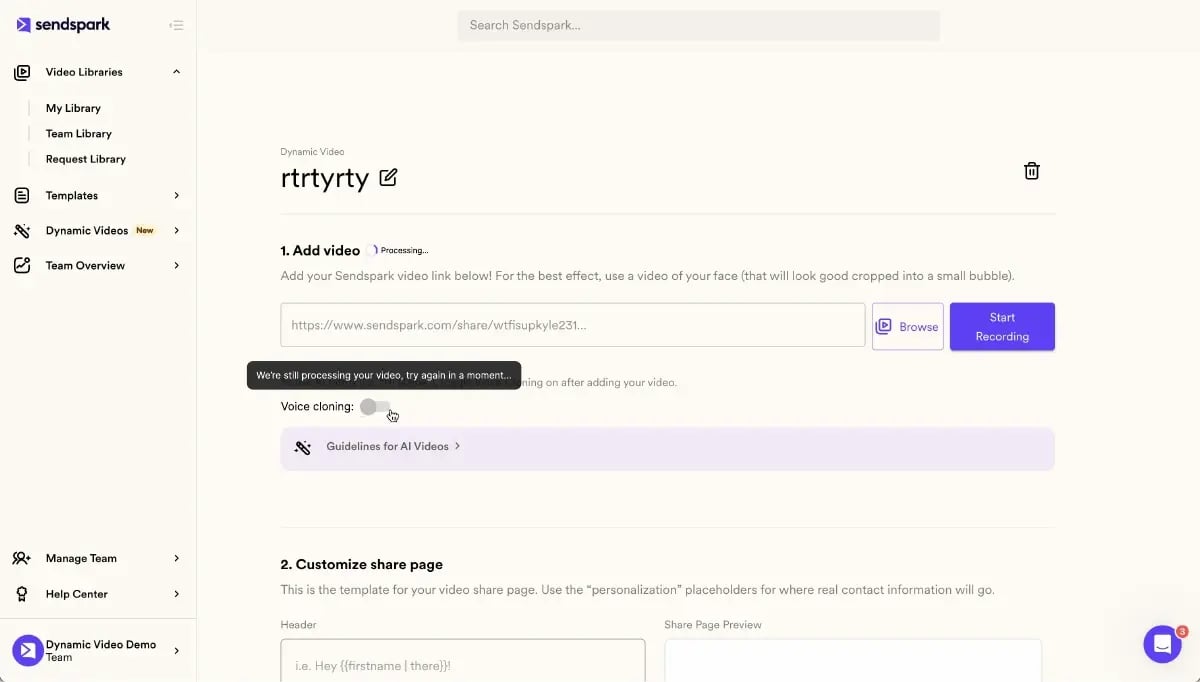
The qualification layer makes this approach significantly more powerful. Instead of personalizing at random, you direct Sendspark’s AI personalization at your top-scored prospects first:
- Score 60+ (top tier): Personalized AI video outreach + direct outreach from AE or senior SDR
- Score 50-59 (high priority): Personalized AI video outreach + automated sequence
- Score 35-49 (medium priority): Shared-template video in nurture sequence — less intensive personalization
- Score <35 (low priority): Marketing email only — no rep video time
This tiered approach means your best reps spend their video personalization budget on prospects most likely to convert. For tools that help you find and enrich B2B prospects before scoring, see our guide to the best B2B prospecting tools. Once your list is scored, Clay integration can automatically trigger Sendspark video campaigns for prospects that clear your threshold score — turning evaluation into automated, personalized outreach without manual steps.
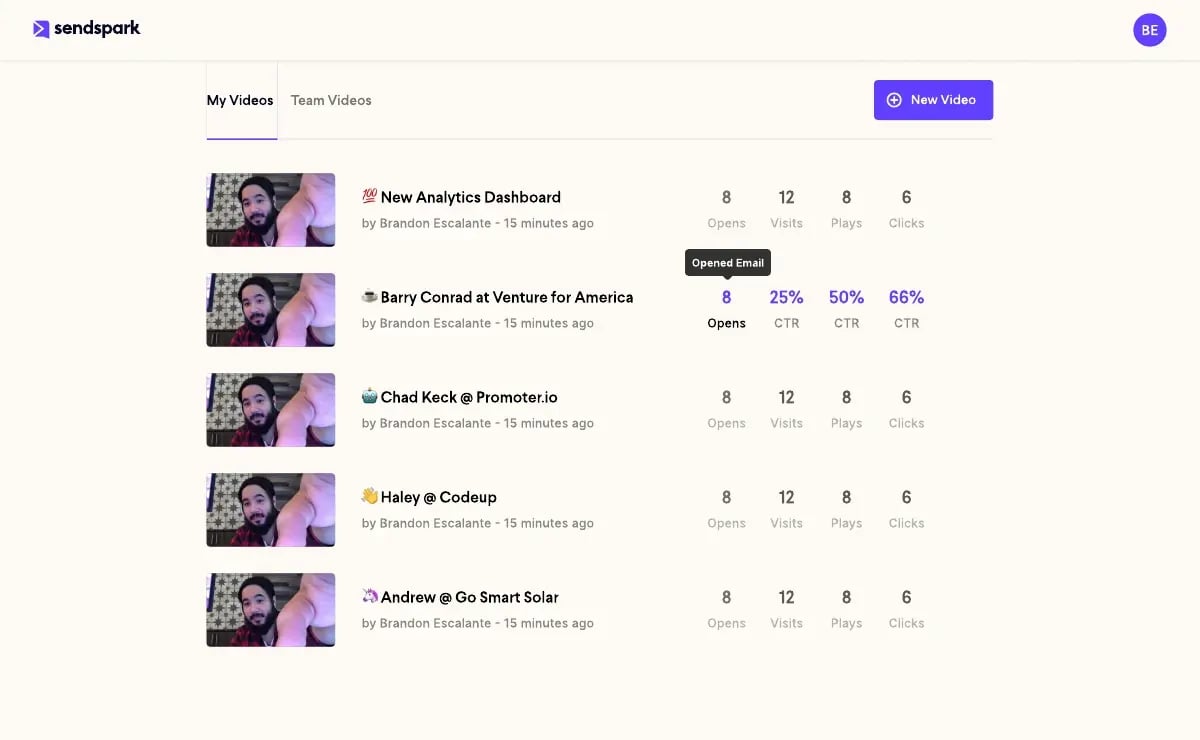
Sendspark’s video analytics then close the feedback loop: when a qualified prospect watches your video multiple times, clicks through, or forwards it internally, those engagement signals update your evaluation score in real time. A prospect who scored 48 before outreach but has now watched your video three times is effectively signaling intent — which pushes them into the top-priority tier for follow-up.
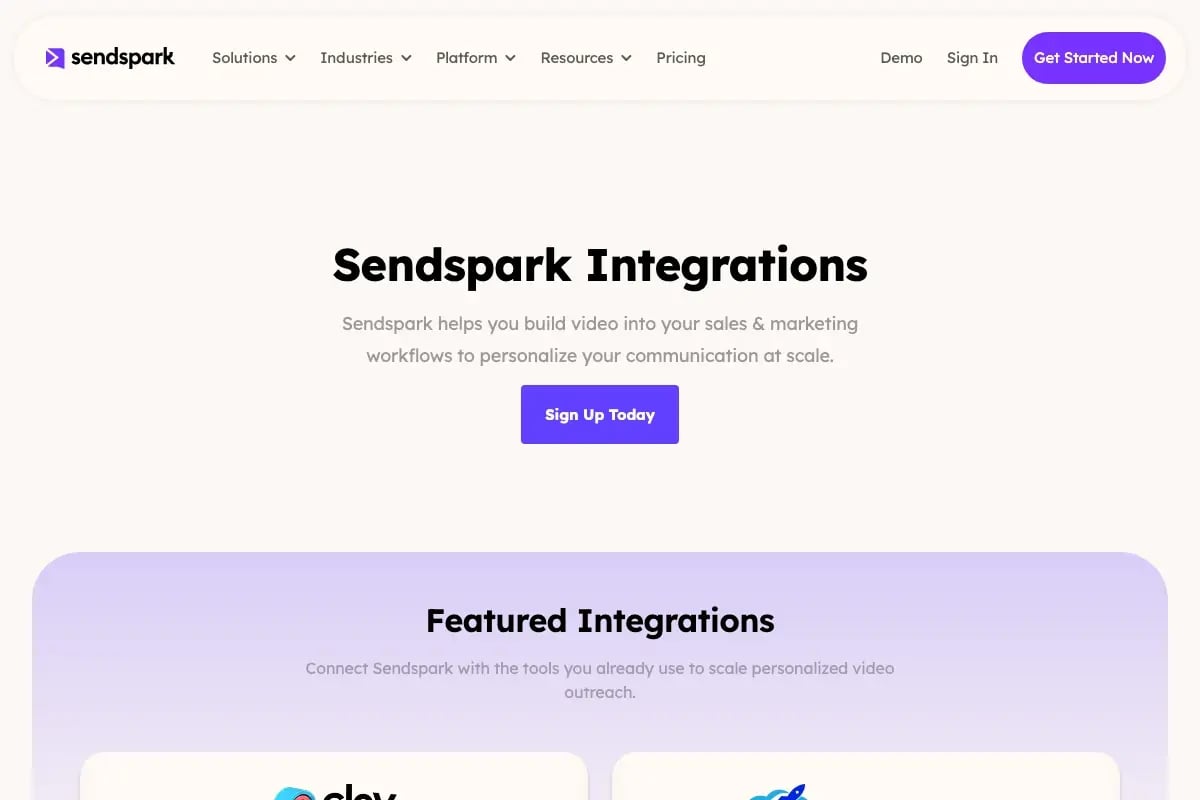
Connect Sendspark to HubSpot and those video engagement signals sync automatically to your CRM contact record.
“Personalization is wasted on unqualified leads. The teams seeing 3x results from video outreach are the ones who evaluate first and personalize second — not the other way around.”
For more on the prospecting side of the workflow, see our guides on outbound prospecting playbooks and sales prospecting techniques that feed your evaluation pipeline. For the lead generation side, see our lead prospecting guide.
B2B Prospect Evaluation: Quick Reference Summary
| Criterion | Score 1-3 (Low) | Score 4-7 (Medium) | Score 8-10 (High) |
|---|---|---|---|
| ICP Fit | Wrong industry or size; fringe use case | Partial match; one or two criteria off | Perfect match on industry, size, revenue, and model |
| Authority | Individual contributor; no budget influence | Manager; influences but doesn’t control budget | VP or above; controls budget directly |
| Budget | No visible budget; cost-cutting signals | Stable headcount; possible budget | Recent funding; headcount growth; spend signals |
| Urgency | No visible pain; status quo comfortable | Pain acknowledged but not prioritized | Active pain; currently evaluating solutions |
| Intent Signals | No visible research activity | Some category awareness; indirect signals | Actively researching your category; visited pricing page |
| Timing Trigger | No trigger; stable status quo | Potential trigger in next 6-12 months | New hire, funding round, or event in last 90 days |
| Tech Stack Fit | Incompatible legacy stack; major integration work needed | Partial compatibility; some integration effort | Native integrations match their existing stack exactly |
Frequently Asked Questions
What are the most important B2B sales prospect evaluation criteria?
The most important B2B prospect evaluation criteria are ICP fit (do they match your ideal customer profile?), decision-making authority (can your contact approve the purchase?), and problem urgency (are they actively experiencing the pain your solution solves?). These three criteria have the highest predictive value for deal close rates. Budget, intent signals, timing triggers, and tech stack compatibility are critical secondary factors that refine your prioritization further.
What is the difference between BANT and MEDDIC?
BANT (Budget, Authority, Need, Timeline) is a simple four-factor qualification framework suited to short sales cycles and smaller deals. MEDDIC (Metrics, Economic Buyer, Decision Criteria, Decision Process, Identify Pain, Champion) is a more comprehensive six-factor framework built for complex, multi-stakeholder enterprise sales. BANT is faster to apply but shallower; MEDDIC requires more discovery time but surfaces political dynamics and decision processes that BANT ignores. Most SaaS teams use BANT for initial filtering and MEDDIC-style questioning in the discovery call.
How do I score prospects in my CRM?
Most CRMs including HubSpot and Salesforce support lead scoring natively. Define your 7 criteria as custom properties, assign each a numeric score based on your rubric anchors, and use automation to calculate a total score field. HubSpot’s predictive lead scoring layer can also incorporate behavioral signals like email opens, website visits, and form fills. Set up views and queues that sort your pipeline by score so reps always see their highest-priority prospects first.
How many criteria should a B2B prospect evaluation use?
Five to seven criteria is the optimal range for B2B prospect evaluation. Fewer than five misses too much signal — BANT’s four factors, for example, ignores intent data and timing triggers that are critical in modern B2B buying. More than eight criteria creates diminishing returns and slows evaluation speed. The seven-criteria framework in this article (ICP fit, authority, budget, urgency, intent, timing, tech stack) covers the full picture without becoming unwieldy.
What are buying intent signals in B2B sales?
Buying intent signals are behavioral indicators that a prospect is actively researching solutions in your category. Common intent signals include visiting your pricing or features pages, downloading category-specific content (buyer’s guides, comparison reports), attending webinars on related topics, engaging with competitor ads, or showing up in intent platforms like 6sense or Bombora. Intent signals dramatically increase the predictive value of any other evaluation criteria — an ICP-perfect prospect with high intent is worth 10 contacts with the same profile but no intent activity.
How does video outreach fit into a prospect evaluation workflow?
Video outreach is most effective as the activation layer after prospect evaluation — not before it. Once you’ve scored prospects using your rubric and identified your top tier (those scoring 50+ out of 70), AI-personalized video outreach ensures your highest-quality leads receive your most compelling, personalized message. Platforms like Sendspark’s AI video personalization let you record one video and use AI voice cloning to create individually personalized versions for each prospect at scale — so you’re not choosing between personalization and efficiency.
What is a good prospect score threshold for active outreach?
A common starting threshold is 50 out of 70 (roughly 71%) for active outreach priority. Prospects scoring 35-49 typically belong in a nurture sequence with lighter-touch touchpoints. Below 35, marketing-only engagement is appropriate unless a significant trigger event changes their score. That said, the right threshold depends on your pipeline capacity: if you have more capacity than qualified leads, lower the bar to 40. If you’re flooded with high-quality leads, raise it to 55 to keep reps focused on the best opportunities.
Sources & References
- Salesforce State of Sales — Data on rep time allocation and qualification impact on selling time (2024)
- Gartner B2B Buying Journey Research — “The average B2B purchase involves 6 to 10 decision-makers” (2023)
- HubSpot: Lead Scoring Guide — Data on conversion rate improvements from structured lead scoring (2024)
- RAIN Group Sales Research — Top performer analysis showing qualification time allocation differences (2024)
Record One Video. AI Personalizes Thousands.
Sendspark is the AI video personalization platform for B2B sales. Record once, and AI voice cloning generates thousands of individually personalized videos with dynamic backgrounds and personalized thumbnails — each prospect hears their name, sees their website, in your voice. Sales teams see 2-3x more replies.
Get Started Now