The average cold email reply rate sits between 1% and 5%, according to the Salesforce State of Sales report. Teams that follow a disciplined set of cold email best practices routinely hit 8-15% — sometimes higher. The gap isn't talent. It's process. If you're also working the phone, see our guide to combining a power dialer with email.
Updated July 2026
This guide covers 16 proven rules that determine whether your cold emails get deleted or replied to — from subject line construction through follow-up sequencing to the new sender mandates that changed deliverability in 2026. For a deep dive on cold email pitch frameworks and examples, that guide covers all seven scenarios.
Key Takeaways
- Cold email reply rates average 1-5% industry-wide — following proven best practices consistently pushes teams into the 8-15% range.
- Google and Yahoo's 2024 bulk sender mandates (DMARC policy, one-click unsubscribe, 0.3% spam rate threshold) are now enforced — non-compliance means messages get deferred or rejected.
- Inbox providers use AI-generated text detection to filter pattern-matched templates; signal-based personalization and video outperform generic copy on both conversions and deliverability.
- Adding a personalized video to your cold email increases click-through rates by 50% and reply rates by 2-3x — Sendspark's AI voice cloning scales this to thousands of individually personalized videos.
- Follow-up sequences of 4-6 touches over 14-21 days drive the majority of replies; most reps quit after one email.
What Makes a Cold Email Best Practice Work in 2026?
A cold email best practice is a technique that reliably improves reply rates across senders, industries, and audience types — backed by real send data, not opinion. In 2026, three forces have changed what actually works: inbox providers are smarter at filtering generic bulk sends, buyers are more skeptical of impersonal outreach, and AI tools now let any sender fake personalization at scale. For a deeper breakdown, see our cold email personalization guide and what cold email actually means.
The practices that work today share two traits. First, they are specific enough to change what you write or send — not just principles like "be relevant." Second, they are measurable, so you can test them in your own campaigns and verify the impact. The 16 rules below meet both criteria.
According to Gartner's B2B buyer research, buyers now spend only 17% of their total purchase journey talking to potential suppliers. Email is competing with every other channel for a fraction of that attention. Getting the fundamentals wrong doesn't just lose one reply — it can get your domain flagged and kill your entire program.
Pro tip
Before optimizing your cold email copy, audit your sender reputation. A domain with a spam score above 0.3% — Google's enforcement threshold — will underperform no matter how good the writing is. Use Google Postmaster Tools to monitor your domain health before your next campaign.
What Are the Cold Email Subject Line Rules That Drive Opens?
The most effective cold email subject lines stay under 50 characters, reference something specific to the recipient, and match the tone of the email body. According to HubSpot's Science of Email research, personalized subject lines increase open rates by up to 26% compared to generic versions. Open rate determines everything else — without it, no other optimization matters. For more proven formulas, see our roundup of email subject lines for sales.
Rule 1: Use the prospect's name or company, not just "quick question"
Subject lines that reference the recipient's name, company, or a specific trigger — a funding round, job change, or new product launch — consistently outperform curiosity-bait openers. "Quick question" was effective in 2018. Now it reads as spam bait. A subject like "[Company] + video prospecting" or "Saw your Series B — congrats, [Name]" performs better because it signals you did actual research.
Rule 2: Avoid promotional language that triggers spam filters
Words like "free," "guaranteed," "no obligation," and excessive punctuation (!!) cause inbox providers to filter emails before they reach the prospect. Write subject lines that look like they came from a human colleague, not a marketing campaign. "Thoughts on [their product category]?" reads human. "Boost your sales by 300%!!!" goes straight to spam — and now risks hitting the inbox provider's AI-generated text detection layer too.
Rule 3: Match subject line tone to body copy
If your subject line promises a quick question but your email is a 400-word pitch deck, you've created a bait-and-switch. Prospects notice, and it destroys trust before you even get to your ask. A subject like "One idea for [Company]'s SDR team" sets accurate expectations for a one-paragraph email with a single CTA. The mismatch between subject and body also increases spam complaint rates — a direct input into your spam rate threshold.
How Do You Write Cold Email Body Copy That Gets Replies?
Cold email body copy should be under 150 words for a first touch, lead with relevance rather than your credentials, and close with a single frictionless ask. The principle: state your purpose in the first sentence, not the third. Every additional word is a chance for the prospect to stop reading. For a complete framework, see our cold email format guide.
Rule 4: Never open with "My name is" or "I work at"
Your first sentence is the most valuable real estate in the email. Opening with your name and company signals immediately that this is about you, not the prospect. Lead instead with an observation about them: a trigger event, a pain point relevant to their role, or a specific compliment on something they published. "Your recent post on SDR ramp time stuck with me — most teams overlook the onboarding video piece entirely" is a better opener than "Hi, my name is Alex and I work at Acme Sales Tech."
Rule 5: State your value in one sentence
After your opening observation, you have one sentence to explain what you do and why it matters to this specific prospect. Cut every word that doesn't contribute. "We help B2B SDR teams send personalized video emails that get 2-3x more replies than text" is complete. "We provide a comprehensive suite of cutting-edge AI-powered tools designed to optimize your sales outreach and engagement metrics" is noise — and it also reads like AI-generated copy to inbox filters.
Record One Video. AI Personalizes Thousands.
Sendspark is the AI video personalization platform for B2B sales. Record once, and AI voice cloning generates thousands of individually personalized videos with dynamic backgrounds and personalized thumbnails — each prospect hears their name, sees their website, in your voice. Sales teams see 2-3x more replies.
Get Started NowRule 6: Use one CTA, and make it easy to say yes
Every additional ask you add to a cold email reduces reply rate. One email, one ask. The ask should be low-commitment: a 15-minute call, a yes/no question, a specific piece of feedback. "Would it make sense to spend 15 minutes this week talking through how [Company] could apply this?" is easier to answer than "Let me know if you want a demo, a trial, a case study, or to be connected with our enterprise team."
What Personalization Techniques Make Cold Email Actually Work?
Personalization is the single biggest lever in cold email performance — but most teams stop at inserting a first name. Meaningful personalization references something specific to the prospect's situation: a trigger, a pain signal, or a public statement, linked directly to your offer. There are four levels of cold email personalization, and each level up drives meaningfully better results. For a deep dive, see our full cold email personalization guide.
Rule 7: Use the four-level personalization framework
| Level | What You Personalize | Example Signal | Effort | Impact |
|---|---|---|---|---|
| Level 1 | Name and company | "Hi Sarah at Acme" | Low (CSV merge) | Minimal |
| Level 2 | Role-specific pain | "SDR teams at Series B SaaS companies often struggle with…" | Low (template by segment) | Moderate |
| Level 3 | Trigger event | "Saw you just expanded your sales team to 15 reps" | Medium (research or signal tool) | High |
| Level 4 | Hyper-specific reference | Video showing prospect's own website; mentioning a specific podcast quote | High (manual) or AI-automated | Highest |
Rule 8: Use trigger events as your opening hook
Trigger events — hiring surges, funding announcements, product launches, leadership changes — give you a natural, credible reason to reach out. A prospect who just posted a Director of Sales job listing is signaling growth and investment in sales capacity. That's your hook. Tools like LinkedIn Sales Navigator, Clay, and ZoomInfo surface these signals automatically, so you can reference them without manual research on every prospect. This is the definition of signal-based personalization — using real-world signals, not templates. For ready-to-use copy, see our proven cold email scripts.
Rule 9: Add personalized video to your first or second touch
Adding a personalized video message to a cold email increases click-through rates by 50% and reply rates by 2-3x, compared to text-only emails. A 30-second video showing the prospect's website as the background signals genuine research, creates a human connection that text can't replicate, and — critically in 2026 — bypasses AI-generated text detection because it's visual, not textual.
With Sendspark's AI voice cloning, you record one video and the platform automatically generates personalized versions for each prospect — including their name, company, and website in the frame. This is Level 4 personalization at scale, without the manual effort. See our full guide to cold email strategies for more on integrating video into your outreach mix.
How Is AI Changing the Rules for Cold Email in 2026?
Two forces converged in 2024-2026 to fundamentally reset cold email: inbox providers deployed AI to detect and filter AI-generated copy, and Google and Yahoo issued mandatory bulk sender requirements that turned best-practice recommendations into hard enforcement rules. Understanding both changes is now table stakes for any cold email program — not optional optimization. For a comprehensive system that accounts for these shifts, see the complete cold email system for SDRs and AEs.
Rule 10: Meet Google and Yahoo's 2024 Bulk Sender Mandates
In February 2024, Google implemented mandatory bulk sender requirements that affect any sender pushing 5,000 or more messages per day to Gmail addresses. The three requirements: a valid DMARC policy (at minimum p=none), one-click unsubscribe functionality on all marketing and prospecting messages, and a spam rate threshold below 0.3% as measured by Google Postmaster Tools.
These aren't advisory guidelines. Senders who exceed the spam rate threshold have messages deferred or rejected. A DMARC policy that's missing or misconfigured causes authentication failures that flag messages as suspicious — regardless of content quality. Set up SPF, DKIM, and DMARC on your sending domain before launching any campaign. Check your domain's spam rate in Postmaster Tools weekly. The sender authentication mandate is now as foundational as writing a good subject line.
Common mistake
Skipping one-click unsubscribe because you think your list is "engaged" is a compliance risk. Google's requirement applies to bulk senders regardless of list quality. A single click to unsubscribe is now a legal expectation in most jurisdictions — and one of the fastest ways to keep your spam rate below the 0.3% threshold.
Rule 11: Write for Humans — Inbox Providers Now Flag AI-Generated Copy
Inbox providers use machine learning models to detect AI-generated text and pattern-matched templates. Emails that share identical phrasing, formulaic structure, or statistical word patterns across thousands of sends are increasingly filtered — even when sender authentication is perfect and volume is within limits. This is engagement-based deliverability: providers reward messages that generate replies and penalize those that generate ignores or complaints.
The practical implication: copy that reads like an AI template (generic openers, boilerplate value statements, identical structure across every send) now carries both a conversion penalty and a deliverability penalty. Signal-based personalization — a real trigger event, a genuine observation, a specific reference to something the prospect published — is the solution to both. Video amplifies this further: a 30-second personalized video referencing a prospect's website is impossible to pattern-match at scale and impossible to flag as generic. In 2026, personalization and deliverability are the same problem. For a full breakdown of what to say next, see how to respond once a prospect actually replies.
How Do You Protect Cold Email Deliverability in 2026?
Great copy won't save you if your emails land in spam. Deliverability is a technical foundation that most sales reps leave to IT — but understanding the basics will protect your domain reputation and ensure your messages actually reach the inbox. These rules apply whether you send 50 emails a day or 5,000, and they work alongside the sender mandates covered above. If you're adding video to the mix, see our deep dive on whether embedding video in email hurts deliverability.
Rule 12: Warm up new domains before bulk sending
A brand-new domain that suddenly sends 500 emails a day will be flagged immediately. Start with 20-30 emails per day from a new domain and ramp up by 20% each week over 4-8 weeks. Use a dedicated sending domain (e.g., mail.yourcompany.com) separate from your main company domain — so a deliverability issue doesn't kill your entire organization's email. This also protects your main domain if a prospect marks your cold email as spam.
Rule 13: Keep send volume consistent and avoid large spikes
Inbox providers use statistical models to detect bulk sending. Sending 50 emails Monday through Thursday then 500 on Friday looks like an cold email automation campaign. Maintain consistent daily volume and spread sends across business hours. Sending at 7:00 AM or between 2:00 PM and 4:00 PM local time consistently outperforms mid-morning blasts — though consistency of volume matters more than precise timing for engagement-based deliverability purposes.
See our roundup of the best time to send emails.
What Is the Right Cold Email Follow-Up Sequence?
Most replies to cold email campaigns come from follow-up touches, not the first email. According to RAIN Group sales research, 80% of sales require at least five contacts after the initial outreach. Yet the majority of SDRs stop after one or two emails. A structured follow-up sequence is one of the highest-leverage changes any team can make to their cold email prospecting program. For great cold email templates, see our complete cold email follow-up guide.
Rule 14: Send 4-6 touches over 14-21 days before retiring the thread
The optimal sequence length depends on deal size and industry, but a 4-6 email sequence over 2-3 weeks is a strong default. Space touches 3-4 days apart in the first week, then extend to 5-7 days for later touches. Each follow-up should introduce a new angle — a relevant case study, a different use case, a specific question — rather than just asking "did you see my last email?" That approach signals low effort and rarely generates a reply.
Rule 15: Change the angle on each follow-up, not just the opener
Each email in your sequence should tell a different part of your story. Touch 1: relevant opening + one-sentence value + easy CTA. Touch 2: a customer story or specific result. Touch 3: a different use case or a relevant resource. Touch 4: a direct question or a breakup email that acknowledges they may not be interested. This structure ensures that even a prospect who ignores the first three emails sees something new in the fourth, rather than a mild variation of the same pitch.
See our guide to responding to not-interested emails.
Rule 16: Use a genuine breakup email as your final touch
The final email in a sequence should close the loop: "I've reached out a few times and haven't heard back. I'll assume the timing isn't right and won't follow up further — but if that changes, I'm happy to reconnect." Breakup emails regularly generate replies from prospects who appreciated the persistence without being annoyed by it. They also keep your engagement-based deliverability score healthy by ending sequences cleanly rather than accumulating ignored-email signals. For structured multi-touch frameworks, see our guide on sales sequence building.
What Cold Email Performance Benchmarks Should You Track?
Knowing whether your cold email program is performing well requires external benchmarks, not just internal week-over-week comparisons. Here are the key metrics to track and what strong performance looks like across different channel types. For a full breakdown of sales metrics to monitor alongside your email program, see our sales email templates and benchmarks resource.
Track Reply Rate — Not Just Open Rate
Open rate is a vanity metric. It measures whether the subject line worked, not whether the email did. Reply rate and positive reply rate — replies that advance a conversation rather than opt-outs — are the metrics that predict pipeline generation. A 40% open rate with a 1% reply rate means your subject line is working but your body copy or CTA is failing. Always optimize toward reply rate. And in 2026, also track your spam rate in Google Postmaster Tools — it's now a direct deliverability input, not a lagging indicator.
| Metric | Industry Average | Good Performance | Best-in-Class |
|---|---|---|---|
| Open rate | 20-25% | 30-40% | 45%+ |
| Reply rate (all replies) | 1-5% | 8-12% | 15%+ |
| Positive reply rate | 0.5-2% | 3-6% | 8%+ |
| Meeting booked rate | 0.3-1% | 1.5-3% | 4%+ |
| Click-through rate (with video) | 2-4% | 8-12% | 15%+ |
| Spam rate (Google threshold) | — | <0.1% | <0.08% |
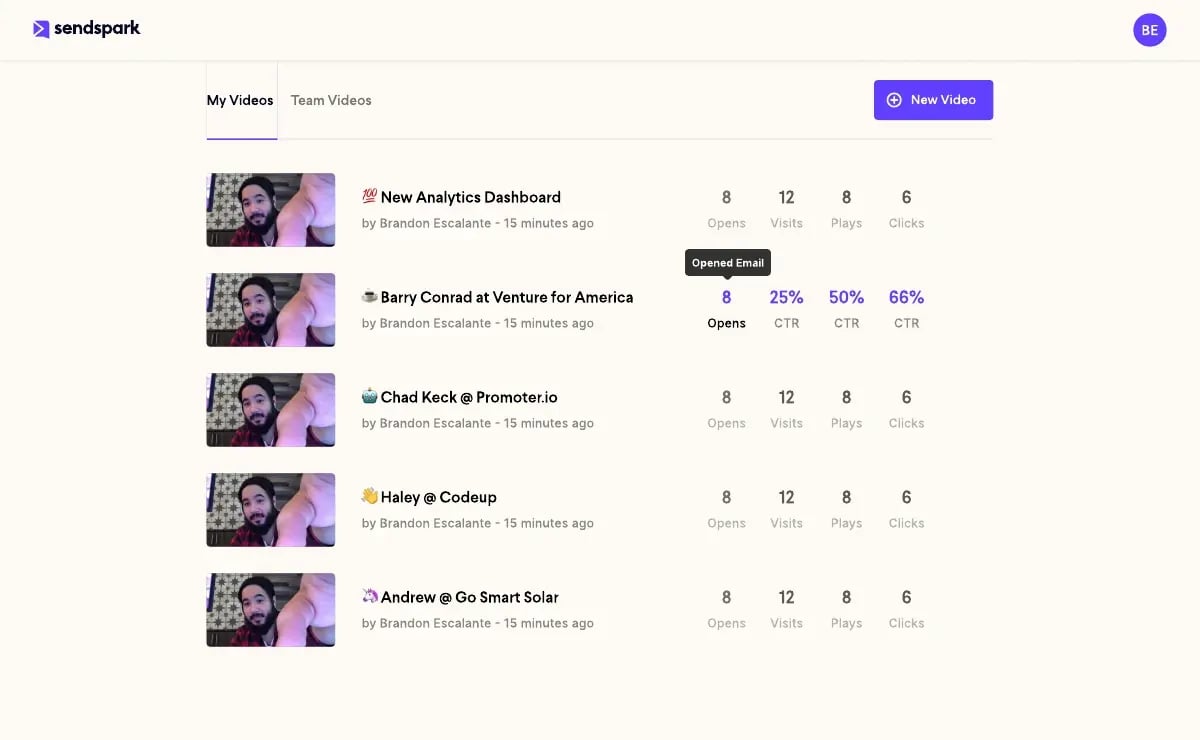
Teams that add personalized video to their cold email sequences consistently see click-through rates in the 15-20% range on video links, compared to 2-4% for text links. This is because AI video personalization creates a fundamentally different experience for the recipient — one that feels like a genuine 1:1 message rather than a template, and that bypasses the inbox provider algorithm's pattern-matching entirely. For context on broader sales performance measurement, the Salesforce State of Sales report tracks benchmark data across thousands of B2B sales organizations annually. Also, platforms like Apify can help automate large-scale data extraction for lead generation.
Sources & References
- Salesforce State of Sales Report — "Average cold email reply rates sit between 1-5% for most B2B sales organizations" (2024)
- Gartner B2B Buyer Journey Research — "B2B buyers spend only 17% of their total purchase journey meeting with potential suppliers across all suppliers being considered" (2023)
- Google Gmail Security Blog — "New requirements for bulk senders: DMARC policy, one-click unsubscribe, and 0.3% spam rate threshold enforcement" (2024)
- RAIN Group: How Many Touches Does It Take to Make a Sale — "80% of sales require at least five contacts after the initial outreach" (2023)
- HubSpot: The Science of Email — "Personalized subject lines generate 26% higher unique open rates compared to non-personalized subject lines" (2024)
Frequently Asked Questions
What is a good cold email reply rate?
A good cold email reply rate is 8-12% for B2B outreach. The industry average is 1-5%, so consistently hitting 8%+ puts you in the top tier of cold email senders. Best-in-class teams using AI-personalized video from Sendspark in their sequences regularly achieve 15%+ reply rates on first-touch emails.
How long should a cold email be?
A cold email should be 75-150 words for a first-touch. Shorter emails consistently outperform longer ones because busy prospects scan rather than read. State your relevance, your value, and your ask in that order, then stop. Detailed content belongs in follow-up touches after the prospect has engaged once.
What are the cold email best practices for subject lines?
The most effective cold email subject lines are under 50 characters, reference something specific to the recipient (name, company, or trigger event), and avoid promotional language. Personalized subject lines increase open rates by up to 26% according to HubSpot research. Avoid "quick question," all-caps words, and excessive punctuation.
How many follow-up emails should I send in a cold email sequence?
Send 4-6 follow-up emails in a lead nurturing email sequence over 14-21 days. Space the first three touches 3-4 days apart, then extend to 5-7 days. Each email should introduce a different angle rather than repeating the original message. End the sequence with a genuine breakup email that closes the loop and invites the prospect to reconnect if timing changes.
Does adding video to cold email actually improve results?
Yes. Adding a personalized video to a cold email increases click-through rates by 50% and reply rates by 2-3x compared to text-only emails. The effect is strongest when the video is genuinely personalized — showing the prospect's website, using their name via AI voice cloning, or referencing a specific trigger event — rather than a generic recording sent to thousands. Want a repeatable script for that first video? Our video sales letter guide breaks down the structure that converts.
What time should I send cold emails?
Cold emails sent early morning (7:00-8:00 AM local time) or mid-afternoon (2:00-4:00 PM) tend to get higher open rates than mid-morning sends, when inboxes are already flooded. Tuesday through Thursday consistently outperform Monday and Friday. Consistency of send volume matters more than precise timing for engagement-based deliverability purposes.
How do I improve cold email deliverability in 2026?
Improve cold email deliverability by meeting Google and Yahoo's 2024 bulk sender mandates: implement a DMARC policy, enable one-click unsubscribe, and keep your spam rate below 0.3% as monitored via Google Postmaster Tools. Also warm up new sending domains over 4-8 weeks, maintain consistent daily send volume, and set up SPF and DKIM authentication. Use a dedicated sending subdomain for cold outreach to protect your primary company domain.
Record One Video. AI Personalizes Thousands.
Sendspark is the AI video personalization platform for B2B sales. Record once, and AI voice cloning generates thousands of individually personalized videos with dynamic backgrounds and personalized thumbnails — each prospect hears their name, sees their website, in your voice. Sales teams see 2-3x more replies.
Get Started Now