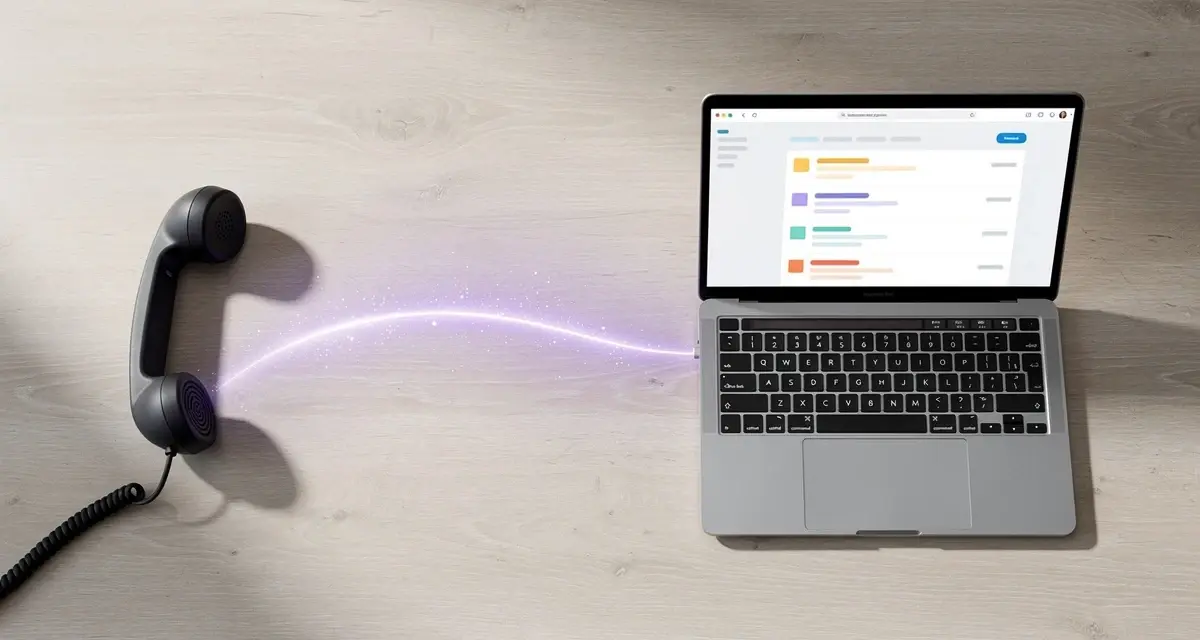
Most B2B reps still treat the phone and the inbox like two separate jobs. That’s a mistake: prospects don’t experience your outreach in channels, they experience it as one conversation, and in 2026 that conversation has to work harder than ever. Cold email deliverability keeps tightening under stricter bulk-sender rules and broader DMARC enforcement, so a plan that leans on the inbox alone is riskier than it was even a year ago.
This guide covers how to combine a power dialer (or a faster parallel dialer) with email into a single cadence, and why a growing number of sales teams are adding a third channel in between: a short, personalized video voicemail that doesn’t depend on the inbox at all. It builds on the fundamentals in our sales prospecting solutions and pairs well with tactics from how to speedrun cold email to a first booked call.
Updated August 2026
Key Takeaways
- Power dialers and email compound each other: cold email alone reply rate averages just 5.1%, and cold calling alone converts to a booked meeting on only about 2.3% of dials, but combined they consistently beat single-channel outreach on meetings booked.
- Adding a personalized video voicemail as a third channel after a missed call – built with AI voice cloning – has driven 200-300% increases in response rate compared to a plain follow-up email.
- Parallel dialers can push connect volume well past a standard power dialer’s 50-60 calls per hour, but need solid call disposition tracking to avoid wasted, abandoned connects.
- Triggering your cadence off real signals – funding rounds, new hires, website visits – instead of a static list consistently outperforms blasting the same sequence at every contact.
- Track meetings per 100 contacts and combined reply rate across all three channels, not vanity metrics like open rate or raw dial volume.
Why Power Dialers and Email Still Beat Single-Channel Outreach in 2026
Power dialers and email still outperform either channel alone because they solve each other’s biggest weakness: email builds context without urgency, and calls create urgency without context. Used together, a prospect who’s already skimmed your email answers the phone recognizing your name, and a prospect who missed your call opens an email that references the attempt instead of starting cold.
The numbers back this up. Cold email on its own converts at roughly a 5.1% average reply rate, with most unpersonalized campaigns stuck in the 1-5% range. According to RAIN Group’s cold calling benchmarks, cold calling alone connects on only 3-10% of dials and converts to a booked meeting on about 2.3% of total dial attempts. Neither channel is strong enough by itself to carry a pipeline goal, which is exactly why the combination matters – and it’s the same logic behind our multi-channel outreach strategy for filling pipeline.
- Email creates familiarity before the call – a rep who calls cold converts worse than a rep whose name the prospect already half-recognizes.
- Calls create the “why now” email can’t – tone, urgency, and real-time objection handling only happen on a live conversation.
- Combined channels compound, they don’t just add – teams running power dialer plus email plus a third touch consistently out-book single-channel teams on meetings per 100 contacts, not just raw activity.
How Power Dialers (and Parallel Dialers) Change the Math on Cold Calling
A power dialer calls numbers one at a time the instant a rep is free, pushing manual dialing’s 10-15 calls per hour to 50-60 calls per hour or more. A newer variant, the parallel dialer (also called a multi-line dialer), goes further by ringing several numbers simultaneously and only connecting the rep once a real human picks up – squeezing even more live conversations out of the same hour.
That extra throughput is only useful if it’s disciplined. The best power dialer software enforces retry logic, attempt caps, and scheduled callbacks so reps don’t over-contact promising accounts or burn through a list on a single bad afternoon.
The parallel dialer tradeoff
Parallel dialers increase connect volume, but they also increase the odds of abandoned calls – a rep can only join one conversation, so extra connects can go unanswered by a human if the software’s answering-machine detection isn’t tuned well. Good call disposition tracking (logging exactly why each call ended – voicemail, no answer, gatekeeper, live conversation) is what turns raw dial volume into a usable, precise list instead of noise.
Newer dialer platforms also layer in conversation intelligence – real-time or post-call analysis that flags talk-track patterns, objection types, and coaching opportunities – and an AI note-taker that captures call summaries automatically so reps spend more time talking and less time logging notes by hand.
Where Cold Email Fits – and Where It Breaks Down
Cold email’s job is to build context and hand the prospect proof points on their own schedule, not to close the deal. Personalized campaigns can reach 12-15% reply rates, and highly tailored, well-segmented sends occasionally hit 15-25% according to HubSpot’s sales benchmarking data – but generic blasts plateau in the low single digits no matter how good the copy is. Our cold email best practices guide covers the segmentation and copy fixes that close that gap.
Email’s ceiling comes from what it can’t do. It can’t read tone, it can’t handle an objection in the moment, and it can’t push the “why now” urgency that turns interest into a booked meeting. That’s the gap a live call – or, increasingly, a video touch – has to fill.
- Good for: establishing context, delivering proof points, letting buyers engage at their own pace
- Weak at: real-time objection handling, urgency, standing out in an inbox under tighter deliverability rules
Record One Video. AI Personalizes Thousands.
Sendspark is the AI video personalization platform for B2B sales. Record once, and AI voice cloning generates thousands of individually personalized videos with dynamic backgrounds and personalized thumbnails -- each prospect hears their name, sees their website, in your voice. Sales teams see 2-3x more replies.
Get Started NowAdd a Third Channel: Video Voicemail Between the Dialer and the Inbox
A video voicemail is a short, personalized, face-to-camera video sent after a power-dialer call goes unanswered – instead of, or alongside, the generic same-day follow-up email. It works because it doesn’t depend on the inbox at all, sidestepping deliverability risk entirely, and because a real face on screen builds more trust in fifteen seconds than another paragraph of text ever will.
The economics used to make this impractical: recording a one-off video for every missed dial doesn’t scale past a handful of prospects a day. That’s changed. With AI voice cloning and dynamic backgrounds, a rep can record one video once, and the system personalizes the opening line – the prospect’s name, their company, a reference to the call attempt – for each send, in the rep’s own cloned voice, through AI-personalized video outreach. Sendspark customers using this approach see 200-300% increases in email response rates and a meeting-to-reply ratio closer to 2:1, because the video does the “why now” work a plain follow-up email can’t. For more tactics like this, see our guide to the highest-reply-rate outbound video plays.
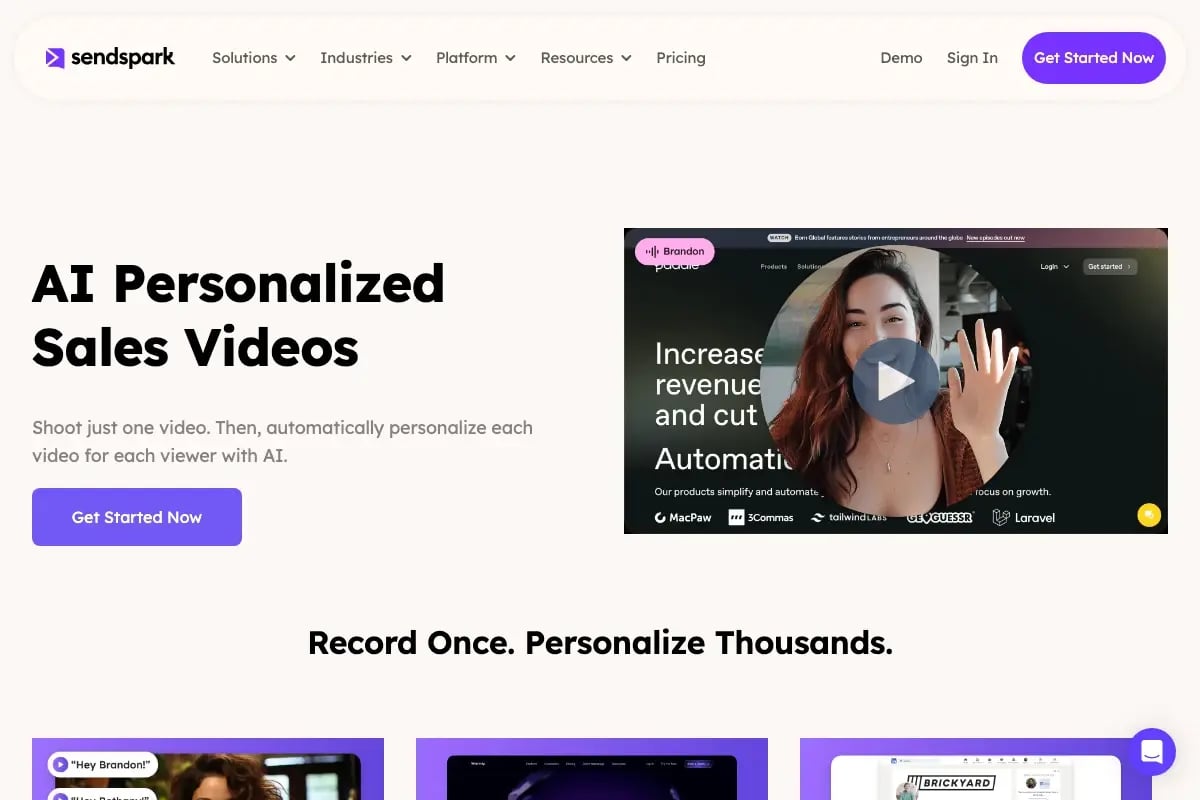
Where it fits in the cadence: send it right after a no-answer dial, either replacing the generic same-day email or running alongside it. A prospect who gets a fifteen-second “sorry I missed you, here’s the one thing I wanted to flag” video is far more likely to reply than one who gets the fifth templated paragraph of the week.
This third channel pairs especially well with signal-based selling – triggering the whole power-dialer-plus-email-plus-video sequence off an actual buying signal (an intent data trigger like a funding round, a new hire in a relevant role, or a repeat website visit) rather than blasting the same cadence at every contact on a list. Warmer lists convert better on every channel, including video.
Advanced strategy
Trigger your video voicemail step off call disposition data from your dialer – only send the video to contacts marked “no answer” or “voicemail,” not to gatekeeper blocks or wrong numbers. That keeps the channel for the prospects who are actually worth the extra effort.
Here’s what triggering a personalized video directly from your sales cadence tooling looks like in practice:
Building a Unified Power Dialer + Email + Video Cadence, Step by Step
Building a three-channel cadence means sequencing power dialer calls, email, and video voicemail so each touch references the last one, all triggered by real buying signals instead of a rigid calendar. This builds directly on the sales cadence best practices and email cadence for B2B sales fundamentals, with video layered in as the missing third channel. Here’s a sequence that holds up across most B2B segments:
- Start with a signal-triggered email
Fire the first email off an actual intent data trigger – a funding round, a new hire, a website visit – rather than a cold list pull. Establish context and a clear problem/solution narrative. - Call the next day, referencing the email
Whether it’s a power dialer or a parallel dialer, the rep opens by referencing the email so the call feels like a continuation, not a cold interruption. - No answer? Send a video voicemail, not just another email
If the call goes to voicemail or gets no answer, send a short personalized video referencing the specific call attempt instead of (or alongside) a same-day follow-up email. - Log the disposition and let your sequencer handle the next step
Accurate call disposition logging lets your sequencer automatically route the contact to the right next touch instead of a rep manually deciding what to do with every no-answer. Salesloft’s cadence tooling research and a Sendspark Outreach integration both support this kind of automated routing. - Add a LinkedIn touch for multi-threading
A LinkedIn message alongside email, call, and video supports multi-threading – reaching more than one stakeholder at the account – and combined multi-channel sequences have been shown to significantly outperform single-channel outreach on conversion. If a no-answer call and video voicemail still don’t land, our follow-up cadence that gets replies covers what to send next.
Principles that keep it working
- Consistency in messaging: every touch (email, call, video, LinkedIn) should tell the same story, or prospects notice the disconnect.
- Segmentation over blasting: executives need ROI framing, managers need workflow detail – personalize by persona and buying stage.
- Clean data first: a precise, signal-qualified list beats a bigger, dirtier one on every metric that matters.
Common Pitfalls That Kill Multi-Channel Cadences
The most common way teams break a multi-channel cadence is treating each channel as a volume lever instead of a coordinated system, which turns three good channels into three sources of noise. Watch for these specific failure modes:
1. Treating the dialer as a volume cannon
Overloading a parallel dialer with vague target lists creates connects nobody wants. Cap daily attempts, prioritize signal-qualified segments, and coach for quality conversations over raw dial count.
2. Sending a generic, unpersonalized video
Common mistake
Sending the exact same recorded video to every prospect defeats the point. Use AI voice cloning to personalize at minimum the opening five to ten seconds – name, company, and a specific reference to the call attempt – or the video reads as just another mass-blasted touch.
A video voicemail with no personalization is just a longer, slower version of a bad templated email. Use AI voice cloning to personalize at minimum the opening five to ten seconds – name, company, and a specific reference to the call attempt – or skip the channel entirely.
3. Disconnected messaging across channels
If the email, the call script, and the video don’t reference each other, prospects experience three unrelated interruptions instead of one conversation. Every touchpoint should reference the previous one by name.
4. Over-optimizing vanity metrics
Open rates and raw dial counts feel productive but don’t pay the bills. Track meetings per 100 contacts and positive reply rate across all three channels combined, not per-channel activity totals.
Quick Comparison: Power Dialer, Cold Email, and Video Voicemail
| Channel | Best for | Typical reply/connect range | Deliverability risk | Effort to personalize at scale |
|---|---|---|---|---|
| Power / parallel dialer | Real-time urgency, objection handling | 3-10% connect, ~2.3% dial-to-meeting | Low (phone network, not inbox) | Medium – scripts and call disposition need discipline |
| Cold email | Context, proof points, low-pressure engagement | 5.1% average, 12-15%+ personalized | Rising – tighter bulk-sender and DMARC rules | High – true 1:1 personalization is slow at volume |
| Video voicemail | Warmth after a missed dial, standing out inbox-free | Up to 200-300% response lift vs. plain follow-up | Low (not inbox-dependent) | Low with AI voice cloning – record once, personalize per send |
Frequently Asked Questions
What is sales dialer software, and how does a power dialer differ from a parallel dialer?
Sales dialer software automates the mechanics of cold calling so reps spend more time talking and less time dialing. A power dialer calls numbers one at a time the moment a rep is free, while a parallel dialer rings several numbers at once and only connects the rep after a real person answers, which pushes connect volume even higher at the cost of more abandoned-call risk.
How do you combine cold calling and email into one sales cadence?
Start with a signal-triggered email that establishes context, follow up with a call the next day that references the email, and if the call goes unanswered, send a short personalized video or a same-day follow-up email rather than starting a new thread. The key is that every touch references the last one so the prospect experiences one conversation, not three unrelated interruptions.
What is a good cadence for power dialer and email outreach?
Most effective B2B cadences run five to eight touches across roughly two to three weeks, mixing email, phone, and at least one non-inbox channel like video or LinkedIn. Front-load the higher-effort, higher-context touches early and space out lower-effort nudges later in the sequence.
What is video voicemail, and does it actually improve reply rates?
Video voicemail is a short, personalized, face-to-camera video sent after a call goes unanswered, and it works because it doesn’t depend on the inbox at all. Teams using AI-personalized video voicemail alongside email have reported response rate increases in the 200-300% range compared to a plain templated follow-up.
How many touches should a B2B cold outreach cadence have in 2026?
Five to eight touches over two to three weeks is a reasonable default, though the right number depends on deal size and buying committee complexity. Enterprise cadences with multiple stakeholders often run longer, while transactional SMB deals can convert on fewer, faster touches.
What sales dialer software works best for cold calling alongside email?
The best sales dialer software integrates directly with your email sequencing tool so call outcomes automatically trigger the right next email or video step, rather than requiring a rep to manually update two separate systems. Look for platforms with strong call disposition tracking and native integrations into your CRM and sequencer.
How do you avoid sounding robotic on power dialer calls?
Use call disposition data and conversation intelligence to review real call recordings regularly, not just script adherence. Reps who reference the specific prospect’s email, recent company news, or an actual buying signal sound far more human than reps working a generic script off a cold list.
Sources & References
- RAIN Group — cold calling connect rates and dial-to-meeting benchmarks (2026)
- HubSpot Blog — B2B sales and email outreach benchmark statistics (2026)
- Gong — conversation intelligence and multi-channel outreach benchmark data (2026)
- Salesloft — sales cadence and sequencing tooling benchmarks (2026)
Record One Video. AI Personalizes Thousands.
Sendspark is the AI video personalization platform for B2B sales. Record once, and AI voice cloning generates thousands of individually personalized videos with dynamic backgrounds and personalized thumbnails -- each prospect hears their name, sees their website, in your voice. Sales teams see 2-3x more replies.
Get Started NowTopics: blog