Most B2B sales teams invest heavily in product training and CRM setup during onboarding — then wonder why new SDRs take 6+ months to hit quota. The missing piece is almost always sales prospecting training: a structured curriculum that teaches reps how to find the right prospects, craft messages that get replies, and build a consistent pipeline from day one.
For a practical guide on finding new sales opportunities across multiple channels, see our complete B2B playbook.
According to Salesforce’s State of Sales report, 67% of sales reps don’t expect to hit their quota this year — and inadequate training on prospecting skills is a leading driver. Reps who receive ongoing coaching, however, generate 50% more revenue than those who only go through initial onboarding. The gap isn’t talent. It’s training.
Key Takeaways
- Effective prospecting training covers ICP research, multi-channel outreach, objection handling, and modern AI tools — not just cold calling scripts.
- According to Salesforce, reps who receive ongoing coaching generate 50% more revenue than those who only go through initial onboarding training.
- Video-based practice — recording mock prospecting videos and reviewing them — gives reps concrete feedback loops that accelerate skill development.
- Include AI video personalization in your training stack: tools like Sendspark let reps record once and send thousands of personalized videos, improving reply rates by 2-3x.
- Track post-training metrics: reply rate, meetings booked per rep per week, and time-to-first-qualified-opportunity reveal whether training is converting to pipeline.
What Sales Prospecting Training Should Cover
A complete sales prospecting training program teaches five core skills: identifying and researching ideal-fit accounts, choosing the right outreach channels, writing messages that get responses, handling early-stage objections, and using the modern tools that make personalization possible at scale. Without all five, reps default to spray-and-pray tactics — and quota suffers. For a step-by-step breakdown, see our qualification call best practices.
Most onboarding programs spend 80% of time on product knowledge and CRM setup, leaving reps without a structured approach to finding and engaging new prospects. That’s why pipeline dries up within the first quarter. A dedicated prospecting curriculum fixes this by treating prospecting as a teachable skill set, not a personality trait.
The Five Core Modules
1. ICP and Account Research — Reps need to know exactly who to target before they touch a phone or keyboard. Training should cover how to use your ideal customer profile (ICP), how to read buying signals (job postings, funding, tech installs), and how to prioritize accounts by fit and timing. See our B2B lead qualification framework for a practical ICP scoring model.
2. Multi-Channel Outreach — Cold calling alone closes fewer doors than it opens. Train reps on sequencing across email, LinkedIn, phone, and video outreach — each channel plays a different role in a 7-10 touch sequence. HubSpot’s State of Sales research shows that reps who use 3+ channels in their outreach sequence book 40% more meetings than single-channel prospectors.
3. Messaging and Copywriting — The opening line determines whether a prospect reads the rest of the email. Train reps on subject lines, personalized openers, value statements, and clear CTAs. Practice should include writing, peer review, and iteration — not just reading best-practice guides.
4. Objection Handling — Early-stage objections (“not interested,” “send me more info,” “call me next quarter”) are prospecting objections, not buying objections. Train specific responses before reps face them live.
5. Modern Prospecting Tools — Reps who don’t know how to use their stack waste time on low-value tasks. Tool training should be hands-on, not slide-deck based.
| Training Module | Core Skill Developed | Success Metric |
|---|---|---|
| ICP & Account Research | Qualifying prospects before outreach | % of outreach to ICP-fit accounts |
| Multi-Channel Sequencing | Running coordinated, persistent outreach | Touchpoints per prospect, channel mix |
| Messaging & Copywriting | Writing messages that get replies | Email open rate, reply rate |
| Objection Handling | Keeping conversations alive | Conversion from contact to meeting |
| Tool Proficiency | Executing outreach efficiently at scale | Daily activity volume, ramp time |
How to Build a Sales Prospecting Training Program Step by Step
Build your prospecting training program in five stages: audit existing rep skills to find gaps, define your ICP and buying signals, create a modular curriculum tied to specific skills, run practice in a safe environment, and lock in weekly reinforcement so skills stick. This structure works for onboarding new SDRs and upskilling experienced reps who’ve plateaued.
Step 1: Audit Current Rep Skills
Before building curriculum, know what you’re fixing. Listen to 10-15 call recordings per rep and review email sequences for patterns. Look for: poor account targeting (going after bad-fit prospects), weak openers (starting with “I wanted to reach out”), missing personalization, and one-and-done follow-up. Document the gaps for each rep — training is most effective when it’s specific to observed behavior, not generic.
Step 2: Define Your ICP and Buying Signals
Reps can’t prospect well if they don’t know exactly who they’re looking for. Document your ICP with firmographic criteria (company size, industry, tech stack, revenue), role criteria (title, seniority, function), and behavioral signals (recent funding, new VP of Sales hire, expansion into a new market). Train reps to search for these signals proactively — not just to respond when inbound leads arrive.
Pro tip
Create a one-page ICP cheat sheet that reps can keep open while prospecting. Include the 5 firmographic criteria, 3 key job titles to target, and 3 buying signals to look for. Reps who reference this during prospecting blocks build better lists faster than those working from memory.
Step 3: Build a Modular Curriculum
Structure the curriculum as standalone modules, each teachable in 30-60 minutes. Avoid marathon training days — spaced learning (one module per day or week) produces better retention than intensive bootcamps. Each module should include: a short explanation of the concept, a real example (good and bad), and a practice exercise the rep completes and submits for review. For a comprehensive approach that combines training with ongoing coaching reinforcement, see our guide to sales training and coaching programs.
Step 4: Run Structured Practice
Reading about prospecting doesn’t build skill — practice does. Require reps to complete mock prospecting exercises: write 10 cold email openers, record a 60-second prospecting video, run a role-play call while being recorded. Then review the output together. This is where improvement happens fastest, because reps can see the gap between their current output and the standard.
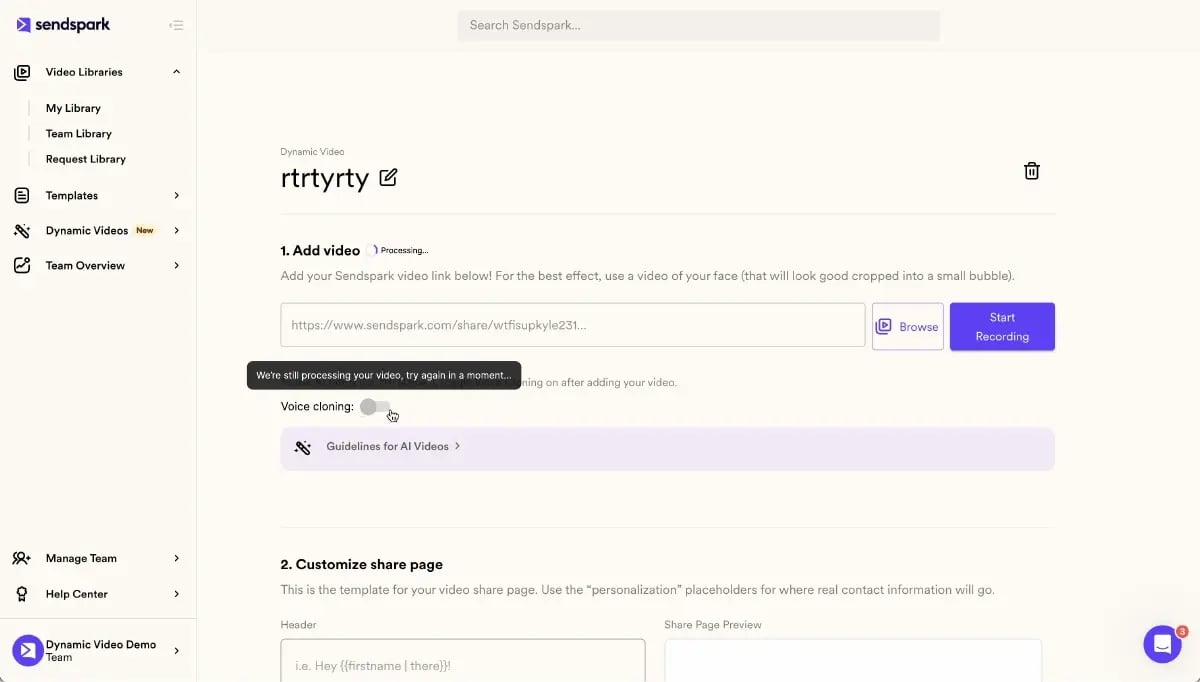
For video prospecting practice specifically, tools like Sendspark’s AI video personalization are valuable in training — reps can practice recording personalized video intros and see how the platform uses AI voice cloning to scale those recordings into thousands of individualized prospect touchpoints. This is a core skill for modern outbound teams. Check our guide on video scripts for sales prospecting for templates reps can practice with.
Record One Video. AI Personalizes Thousands.
Sendspark is the AI video personalization platform for B2B sales. Record once, and AI voice cloning generates thousands of individually personalized videos with dynamic backgrounds and personalized thumbnails — each prospect hears their name, sees their website, in your voice. Sales teams see 2-3x more replies.
Get Started NowStep 5: Reinforce with Weekly Coaching
Training without reinforcement fades within 30 days. Build a weekly cadence: Monday prospecting blocks (reps build lists together), Wednesday email/call review (manager listens to recordings and gives written feedback), Friday metrics check (pipeline added, reply rates, meetings booked). This cadence keeps skills sharp and catches regressions before they become habits.
For a broader view of how prospecting training fits into AE onboarding, see our account executive ramp-up plan template — it includes a 30-60-90 day framework that incorporates prospecting milestones.
Sales Prospecting Training Techniques That Work
The most effective prospecting training techniques share one thing: they create feedback loops. Call recording and review, video practice, live coaching on real pipeline calls, and prospecting sprints all work because they close the gap between what a rep thinks they’re doing and what’s actually happening. Abstract instruction without feedback produces slow improvement at best.
Call Recording and Peer Review
Record every prospecting call and cold call attempt for the first 90 days. Weekly, pull 2-3 recordings per rep and review them together. Use a consistent rubric: opener quality, personalization, value statement clarity, objection handling, close attempt. Written feedback beats verbal-only — reps can reference it during solo practice.
Peer review also works well. Have two reps review each other’s calls using the same rubric, then discuss. This builds critical listening skills alongside self-awareness, and reduces the perception of top-down judgment that sometimes makes reps defensive.
Video Prospecting Practice
Video prospecting is now a standard outbound channel — LinkedIn Sales Solutions data shows that video messages on LinkedIn receive 3x more replies than text-only InMails. Yet most SDRs are never trained on how to record a compelling 60-90 second prospecting video.
Run a weekly “video practice sprint”: every rep records one prospecting video targeting a specific account, using their real prospect’s name and company context. Play the recordings as a group, score each one on: hook (first 10 seconds), personalization quality, value statement, and CTA. The public accountability accelerates improvement faster than private feedback alone.
When reps are ready to scale, AI-powered prospecting with Sendspark lets them record a single video and personalize it for hundreds of prospects using AI voice cloning and dynamic backgrounds — each prospect hears their name and sees their own website behind the presenter. This takes the manual effort out of video personalization and lets reps spend more time building lists and less time re-recording. Our guide to personalizing outbound sales at scale covers the data and workflow foundations reps should train on before scaling this up.
Live Coaching on Real Calls
Join reps on live prospecting calls monthly — not to take over, but to observe. Debrief within 30 minutes while the call is fresh. Focus on one or two specific behaviors per session, not a comprehensive critique. Managers who try to fix everything at once overwhelm reps. Managers who focus on one skill at a time see measurable improvement within two weeks.
Prospecting Sprints
Dedicate two 60-minute blocks per week as protected “prospecting sprints” — phones and inboxes off, calendar blocked, only prospecting activity. Reps work on lists, write personalized outreach, or send video messages. No meetings, no Slack. Teams that implement structured sprints report 25-35% higher daily activity volume compared to reps who prospect “whenever they have time.”
Common mistake
Don’t let reps skip prospecting sprints when pipeline is full. The managers who protect sprint time even during good months maintain more consistent pipeline than those who let reps backfill only when quota is at risk.
Tools to Include in Your Prospecting Training Program
Your prospecting training program should include hands-on certification in four tool categories: a CRM for pipeline management, a sales engagement platform for sequencing, an AI video personalization tool for video outreach, and a prospecting data tool for list building. Reps who are proficient in all four execute faster and more consistently than those who wing it with partial knowledge.
The common mistake is introducing all tools in week one. Overwhelmed reps don’t retain tool training — they just click around and hope for the best. Sequence tool training to match the workflow: CRM first (they need it immediately), engagement platform second (week 2-3), prospecting data tool third (week 3-4), video personalization fourth (week 4+, once they have messaging fundamentals).
What to Cover in Each Tool Training
For each tool, training should cover: basic navigation, the specific workflow reps use daily, what “good” looks like in that tool, and common mistakes to avoid. A 30-minute hands-on session beats a 90-minute demo every time. Have reps complete a real task — not a practice exercise — and observe where they get stuck.
| Tool Category | Purpose in Prospecting | Training Focus | When to Introduce |
|---|---|---|---|
| CRM (HubSpot, Salesforce) | Track contacts, log activity, manage pipeline | Creating contacts, logging calls, deal stage updates | Day 1 |
| Sales Engagement Platform (Outreach, Apollo) | Automate multi-touch email and call sequences | Building sequences, adding prospects, reviewing analytics | Week 2 |
| Prospecting Data (ZoomInfo, Clay) | Build targeted, verified lead lists | Filters for ICP criteria, export workflows, data hygiene | Week 3 |
| AI Video Personalization (Sendspark) | Send personalized video outreach at scale | Recording, AI voice cloning setup, dynamic backgrounds, sending | Week 4 |
| LinkedIn Sales Navigator | Social prospecting and decision-maker outreach | Search filters, InMail, connection strategies, saved searches | Week 3-4 |
For a comprehensive list of prospecting tools across all categories, see our guide to B2B prospecting tools for sales teams — it covers 20+ tools with pricing and use-case recommendations.
Metrics to Measure Sales Prospecting Training Effectiveness
Measure prospecting training effectiveness with two types of metrics: leading indicators (activity volume and quality in the first 30 days) and lagging indicators (reply rates, meetings booked, and pipeline generated by 60-90 days). Leading indicators tell you whether reps are executing the training. Lagging indicators tell you whether the training is producing results.
Most managers track only lagging indicators and get frustrated when they don’t move fast enough. But lagging indicators take 6-8 weeks to reflect training improvements — by then, it’s hard to diagnose what to fix. Track leading indicators weekly so you can course-correct in real time.
Leading Indicators (Track Weekly)
- Daily outreach volume — calls attempted, emails sent, LinkedIn touches, videos sent
- Personalization rate — % of emails with a personalized opener (not just first name merge)
- Sequence completion rate — % of prospects who receive all planned touchpoints (not just the first email)
- ICP targeting rate — % of outreach going to accounts that match your ICP criteria
Lagging Indicators (Track Monthly)
- Email reply rate — benchmark: 3-8% for cold email; video email typically hits 10-20%
- Meetings booked per rep per week — baseline this before training, then measure lift
- Pipeline generated per rep — dollar value of opportunities created from prospecting activity
- Time-to-first-qualified-opportunity — how long from start date to first SQLs in pipeline
According to RAIN Group’s sales research, top-performing prospectors make 8-10 contact attempts per prospect before moving on, while average performers give up after 2-3. Training reps to persist through a full sequence — and measuring sequence completion rate — directly impacts how many of those top-performer behaviors get replicated across the team.
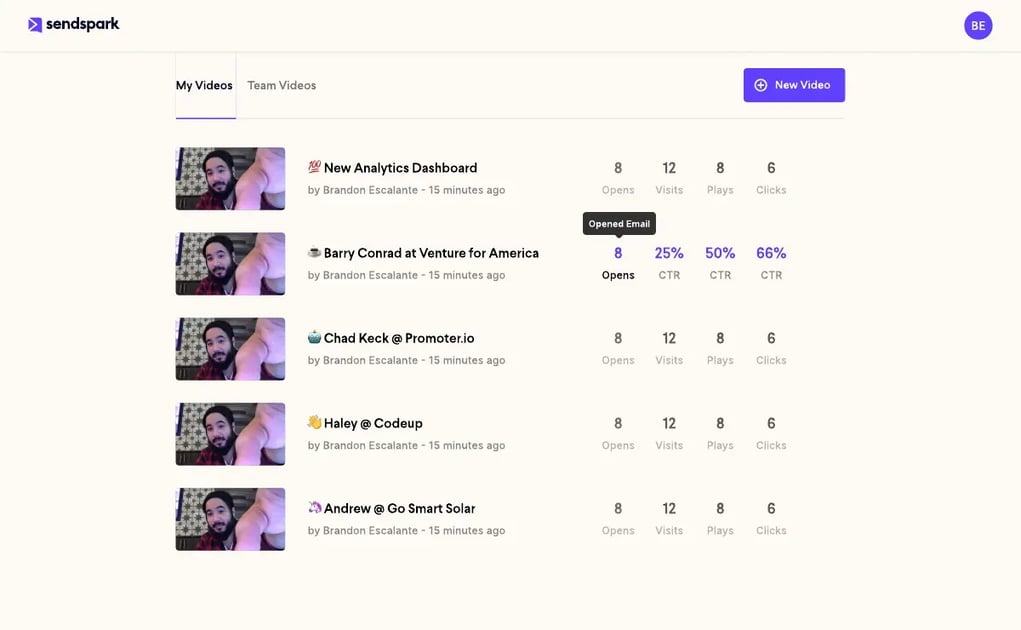
Once reps are trained on modern prospecting techniques, you can use video engagement data from Sendspark’s analytics to add a new layer of insight: which prospects opened and watched a video, how long they watched, and whether they clicked the CTA. This data flows back into HubSpot or Salesforce, giving managers a richer view of rep-level prospecting quality than call and email activity alone.
“The reps who ramp fastest are the ones who treat prospecting as a craft — they study their recordings, iterate on their messaging, and track what’s working. The managers who create that environment build the most consistent pipeline.”
— RAIN Group, Top Performance in Sales Prospecting
Benchmark: Untrained vs. Trained Rep Performance
| Metric | Untrained Rep (Month 1) | Trained Rep (Month 1) | Trained Rep (Month 3) |
|---|---|---|---|
| Daily outreach touches | 15-25 | 40-60 | 60-80 |
| Email reply rate | 1-2% | 3-5% | 5-10% |
| Meetings booked/week | 0-1 | 2-3 | 4-6 |
| Pipeline generated | Low / erratic | Building steadily | Consistent & predictable |
| Time to first SQL | 60-90 days | 30-45 days | Ongoing |
Frequently Asked Questions
What is sales prospecting training?
Sales prospecting training is a structured program that teaches sales reps how to identify ideal-fit accounts, craft outreach messages that get responses, and build consistent pipeline. It covers research skills, multi-channel outreach, objection handling, and tool proficiency — going well beyond product knowledge and CRM setup.
How long does a sales prospecting training program take?
Most effective prospecting training programs run 4-6 weeks for initial onboarding, followed by ongoing weekly coaching. The first two weeks focus on ICP research and messaging fundamentals; weeks 3-4 add tool training and practice sprints; week 5-6 introduce video prospecting and multi-channel sequencing. Ongoing reinforcement continues indefinitely.
What should a sales prospecting training program include?
A complete sales prospecting training program should include: ICP definition and account research methods, multi-channel outreach sequencing (email, LinkedIn, phone, video), messaging and copywriting practice, objection handling for early-stage responses, and hands-on tool certification across CRM, engagement platforms, and AI video personalization tools.
How do you measure the success of sales prospecting training?
Measure prospecting training with leading indicators (daily outreach volume, personalization rate, sequence completion rate) in the first 30 days, and lagging indicators (email reply rate, meetings booked per week, pipeline generated, time-to-first-SQL) from 60 days onward. Compare each metric to pre-training baselines to isolate the training impact.
What tools are essential for sales prospecting training?
The four essential tool categories for prospecting training are: a CRM (HubSpot or Salesforce) for pipeline management, a sales engagement platform (Outreach, Apollo, or SalesLoft) for sequencing, a prospecting data tool (ZoomInfo or Clay) for list building, and an AI video personalization platform (Sendspark) for personalized video outreach that drives 2-3x higher reply rates.
How do you train SDRs on video prospecting?
Train SDRs on video prospecting with weekly practice sprints: each rep records a 60-90 second video targeting a real prospect, then plays it for the group for scoring and feedback. Focus on the hook, personalization, and CTA. Once messaging is solid, introduce AI tools like Sendspark where reps record once and AI voice cloning generates personalized versions for each prospect — dramatically reducing the time cost of video outreach at scale.
Sources & References
- Salesforce State of Sales — “67% of sales reps don’t expect to hit quota; reps with ongoing coaching generate 50% more revenue than onboarding-only” (2024)
- HubSpot State of Sales — “Reps using 3+ outreach channels book 40% more meetings than single-channel prospectors” (2024)
- RAIN Group — Top Performance in Sales Prospecting — “Top-performing prospectors make 8-10 contact attempts per prospect; average performers give up after 2-3” (2023)
- LinkedIn Sales Solutions — “Video messages on LinkedIn receive 3x more replies than text-only InMails” (2024)
Record One Video. AI Personalizes Thousands.
Sendspark is the AI video personalization platform for B2B sales. Record once, and AI voice cloning generates thousands of individually personalized videos with dynamic backgrounds and personalized thumbnails — each prospect hears their name, sees their website, in your voice. Sales teams see 2-3x more replies.
Get Started Now