Most sales teams don’t lose deals because they pitch badly. They lose them because they spent weeks pursuing the wrong people. A B2B lead qualification framework fixes that problem at the root — by giving your team a repeatable system to decide, within the first two touchpoints, whether a prospect is worth pursuing at all. For the full breakdown, see our complete a structured lead qualification process.
The best frameworks are built on one foundation: your Ideal Customer Profile (ICP). When your ICP is specific — defining the exact company size, tech stack, budget authority, and pain pattern your best customers share — qualification stops being a judgment call and becomes a checklist.
This guide covers the most effective B2B lead qualification frameworks, how to build your own using ICP criteria, and how to use AI-personalized video to double your response rates from the leads that actually qualify. — for a practical tool to apply these criteria, see our printable lead qualification checklist.
Key Takeaways
- A B2B lead qualification framework filters out poor-fit prospects early, so your sales team spends time only on deals that can close.
- Your ICP is the anchor for every qualification decision — company size, tech stack, budget authority, and pain pattern must all match before a lead gets qualified.
- The most effective frameworks (BANT, MEDDIC, CHAMP) all ask the same four questions: Do they have the need, the budget, the authority, and the timeline?
- According to Salesforce’s State of Sales, high-performing sales teams are 2.8x more likely to use a formal qualification process than underperforming ones.
- AI-personalized video outreach — where each prospect hears their name and sees their company — can double reply rates from high-ICP leads compared to plain text email.
What Is a B2B Lead Qualification Framework?
A B2B lead qualification framework is a structured system that determines whether a prospect has the characteristics, budget, authority, and timing needed to become a customer. It turns a subjective gut-check into a repeatable, scoreable process — one that every SDR and AE on your team applies consistently, across every touchpoint, before a lead moves deeper into the pipeline.. Choosing the right lead management software tool is a foundational step before running nurturing or engagement sequences.
Without a framework, reps default to their own instincts. Some are overly optimistic and clog the pipeline with warm-but-unqualifiable contacts. Others are overly cautious and kill potentially strong deals too early. Both extremes hurt revenue. For the broader strategic context, see our definitive guide to lead qualification.
MQL vs SQL: Where Qualification Happens
Most B2B sales organizations qualify leads twice:
- Marketing Qualified Lead (MQL) — A contact who has shown enough behavioral engagement (content downloads, webinar attendance, email opens) to be passed from marketing to sales. MQL status is based on activity, not fit.
- Sales Qualified Lead (SQL) — A contact who has been vetted by a sales rep against ICP and BANT-style criteria, and confirmed as worth pursuing in an active sales conversation.
The gap between MQL and SQL is where most qualification frameworks live. HubSpot research consistently shows that a large share of MQLs — often the majority — never convert to SQLs, because the behavioral signals that trigger MQL status don’t always correlate with genuine purchase intent or ICP fit.
A strong qualification framework closes that gap by giving sales reps a clear, data-backed way to validate or disqualify any inbound or outbound lead within one or two discovery interactions. For a step-by-step breakdown, see our how to structure a qualification call.
Why Most Teams Qualify Too Late (and Lose Time)
According to Salesforce’s State of Sales report, sales reps spend only 28% of their week actually selling — the rest goes to admin, research, and non-selling activity. One of the biggest time drains is extended discovery with unqualifiable leads.
A framework that disqualifies a poor-fit lead in the first call — rather than the third demo — recovers hours per rep per week. At 10 SDRs, that’s potentially 50+ selling hours recovered every month.
Pro tip
Build a “fast disqualify” checklist with 3-4 hard criteria — company size, tech stack fit, or budget minimum. Reps should run this check before the first outreach email, not after the second discovery call.
How to Define Your ICP: The Foundation of Any Qualification Framework
Your Ideal Customer Profile (ICP) is the precise description of the company type most likely to buy your product, use it successfully, and renew. Every effective lead qualification framework starts here — because no framework can tell you whether a lead is qualified without first knowing what “qualified” looks like for your specific business. For a full breakdown of available options, see our guide to lead qualification services for B2B teams.
Think of your ICP as the filter at the top of the qualification funnel. Before you even ask about budget or timeline, you’re asking: does this company look like our best customers? If you haven’t formalized that filter yet, see our guide to building an ideal customer profile before you scale outreach.
Firmographic ICP Criteria
These are the structural characteristics of the target company:
- Company size: Number of employees or revenue range (e.g., 50-500 employees, $5M-$100M ARR)
- Industry: B2B SaaS, tech, professional services, or whatever verticals you close best
- Geography: North America-focused? Global? Regional?
- Funding stage: Series A–D typically signals budget authority and growth investment
- Revenue or headcount growth rate: Hiring signals indicate expansion budget
Technographic ICP Criteria
What tools does your ideal customer already use? For B2B sales tools, relevant technographic signals include:
- CRM: HubSpot, Salesforce — indicates a tech-forward sales org with workflow investment
- Sequencing tools: Outreach, Apollo, SalesLoft — confirms a proactive outbound motion
- Intent data: Bombora, 6sense — signals that they’re actively evaluating solutions in your category
- Video tools: Using any video outreach already suggests they’re open to video-first communication
Tools like Clay and ZoomInfo can surface technographic data at scale, letting you pre-filter lead lists before a single rep makes contact. This is sometimes called “intent-based prospecting” — and it’s a step above basic firmographic filtering. You can learn more in our guide to B2B prospect evaluation criteria.
Behavioral ICP Criteria
These signals indicate that a company is actively in-market or experiencing the pain your product solves:
- Recent funding announcement (implies budget and growth initiative)
- Job postings for SDR/BDR roles (implies outbound sales investment)
- G2 reviews of competitor products (implies active evaluation)
- Content consumption patterns on your own site (high-intent MQLs)
Gartner research shows that the typical B2B buying group now involves 6 to 10 decision makers. That means your ICP needs to go beyond company-level fit — it also needs to identify the right buyer persona within that company.
“The companies where we close fastest are Series B SaaS firms with 50-150 employees already using HubSpot and Outreach. If I see those three signals, I know the discovery call will be productive.” — a pattern common among high-performing AEs at B2B SaaS companies
The Four Most-Used B2B Lead Qualification Frameworks
Once you know your ICP, you need a framework to validate individual leads against that profile during live sales conversations. These four frameworks are the most widely used in B2B sales — each with different strengths depending on your sales cycle length and deal complexity.
| Framework | Best For | Core Criteria | Complexity |
|---|---|---|---|
| BANT | Transactional B2B, short cycles | Budget, Authority, Need, Timeline | Low |
| MEDDIC | Enterprise, complex cycles | Metrics, Economic Buyer, Decision Criteria, Decision Process, Identify Pain, Champion | High |
| CHAMP | Mid-market, challenger sales | Challenges, Authority, Money, Prioritization | Medium |
| GPCTBA/C&I | Inbound-heavy, consultative | Goals, Plans, Challenges, Timeline, Budget, Authority, Consequences & Implications | Medium-High |
BANT: The Starting Point
BANT (Budget, Authority, Need, Timeline) is the most widely taught qualification framework in B2B sales. Developed by IBM in the 1950s, it remains effective for transactional sales with cycles under 60 days. The four questions are simple: Does the prospect have budget? Are you speaking to the decision-maker? Is there a genuine business need your product solves? Is there a real timeline for purchase?
BANT’s weakness is that it treats all four criteria as equally weighted gates — in reality, a strong “need” can override a fuzzy “timeline” in most B2B deals.
MEDDIC: The Enterprise Standard
MEDDIC (Metrics, Economic Buyer, Decision Criteria, Decision Process, Identify Pain, Champion) is the preferred framework for complex enterprise deals. It goes beyond whether a deal is possible and asks whether it’s winnable — who is your internal champion, what are the formal decision criteria, and what measurable business outcome will justify the purchase?
Teams selling six-figure deals with multi-stakeholder buying groups should default to MEDDIC. It forces reps to map the entire buying committee — which is critical given that Gartner’s B2B Buying Journey research shows the average enterprise deal involves 11 stakeholders in the final decision.
CHAMP: Challenges First
CHAMP (Challenges, Authority, Money, Prioritization) reorders BANT by putting the prospect’s pain front and center. Instead of opening with budget questions, reps first understand the business problem — then validate that the authority, budget, and prioritization exist to solve it. This consultative approach tends to build more trust earlier in the conversation.
GPCTBA/C&I: The Inbound Variant
Developed by HubSpot, GPCTBA/C&I (Goals, Plans, Challenges, Timeline, Budget, Authority, Consequences & Implications) adds a layer of strategic context to BANT. It’s particularly well-suited for inbound leads who have self-selected into your funnel — because those prospects already have goals and plans in mind, and understanding those goals before pitching is critical to positioning.
Common mistake
Don’t try to apply all four frameworks simultaneously. Pick one that matches your deal size and sales motion, then train your entire team to use it consistently. A uniformly applied simple framework beats an inconsistently applied complex one every time.
How to Build Your Own B2B Lead Qualification Framework in 5 Steps
Building a qualification framework from scratch takes less time than you think — and the return in recovered selling hours pays back within weeks. Here’s a five-step process you can implement with any CRM and any existing sales motion.
Step 1: Start With Your ICP Criteria as Hard Gates
Pull your last 20-30 closed-won deals. Identify the 3-5 criteria they all shared: company size range, industry, tech stack, team size, and growth stage. These become your hard-gate criteria — leads that don’t match on all five are disqualified before the first call.
Document your ICP in your CRM as custom properties. This lets you build automated disqualification rules and report on ICP match rate across your pipeline. See our lead pipeline management guide for how to structure this in HubSpot.
Step 2: Choose a Base Framework
For most B2B SaaS companies with deal sizes between $5K-$100K ARR and cycle lengths of 30-90 days, BANT or CHAMP work well. For enterprise deals above $100K ARR with multi-stakeholder buying processes, start with MEDDIC.
You don’t need to implement every element on day one. Start with 3-4 core qualification questions your reps can cover in a single discovery call.
Step 3: Map Qualification Questions to Pipeline Stages
Each sales pipeline stage should have specific qualification questions that must be answered before a deal advances. For example:
- Stage 1 (Prospecting): ICP match confirmed? Decision-maker identified?
- Stage 2 (Discovery): Pain confirmed? Budget range established?
- Stage 3 (Demo): Timeline to decision confirmed? Evaluation criteria known?
- Stage 4 (Proposal): Champion identified? Procurement process mapped?
Deals that can’t answer the required questions for their current stage get flagged for coaching or stalled — not moved forward.
Step 4: Score Leads in Your CRM
Build a lead scoring model in HubSpot or Salesforce that assigns points for ICP fit criteria, behavioral signals, and BANT qualification data. Set a minimum score threshold for SQL conversion — and stick to it.
Most teams use two tiers: “high-ICP” leads that get immediate outbound sequencing, and “medium-ICP” leads that get nurtured via content until they show higher intent signals. For a deeper look at your options, see our guide to lead nurturing software.
Step 5: Review and Refine Monthly Using Win/Loss Data
Your qualification framework is only as good as your most recent closed-won and closed-lost analysis. Run a monthly win/loss review to identify which qualification signals most reliably predicted a closed deal — and update your ICP criteria and scoring model accordingly.
RAIN Group’s research on sales qualification consistently shows that the teams with the highest win rates review and refine their qualification criteria quarterly or more often. Static frameworks decay as your market evolves.
Record One Video. AI Personalizes Thousands.
Sendspark is the AI video personalization platform for B2B sales. Record once, and AI voice cloning generates thousands of individually personalized videos with dynamic backgrounds and personalized thumbnails — each prospect hears their name, sees their website, in your voice. Sales teams see 2-3x more replies.
Get Started NowHow AI-Personalized Video Outreach Accelerates Lead Qualification
Once you’ve identified a high-ICP lead, your next challenge is getting a response. Cold outreach to even perfectly qualified prospects fails if the message looks like every other email in their inbox. This is where AI-personalized video changes the game — turning your qualification outreach into something prospects actually open, watch, and reply to.
Video Engagement as a Real-Time Qualification Signal
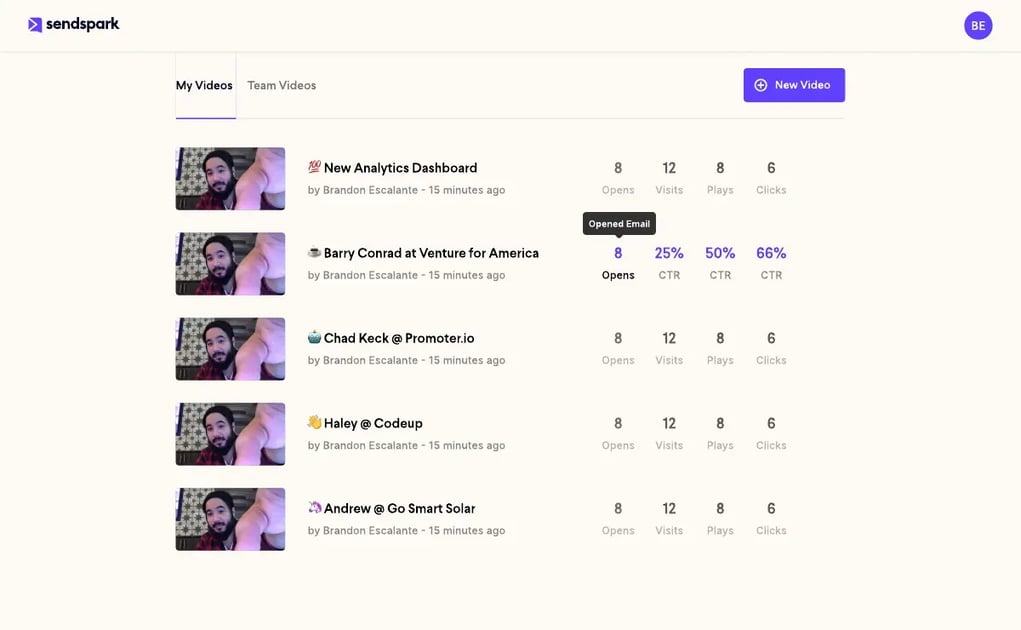
When a prospect watches 90% of your personalized video, rewinds the demo portion, and clicks the CTA link to your pricing page — that’s stronger qualification data than any form fill or email open. Sendspark’s video analytics feed this engagement data directly into your CRM, letting reps prioritize follow-up based on actual buying signals rather than guesswork.
A prospect who watched your video twice and clicked your pricing link is qualified. A prospect who opened the email but never watched the video might not be — or at least needs a different follow-up approach.
Using AI Personalization to Reach High-ICP Leads at Scale
The traditional tension in sales outreach is between personalization and scale. Recording a custom video for every high-ICP lead takes hours. Sending the same generic video to everyone produces mediocre results.
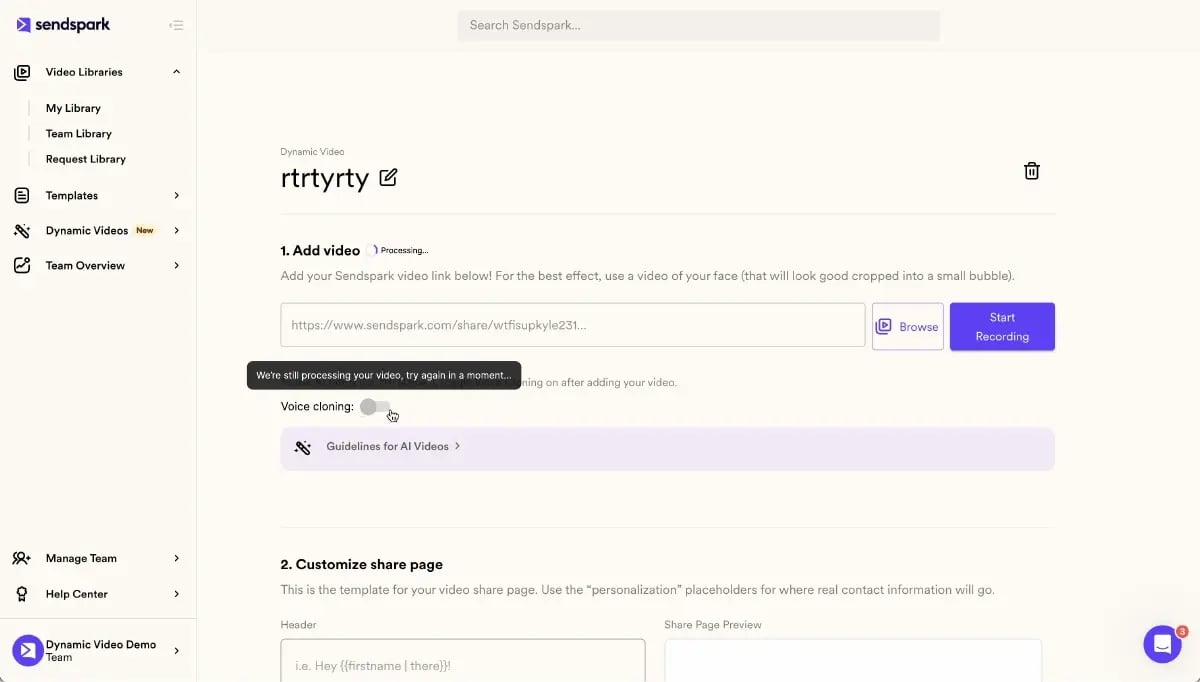
Sendspark’s AI Personalized Video solves this: you record one video once, and the AI clones your voice to generate thousands of individually personalized versions — each prospect hears their own name and company name, spoken naturally in your voice, with their company website visible in the video background. That’s the kind of personalization that stops the scroll.
For SDR teams using B2B sales prospecting workflows in Outreach, Apollo, or SalesLoft, adding a personalized video step to the qualification sequence gives you:
- Higher reply rates from high-ICP prospects (2-3x vs. text-only sequences)
- Faster discovery — prospects who engage with video often self-qualify in their reply
- Video watch data as a CRM qualification signal, alongside BANT data
The Qualification Conversation Video Template
A strong qualification video is 60-90 seconds and follows this structure:
- Hook (0-10s): Call out a specific trigger — “I saw [Company] just raised a Series B and is hiring 15 SDRs…”
- Problem (10-30s): Name the pain your qualification research surfaced — “Most fast-growing teams at this stage struggle to scale personalized outreach without just adding headcount.”
- Bridge (30-60s): Connect their situation to your solution without pitching — “We work with companies like yours to [specific outcome]. Would it make sense to compare notes on how you’re thinking about this?”
- CTA (60-90s): One specific ask — a 20-minute call, not a demo or a proposal.
The video serves double duty: it gets the reply, and the watch analytics tell you how qualified the prospect really is before you ever pick up the phone.
B2B Lead Qualification Framework: Quick Reference
| Decision | What to Use | Where It Lives |
|---|---|---|
| Is this company ICP-fit? | Firmographic + technographic criteria from your ICP | CRM lead scoring model, pre-outreach |
| Is this contact worth outreach? | Behavioral signals (job postings, funding, G2 activity) | Clay, ZoomInfo, intent data tools |
| Is there a real opportunity? | BANT or CHAMP questions in discovery call | Discovery call, deal notes in CRM |
| Can we win this deal? | MEDDIC for enterprise: champion, decision criteria, economic buyer | Opportunity record, pipeline review |
| Is this prospect showing buying intent? | Video engagement data (watch %, click, replay) | Sendspark analytics in CRM |
| Should this lead advance to SQL? | Minimum lead score threshold (all hard-gate ICP criteria met) | HubSpot or Salesforce lead scoring |
Frequently Asked Questions
What is a B2B lead qualification framework?
A B2B lead qualification framework is a structured system that sales teams use to determine whether a prospect is a good fit for their product, has the budget and authority to buy, and is ready to engage in a sales conversation. Frameworks like BANT, MEDDIC, and CHAMP provide repeatable criteria that prevent reps from wasting time on deals that cannot close.
What is the difference between MQL and SQL in lead qualification?
An MQL (Marketing Qualified Lead) is a contact who has shown behavioral engagement — content downloads, website visits, or webinar signups — sufficient to be passed to sales. An SQL (Sales Qualified Lead) is a contact who has been vetted by a sales rep against ICP and qualification criteria, and confirmed as ready for an active sales conversation. MQL status is based on activity; SQL status is based on fit and intent.
What is ICP in B2B sales qualification?
ICP stands for Ideal Customer Profile — a detailed description of the company type most likely to buy your product, use it successfully, and renew. In lead qualification, your ICP defines the hard-gate criteria that a lead must meet before your team invests time in discovery. Typical ICP criteria include company size, industry, revenue range, tech stack, and growth stage.
Which B2B lead qualification framework is best for SaaS companies?
For most B2B SaaS companies with deal sizes under $50K ARR and cycles of 30-60 days, BANT or CHAMP work well because they’re fast to apply and easy for SDRs to use consistently. For enterprise SaaS deals above $100K ARR with complex, multi-stakeholder buying processes, MEDDIC is the standard because it forces reps to map the full buying committee and decision process.
How do you qualify a B2B lead quickly without wasting discovery time?
Start with a pre-call ICP check: does the company match your firmographic and technographic criteria before you invest in a discovery call? Use tools like Clay or ZoomInfo to verify company size, tech stack, and recent intent signals in seconds. For the discovery call itself, open with the two or three BANT questions that most reliably predict deal quality for your market — typically Need and Budget — and disqualify fast if either is missing.
What questions should you ask to qualify a B2B lead?
The most reliable qualification questions for B2B sales are: “What’s driving this initiative right now?” (reveals need and urgency), “Who else is involved in this decision?” (reveals authority and committee size), “What does your budget conversation look like for something like this?” (surfaces budget without a direct ask), and “What does success look like six months after you solve this problem?” (reveals whether they’re serious buyers or just exploring).
How does lead qualification improve sales forecasting accuracy?
When every opportunity in your pipeline has been validated against consistent qualification criteria, your forecast reflects only real, closeable deals — not wishful thinking. Sales teams with formal qualification frameworks report significantly more accurate forecasts because they disqualify deals earlier and avoid the “deal optimism” bias that inflates projected close rates. Accurate forecasting also helps revenue operations teams make better headcount and capacity planning decisions.
Sources & References
- Salesforce State of Sales — “High-performing sales teams are 2.8x more likely to use a formal lead qualification process; sales reps spend only 28% of their week actually selling.” (2024)
- HubSpot Marketing Statistics — “A significant majority of marketing-generated leads never convert to sales, underscoring the gap between MQL and SQL quality.” (2024)
- Gartner B2B Buying Journey Research — “The typical B2B buying group for a complex solution involves 6 to 10 decision makers, each with their own information agenda.” (2024)
- RAIN Group: What Is a Qualified Lead? — “Top-performing sales teams review and refine their qualification criteria more frequently than average performers.” (2024)
- Demand Gen Report — B2B lead quality and MQL-to-SQL conversion benchmarks showing the impact of ICP-aligned qualification on win rates. (2024)
Record One Video. AI Personalizes Thousands.
Sendspark is the AI video personalization platform for B2B sales. Record once, and AI voice cloning generates thousands of individually personalized videos with dynamic backgrounds and personalized thumbnails — each prospect hears their name, sees their website, in your voice. Sales teams see 2-3x more replies.
Get Started Now