Most B2B pipeline doesn’t come from prospects who found you first. It comes from reps who went out and started the conversation. That’s outbound sales — and despite the rise of inbound marketing, it still drives the majority of revenue at high-growth B2B companies.
If you’re building a sales team, scaling a startup, or trying to fill your pipeline faster than SEO allows, you need to understand outbound sales: what it is, how it works, and which channels and tactics get results in 2026. For a complete step-by-step walkthrough, see our how to build an outbound sales team from scratch.
Key Takeaways
- Outbound sales means proactively reaching prospects before they raise their hand — it drives the majority of pipeline at most B2B tech companies.
- The four most effective modern outbound channels are cold email, phone, LinkedIn, and AI-personalized video — each converts best when combined into a multi-touch sequence.
- Effective outbound requires 7-12 touchpoints across at least two channels; single-touch outreach rarely books meetings.
- AI voice cloning lets you record one video and auto-generate thousands of individually personalized versions — Sendspark users report 2-3x more replies than text email alone.
- Track these five metrics to optimize your outbound: reply rate, meeting-booked rate, pipeline velocity, opportunity-to-close rate, and cost per opportunity.
What Is Outbound Sales?
Outbound sales is the practice of proactively reaching out to potential customers rather than waiting for them to come to you. Your sales reps identify prospects who match your ideal customer profile (ICP), then initiate contact through email, phone, LinkedIn, or video. The rep controls when and how contact happens — not the prospect.
This contrasts with inbound sales, where prospects find you through search, content, or ads and then raise their hand. Both approaches have their place, but outbound gives you immediate control over pipeline volume and targeting. You decide which companies to pursue, when to reach out, and how to frame the value proposition.
Why Outbound Still Works in 2026
Outbound sales has faced criticism as inboxes fill and cold call answer rates decline. But the data tells a different story. According to the Salesforce State of Sales report, outbound prospecting remains the top source of new pipeline for B2B organizations, even as inbound tactics mature. The challenge isn’t that outbound doesn’t work — it’s that generic, low-personalization outbound doesn’t work.
The companies winning with outbound today have upgraded their approach in three ways:
- Precision targeting: Using intent data, firmographic filters, and buying signals to identify prospects who are actually in-market right now
- Genuine personalization: Referencing specific company details, role-level pain points, and individual context — not just first name and company name in a mail-merge
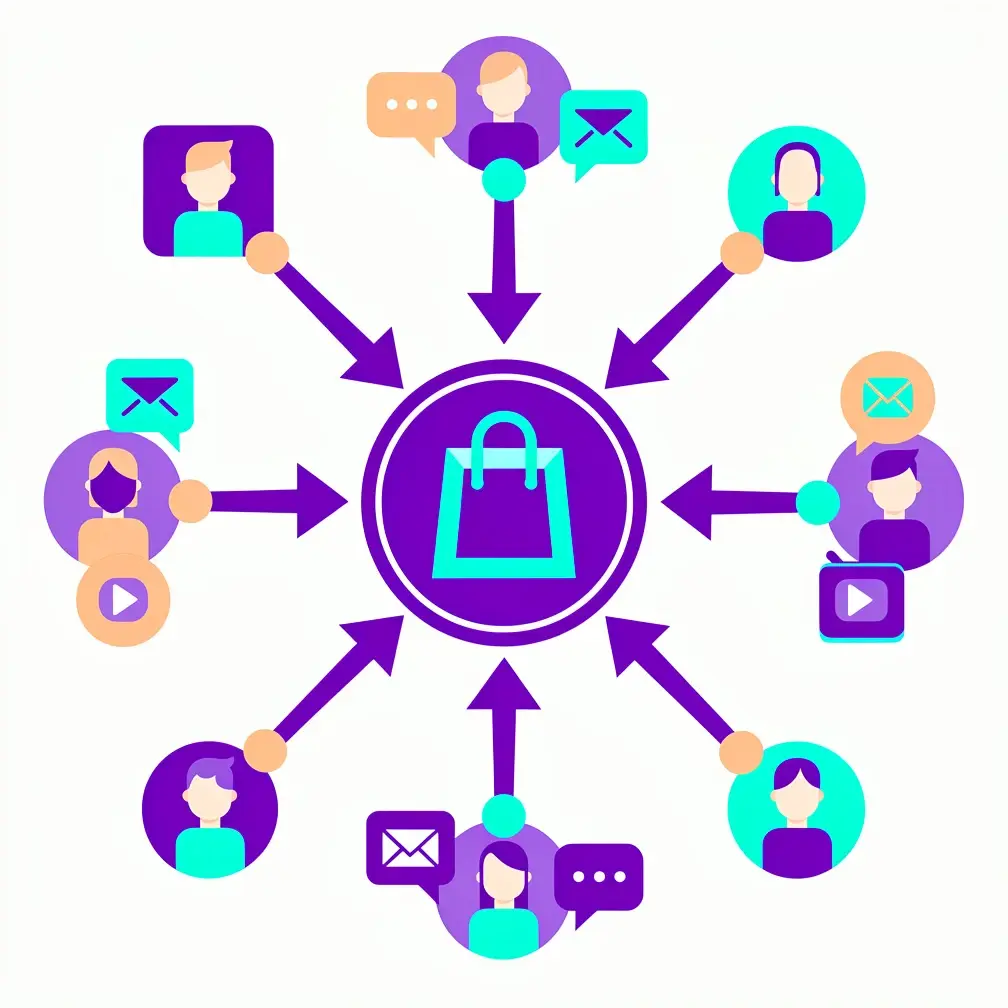
- Multi-channel sequencing: Reaching prospects across email, phone, LinkedIn, and video in a coordinated cadence, not one-off blasts
The fundamental psychology of outbound hasn’t changed: a well-timed, genuinely relevant message from a real person still gets replies. What’s changed is the bar for what counts as “genuinely relevant.”
The Evolution of Outbound: From Cold Calls to AI-Personalized Video
Outbound sales has evolved significantly over the last two decades. In the early 2000s, it was almost entirely phone-based — cold calls from prospect lists. Email outreach emerged in the mid-2000s and initially had high open rates because it was novel. By the 2010s, LinkedIn added a new channel. Each new medium started with high engagement before declining as adoption spread and inboxes filled.
Today, we’re in the third wave: AI-powered personalization at scale. Instead of writing one-to-many emails with superficial merge fields, modern outbound teams use tools like AI-personalized video to deliver genuinely unique messages to each prospect — automatically. A rep records one video; AI voice cloning generates a personalized version for every prospect on the list, with their name in the rep’s own voice, their company website as the background, and their specific pain point addressed. Volume and personalization are no longer a trade-off.
Advanced strategy
The highest-performing outbound sequences in 2026 open with an AI-personalized video showing the prospect’s own website or LinkedIn profile. This signals genuine research instantly and stops the scroll. Sendspark’s dynamic background feature makes this possible at scale — no manual recording required per prospect.
Outbound vs. Inbound Sales: Key Differences
Outbound and inbound are not competing strategies — most high-growth B2B companies run both in parallel. But they work differently, with different timelines, costs, and ideal use cases. The core distinction: outbound puts the rep in control of timing and targeting, while inbound depends on the prospect’s search behavior and content discovery.
Here’s a direct comparison of the two approaches:
| Dimension | Outbound Sales | Inbound Sales |
|---|---|---|
| Who initiates contact | Rep reaches out first | Prospect raises their hand |
| Time to first pipeline | Days to weeks | Months to years (content-dependent) |
| Control over targeting | High — rep selects ICP | Low — search drives who arrives |
| Cost structure | Variable (headcount + tools) | Fixed (content + SEO investment) |
| Scalability | Scales with headcount or AI personalization | Scales with content volume and domain authority |
| Buyer intent at first contact | Often low — prospect not searching yet | High — prospect actively searching |
| Best for | New markets, enterprise deals, fast pipeline | Volume, brand building, long-term CAC reduction |
According to Gartner’s research on the new B2B buying process, 75% of B2B buyers now prefer digital-first or rep-free purchase experiences for smaller deals. But for complex, high-value sales — exactly the deals most B2B SaaS companies are chasing — human-initiated outbound remains essential. Buyers for a $50K+ contract don’t just discover solutions through a Google search and click “buy now.” They need a rep to show them the problem, frame the solution, and navigate the buying committee.
For a deeper look at how to balance both motions, see our guide to inbound vs outbound sales.
The 4 Best Outbound Sales Channels
Modern outbound sales uses four primary channels, each with distinct strengths. The most effective teams don’t pick one — they run all four in a coordinated sequence. According to RAIN Group’s research, top-performing sales teams use at least 2-3 outbound channels per sequence, and reach decision-makers across an average of 8 touchpoints before booking a meeting.
1. Cold Email
Cold email remains the backbone of most outbound programs. It’s asynchronous (prospects reply when it’s convenient), scalable, and provides a written record of your value proposition. The challenge in 2026 is deliverability and standing out — the average business professional receives 121 emails per day.
What separates high-performing cold email from spam:
- A subject line under 6 words that creates specific curiosity (not generic “Quick question” or “Following up”)
- An opening line that references something specific to the prospect or their company
- A single clear value proposition tied to a pain point they actually have
- One CTA — not three options
- Under 100 words in the body
For detailed templates and tactics, see our guide to cold email best practices.
2. Cold Calling
Cold calling is widely declared dead, but the numbers say otherwise. HubSpot research shows that 80% of sales require 5 or more follow-up touches, and phone calls are often the touchpoint that breaks through after emails go unanswered. Direct conversation also lets you handle objections in real time and qualify faster than any other channel.
The reps who succeed with cold calling in 2026 use a few key principles:
- Call immediately after sending a relevant email or LinkedIn message — warm context dramatically improves answer and conversation rates
- Have a 30-second opener ready that references something specific (their company news, a tech stack you saw, their job posting)
- Aim for conversation, not pitch — one good discovery question outperforms five features
Common mistake
Reps who pitch the product in the first 30 seconds of a cold call almost always get hung up on. Lead with a pain point or a relevant observation about their business first. The product comes after the prospect agrees there’s a problem worth solving.
3. LinkedIn Outreach
LinkedIn is the only social platform where B2B decision-makers expect and accept professional cold outreach. A well-timed connection request followed by a personalized message gets engagement rates that email can’t match — especially at the VP and C-level, where LinkedIn is more actively monitored than email.
LinkedIn outreach works best when you:
- Engage with a prospect’s recent post before sending a connection request (so your name is already familiar)
- Keep the first message short — one sentence of context, one question
- Follow up with a video message rather than another text message to break the pattern
4. AI-Personalized Video Outreach
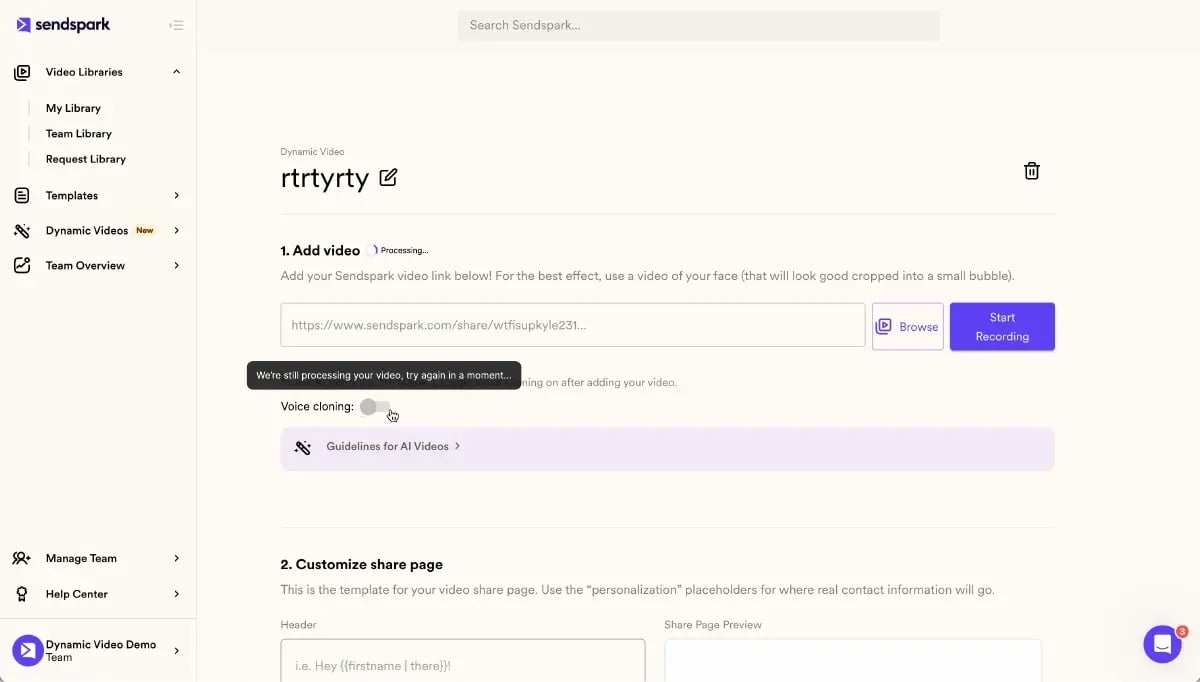
Video is the fastest-growing outbound channel in B2B sales, and AI personalization has made it viable at scale. Where one-to-one video recording was too time-consuming for most SDR workflows, AI-personalized video now lets you record a single video template and automatically generate individualized versions for each prospect — with AI voice cloning speaking their name, their company website as the dynamic background, and a personalized thumbnail showing their logo.
The results are measurable. Sendspark customers using AI-personalized video in their outbound sequences see 2-3x higher email reply rates and 40-50% more meetings booked compared to text-only sequences. When a prospect opens an email and sees a thumbnail with their own name and company website, the click-through rate increases 50% on average.
Video works particularly well as:
- The first touch: A personalized intro video sets you apart immediately from competitors sending generic emails
- A follow-up after no response: Video stands out when prospects are ignoring your third or fourth text email
- A deal progression tool: After an initial meeting, a short video recap with next steps shows professionalism and keeps deals moving
Here’s a summary of how each outbound channel compares across key dimensions:
| Channel | Avg. Reply Rate | Best Touchpoint | Scalability | Personalization Ceiling |
|---|---|---|---|---|
| Cold Email | 2-5% | Touch 1, 3, 5 | Very high | Medium (merge fields) |
| Cold Calling | 8-12% connect rate | Touch 2, 4 | Medium (headcount-limited) | High (live conversation) |
| LinkedIn Outreach | 10-25% acceptance rate | Touch 3, 6 | Medium (platform limits) | Medium-high |
| AI-Personalized Video | 3-8% (2-3x vs. email alone) | Touch 1 or 4 | Very high (AI scales it) | Very high (AI cloning) |
Record One Video. AI Personalizes Thousands.
Sendspark is the AI video personalization platform for B2B sales. Record once, and AI voice cloning generates thousands of individually personalized videos with dynamic backgrounds and personalized thumbnails — each prospect hears their name, sees their website, in your voice. Sales teams see 2-3x more replies.
Get Started NowHow to Build an Outbound Sales Process
A repeatable outbound sales process has five stages: defining who to target, researching and personalizing, building a multi-channel sequence, executing with discipline, and measuring what’s working. Reps who follow a documented process outperform ad-hoc outreach by a significant margin — not because the process is rigid, but because it ensures nothing falls through the cracks.
Step 1: Define Your ICP and Build a Targeted List
Every effective outbound program starts with a precise ideal customer profile (ICP). Vague targeting wastes rep time and burns domain reputation. Your ICP should specify:
- Company-level: Industry, company size (headcount + revenue), tech stack signals, growth stage, geography
- Contact-level: Title, seniority, department, buying authority
- Behavioral signals: Hiring for relevant roles, tech stack changes, recent funding, expansion news
Build your prospect list in a tool like Clay or ZoomInfo, enriching each record with firmographic data before any contact is made. A list of 200 high-fit prospects outperforms a list of 2,000 low-fit ones every time.
Step 2: Research and Personalize at Scale
Personalization is the single biggest driver of outbound reply rates. But personalizing 200 outreach attempts manually isn’t feasible for most SDR teams. The modern approach is layered personalization:
- Level 1 (table stakes): First name, company name, job title — automated via merge fields
- Level 2 (better): Recent company news, job posting signals, or tech stack reference — requires light research or a tool like Clay with AI enrichment
- Level 3 (strong): Role-specific pain point connected to a specific business outcome relevant to their stage/sector
- Level 4 (highest impact): AI-personalized video showing the prospect’s own website as the background, AI voice cloning speaking their name — immediately signals genuine attention
With Sendspark’s AI-personalized video for sales prospecting, Level 4 personalization is no longer manual. Record one video template, upload your prospect list, and the platform generates individualized videos for each contact — complete with dynamic backgrounds and voice-cloned greetings. What used to take hours per prospect now takes minutes for hundreds.
Step 3: Build Your Multi-Channel Sequence
A sequence maps out every touchpoint across channels and timing. A typical high-performing 10-touch sequence for B2B SaaS might look like this:
| Day | Channel | Action |
|---|---|---|
| Day 1 | AI-personalized video email (dynamic background + voice-cloned name) | |
| Day 2 | Connect request with personalized note referencing email | |
| Day 4 | Value-add follow-up (relevant resource, case study, or insight) | |
| Day 5 | Phone | Call referencing Day 1 email — warm context, one qualifying question |
| Day 8 | Social proof email (customer story from similar company) | |
| Day 10 | Message (assuming connection accepted) with direct calendar link | |
| Day 12 | Phone | Second call attempt — voicemail if no answer |
| Day 15 | Short check-in (“Still relevant?”) with 1-click CTA | |
| Day 20 | Break-up email (genuine, not passive-aggressive) | |
| Day 21 | Final LinkedIn comment or video message if still connected |
For detailed guidance on building sequences, see our guide to multi-channel outreach strategy.
Step 4: Execute and Track Engagement
Use a sales engagement platform — Outreach, SalesLoft, or Apollo — to automate sequence delivery and track opens, clicks, replies, and video watch time. The engagement data tells you what’s resonating. A prospect who watches 80% of your video but doesn’t reply is far warmer than one who opened your email but spent 2 seconds on it.
Integrate your Sendspark videos into Outreach sequences or connect via HubSpot to sync video view data directly into the CRM. When your next follow-up references what the prospect watched, conversion rates jump significantly.
Step 5: Measure and Optimize
Outbound works at scale when you optimize based on data. Track these five core metrics:
| Metric | Definition | Target Benchmark |
|---|---|---|
| Reply Rate | Replies ÷ Emails Sent | 3-8% (cold email average) |
| Meeting-Booked Rate | Meetings ÷ Contacts Touched | 1-3% of total sequence contacts |
| Pipeline Velocity | (Deals × Win Rate × Avg Value) ÷ Sales Cycle Length | Benchmark against prior quarter |
| Opportunity-to-Close Rate | Closed Won ÷ Opportunities Created | 20-30% for qualified outbound |
| Cost Per Opportunity | Total Outbound Cost ÷ Opportunities Created | Varies by ACV — track trend, not absolute |
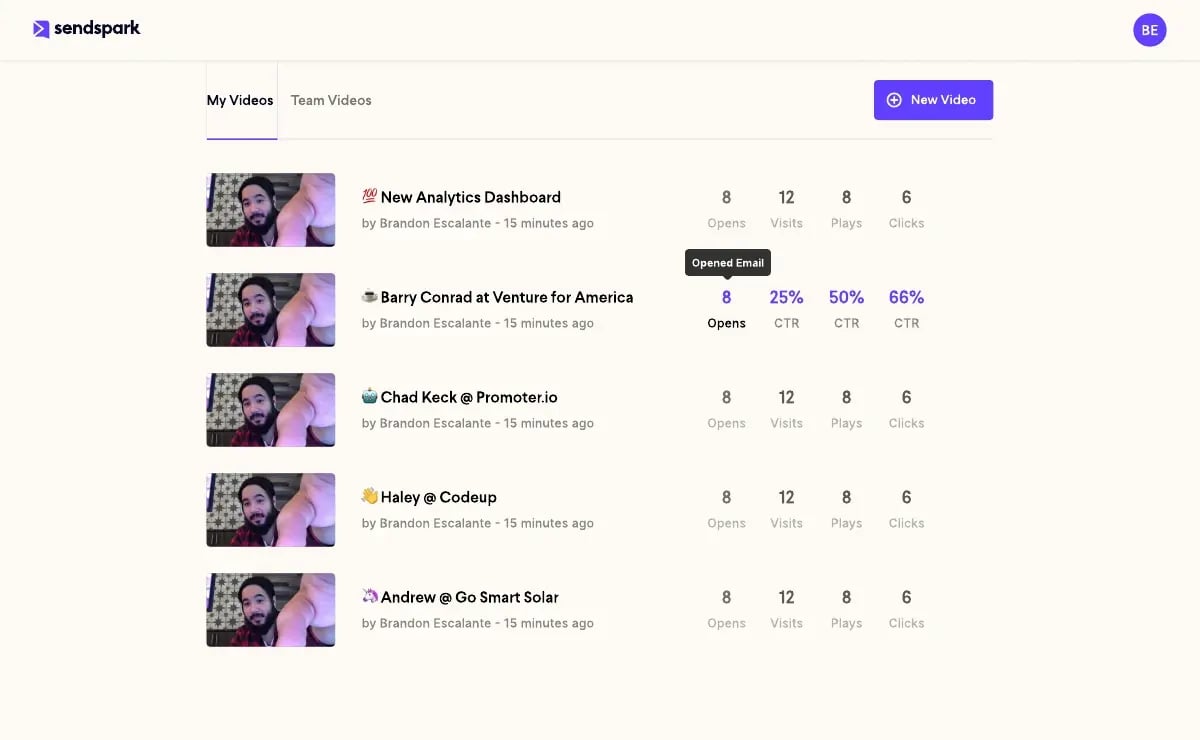
According to McKinsey research on B2B digital transformation, companies that invest in AI-augmented sales outreach see 10-15% improvement in pipeline conversion rates. The data from your own sequences — especially video engagement data — is your biggest optimization lever.
For more on what to measure, see our full guide to outbound sales strategy and the step-by-step sequence setup in our outbound prospecting playbook.
“The teams that consistently win at outbound treat it like a science experiment: hypothesis, variable, measure, iterate. They’re not sending 1,000 emails hoping something sticks — they’re sending 200 well-researched messages, measuring every touchpoint, and using that data to improve the next 200.” — Gong Labs, Outbound Sales Benchmarks Report
Outbound Sales: Key Concepts at a Glance
| Concept | Definition / Best Practice |
|---|---|
| Outbound Sales | Proactively reaching prospects before they raise their hand. Rep controls timing and targeting. |
| ICP | Ideal Customer Profile — firmographic + behavioral description of your best-fit buyer. Define before building any list. |
| Multi-Touch Sequence | 7-12 coordinated touchpoints across 2-3 channels over 21 days. More effective than single-channel blasts. |
| AI-Personalized Video | Record one video; AI voice cloning + dynamic backgrounds generate thousands of individualized versions. 2-3x higher reply rates. |
| Key Channels | Cold email, cold calling, LinkedIn, and AI-personalized video — use at least 2-3 per sequence. |
| Top Metric | Meeting-booked rate (1-3% of contacted prospects) — the clearest signal that your messaging and targeting are working. |
Frequently Asked Questions
What is outbound sales?
Outbound sales is the practice of proactively reaching out to potential customers before they’ve expressed interest. Sales reps identify target accounts that fit the ideal customer profile, then initiate contact through cold email, phone calls, LinkedIn messages, or personalized video. The rep controls when and how the first contact happens — unlike inbound, where the prospect initiates.
What is the difference between inbound and outbound sales?
Inbound sales happens when prospects find you through search, content, or ads and reach out first. Outbound sales is the reverse — your reps proactively identify and contact prospects. Inbound leads are usually further along the buying journey; outbound prospects may not have started searching yet. Most high-growth B2B companies run both in parallel, using outbound to fill the pipeline while inbound compounds over time.
What are the best channels for outbound sales?
The four most effective outbound sales channels for B2B are cold email, cold calling, LinkedIn, and AI-personalized video. Each channel has different strengths: email scales easily, phone allows real-time qualification, LinkedIn reaches decision-makers who ignore their inboxes, and personalized video stands out in crowded inboxes. RAIN Group research shows the best-performing teams use at least two channels in every sequence.
How many touchpoints does outbound sales require?
Research consistently shows that 7-12 multi-channel touchpoints are needed to convert a cold prospect into a booked meeting. Most reps give up after 2-3 attempts, which means the majority of bookable prospects are never followed up with enough times. A well-structured 21-day sequence that includes email, phone, LinkedIn, and video touchpoints maximizes your chances of reaching the prospect at the right moment.
Does outbound sales still work in 2026?
Yes — outbound sales still works and remains the dominant source of B2B pipeline at most technology companies. What doesn’t work is generic, low-personalization outbound: mass email blasts, cold calls with no context, or copy-paste LinkedIn messages. Modern outbound succeeds when it combines precise ICP targeting, genuine personalization (including AI-personalized video), and coordinated multi-channel sequences of 8-12 touchpoints.
How does AI improve outbound sales?
AI improves outbound sales in three main ways: automating research and personalization (tools like Clay enrich prospect data at scale), optimizing send timing and messaging based on engagement patterns, and generating personalized video at scale. Platforms like Sendspark use AI voice cloning and dynamic backgrounds to auto-generate individualized videos for each prospect — so a rep records one video and AI creates a personalized version for every contact on their list.
What metrics should I track for outbound sales?
The five key outbound sales metrics are: reply rate (target 3-8% for cold email), meeting-booked rate (1-3% of contacted prospects), pipeline velocity (track trend over time), opportunity-to-close rate (20-30% for well-qualified outbound deals), and cost per opportunity (normalize against ACV to evaluate ROI). Video-specific metrics — watch rate, completion rate, and CTA click rate — are also critical if you’re using personalized video in your sequences.
Sources & References
- Salesforce State of Sales Report — “Sales reps spend only 28% of their week actually selling; outbound prospecting remains the top source of new B2B pipeline” (2026)
- HubSpot Sales Statistics — “80% of sales require 5 or more follow-up calls after the initial meeting” (2025)
- Gartner: The New B2B Buying Process — “75% of B2B buyers prefer digital-first or rep-free purchase experiences” (2024)
- McKinsey: B2B Digital Inflection Point — “AI-augmented sales outreach produces 10-15% improvement in pipeline conversion rates” (2024)
- RAIN Group: Outbound Sales Research — “Top-performing sales teams use 2-3 outbound channels per sequence and average 8 touchpoints before booking” (2025)
Record One Video. AI Personalizes Thousands.
Sendspark is the AI video personalization platform for B2B sales. Record once, and AI voice cloning generates thousands of individually personalized videos with dynamic backgrounds and personalized thumbnails — each prospect hears their name, sees their website, in your voice. Sales teams see 2-3x more replies.
Get Started Now