Most outbound sales efforts fail before a single reply comes in — not because outbound doesn’t work, but because the approach is improvised rather than strategic. According to Gartner research, B2B buyers spend only 17% of their total purchase journey actually talking to sellers. That means your outbound window is narrow — and how you use it determines whether you generate pipeline or get ignored. This guide breaks down exactly how to build an outbound sales strategy that generates consistent, predictable pipeline. For new AEs, see our account executive ramp-up plan with 30-60-90 day template to build pipeline fast from day one. For the bigger-picture decision of how outbound fits alongside inbound in your overall pipeline mix, see our inbound vs outbound sales guide.
For a comprehensive overview of outbound sales fundamentals, see our guide to What Is Outbound Sales?.
Key Takeaways
- An outbound sales strategy requires four components: a defined ICP, a targeted account list, a multi-channel sequence, and a measurement framework.
- The most effective outbound sequences use 8-12 touchpoints across 3-4 channels — email, phone, video, and LinkedIn — spaced over 3-4 weeks.
- Personalized video outreach generates 2-3x more replies than text-only cold email when used in outbound sequences.
- Measuring reply rate, meeting rate, and opportunity rate at each stage lets you pinpoint and fix the weakest link in your funnel.
- The biggest outbound mistake is volume without relevance — high send volume with generic messaging produces diminishing returns and rep burnout.
What Is an Outbound Sales Strategy?
An outbound sales strategy is a systematic plan for proactively reaching potential customers rather than waiting for them to find you. It defines who you target, which channels you use to reach them, how many touchpoints you send, and how you measure success. A true strategy is repeatable and data-driven — not a collection of one-off cold emails sent when pipeline runs dry. For context on the broader framework, see our guide on your RevOps strategy.
The key difference between outbound and inbound sales is who initiates contact. With inbound sales, prospects come to you through content, SEO, or referrals. With outbound sales, your team proactively identifies and contacts prospects who may not yet know they need your solution. Both motions work, but outbound gives you direct control over pipeline volume and target account selection.
Outbound has faced a crisis of effectiveness over the past few years — inboxes are crowded, cold call pick-up rates have dropped, and buyers have grown skeptical of generic pitches. But outbound still works when it’s strategic. RAIN Group research shows that 82% of buyers still accept meetings when sellers proactively reach out — the issue is relevance and timing, not the channel itself. Our comparison of warm outbound vs. cold outbound breaks down exactly how much of that relevance gap AI-personalized video can close.
A complete outbound sales strategy has four components:
- ICP and target account list — who you’re reaching out to and why they’re a fit
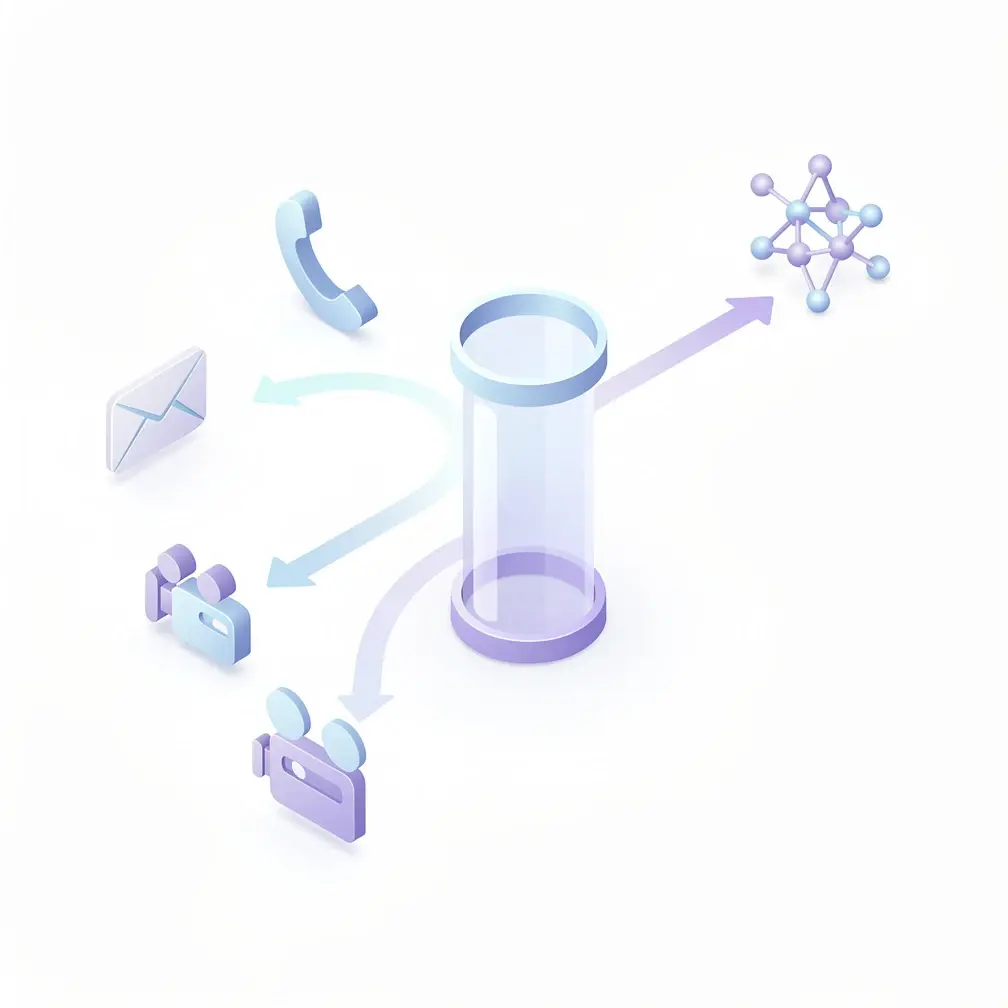
- Channel mix — the combination of email, phone, video, and LinkedIn you’ll use
- Sequence design — the order, timing, and cadence of your touchpoints
- Measurement framework — the metrics you track to optimize each stage
Step 1: Define Your ICP and Target Account List
Your Ideal Customer Profile (ICP) is the foundation of every outbound campaign. Without a sharp ICP, you’re sending volume into a crowd — not a pipeline. The ICP defines the characteristics of companies most likely to buy, get value, and renew. Your target account list (TAL) is the specific set of companies that match your ICP right now. For the highest-value accounts, this ICP work becomes the foundation for account-based selling.
Build Your ICP with Firmographics and Technographics
Start with firmographic filters: company size, industry, revenue range, geography, and growth stage. These are table-stakes filters that eliminate obviously wrong-fit targets. Then layer in technographic data — what software does this company already use? A company running Salesforce + Outreach + ZoomInfo is a very different prospect than one using spreadsheets.
The strongest ICPs also include a trigger event layer — signals that indicate a company is in-market right now. Common triggers include:
- Recent funding round (Series A-C companies have budget and growth pressure)
- New sales leadership hire (new VP of Sales often rebuilds the tech stack)
- Job postings for SDRs or AEs (indicates active sales team buildout)
- Product launch or expansion into new market
- Competitive vendor contract renewal coming up (3-6 months prior)
Build and Tier Your Target Account List
Once your ICP is defined, pull your TAL from tools like Clay, ZoomInfo, or Apollo (available through Sendspark’s Apollo integration). Aim for 200-500 accounts in active rotation at any time — enough volume to fill pipeline without spreading outreach so thin it becomes impersonal. Pairing your TAL with a clear sales territory management framework ensures every account has an assigned rep before sequences begin.
Tier your TAL into three buckets:
- Tier 1 (high-touch): 20-50 dream accounts. Full personalization, multi-channel, video outreach, direct mail if needed.
- Tier 2 (medium-touch): 100-200 strong-fit accounts. Semi-personalized email sequences + LinkedIn + calls.
- Tier 3 (low-touch): 200-300 broader fit. Templated sequences with light personalization at scale.
Pro tip
Spend 80% of your personalization effort on Tier 1 accounts. A single highly personalized message to a dream account outperforms 50 generic touches. Use AI tools like Sendspark’s AI video personalization to scale Tier 2 personalization without doubling research time.
Step 2: Build Your Outbound Channel Mix
Single-channel outbound is a liability. If you’re only sending cold email, you’re competing with every other team in the prospect’s inbox. An effective outbound sales strategy uses 3-4 channels in a coordinated sequence, creating multiple impressions across different contexts. Here’s how each channel performs and when to use it. For a complete step-by-step walkthrough, see our guide to building your outbound sales team.
Cold Email
Cold email remains the highest-volume outbound channel because it scales. A well-crafted cold email sequence — short subject line, one key pain point, one specific CTA — can generate 3-8% reply rates in tight ICP segments. The critical factor is personalization above the fold: the first sentence must reference something specific to the prospect’s company, role, or recent activity. Generic intros (“I help companies like yours…”) get deleted before the second sentence.
Resources like our cold email strategies guide cover the structural components of high-performing outbound emails in detail.
Video Outreach
Video is the highest-engagement channel in the outbound mix. Personalized video messages generate 2-3x more replies than text-only emails, with a meeting-to-reply ratio of 2:1. The challenge has always been scale — recording individual videos for each prospect takes too long for high-volume outreach.
Sendspark’s AI-powered personalization solves this. Record one video, and the AI personalizes it with each prospect’s name, company, and website as the background — automatically. A rep can deploy 200 personalized video touches in the time it used to take to record 10. For Tier 1 accounts, video in the first or second touch dramatically increases open rates because it signals genuine effort.
Record One Video. AI Personalizes Thousands.
Sendspark is the AI video personalization platform for B2B sales. Record once, and AI voice cloning generates thousands of individually personalized videos with dynamic backgrounds and personalized thumbnails — each prospect hears their name, sees their website, in your voice. Sales teams see 2-3x more replies.
Get Started NowCold Calling
Cold calling works best as a follow-up channel, not the first touch. Calling a prospect who has already seen your email or video converts significantly better than a cold dial with no prior contact. Modern outbound teams use calls on touchpoints 4-6 in a sequence, once some awareness has been established. Keep voicemails under 30 seconds and reference the email you sent — “I sent you a quick video earlier this week about [specific pain].”
On the inbound side, it’s also worth making sure you’re not losing warm leads who call back after watching your video — setting up an AI answering service ensures those calls get handled and routed even when your reps are mid-sequence or off the clock.
LinkedIn Outreach
LinkedIn works best for relationship-building before the ask. A three-step LinkedIn approach — view profile, like a recent post, then send a connection request with a brief personalized note — generates 15-20% connection acceptance rates in well-targeted accounts. After connecting, a short direct message works better than a pitch. Reserve LinkedIn InMail for senior decision-makers where email address discovery is difficult.
Step 3: Design Your Outbound Sequence
Your outbound sequence is the choreography of your multi-channel touches — how many, in what order, spaced how far apart. Harvard Business Review research on B2B sales shows that most reps give up after 2-3 attempts, while most meetings are booked on touchpoints 6-12. The gap between where reps stop and where meetings actually happen is where pipeline is lost.
Build your sequences in your outbound automation tool and connect them to your CRM via HubSpot or Salesforce so every touch is tracked. Review our guide to building a multi-touch sales sequence for a deeper look at sequence architecture.
Example 10-Touch Outbound Sequence (B2B SaaS)
| Day | Channel | Action | Personalization Level |
|---|---|---|---|
| 1 | View profile + like a recent post | Passive signal | |
| 2 | Personalized intro email (1 pain, 1 CTA) | High — specific to company/role | |
| 4 | Video | AI-personalized video (prospect’s website as background) | High — name + company dynamic |
| 7 | Connection request with brief note | Medium — reference video/email | |
| 9 | Value-add email (case study or insight) | Medium — industry relevant | |
| 12 | Phone | Call + voicemail referencing earlier outreach | High — reference prior touches |
| 15 | Reply bump to original email thread | Low — one-line bump | |
| 19 | LinkedIn DM | Short direct message (if connected) | Medium |
| 22 | Phone | Second call attempt | High — voicemail with specific ask |
| 28 | Break-up email (“close the loop”) | Low — brief and direct |
Your email cadence within the sequence matters as much as the channel mix. Spacing touchpoints too close together (every day) reads as spam. Too far apart (every two weeks) loses momentum. The example above spaces touches 2-7 days apart — enough time to be polite without losing the thread.
Common mistake
Reps often reduce sequence length to avoid feeling “pushy.” The data says the opposite — prospects who haven’t responded aren’t annoyed, they haven’t noticed yet. Eight or more touches is standard. The break-up email at the end often generates the highest reply rates in the whole sequence.
Step 4: Measure and Optimize Your Outbound Funnel
A strategy without measurement is just activity. To optimize your outbound sales strategy, you need to track conversion rates at each stage of the funnel and diagnose which stage is underperforming. The goal is to turn a random process into a system with predictable outputs.
Track these four key outbound metrics in your CRM:
| Metric | Definition | Good Benchmark (B2B SaaS) | What It Diagnoses |
|---|---|---|---|
| Email Open Rate | Opens / delivered emails | 40-60% | Subject line and deliverability |
| Reply Rate | Replies / contacts sequenced | 5-15% | Messaging relevance and personalization |
| Meeting Rate | Meetings booked / contacts reached | 2-5% | ICP fit and value proposition clarity |
| Opportunity Rate | Opps created / meetings held | 25-40% | Discovery quality and TAL targeting |
Once you have benchmarks, use them diagnostically. Low open rate? Fix the subject line or deliverability. High open rate but low reply rate? Your message body isn’t compelling or isn’t personalized enough. High reply rate but low meeting rate? Your offer or CTA needs work. Low opportunity rate from meetings? Your ICP is off — you’re booking meetings with the wrong-fit companies. For a deeper look at the right KPIs to track, see our guide to B2B demand generation metrics and our complete B2B sales metrics to track guide.
How to Run A/B Tests on Your Outbound Strategy
Change one variable at a time and run each test for at least 100 contacts before drawing conclusions. The highest-impact variables to test, in order:
- Subject line (affects open rate — most visible lever)
- First sentence personalization (affects reply rate)
- Channel order (email-first vs video-first vs LinkedIn-first)
- Sequence length (8-touch vs 12-touch)
- CTA type (book a call vs reply to this email vs watch a 2-minute demo)
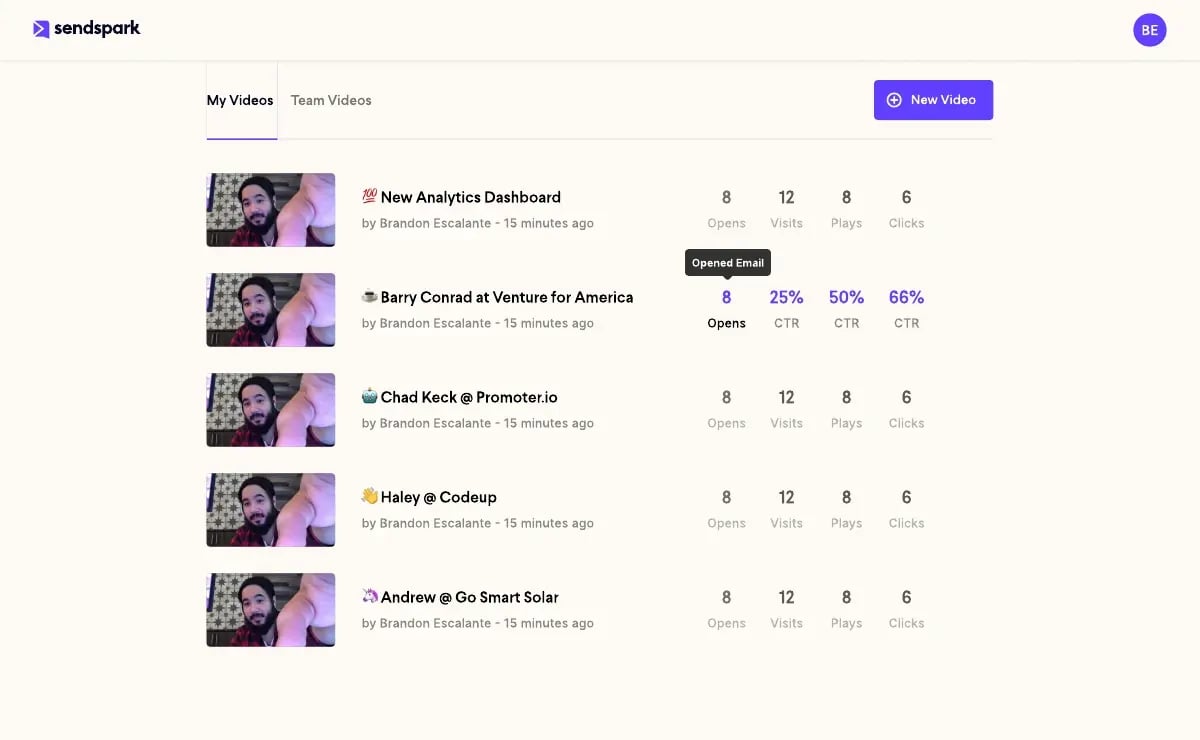
Video open rates and view completion are tracked natively in Sendspark’s video analytics dashboard — you can see exactly which prospects watched your video, how long they watched, and whether they clicked your CTA. Feeding this engagement data back into your CRM signals which accounts are warming up before they ever reply.
Outbound Sales Strategy Quick Reference
Use this summary table to quickly assess how to deploy each component of your outbound sales strategy based on account tier and goals.
| Component | Tier 1 (Dream Accounts) | Tier 2 (Strong Fit) | Tier 3 (Broad Fit) |
|---|---|---|---|
| Account volume | 20-50 | 100-200 | 200-300 |
| Channels | Email + Video + Phone + LinkedIn | Email + Video + LinkedIn | Email + LinkedIn |
| Touchpoints | 10-14 | 8-10 | 5-7 |
| Personalization | Deep research per account | AI-assisted personalization | Light (name, company, industry) |
| Video outreach | Individual + AI personalized | AI personalized at scale | Optional |
| Target reply rate | 15-25% | 8-15% | 3-8% |
For a complete overview of the tools that power each stage of this system, see our breakdown of the best B2B prospecting tools for building and executing your outbound motion.
Frequently Asked Questions
What is an outbound sales strategy?
An outbound sales strategy is a systematic plan for proactively contacting potential customers before they’ve expressed interest. It defines your target accounts, the channels you use (email, phone, video, LinkedIn), the sequence and timing of touches, and the metrics you track to measure and improve performance.
How many touchpoints should an outbound sequence have?
Most high-performing outbound sequences use 8-12 touchpoints spread over 3-4 weeks. RAIN Group data shows that 80% of meetings are booked between touchpoints 6 and 12 — reps who stop at 2-3 attempts miss most of their pipeline. Include a break-up email at the end of the sequence, which typically generates some of the highest reply rates.
What is a good reply rate for outbound sales?
A good reply rate for B2B outbound is 5-15%, depending on your ICP tightness and personalization level. Tier 1 high-touch sequences targeting well-researched dream accounts can achieve 15-25%. Broad Tier 3 sequences might see 3-8%. If you’re below 3%, focus on ICP refinement and first-line personalization before increasing volume.
What are the best channels for outbound sales in 2026?
The most effective outbound sales channel mix in 2026 is email + personalized video + LinkedIn, with phone as a follow-up channel from touchpoint 4 onward. Personalized video (using tools like Sendspark’s video personalization platform) generates 2-3x more replies than text email alone and is still underutilized by most outbound teams.
How do you personalize outbound sales at scale?
Personalize outbound at scale by combining data enrichment with AI tools. Use Clay or ZoomInfo to pull company-specific data (funding, headcount, tech stack, recent hires) into your sequences automatically. For video personalization, tools like Sendspark let you record one video and AI-personalize it with each prospect’s name, company, and website — achieving Tier 1-quality personalization at Tier 3 volume. For the full framework on building this out, see our guide to personalizing outbound sales at scale.
What’s the difference between outbound and inbound sales?
Outbound sales means your team proactively reaches out to prospects who haven’t raised their hand. Inbound sales means prospects come to you through content, SEO, or referrals and your team responds to their interest. Most B2B companies need both — inbound provides efficiency, outbound provides control over target account selection and pipeline volume.
How long does it take to see results from outbound sales?
Most B2B outbound programs generate first meetings within 2-4 weeks of launching. Pipeline impact (opportunities created) typically shows up within 45-60 days once sequences are running at full volume. Optimizing to predictable results — consistent reply rates, meeting rates, and opportunity rates — usually takes 90 days of testing and iteration.
Sources & References
- Gartner — “B2B buyers spend only 17% of their total purchase journey talking to potential suppliers” (2023)
- RAIN Group — “82% of buyers accept meetings when sellers proactively reach out” (2024)
- Harvard Business Review — Research on B2B buying dynamics and seller engagement windows (2020)
- Salesforce — “State of Sales: Outbound prospecting strategies and benchmarks” (2024)
Record One Video. AI Personalizes Thousands.
Sendspark is the AI video personalization platform for B2B sales. Record once, and AI voice cloning generates thousands of individually personalized videos with dynamic backgrounds and personalized thumbnails — each prospect hears their name, sees their website, in your voice. Sales teams see 2-3x more replies.
Get Started Now