B2B email marketing delivers an average ROI of $36 for every $1 spent, according to HubSpot’s email marketing research — making it the highest-ROI channel available to B2B teams. Yet most companies leave that return on the table by sending generic batch-and-blast campaigns that prospects ignore. This guide covers every layer of B2B email marketing: what it is, which campaign types work, best practices that move the needle, and how AI-personalized video is reshaping what a “good email” looks like in 2026. For a deeper look, see our cold email personalization guide. For more on this, see our guide to personalizing the customer experience.
See our roundup of the getting started with B2B email marketing.
Key Takeaways
- B2B email marketing generates an average ROI of $36 for every $1 spent — the highest of any digital channel.
- The best B2B email campaigns combine audience segmentation, single-action CTAs, and relevance-first messaging — not just design.
- AI-personalized video emails generate 2-3x more replies than plain text outreach by giving each recipient a unique, personalized experience.
- Cold outreach, lead nurture, newsletters, and re-engagement each require a distinct strategy — treating them the same kills performance.
- Tracking reply rate and pipeline influenced matters more than open rate alone for B2B email ROI measurement.
What Is B2B Email Marketing?
B2B email marketing is the practice of using email to communicate with businesses — reaching decision-makers, nurturing leads, and driving revenue in longer, multi-stakeholder sales cycles. Unlike B2C email, which targets individual consumers with impulse-driven messaging, B2B email is built around logic, value proof, and sustained relationship-building across weeks or months.
The core difference comes down to audience and intent. B2B buyers are often committees — a VP of Sales, a RevOps lead, and a CFO all evaluating the same purchase. Your emails need to address each stakeholder’s concerns, provide evidence (case studies, ROI data, benchmarks), and maintain relevance through a longer buying journey. A B2C campaign might convert in one email; a B2B sequence typically runs 6-12 touches across 30-90 days.
Why B2B Email Still Delivers in 2026
Despite the rise of LinkedIn, Slack, and video outreach, email remains the default B2B communication channel. The Content Marketing Institute’s B2B Content Marketing Report consistently ranks email as the top distribution channel for B2B marketers, with 81% of B2B marketers saying email newsletters are their most-used content marketing format.
The reason is simple: every business professional has a work email address they check throughout the day. Email doesn’t require an accepted connection request, a paid ad budget, or an algorithm to surface your message. Combined with automation and personalization tools, it scales in ways that phone-based outreach cannot.
B2B vs B2C Email: The Key Differences
| Factor | B2B Email | B2C Email |
|---|---|---|
| Decision timeline | 30–180 days | Minutes to days |
| Buying committee | 3–10 stakeholders | 1 person |
| Messaging tone | Logical, ROI-focused, evidence-based | Emotional, aspirational, impulse-driven |
| Primary goal | Meeting booked, demo requested | Immediate purchase, discount redemption |
| Send frequency | Sequenced, spaced 2–5 days apart | Weekly or triggered by behavior |
| Personalization depth | Company, role, pain point, tech stack | Name, purchase history, location |
Types of B2B Email Marketing Campaigns
B2B email marketing covers six distinct campaign types, each with a different goal, tone, and success metric. Treating them with the same template or frequency is one of the most common reasons B2B email programs underperform. The campaigns that drive pipeline are cold outreach and nurture sequences; the ones that build brand authority are newsletters and thought leadership sends.
Cold and Prospecting Emails
Cold emails are the top-of-funnel engine for most B2B sales teams. The goal is simple: get a reply, not a purchase. A strong cold email is under 150 words, references a specific pain point or company insight, and closes with a single low-friction ask (“Worth a 15-minute call?”). For a complete breakdown of cold email campaign structure, see our guide to cold email strategies that get replies.
The most effective cold prospecting emails today include personalized elements beyond just first name: job title context, recent company news, or a specific observation about the prospect’s tech stack or growth stage. This type of contextual personalization is what separates a 2% reply rate from a 12% reply rate in B2B outreach.
Lead Nurture Sequences
Nurture sequences run after a prospect has shown intent — downloaded a resource, attended a webinar, or engaged with your website. Unlike cold outreach, nurture emails assume some level of awareness. They move prospects through the funnel by building trust (case studies, social proof), reducing risk (FAQs, security docs, ROI calculators), and creating urgency (limited trial, cohort start date).
A well-structured nurture sales sequence typically runs 6-8 emails over 3-4 weeks, with content that maps to each stage of the buyer’s consideration. The email cadence matters as much as the content — too aggressive and you cause unsubscribes; too sparse and the prospect forgets you exist.
Newsletters and Thought Leadership
B2B newsletters build brand awareness and keep you top-of-mind during the extended buying cycle. They work best when they deliver genuine utility: industry trend analysis, original data, curated resources your audience actually uses. The standard frequency is bi-weekly or monthly — enough to stay relevant without flooding inboxes.
Newsletters rarely generate direct pipeline but they create the brand familiarity that makes cold outreach dramatically more effective. Prospects who’ve read your newsletter three times before your SDR emails them will reply at a much higher rate than cold-cold contacts.
Record One Video. AI Personalizes Thousands.
Sendspark is the AI video personalization platform for B2B sales. Record once, and AI voice cloning generates thousands of individually personalized videos with dynamic backgrounds and personalized thumbnails — each prospect hears their name, sees their website, in your voice. Sales teams see 2-3x more replies.
Get Started NowEvent and Webinar Invitations
Event invite emails serve a specific conversion goal: registration. They work best with a clear value statement (what will I learn?), social proof (speaker credentials, past attendee count), and a hard deadline. Send the initial invite 2-3 weeks out, a reminder one week before, and a final “last chance” 24 hours ahead. For virtual events, a video preview of the speaker or content dramatically increases registration rates.
Re-engagement Campaigns
Every B2B database has a segment of contacts who haven’t engaged in 90+ days. Re-engagement campaigns are a cost-effective way to revive dormant leads before removing them from active sequences. The best approach: acknowledge the silence directly (“It’s been a while”), offer something genuinely new (new product feature, fresh case study), and include an easy exit if they’re no longer the right fit.
Pro tip
Before sending re-engagement emails to dormant contacts, run a quick deliverability check. Emailing a list of bounced or spam-marked addresses hurts your sender reputation and can tank deliverability across your entire domain. Use an email verification tool to clean the list first.
B2B Email Marketing Best Practices
The highest-performing B2B email programs share five core practices: audience segmentation before sending, subject lines written for skimming, single-action CTAs, mobile-first formatting, and personalization that goes deeper than first name. Each of these is individually worth a 10-20% performance lift — combined, they’re the difference between a campaign that opens and one that closes deals.
Write Subject Lines That Get Opened
B2B subject lines live and die by relevance and specificity. Generic subject lines (“Thought of you” or “Quick question”) have been overused to the point of invisibility. What still works: specificity about the recipient’s context (“Your HubSpot stack + Sendspark”), curiosity gaps (“The stat your SDR team should know”), or concrete value statements (“How [Company] booked 40% more meetings”).
According to Campaign Monitor’s email marketing benchmarks, B2B emails have an average open rate of 15-25%, but personalized subject lines increase open rates by up to 26%. Keep subject lines under 50 characters — most email clients truncate beyond that on mobile. And always A/B test: even a single subject line change can move open rates by 30%+.
Personalize Beyond First Name
True B2B personalization goes several levels deeper than “Hi [First Name].” The most effective personalization signals in B2B email include:
- Company context — Recent funding, product launch, job postings, or earnings reports
- Role-specific pain points — What a VP of Sales cares about differs entirely from a CMO or CFO
- Tech stack relevance — Referencing the tools they already use signals genuine research
- Industry-specific language — Using the vocabulary of their vertical shows you understand their world
This level of personalization used to require hours per prospect. Now, with tools like Clay for data enrichment and Sendspark’s AI-personalized video intros, you can generate contextually relevant personalization at scale — each prospect gets a unique message without each rep spending 20 minutes on research.
Structure Emails for Scan-Reading
B2B recipients read emails the same way they read everything else in 2026: on mobile, in a linear scan, looking for a reason to stop and engage. Structure your emails accordingly:
- First sentence must deliver the core value or observation — no warm-up
- Use short paragraphs (2-3 sentences max)
- Bold the most important phrase in each paragraph
- One CTA per email — not two, not three, one
- Sign off with a genuine observation, not a generic “Best”
For B2B lead generation email templates that follow these principles, our library covers prospecting, follow-up, and re-engagement use cases with annotated examples.
Common mistake
Don’t end B2B emails with open-ended questions like “What do you think?” or “Does this make sense?” These shift the cognitive burden to the prospect. Instead, close with a specific, low-friction ask: “Worth a 20-minute call this week? Here’s my calendar.” Specific CTAs get 3x more responses than vague ones.
How to Measure B2B Email Marketing Success
B2B email marketing success is measured across four primary metrics: open rate (awareness), click-through rate (engagement), reply rate (intent), and pipeline influenced (revenue impact). Most teams over-index on open rate because it’s the easiest metric to see — but in B2B, reply rate and pipeline influenced are the metrics that actually correlate with revenue.
According to Gartner’s email marketing research, only 23% of B2B marketers consistently track pipeline influenced by email — the rest measure only surface engagement. This is a significant missed opportunity: teams that track email-to-pipeline contribution can demonstrate direct ROI and earn budget for better personalization, better data, and better tooling.
| Metric | B2B Benchmark | What It Tells You | How to Improve |
|---|---|---|---|
| Open rate | 15-25% | Subject line and sender reputation quality | A/B test subject lines, warm your domain |
| Click-through rate (CTR) | 2-5% | Content relevance and CTA effectiveness | Single CTA, above the fold, action-verb copy |
| Reply rate (cold outreach) | 3-8% | Personalization depth and offer relevance | Deeper personalization, AI video intros |
| Unsubscribe rate | <0.5% | List quality and send frequency fit | Segment better, reduce send frequency |
| Bounce rate | <2% | Email list hygiene | Verify emails before importing, clean regularly |
| Pipeline influenced | Varies by deal size | Revenue contribution of email channel | UTM tracking, CRM integration, attribution models |
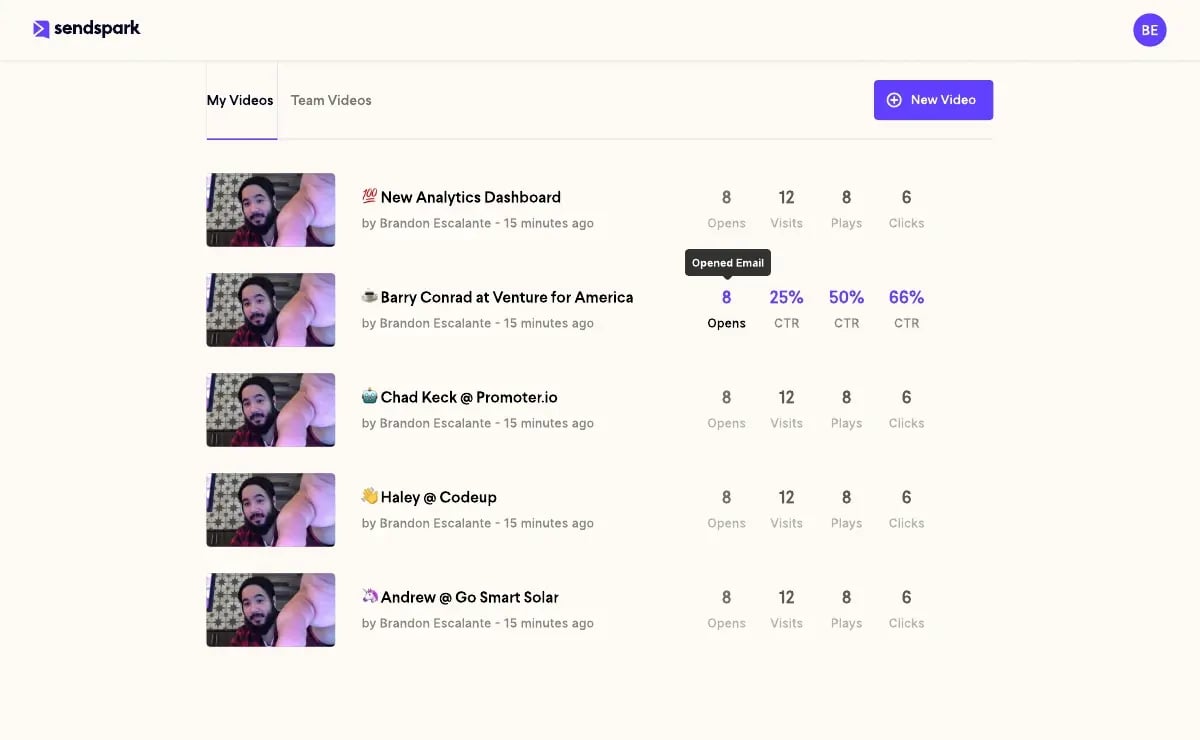
For teams running email through HubSpot, the HubSpot + Sendspark integration automatically pushes video engagement data — opens, plays, watch time, CTA clicks — into contact records, making pipeline attribution far more accurate than tracking clicks alone.
How AI-Personalized Video Transforms B2B Email Results
AI-personalized video in B2B email outperforms plain text because it delivers something text cannot: a human face, a personal greeting, and a visual hook that stops the scroll. When a prospect opens an email and sees a thumbnail of a video that shows their company name, their website, or a message addressed specifically to them — they engage. Sendspark customers consistently report 2-3x higher reply rates compared to equivalent text-only sequences.
The mechanism is AI voice cloning for sales prospecting. Rather than recording a unique video for each of the 500 prospects in your sequence, you record one master video. Sendspark’s AI then generates a personalized version for every contact — cloning your voice to speak each person’s name, showing their company website as the video background, and adding a personalized thumbnail with their name overlaid. The prospect receives what feels like a custom, individually recorded video — at a fraction of the time.
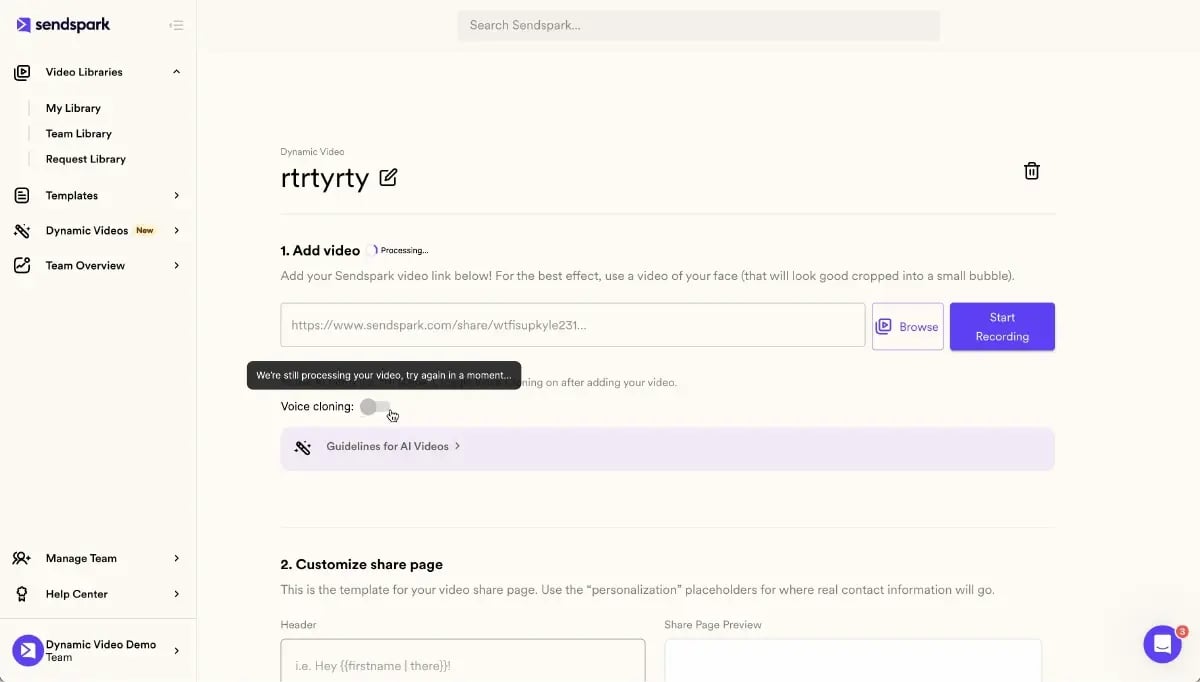
Where AI Video Works Best in B2B Email
Not every email type benefits equally from video. Here’s where the impact is highest:
- Cold outreach — A personalized video thumbnail in a cold email stands out immediately in a text-heavy inbox. The visual signal (“this person actually made something for me”) drives curiosity clicks that no subject line can match.
- Post-demo follow-up — After a discovery call, a personalized video recap with next steps feels attentive and professional. It’s harder to ghost than a text email.
- Re-engagement campaigns — A genuine-feeling video message to a dormant prospect (“I wanted to personally reach back out…”) outperforms any text re-engagement format.
- Deal progression — When a deal goes quiet at proposal stage, a video walking through the proposal key points and addressing the buyer’s specific objections can unlock momentum.
The video personalization platform integrates directly with HubSpot sequences, Outreach, SalesLoft, Apollo, and 50+ other tools — so personalized video sends happen automatically as part of your existing email workflow, with zero extra steps from your reps.
“We went from a 4% reply rate on cold outreach to over 11% after adding Sendspark AI video intros to our sequences. The difference was immediate — prospects would reply just to comment on the video before we even got to the pitch.” — SDR Manager, B2B SaaS company
According to Harvard Business Review’s research on B2B buying decisions, buyers increasingly prioritize vendors who demonstrate genuine understanding of their situation. AI-personalized video is the most scalable way to signal that understanding in an email channel that’s otherwise saturated with identical outreach.
B2B Email + AI Video: Performance Summary
| Email Type | Text-Only Reply Rate | With AI Video Reply Rate | Lift |
|---|---|---|---|
| Cold prospecting | 3-5% | 8-15% | 2-3x |
| Post-demo follow-up | 15-25% | 30-45% | ~2x |
| Re-engagement | 2-4% | 6-10% | 2-3x |
| LinkedIn InMail + video | 8-12% | 18-25% | 2x |
Frequently Asked Questions
What is B2B email marketing?
B2B email marketing is the practice of using email to reach, engage, and convert business customers through targeted messaging. It covers cold outreach, lead nurture sequences, newsletters, event invites, and re-engagement campaigns — each designed for the longer, multi-stakeholder decision cycles typical of B2B sales.
What is the ROI of B2B email marketing?
B2B email marketing generates an average ROI of $36 for every $1 spent, according to HubSpot research — making it the highest-ROI digital channel. Actual returns vary based on list quality, personalization depth, and campaign type. Cold outreach sequences optimized for personalization and reply rate can generate significantly higher returns per dollar spent.
What are the most effective types of B2B email campaigns?
Cold prospecting emails, lead nurture sequences, and re-engagement campaigns are the highest-impact campaign types for pipeline generation. Newsletters and event invite emails build brand awareness and reduce resistance to later outreach. The most effective programs use all five types, with each serving a distinct stage of the buyer’s journey.
How do you measure B2B email marketing success?
Track open rate (15-25% benchmark), click-through rate (2-5%), reply rate (3-8% for cold outreach), and pipeline influenced. Most teams over-index on open rate — in B2B, reply rate and pipeline influenced are more meaningful indicators of revenue impact. Use UTM tracking and CRM integration to tie email campaigns directly to opportunities and closed deals.
How does AI video improve B2B email marketing performance?
AI-personalized video in B2B email increases reply rates by 2-3x compared to plain text outreach. Platforms like Sendspark let reps record one video and use AI voice cloning to generate personalized versions for each prospect — addressing them by name, showing their company website as the background. The personalized thumbnail and human face stop the scroll in a text-heavy inbox.
What is a good B2B email open rate?
A good B2B email open rate is 15-25% for cold outreach and 25-40% for nurture and newsletter sends to opted-in lists. Open rate benchmarks vary significantly by industry and list quality. Note that Apple Mail Privacy Protection has inflated open rate numbers since 2021 — reply rate and CTR are now more reliable engagement proxies for B2B campaigns.
How often should B2B emails be sent?
Cold outreach sequences typically send 5-8 touches over 3-4 weeks, spaced 2-5 days apart. Nurture sequences send 6-10 emails over 4-6 weeks. B2B newsletters perform best at bi-weekly or monthly frequency. Sending too frequently without value triggers unsubscribes and spam reports; too infrequently causes prospects to forget you between touches.
Sources & References
- HubSpot — Email Marketing Statistics — “B2B email marketing generates an average ROI of $36 for every $1 spent” (2024)
- Campaign Monitor — Email Marketing Benchmarks — “Personalized subject lines increase open rates by up to 26%” (2024)
- Content Marketing Institute — B2B Content Marketing Report — “81% of B2B marketers use email newsletters as their top content distribution channel” (2024)
- Gartner — Email Marketing Statistics — “Only 23% of B2B marketers consistently track pipeline influenced by email campaigns” (2024)
- Harvard Business Review — The Elements of Value in B2B — “B2B buyers prioritize vendors who demonstrate genuine understanding of their specific situation” (2023)
Record One Video. AI Personalizes Thousands.
Sendspark is the AI video personalization platform for B2B sales. Record once, and AI voice cloning generates thousands of individually personalized videos with dynamic backgrounds and personalized thumbnails — each prospect hears their name, sees their website, in your voice. Sales teams see 2-3x more replies.
Get Started Now