
Most B2B sales teams lose deals not because their product isn’t good enough — but because deals stall, go dark, and die quietly in a disorganized pipeline. According to Salesforce’s State of Sales report, high-performing sales teams are 1.5x more likely to use a dedicated CRM as their primary deal management hub than underperformers. The right deal management software gives every rep real-time visibility into where every opportunity stands, what action to take next, and when to escalate — before the deal goes cold.
This guide covers the 7 best deal management software tools for B2B sales teams in 2026: from purpose-built CRMs to AI-powered video personalization that moves deals forward faster at every stage.
Key Takeaways
- Deal management software tracks every opportunity from first contact to close, giving sales teams full pipeline visibility and reducing deal-slippage risk at every stage.
- Salesforce research shows high-performing teams are 1.5x more likely to use a dedicated CRM as their deal management hub compared to underperformers.
- The best deal management tools combine visual pipeline tracking, AI-powered forecasting, and native integrations with your existing sales stack.
- Sendspark’s AI video personalization adds a deal acceleration layer on top of any CRM — reps record one video and AI personalizes it for each prospect, boosting reply rates 2-3x at critical deal moments.
- When evaluating deal management software, prioritize ease of adoption over feature count — the best tool is the one your team actually uses every day.
What Is Deal Management Software?
Deal management software is a category of sales tools that helps B2B teams track, organize, and advance every sales opportunity from initial qualification to close. At its core, it gives you a structured pipeline where each deal has a defined stage, an owner, associated activities, and a clear next action. Without it, reps work from memory, spreadsheets, or chaotic email threads — and deals fall through the cracks.
The best deal management platforms go further than simple tracking. They surface deal risk signals before a prospect goes dark, automate follow-up reminders, log every touchpoint automatically, and forecast revenue based on pipeline health. According to LinkedIn’s State of Sales Report, sales professionals who consistently exceed quota are significantly more likely to say their CRM is central to their daily workflow than those who miss targets. The best deal management platforms also make it easy to log the findings from a win-loss analysis program against the closed record, so patterns across lost deals show up in the same dashboard as everything else.
Modern deal management software falls into several categories:
- Full CRMs — HubSpot, Salesforce, Pipedrive, Close. Handle everything from contact management to pipeline tracking and reporting.
- Visual pipeline tools — monday.com Sales CRM. Flexible boards for teams that want custom workflows over rigid CRM structures.
- Revenue intelligence platforms — Gong. Layer AI coaching and deal risk analysis on top of your existing CRM data.
- Deal acceleration tools — Sendspark. AI video personalization for deal progression — personalized follow-up videos, proposal walkthroughs, and stakeholder outreach that moves stalled deals forward.
Most B2B teams will need a combination: a CRM as the deal management backbone, plus one or two specialized tools for acceleration and intelligence.
How We Evaluated These Tools
We evaluated these deal management software tools across five criteria: pipeline visualization and deal tracking depth, AI and automation capabilities, native CRM integration quality, pricing transparency, and G2 review scores from verified B2B sales users. Each tool was assessed for how well it supports mid-market B2B sales teams of 5-50 reps — the segment where deal management has the highest ROI impact.
Tools with broad category overlap (e.g., general project management software pivoting to sales) were excluded. Every tool on this list was purpose-built for or heavily optimized for B2B deal management.
7 Best Deal Management Software Tools for B2B Sales
The seven best deal management software tools for B2B sales teams in 2026 are HubSpot CRM, Salesforce Sales Cloud, Pipedrive, Sendspark, Close CRM, monday.com Sales CRM, and Gong. Each serves a different role in the deal management stack — from full CRM backbone to AI video acceleration. Here is how they compare at a glance.
| Tool | Best For | Key Strength | Starting Price | G2 Rating |
|---|---|---|---|---|
| HubSpot CRM | SMB to midmarket all-in-one | Free tier, complete pipeline + marketing stack | Free / $20/mo | 4.4/5 |
| Salesforce Sales Cloud | Enterprise teams | Maximum customization and Einstein AI | $25/user/mo | 4.3/5 |
| Pipedrive | SMBs wanting simplicity | Intuitive visual pipeline, rep-friendly UX | $14/user/mo | 4.3/5 |
| Sendspark | AI video for deal acceleration | Record once, AI personalizes thousands of follow-ups | $99/mo | 4.8/5 |
| Close CRM | High-velocity outbound teams | Built-in calling, SMS, fast activity logging | $49/mo | 4.7/5 |
| monday.com Sales CRM | Teams wanting flexible visual boards | Highly customizable deal workflows | $12/seat/mo | 4.6/5 |
| Gong | Mid-market to enterprise | AI deal coaching, pipeline risk signals | Custom pricing | 4.7/5 |
1. HubSpot CRM
HubSpot CRM is the most complete all-in-one deal management platform for B2B teams moving from spreadsheets to a structured pipeline. The free tier includes unlimited users and full deal pipeline tracking — rare in this category. Paid tiers add AI forecasting, deal scoring, and predictive lead management.
The deal board is drag-and-drop and updates in real time. Every call, email, and meeting logs automatically when you connect Gmail or Outlook. Reps see their entire deal history in a single timeline without manual data entry. HubSpot’s native Sendspark integration (rated 5/5) lets you embed AI-personalized videos directly into HubSpot sequences, so video follow-ups trigger automatically as deals progress through stages.
Pros: Free tier for unlimited users, excellent pipeline visualization, strong automation on paid plans, native video integration with Sendspark, deep marketing/service stack connections.
Cons: Costs scale quickly for larger teams, some advanced reporting requires expensive tiers, can feel complex for teams that only need a simple pipeline tracker.
Best for: B2B SaaS companies that want deal management, marketing automation, and customer success in one platform.
2. Salesforce Sales Cloud
Salesforce Sales Cloud is the enterprise standard for deal management and opportunity tracking. Every major B2B sales methodology — MEDDIC, Challenger, SPIN — is configurable in Salesforce’s flexible opportunity object. Einstein AI surfaces deal risk, predicts close probability, and recommends next best actions based on historical win patterns.
For teams that need deep customization — custom deal stages, complex approval workflows, territory management, and revenue forecasting by product line — Salesforce delivers what no other platform matches. The Sendspark-Salesforce integration syncs video engagement data (opens, plays, CTA clicks) back to opportunity records, giving managers visibility into which deals are actively engaged versus going dark.
Pros: Maximum customization, Einstein AI deal intelligence, the largest integration ecosystem in CRM, enterprise-grade security and compliance, Salesforce Einstein Copilot for deal coaching.
Cons: Expensive at scale, requires a dedicated admin to implement correctly, steep learning curve for reps unfamiliar with the platform.
Best for: Enterprise teams (100+ reps) with complex deal cycles, multiple product lines, or strict compliance requirements.
3. Pipedrive
Pipedrive is built around one core idea: reps should spend time selling, not managing their CRM. The pipeline view is the product’s centerpiece — a clean visual board where deals move from stage to stage with a single drag. Activity-based reminders tell reps exactly what to do next on each deal without requiring manager check-ins.
Pipedrive’s AI Sales Assistant analyzes your pipeline and surfaces the deals most at risk of going cold. Smart contact data enriches lead profiles automatically. The platform is intentionally simple — which is both a strength (fast adoption) and a limitation (less flexibility for complex reporting or multi-product deal management).
Pros: Best-in-class UX for reps, fast onboarding, visual pipeline that sales teams actually enjoy using, solid email and calling integration, competitive pricing.
Cons: Limited reporting depth, no free tier, fewer native integrations than HubSpot or Salesforce, not ideal for enterprises with complex deal structures.
Best for: SMB sales teams of 2-30 reps who want a CRM that drives daily rep activity without heavy admin overhead.
Record One Video. AI Personalizes Thousands.
Sendspark is the AI video personalization platform for B2B sales. Record once, and AI voice cloning generates thousands of individually personalized videos with dynamic backgrounds and personalized thumbnails — each prospect hears their name, sees their website, in your voice. Sales teams see 2-3x more replies.
Get Started Now4. Sendspark
Sendspark is the AI video personalization platform that B2B sales teams use to accelerate deal progression at the moments that matter most. It is not a CRM — it is the deal acceleration layer that sits on top of your pipeline and turns stalled deals back into active conversations. You record one video, and Sendspark’s AI voice cloning and dynamic backgrounds automatically generate a personalized version for every prospect, showing their name, company website, and speaking in your voice.
For deal management, Sendspark shines at three specific stages: mid-deal follow-ups after demos, proposal walkthroughs for multi-stakeholder deals, and re-engagement campaigns for opportunities that have gone dark. Sales teams using Sendspark report 40-50% more meetings booked and reply rates 2-3x higher than standard email follow-ups. The deal progression use case is purpose-built — each video automatically includes the prospect’s company website as the background, signaling genuine research that generic email cannot replicate.
The best deal management platforms also support buyer enablement content delivery — centralizing personalized videos, proposals, and ROI data so every stakeholder can access exactly what they need.
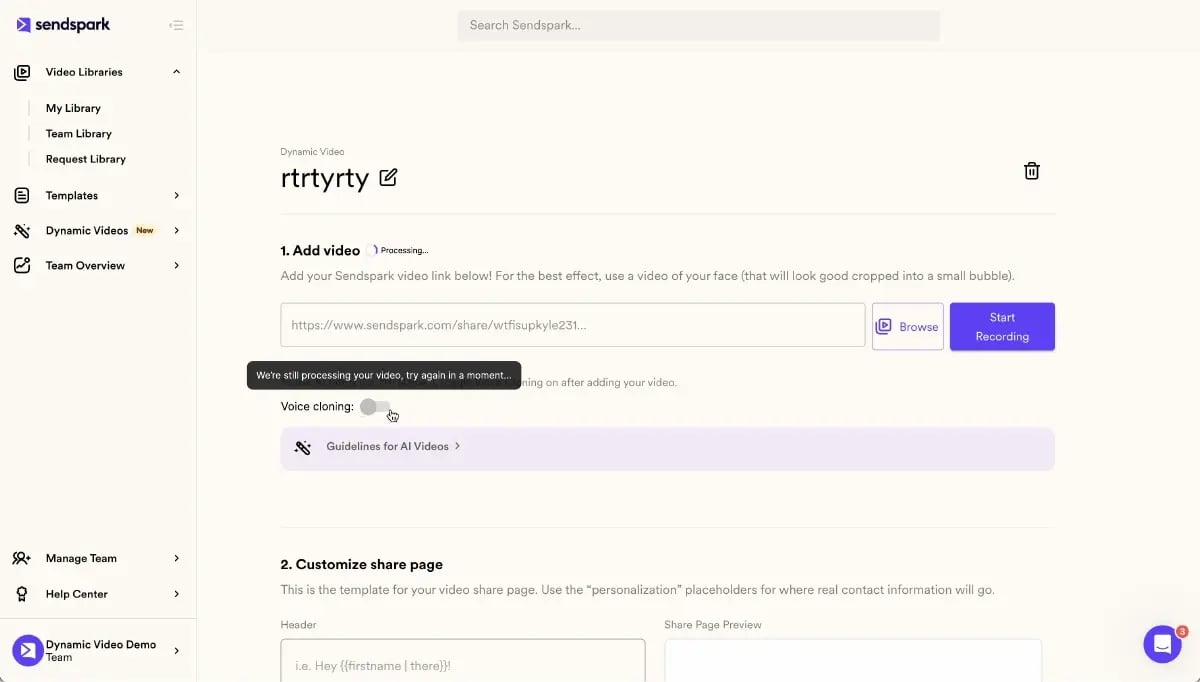
Sendspark integrates natively with HubSpot, Salesforce, Outreach, SalesLoft, Apollo, Gmail, and 50+ other sales tools. Video engagement data — who opened, who watched to completion, who clicked the CTA — syncs back to your CRM deal records automatically. When a prospect watches your proposal walkthrough video three times in an hour, Sendspark flags it. That’s a deal signal no email open rate can surface.
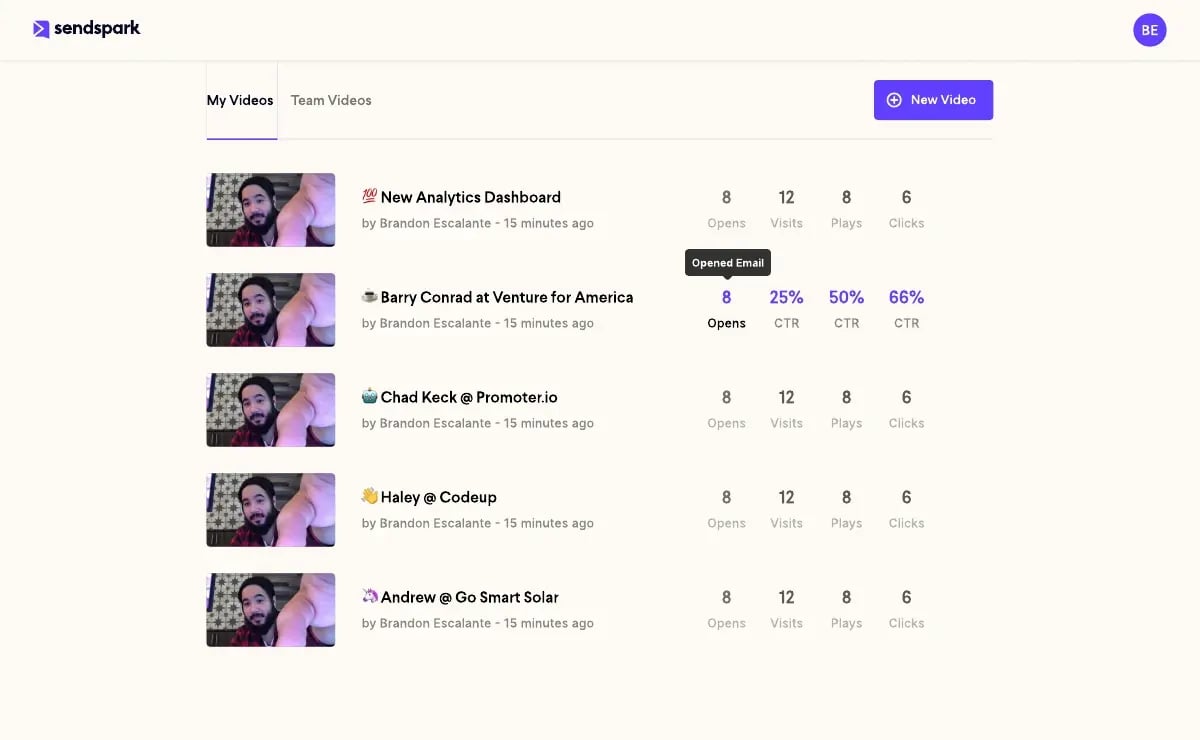
Pros: Record one video, AI generates personalized versions for hundreds of prospects simultaneously; dynamic backgrounds show each prospect’s own website; 50+ native integrations including HubSpot and Salesforce; video analytics track engagement per deal; rated 4.8/5 on G2 by 350+ verified reviewers.
Cons: Not a full CRM — works best alongside an existing deal management platform, not as a standalone replacement.
Best for: B2B sales teams running 10-500 deals per month who want to stand out at critical deal moments and turn silent pipelines into active conversations.
Pricing: Growth $99/mo (3 seats, 20K videos); Team $299/mo (10 seats, 100K videos). See full pricing.
Advanced strategy
Use Sendspark’s combined video workflow for multi-stakeholder deals: a personalized AI intro addresses each decision-maker by name, then merges into a single product demo. One recording reaches every stakeholder on the buying committee with a personalized touch — without recording a separate video for each person.
5. Close CRM
Close CRM is designed for high-velocity outbound sales teams that run large volumes of deals in parallel. The core differentiator is built-in calling and SMS — reps can dial, text, and email without ever leaving the deal view. Activity logging is largely automatic, so reps spend more time selling and less time updating records.
Close’s pipeline view is straightforward and fast. Smart views filter deals by last activity date, deal value, or custom criteria with a single click. The built-in Power Dialer lets reps work through call lists at scale. For teams doing high-volume outbound where speed-to-follow-up is the competitive advantage, Close is hard to beat on ease-of-use and daily efficiency.
Pros: Built-in calling and SMS (no separate tool needed), fast activity logging, excellent Smart Views for pipeline filtering, strong reporting for outbound metrics, competitive pricing relative to features.
Cons: Less customizable reporting than Salesforce or HubSpot, integration ecosystem smaller than top-tier CRMs, not ideal for complex enterprise deal structures.
Best for: Outbound-heavy teams of 5-50 reps running high-volume deal pipelines where call volume and speed are the primary metrics.
6. monday.com Sales CRM
monday.com Sales CRM extends the platform’s visual work management capabilities into deal tracking. Teams that find traditional CRMs too rigid often choose monday.com because every column, stage, and automation is customizable without developer help. Deal boards can be structured around any sales methodology your team uses.
The platform’s strength is flexibility and collaboration — marketing, sales, and operations can all work in the same system with clear handoff workflows. The weakness is depth: reporting and forecasting are less robust than purpose-built CRMs, and there is no built-in calling. For teams that want deal management tightly integrated with project delivery (think agencies or professional services firms managing client deals alongside delivery workflows), monday.com fills a gap that traditional CRMs don’t.
Pros: Highly customizable deal boards and automations, strong team collaboration features, flexible enough to map any sales process, clean mobile experience.
Cons: Less depth in sales-specific features like forecasting and activity intelligence, no built-in calling, can require significant initial setup to get right.
Best for: Teams that need flexible deal management integrated with broader business operations, or organizations already using monday.com for project work.
7. Gong
Gong is a revenue intelligence platform that layers AI deal coaching on top of your existing CRM data. Where a CRM tells you where deals stand, Gong tells you why they stand there — surfacing conversation patterns, competitive mentions, and deal risk signals from every recorded call, email, and video meeting. According to Gartner research on sales technology, revenue intelligence platforms like Gong are among the fastest-growing categories in the sales tech stack for mid-market and enterprise teams. See our full breakdown of revenue intelligence platforms for how Gong stacks up against Clari, Salesforce, and five other options.
Gong’s Deal Intelligence dashboard surfaces which deals have gone quiet, which have too few stakeholders engaged, and which are trending toward a loss based on historical patterns. Managers can see deal health across the entire team without relying on rep self-reporting in CRM fields. For organizations with complex, multi-month deal cycles involving multiple buyers, Gong dramatically improves forecast accuracy and coaching precision.
Pros: Best-in-class AI deal coaching from conversation data, accurate pipeline forecasting, strong competitive intelligence, helps managers identify at-risk deals before they’re lost, excellent analytics for deal velocity and win rate by stage.
Cons: Expensive (typically $1,200-1,600/user/year), requires existing CRM to be useful, adds the most value for teams with 10+ reps and longer deal cycles, complex to configure initially.
Best for: Mid-market to enterprise B2B teams (20+ reps, 60+ day deal cycles) wanting AI-powered deal coaching and accurate revenue forecasting.
Common mistake
Buying the most feature-rich deal management tool your team will never fully use. A simple CRM with 90% adoption beats a complex enterprise platform at 20% adoption every time. Start with the minimum viable pipeline tool, then layer on intelligence and acceleration tools as your team’s habits mature.
How to Choose Deal Management Software for Your Team
Choosing the right deal management software depends on your team size, deal cycle complexity, existing tech stack, and growth stage. The right answer for a 5-person outbound team looks completely different from a 100-person enterprise sales org. Here is how to evaluate your options without overbuying or underinvesting.
Match the Tool to Your Team’s Stage
Early-stage teams (1-10 reps) should start with HubSpot CRM free tier or Pipedrive. Both are fast to implement and have enough deal management depth to run a structured pipeline without a dedicated admin. Avoid enterprise platforms — the configuration overhead will slow you down more than a basic CRM will.
Growth-stage teams (10-100 reps) need more structure: deal scoring, automated sequences, and reporting by rep and team. HubSpot Sales Hub or Close CRM typically hit the right balance. Add Sendspark on top for AI-powered deal acceleration when you want to differentiate your follow-up approach from the rest of your competitive set.
Enterprise teams (100+ reps) running complex deals with multiple stakeholders and long cycles need Salesforce Sales Cloud as the CRM backbone, with Gong layered on for deal intelligence and forecast accuracy. See our ultimate guide to building and managing a sales pipeline for a deeper breakdown of how these tools connect.
Prioritize Integration Depth Over Feature Lists
The best deal management software is the one that connects cleanly to the other tools your team already uses every day. A deal management platform with 200 features but no native connection to your email, calendar, and marketing automation is a deal management platform your reps will abandon within 90 days. Check for native integrations with your email provider, sales engagement platform, and any enrichment tools like Clay or ZoomInfo before making a final decision.
According to McKinsey research on sales and marketing technology, sales teams that use three or more integrated tools in their deal workflow report higher win rates than those using disconnected point solutions. Integration is not a nice-to-have — it is how deal data stays current and actionable across your stack.
The Role of AI Video in Deal Management
The fastest-growing addition to modern deal management stacks is AI-powered video personalization. When a deal stalls after a strong demo, a generic email follow-up rarely breaks the silence. An AI-personalized video from Sendspark — where each prospect sees their own website as the background and hears the rep’s voice addressing them by name — reactivates conversations that standard outreach cannot. Teams using Sendspark for deal progression report 40-50% more meetings booked compared to text-only follow-up sequences. See how virtual selling tools like Sendspark fit into the broader sales stack.
The key is timing: use AI-personalized video at the moments when differentiation matters most — after a demo, when a multi-stakeholder proposal needs a champion to share it internally, or when a deal has gone quiet for 10+ days. These are the high-stakes touchpoints where generic email gets ignored and personalized video gets a reply.
Deal Management Software Selection Criteria Summary
| Criteria | Early-Stage (1-10 reps) | Growth-Stage (10-100 reps) | Enterprise (100+ reps) |
|---|---|---|---|
| CRM Backbone | HubSpot Free or Pipedrive | HubSpot Sales Hub or Close | Salesforce Sales Cloud |
| Deal Acceleration | Sendspark Growth | Sendspark Team | Sendspark Business |
| Deal Intelligence | Built-in CRM AI | CRM AI + reporting | Gong |
| Flexible Workflows | Not needed yet | monday.com if needed | Salesforce custom objects |
| Budget Range | $0-$150/mo total | $400-$1,500/mo | $2,000+/mo |
Frequently Asked Questions
What is deal management software?
Deal management software is a sales tool that helps B2B teams track every sales opportunity from initial qualification to close. It provides a structured pipeline with defined stages, activity logging, forecasting, and deal risk signals — replacing manual tracking in spreadsheets or email. Most modern deal management platforms are either full CRMs (HubSpot, Salesforce, Pipedrive) or specialized acceleration tools that layer on top of a CRM.
What is the best deal management software for small B2B sales teams?
For small B2B sales teams of 1-15 reps, HubSpot CRM (free tier) or Pipedrive (from $14/user/mo) are the best deal management software options. Both offer visual pipeline tracking, activity reminders, and email integration without requiring a dedicated CRM admin. HubSpot’s free tier includes unlimited users, making it the strongest starting point for budget-conscious teams.
How does deal management software improve close rates?
Deal management software improves close rates by ensuring no deal falls through the cracks, surfacing at-risk opportunities before they go cold, and automating follow-up reminders so reps act on every deal at the right time. According to Salesforce’s State of Sales research, high-performing teams are significantly more likely to have structured deal management processes than underperformers. Adding AI tools like Sendspark for personalized video follow-ups at critical deal stages further boosts reply rates 2-3x.
Is Sendspark deal management software?
Sendspark is an AI video personalization platform used for deal acceleration rather than traditional deal management. It works alongside your CRM (HubSpot, Salesforce, Pipedrive, etc.) to send AI-personalized video follow-ups and proposal walkthroughs that move stalled deals forward. Where a CRM tracks deal status, Sendspark actively advances deals by delivering personalized video outreach that gets responses standard email cannot.
What is the difference between a CRM and deal management software?
A CRM (Customer Relationship Management) system is a broader category that manages contacts, deals, and the full customer lifecycle. Deal management software refers specifically to the pipeline and opportunity management features within a CRM or a standalone tool focused on tracking sales opportunities. Most modern CRMs include deal management as a core feature, while some specialized tools (like deal rooms or revenue intelligence platforms) focus exclusively on advancing deals through the pipeline.
How do I choose between HubSpot and Salesforce for deal management?
Choose HubSpot if your team is 5-100 reps and you want faster onboarding, a free starting point, and tight marketing-to-sales integration. Choose Salesforce Sales Cloud if you are 100+ reps, need deep customization (custom fields, objects, complex approval workflows), or require enterprise-grade security and compliance. Both integrate natively with Sendspark for AI video deal progression. See the guide to sales pipeline stages for how to structure your deal stages in either platform.
How much does deal management software cost?
Deal management software ranges from free (HubSpot CRM free tier) to $25-80/user/month for mid-market CRMs like Salesforce and HubSpot Sales Hub, up to $1,200-1,600/user/year for enterprise revenue intelligence platforms like Gong. Most B2B teams spend $200-800/month in total on their deal management stack. Adding an AI video personalization layer like Sendspark starts at $99/month for up to 3 seats and 20,000 personalized videos.
Sources & References
- Salesforce State of Sales Report — “High-performing sales teams are 1.5x more likely to use a CRM as their primary deal management hub than underperformers.” (2022/2023)
- LinkedIn State of Sales Report — Sales professionals who consistently exceed quota are significantly more likely to say their CRM is central to their daily workflow. (2023)
- Gartner — Sales Technology Research — Revenue intelligence platforms are among the fastest-growing categories in the B2B sales tech stack for mid-market and enterprise teams. (2024)
- McKinsey & Company — Sales and Marketing Insights — Sales teams using three or more integrated tools in their deal workflow report higher win rates than those using disconnected point solutions. (2023/2024)
Record One Video. AI Personalizes Thousands.
Sendspark is the AI video personalization platform for B2B sales. Record once, and AI voice cloning generates thousands of individually personalized videos with dynamic backgrounds and personalized thumbnails — each prospect hears their name, sees their website, in your voice. Sales teams see 2-3x more replies.
Get Started Now