Most sales training programs fail not because the content is bad — but because nothing comes after. Research from the Research Institute of America shows that 87% of new training content is forgotten within 30 days without reinforcement. You invest in a workshop, reps take notes, and by next month they’re back to the same habits.
The fix isn’t more training. It’s adding coaching. Sales training and coaching are two distinct disciplines that work together — training builds the knowledge, coaching applies it to real situations until new behaviors stick. When you combine them into one deliberate program, win rates climb, ramp time shrinks, and quota attainment becomes repeatable. For a broader set of tactics, explore our practical B2B sales tips to reinforce what your team learns in training — ranked by impact.
This guide covers exactly what each one is, why you need both, and a five-step framework for building a program that actually changes how your reps sell.
Key Takeaways
- Sales training delivers knowledge and skills once; sales coaching applies and reinforces them continuously — both are required to change rep behavior permanently.
- Gartner research shows reps who receive regular coaching are 19% more likely to hit quota than those who receive only training.
- A five-step framework covers: diagnose the gap, design the curriculum, build the coaching cadence, deliver with AI video, and measure leading indicators.
- AI video tools like Sendspark let managers record training once and deliver async coaching feedback at scale — without adding more calendar time.
- The #1 program killer: delivering training with no coaching follow-up. Skills fade within 30 days without structured reinforcement.
What Is Sales Training vs. Sales Coaching?
Sales training is structured delivery of knowledge and skills — product knowledge, methodology frameworks, objection handling, and process steps — typically in a classroom, workshop, or video format. Sales coaching is ongoing, personalized guidance that applies those skills to a specific rep’s real deals, calls, and behaviors. Training is an event; coaching is a process.
Most organizations treat these as the same thing. They’re not. Training is what you deliver to a group. Coaching is what you do one-on-one or in small groups, consistently, to ensure the training actually sticks. You can have great training with no coaching and see almost no behavior change. You can also have coaching without proper training, leaving reps to figure out the fundamentals on their own. Neither works in isolation.
| Dimension | Sales Training | Sales Coaching |
|---|---|---|
| Definition | Structured delivery of knowledge and skills | Ongoing personalized guidance to apply skills |
| Goal | Build awareness and foundational capability | Change specific behaviors and reinforce good habits |
| Format | Workshops, videos, role-play, eLearning modules | 1:1 sessions, call review, deal inspection, feedback |
| Timing | Periodic — onboarding, quarterly refreshes | Continuous — weekly or biweekly per rep |
| Ownership | Sales enablement, L&D, or revenue operations | Frontline sales manager |
| Success Metric | Completion rate, assessment scores, knowledge retention | Behavior change, call quality score, quota attainment |
The distinction matters for how you design and fund your program. Training can scale — you record it once and distribute it to 50 reps. Coaching requires manager time, which is your scarcest resource. Understanding the difference helps you invest in the right mix and avoid spending all your budget on training events that never change how reps actually behave in the field.
Why High-Performing Teams Run Training and Coaching Together
For leaders developing senior sellers and VPs specifically, our executive sales coaching guide covers the strategic competencies that go beyond standard training. Running sales training and coaching as separate initiatives is one of the most expensive mistakes in sales leadership. Training without coaching loses 87% of its impact within 30 days. Coaching without training context wastes manager time correcting basics reps should already know. The highest-performing sales organizations treat them as a single integrated system — each reinforcing the other in a continuous cycle of learn, practice, and apply.
The data is clear. Gartner research shows that reps who receive regular coaching from their manager are 19% more likely to hit quota compared to those who receive training alone. RAIN Group’s analysis of top-performing sales organizations found they provide three times more coaching hours per rep than average organizations — not just more training.
“Training tells reps what good looks like. Coaching shows them how to get there — with their own deals, their own accounts, in their own words. Without coaching, training is just information. With it, training becomes capability.”
— Mike Schultz, President, RAIN Group
The mechanism behind this is well-documented in learning science. Hermann Ebbinghaus’s forgetting curve shows that without active retrieval and application, people forget approximately 50% of new information within one hour and 70% within 24 hours. Coaching is the retrieval — it forces reps to actively recall and apply what they learned before it fades.
Think of the cycle as: Train → Practice → Coach → Repeat. Training loads the knowledge. Practice (structured roleplay training, call attempts) activates it. Coaching corrects the application and reinforces what’s working. Without the coaching step, you’re stuck in train → forget → train again — an expensive loop that never changes behavior.
This is exactly the trap most annual sales kickoffs fall into: a strong event followed by no reinforcement plan. Our guide to sales kickoff reinforcement walks through a 5-step framework for making SKO training actually stick.
Record One Video. AI Personalizes Thousands.
Sendspark is the AI video personalization platform for B2B sales. Record once, and AI voice cloning generates thousands of individually personalized videos with dynamic backgrounds and personalized thumbnails — each prospect hears their name, sees their website, in your voice. Sales teams see 2-3x more replies.
Get Started NowHow to Build a Sales Training and Coaching Program in 5 Steps
Building an effective sales training and coaching program starts with diagnosing what your team actually needs — then designing a system, not a one-time event. The five steps below apply whether you’re building from scratch or fixing a program that isn’t delivering results. Follow them in order: skipping the diagnosis step is the single most common reason programs fail to change behavior.
Step 1: Diagnose the Gap First
Before you design anything, you need to know what’s actually preventing your reps from performing. There are three types of performance gaps, and each requires a different response:
- Skill gap — The rep doesn’t know how to do it. Fix: training.
- Motivation gap — The rep knows how but isn’t doing it. Fix: coaching + accountability.
- Execution gap — The rep knows and wants to but gets stuck in specific situations. Fix: coaching on specific scenarios.
Diagnose by reviewing call recordings, pipeline data, and manager observations. A rep with a 20% discovery-to-demo rate and strong close skills has an execution gap in early-stage conversations — not a knowledge problem. A rep with high activity and poor close rates has a different gap entirely. Your training and coaching investment should map to where the gaps actually are, not where it’s easiest to deliver content.
Step 2: Design the Training Curriculum
Your curriculum should cover three time horizons: onboarding (what new reps need in the first 30/60/90 days), ongoing (quarterly skill refreshes and new content), and just-in-time (specific skills reps need for a current deal or situation).
Onboarding training should cover: your ICP, product value propositions, your sales methodology (MEDDIC, Challenger, SPIN, etc.), objection handling, and tool proficiency. Don’t try to cover everything in week one — spread modules across the ramp period so reps practice each skill before moving to the next.
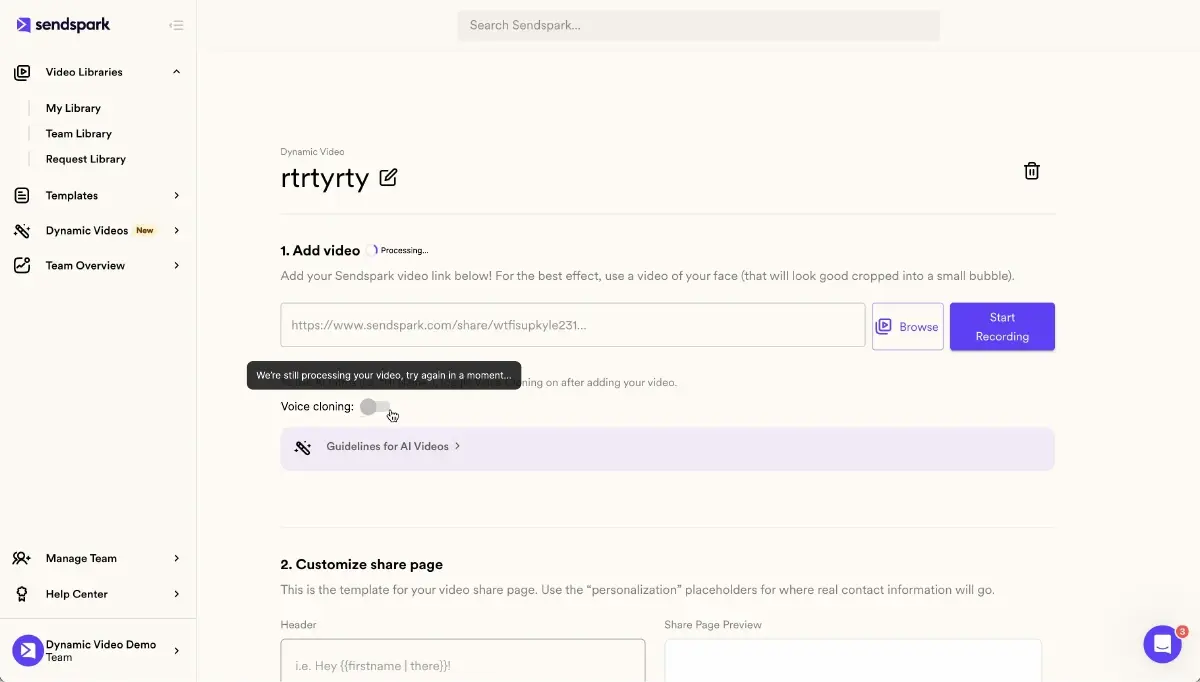
Ongoing training works best as short, focused modules (10-20 minutes) delivered consistently rather than a full-day quarterly event. Use a structured cadence for delivering training updates — the same consistency you’d apply to outbound outreach applies to skill development.
Step 3: Build the Coaching Cadence
Coaching works through consistency, not intensity. A manager who runs a focused 30-minute 1:1 every week produces better results than one who runs a two-hour deep dive once a month. Structure your coaching cadence around three meeting types:
- Weekly 1:1 (30-40 minutes) — Review one or two active deals and provide skill feedback on a specific behavior. Avoid status updates; this is coaching time.
- Biweekly call/demo review (20-30 minutes) — Watch a recorded call or demo, score it against a rubric, and give structured feedback on specific moments.
- Monthly performance review (45 minutes) — Review pipeline data, leading indicators, and create a 30-day development plan with the rep.
The manager’s role in one-on-one sales coaching is not to give answers but to ask questions that help the rep diagnose their own gaps. Use frameworks like GROW (Goal, Reality, Options, Will) to structure conversations without making them feel like performance reviews.
Step 4: Deliver Training at Scale with AI Video
The traditional constraint on training is delivery: you can only run so many workshops, and manager time is finite. AI video personalization breaks this constraint by letting you record training content once and deliver it to every rep in a personalized format — each version addressing their specific territory, skill focus, or onboarding stage.
Sendspark’s AI voice cloning and dynamic backgrounds let you create training videos that speak directly to each rep without recording a separate take for each person. For sales performance coaching, managers record async video feedback on call recordings and send them as personalized responses — the rep gets specific, timestamped feedback they can revisit without a scheduled meeting.
Step 5: Measure with Leading Indicators
Most training programs measure the wrong things: completion rates and assessment scores. These tell you whether reps watched the content — not whether their behavior changed. Measure these instead:
- Leading indicators: call quality score, discovery question usage rate, next-step booking rate, talk-to-listen ratio
- Lagging indicators: win rate, quota attainment, average deal size, ramp time to first close
Run a weekly rep scorecard that tracks 3-5 leading indicators per rep alongside their pipeline data. Use this data in your coaching 1:1s, not to judge performance but to guide where coaching time should go.
Pro tip
Run your first training session as a live cohort, then record it. The live session lets you capture real Q&A that future reps will also have — making your recorded version far more useful than a scripted presentation.
Using AI Video to Scale Training Delivery and Coaching Feedback
The biggest bottleneck in most sales training and coaching programs isn’t content — it’s delivery. A sales manager with eight direct reports can theoretically coach each for 30 minutes a week, but adding training delivery, call reviews, and pipeline management to that schedule quickly exceeds available hours. AI video changes the math by separating content creation from content delivery.
AI Video for Training Delivery
Traditional training requires the same person (or facilitator) to repeat the same content for every cohort. With Sendspark’s AI video personalization, you record a training module once — and AI voice cloning personalizes the delivery for each rep. A training video on enterprise prospecting can address each rep by name, reference their specific territory, and emphasize the objections most relevant to their accounts.
This approach works particularly well for:
- Onboarding — New hire modules delivered asynchronously; reps progress at their own pace, managers review completion data via video analytics
- Skill refreshers — Short monthly videos on a specific skill (e.g., multi-threading enterprise deals) pushed to all reps
- Just-in-time coaching — A manager spots a pattern across three reps’ calls and records one targeted coaching video, personalized for each rep’s specific situation
Async Video Coaching Feedback
Scheduling a coaching conversation for every rep, every week, is a manager’s full-time job. Async video feedback solves this: after watching a rep’s recorded call, the manager records a 3-5 minute video response with timestamped feedback (“at 4:30, when the prospect mentioned budget, here’s what I’d do differently”), then sends it through Sendspark. The rep watches when ready, replays specific moments, and the conversation happens on their schedule without a synchronous meeting.
This isn’t less effective than live coaching — for many reps, it’s more effective. They can pause, rewind, and process feedback without the social pressure of a live conversation. And for managers, it means coaching eight reps doesn’t require eight 30-minute slots on the calendar.
The HubSpot integration connects training and coaching activity to CRM data, so you can correlate coaching engagement with pipeline movement — closing the loop between rep development and revenue outcomes.
Advanced strategy
Use Sendspark’s AI voice cloning to create a “coaching library” — a searchable collection of short video responses to common objections, discovery questions, and deal scenarios. Reps self-serve the coaching they need before calls, without waiting for a scheduled session.
5 Common Mistakes in Sales Training and Coaching Programs
Even well-intentioned sales training and coaching programs fail when they’re built on assumptions instead of data. The most costly mistake is delivering training with no coaching follow-up — which guarantees that 87% of what reps learn disappears within a month. But there are four other patterns that consistently undermine program ROI, and knowing them in advance lets you build around them.
Mistake 1: Training Without Coaching Reinforcement
You run a two-day methodology workshop. Reps are engaged, take notes, score well on the assessment. Two weeks later, you listen to calls and hear the exact same habits as before. This is the forgetting curve in action. Without structured coaching to reinforce application — call reviews, deal coaching, scenario role-play — the training never reaches the rep’s muscle memory. Budget for both or expect to fund the training repeatedly with diminishing returns.
Mistake 2: Generic Off-the-Shelf Content
Sales training that doesn’t map to your ICP, your product, and your actual objections teaches reps to handle a hypothetical sales motion. When they hit a real prospect with a specific technical question or a pricing comparison, generic training provides no guidance. Build or customize your training to reflect real call recordings, real objections from your pipeline, and real scenarios your reps encounter in their territories.
Mistake 3: Measuring Attendance, Not Behavior Change
Completion rates feel like progress. They’re not. Knowing that 94% of your reps finished the module tells you nothing about whether they’re applying the skill. Replace completion metrics with behavioral ones: are reps booking more discovery calls? Are talk-to-listen ratios improving? Is next-step booking rate increasing? These are the signals that show whether training is translating into different actions on actual calls. See sales coaching tools that include call scoring and behavioral analytics to track this.
Mistake 4: Only Coaching Underperformers
Most managers spend the majority of their coaching time on the bottom 20% of reps — the ones who are most visible because they’re missing quota. But research from RAIN Group consistently shows that top-performing sales organizations invest more coaching time in their highest performers. A top-quartile rep who improves their win rate by 5% generates more absolute revenue than a bottom-quartile rep who improves by 30%. Balance your coaching calendar across all performance tiers.
Mistake 5: No Structured Coaching Framework
When every manager runs 1:1s differently — some reviewing pipeline, some giving advice, some just having check-in conversations — there’s no consistency in what good coaching looks like or produces. Reps experience wildly different development quality depending on their manager. Define a coaching framework (GROW, SBI, or a custom rubric) and train your managers to use it consistently. For a detailed playbook, see sales performance coaching.
| Mistake | Why It Fails | How to Fix It |
|---|---|---|
| Training without coaching | 87% forgotten in 30 days; behavior never changes | Build coaching cadence into the same program budget |
| Generic off-the-shelf content | Reps can’t apply abstract skills to their real accounts | Customize with your real objections, ICP, and call recordings |
| Measuring attendance | Completion rates don’t correlate with behavior change | Track leading indicators: call quality, discovery rate, next-step booking |
| Coaching only low performers | Miss the highest ROI coaching opportunities | Allocate coaching time across all performance tiers |
| No coaching framework | Inconsistent development quality across managers | Train managers on GROW or SBI; review recordings with a scored rubric |
Common mistake
Don’t launch a new training program without securing manager commitment to the coaching cadence. Training without managerial follow-through is the fastest way to waste your enablement budget and lose rep trust in L&D initiatives.
A combined sales training and coaching program isn’t a one-time project — it’s an operating system for rep development. Build the diagnosis, curriculum, cadence, delivery, and measurement layers correctly and you create a system that compounds: reps improve consistently, manager time is used efficiently, and quota attainment becomes less dependent on hiring luck and more dependent on deliberate development. For teams using AI-powered sales prospecting tools, pairing that outbound capability with a strong training and coaching backbone is what separates high-growth teams from high-churn ones.
Published August 2026
Sources & References
- Association for Talent Development (ATD) — “87% of new training content is forgotten within 30 days without reinforcement” (Research Institute of America, via ATD L&D reports)
- RAIN Group — Top Sales Training Challenges Research — “Top-performing sales organizations provide 3x more coaching hours per rep than average organizations” (2024)
- Harvard Business Review — Why Leadership Training Fails — “Training alone rarely changes behavior; reinforcement and accountability are required” (2019)
- Gartner — Sales Coaching Insights — “Reps who receive regular coaching from their manager are 19% more likely to hit quota” (Gartner Sales Research)
Frequently Asked Questions
What is the difference between sales training and sales coaching?
Sales training is structured delivery of knowledge and skills — methodology, product, objection handling — typically in workshops or video format, delivered periodically. Sales coaching is ongoing, personalized guidance from a manager that applies those skills to a specific rep’s real deals and behaviors. Training is an event; coaching is a process. Both are required for lasting behavior change.
How much does sales coaching cost?
Internal sales coaching by frontline managers has no direct cost beyond manager time. External sales coaches or coaching programs typically range from $2,000 to $10,000 per rep per year depending on intensity and vendor. Most organizations achieve the best ROI by investing in manager coaching capability (training managers to coach well) rather than outsourcing coaching entirely.
What is the 70-20-10 rule in sales training?
The 70-20-10 learning model holds that 70% of skill development comes from on-the-job experience, 20% from coaching and feedback, and 10% from formal training. This framework argues that most organizations over-invest in the 10% (formal training) and under-invest in the 20% (coaching) that most drives application of the 70% (experience). A strong sales training and coaching program deliberately addresses all three layers.
How often should sales managers coach their reps?
Weekly 1:1 coaching sessions of 30-40 minutes, focused on deals and skill feedback, is the baseline standard for effective coaching. Top-performing organizations add biweekly call reviews and monthly performance reviews. The consistency matters more than the duration — a focused 30-minute weekly session produces better results than a two-hour monthly session.
How long does it take to see results from a sales training and coaching program?
Leading indicators like call quality scores and discovery-to-demo conversion typically improve within 4-8 weeks of consistent coaching. Lagging indicators like quota attainment and win rates generally show meaningful change after one full quarter (3 months). Ramp time for new reps — the clearest program outcome — typically improves by 20-30% within two cohorts when training and coaching are properly integrated.
Can AI video tools improve sales coaching?
Yes, significantly. AI video platforms like Sendspark let managers deliver async coaching feedback on call recordings without scheduling synchronous meetings. Managers record a 3-5 minute personalized video response, the rep watches on their schedule and can replay key moments. This increases coaching frequency — removing the scheduling constraint that limits most managers to 1-2 coached reps per week — and lets teams deliver AI-personalized training content at scale without proportional increases in facilitator time.
What are the top 3 skills to focus on in sales training?
Discovery questioning (understanding prospect pain, fit, and buying process), objection handling (reframing concerns without dismissing them), and next-step commitment (consistently securing a defined next action before ending every conversation) consistently produce the highest ROI when improved. These three skills have a compounding effect: better discovery improves proposal quality, which reduces objections, which makes closing a natural outcome rather than a hard push.
Record One Video. AI Personalizes Thousands.
Sendspark is the AI video personalization platform for B2B sales. Record once, and AI voice cloning generates thousands of individually personalized videos with dynamic backgrounds and personalized thumbnails — each prospect hears their name, sees their website, in your voice. Sales teams see 2-3x more replies.
Get Started Now