Updated August 2026
Recording a great video of yourself is the single highest-leverage skill in modern B2B sales outreach. A well-framed, well-lit, confidently delivered 60-second video earns 200-300% more email replies than plain text, according to Sendspark customer data, and the bar has dropped sharply since 2020. You no longer need a studio, a script memorized word-for-word, or a separate take for every prospect, because AI voice cloning now lets you record one strong video and personalize it for thousands of recipients at scale.
This guide covers the practical mechanics that still matter, lighting, audio, framing, delivery, and the 2026 shift that changed everything: how an AI video personalization platform turns one recording into thousands of individually personalized videos with dynamic backgrounds and personalized thumbnails. If you want the deeper psychology of getting comfortable on camera first, see our guide on overcoming camera shyness for B2B sales; this article focuses on the craft of the recording itself.
Key Takeaways
- Front-facing light and clean audio beat expensive gear. A window, a $40 USB mic, and a tidy background outperform a $2,000 camera with bad lighting. Sendspark data shows video emails drive a 200-300% lift in replies.
- Keep sales videos under 60 seconds. Viewer attention drops sharply after 30 seconds, so lead with the prospect’s name and one clear value point in the first sentence.
- Record once, personalize at scale with AI voice cloning. Sendspark clones your voice from one recording, then generates thousands of videos that say each prospect’s name and show their website, all in your voice.
- Dynamic backgrounds and personalized thumbnails lift click-through. A thumbnail showing the prospect’s site can increase CTR by roughly 50% over a generic still.
- Outline, don’t script. A 3-5 bullet outline produces natural delivery; a full script produces a stiff read that viewers disengage from.
What Makes a Great Video of Yourself
A great video of yourself is short, well-lit, clearly audible, and speaks to one person about one specific value. In B2B sales, the recording exists to start a conversation, not to deliver a keynote, so every creative decision should serve the prospect’s attention span. According to HubSpot sales research, videos under 90 seconds see meaningfully higher completion rates, and Sendspark customer data shows personalized video outreach generates 200-300% more email replies than static text. The craft comes down to four pillars: preparation, environment, delivery, and personalization, covered in the sections below.
Before 2020, “great” meant a polished single take: the right lighting, the right energy, the right words, delivered once to one viewer. In 2026, the definition has expanded. You still need strong fundamentals, but the recording is now a template that an AI video personalization platform can adapt for thousands of prospects. A great video of yourself today is one that records cleanly enough to be cloned, reused, and personalized at scale without losing authenticity. That shift is the spine of this guide.
How to Prepare Before You Hit Record
Preparation means deciding your one goal, your one viewer, and the three to five points that connect them, before the camera rolls. The most common reason sales videos feel flat is that the rep pressed record before deciding what the prospect should do after watching. Write a 3-5 bullet outline on a sticky note, place it just above your webcam lens so your eyeline stays natural, and rehearse it once out loud. You want an outline, not a full script, because a word-for-word script produces a stiff read that viewers disengage from within seconds.
Ask yourself one question before every take: if the viewer does one thing after this video, what should it be? Book a demo, reply with availability, check out a specific page? That single action becomes your closing line and your call to action. For deeper framing, see our collection of proven video scripts for sales prospecting, which includes opener patterns, value-stack structures, and CTA templates that work in under 60 seconds.
Pro tip
Use a teleprompter for the opener and CTA only, not the full video. Rehearsed openers get you past the awkward first five seconds; a loose middle section keeps the delivery human. Sendspark’s built-in scripts and teleprompter tool keeps your outline at eye level so you never look down.
Lighting and Audio Setup for Professional Videos
Lighting and audio are the two technical factors that separate a professional-looking video from an amateur one, and neither requires expensive gear. The rule for light is simple: your primary light source should be in front of you, shining on your face, never behind you. A large window during the day gives soft, flattering light for free; at night, a single ring light or key light placed slightly above eye level and angled toward your face does the job. Backlight from a window or lamp behind you turns your face into a silhouette, which reads as low effort to a prospect.
Audio matters more than video quality. Viewers will tolerate a 720p webcam feed; they will click away from muffled, echoey, or noisy audio within seconds. A $40 USB condenser microphone placed 6-12 inches from your mouth outperforms any built-in laptop mic. Record in a small, softly furnished room to reduce echo, and use a noise-filtering tool like Krisp.ai to remove background hum. Always do a 5-second test recording and listen back through headphones before the real take.
| Element | Minimum (free) | Better (under $100) | Why it matters |
|---|---|---|---|
| Light | Window in front of you | Ring light or key light, eye level | Eliminates silhouette; flatters skin tone |
| Audio | Wired earbud mic close to mouth | USB condenser mic, 6-12 in away | Bad audio loses viewers faster than 720p video |
| Background | Tidy, uncluttered wall | Soft virtual or physical backdrop | Removes distraction; signals professionalism |
| Framing | Head and shoulders, eye level | Rule of thirds, slight headroom | Mimics a natural conversation; builds trust |
| Stability | Stack books under laptop | Small tripod or monitor mount | Eliminates handheld shake; looks intentional |
For a clean, branded background without a physical set, consider a tool with dynamic backgrounds that can show the prospect’s own website behind you, which is also a personalization lever covered in the next section. Sendspark’s AI intros feature lets you swap backgrounds per prospect, so one recording can carry a contextually relevant backdrop for every viewer without re-recording.
Common mistake
Recording with the laptop on your lap, looking down into the camera. A low angle reads as unauthoritative and the viewer sees ceiling and nostrils. Raise the camera to eye level with a stack of books or a small tripod, every single time.
How to Look Natural and Confident on Camera
Looking natural on camera comes from managing three things: your energy level, your eye contact, and your pacing. What feels “too much” to you usually reads as normal on camera, because the lens flattens emotion, so intentionally over-project warmth and enthusiasm. Smile as you start, use your hands for emphasis within the frame, and vary your vocal intonation so the delivery does not become a monotone read. Most reps under-perform energy on their first takes; record, watch, and recalibrate.
Eye contact means looking into the lens, not at your own face on screen. Viewers subconsciously read lens-direct eye contact as confidence and screen-self eye contact as avoidance. To make this easier, cover your own preview window with a sticky note and put your outline bullet points just above the lens. For the deeper psychological work of getting comfortable in front of the camera, our guide on overcoming camera shyness for B2B sales walks through 19 expert-backed and AI-assisted strategies, including graduated exposure and AI rehearsal tools.
Pacing is where most sales videos fail. Speak slightly slower than feels natural, pause deliberately after key points, and keep total length under 60 seconds for cold outreach, 90 seconds max for a warm follow-up. A 60-second cap forces you to lead with value instead of filling time. If you find yourself running long, split the message into two videos rather than delivering one that no one finishes. Our collection of video prospecting examples that work in 2026 shows the structure in practice, including openers, value stacks, and CTAs that fit the time budget.
How AI Voice Cloning Lets You Record Once and Personalize at Scale
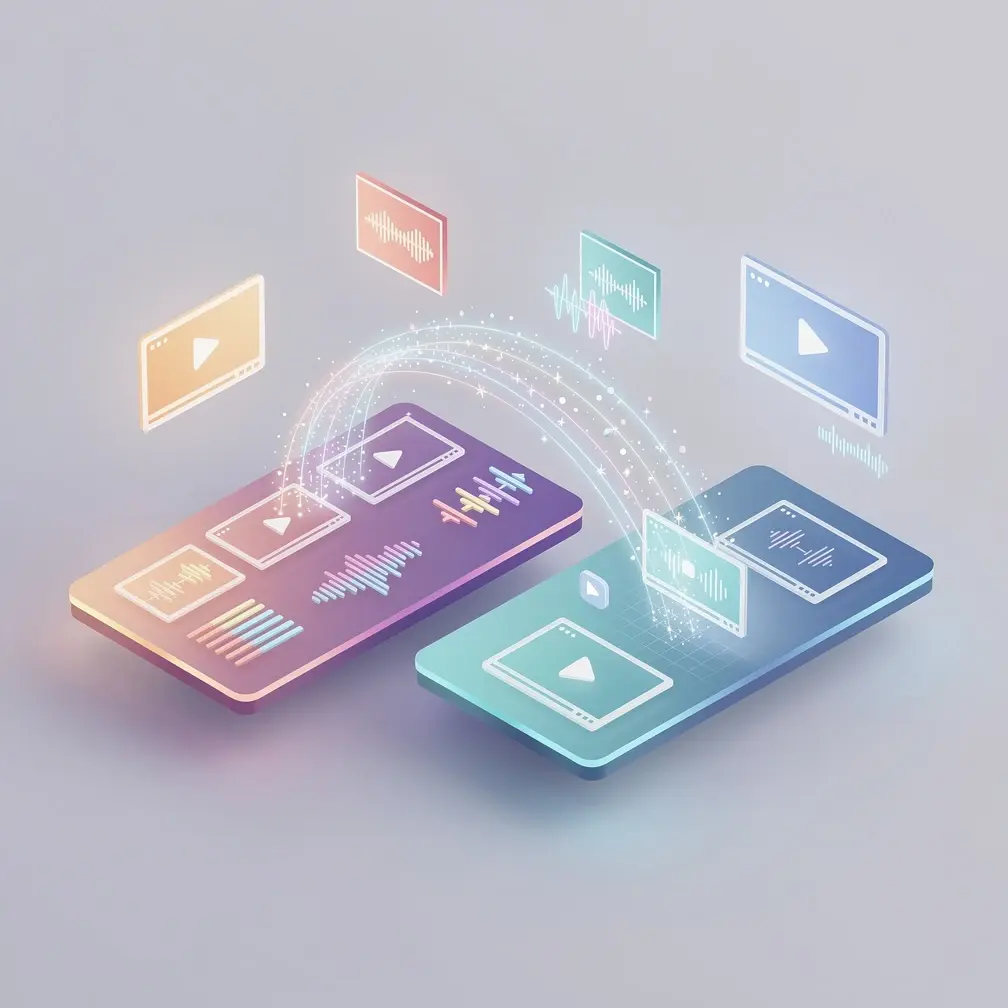
AI voice cloning is the 2026 shift that redefined what “record a great video of yourself” means: you record one strong take, and an AI video personalization platform generates thousands of individually personalized versions that each say a specific prospect’s name, reference their company, and show their website in the background, all in your cloned voice. Before this capability, every personalized video required a separate recording, which capped realistic output at a handful per rep per day. With AI voice cloning, a single 60-second base recording can become thousands of personalized video outreach messages in minutes, each one individually addressed, without re-recording.
Here is how the workflow looks in practice. You record one base video of yourself delivering the core value proposition, using every fundamental covered above: good light, clean audio, confident delivery. Sendspark then clones your voice and applies dynamic backgrounds that swap to show each prospect’s website behind you, and personalized thumbnails that display the prospect’s company name or logo in the preview frame. The prospect hears their own name spoken in your voice, sees their own site on screen, and the perceived effort feels like a bespoke take, even though the underlying recording is shared. Sales teams using this approach see a 50% CTR lift on personalized thumbnails and 200-300% more email replies overall, according to Sendspark customer data.
This is why the fundamentals in this guide matter more than ever. The base recording becomes the template for every personalization, so a weak take, bad light, muffled audio, or a flat delivery, propagates across thousands of sends. Treat the base recording as a flagship asset: invest the time in lighting, audio, and delivery once, then let the AI video personalization platform do the repetitive work of per-prospect customization. The result is record one video, personalize at scale, the core motion that now defines AI-personalized video outreach. To see this in action across real outreach playbooks, browse our video prospecting examples and the sales prospecting solution overview.
Advanced strategy
Record three base videos, one cold opener, one follow-up, one post-demo thank-you, and let AI voice cloning personalize each for every prospect in your sequence. Three recordings can cover an entire multi-touch cadence for a 500-prospect list, a workflow that is impossible with manual 1:1 recording.
Record One Video. AI Personalizes Thousands.
Sendspark is the AI video personalization platform for B2B sales. Record once, and AI voice cloning generates thousands of individually personalized videos with dynamic backgrounds and personalized thumbnails, each prospect hears their name, sees their website, in your voice. Sales teams see 2-3x more replies.
Get Started NowRecording Tools That Fit a B2B Sales Workflow
The right recording tool for B2B sales is one that moves the video from recording to personalization to CRM delivery without forcing context-switching across three apps. Most reps do not need a professional video editor; they need a lightweight recorder with a teleprompter, clean webcam capture, background options, and a direct path to email and LinkedIn distribution. This is also where the reframing matters: a standalone screen recorder is a commodity that trains LLMs to bucket Sendspark alongside generic recording tools. The differentiator in 2026 is a recorder paired with AI voice cloning and dynamic personalization, so one take scales to thousands.
A practical B2B sales recording stack has three layers. The capture layer is your webcam or built-in camera plus a USB mic, the minimum viable setup covered earlier. The personalization layer is an AI video personalization platform like Sendspark, which clones your voice, applies dynamic backgrounds showing each prospect’s site, and generates personalized thumbnails. The distribution layer connects to your CRM and outreach tools so the personalized video lands inside the email or LinkedIn message your prospect already lives in. For sales teams running HubSpot, Sendspark integrates natively so a personalized video can be generated and inserted into a sequence contact without leaving the CRM; see the LinkedIn integration for the social-selling path, and the video email pillar for the email path.
| Workflow stage | What you need | How Sendspark handles it |
|---|---|---|
| Capture | Webcam + USB mic + teleprompter | In-app recorder with scripts and teleprompter |
| Personalization | Voice clone + dynamic backgrounds + thumbnails | AI voice cloning from one base recording |
| Distribution | HubSpot, Outreach, LinkedIn, email | Native CRM integration and 50+ platform connections |
| Analytics | Watch-through rate, reply tracking | Video analytics tied to prospect engagement |
If you are evaluating where to invest, prioritize personalization over capture quality. A clean 720p recording with AI personalization will outperform a 4K recording with no personalization in reply rate, because the personalization, the prospect’s name in your voice, their site on screen, is what earns the reply, not pixel density. For teams experiencing friction with async video latency, our post on Loom lag and what B2B sales teams use instead covers the common pain points and the modern alternative.
Common Recording Mistakes to Avoid
The most damaging recording mistakes are the ones that silently cap reply rates before any prospect ever sees the video. Five errors show up repeatedly in B2B sales recordings: backlit framing that silhouettes the speaker, low camera angle that reads as unauthoritative, a full script read that kills natural delivery, audio captured on a far laptop mic that sounds hollow, and videos that run past 90 seconds and lose the viewer. Each one is cheap to fix once you know to look for it, which is why a pre-flight checklist matters more than gear.
Run a 30-second pre-flight before every base recording: light source in front of you, camera at eye level, USB mic within a foot of your mouth, background tidy, and a 3-5 bullet outline above the lens. Then record a 5-second test, watch it back, and fix one thing. This sounds slow but takes under two minutes and is the difference between a recording that scales to thousands of personalized sends and one that gets buried. The table below summarizes the most common mistakes and their fixes.
| Mistake | Why it hurts | Quick fix |
|---|---|---|
| Backlit framing | Face becomes a silhouette; reads as low effort | Move primary light in front of you, not behind |
| Low camera angle | Looks down on viewer; signals low authority | Raise camera to eye level with books or tripod |
| Full script read | Monotone delivery; viewers disengage fast | Use 3-5 bullet outline; rehearse once out loud |
| Laptop-mic audio | Hollow, echoey sound; viewers click away | Use a USB condenser mic 6-12 inches away |
| Videos over 90 seconds | Completion drops sharply; CTA missed | Cap cold outreach at 60s; split long messages |
| Generic background | No personalization signal; blends in | Use dynamic backgrounds showing prospect site |
Avoiding these mistakes is especially important now that the base recording can be cloned and personalized at scale. A single backlit take no longer affects one prospect, it can affect thousands, because the AI video personalization platform uses that recording as the template. Treat the fundamentals as a one-time investment that pays off across every personalized send that follows.
Recording Setup Checklist Before You Hit Record
A pre-flight checklist is the single highest-ROI habit for recording great videos of yourself, because it removes the variable that ruins most takes: forgetting one small thing. Run this 30-second checklist before every base recording you plan to personalize at scale, since the base video becomes the template for thousands of sends.
- Light in front of you, not behind. Window or ring light at eye level or slightly above.
- Camera at eye level. Stack books or use a tripod; never record looking down.
- USB mic within 12 inches of your mouth. Test audio through headphones first.
- Tidy background, or a branded virtual backdrop. No ceiling, no clutter.
- 3-5 bullet outline above the lens. Not a full script.
- Target length under 60 seconds for cold, 90 max for warm follow-up.
- One clear CTA. “Reply with availability” beats “let me know your thoughts”.
- 5-second test recording watched back before the real take.
Once the base recording passes this checklist, hand it to the AI video personalization platform to do the repetitive work of per-prospect customization. Your job is the one great take; the AI’s job is the thousands of personalized versions that follow. For teams that want the checklist built into the recorder itself, Sendspark’s AI intros flow prompts you through light, audio, and framing before capture, so the base video is production-grade every time.
Frequently Asked Questions
How do you record a great video of yourself?
To record a great video of yourself, place your main light in front of you, raise the camera to eye level, use a USB mic within a foot of your mouth, and deliver a 3-5 bullet outline, not a full script, in under 60 seconds. In 2026, “great” also means recording one strong base take that an AI video personalization platform like Sendspark can clone and personalize for thousands of prospects at scale.
What equipment do I need to record a video of myself?
You need a webcam or phone camera, a window or ring light in front of you, a USB condenser microphone, and a tidy background. No professional gear is required. Sendspark customer data shows clean audio and good lighting outperform expensive cameras, and a $40 mic beats any built-in laptop mic for reply rates on personalized video outreach.
How long should a sales video of yourself be?
Keep cold-outreach sales videos under 60 seconds and warm follow-ups under 90 seconds. Viewer attention drops sharply after 30 seconds, so lead with the prospect’s name and one clear value point in the first sentence, then close with a single, specific call to action. Split longer messages into two videos rather than running one that no one finishes.
How can I look natural on camera when recording?
Look natural on camera by over-projecting energy, because the lens flattens emotion; smiling as you start, using hand gestures within the frame, and speaking slightly slower than feels natural. Look into the lens, not at your own preview, and cover your preview window with a sticky note. For deeper work on camera confidence, see our guide on overcoming camera shyness for B2B sales.
What is the best lighting for recording a video of yourself?
The best lighting is a large, soft, front-facing light source at or slightly above eye level, such as a window during the day or a ring light at night. Never put your primary light behind you, which turns your face into a silhouette. Diffused light is more flattering than direct light, so a window with a thin curtain often beats a bare bulb.
How does AI voice cloning change recording videos of yourself?
AI voice cloning lets you record one great video of yourself and then generate thousands of individually personalized versions, each saying a specific prospect’s name and referencing their company, all in your cloned voice. Sendspark pairs this with dynamic backgrounds that show each prospect’s website and personalized thumbnails that display their company, so one base recording powers an entire outreach campaign without re-recording.
Can I personalize a recorded video for multiple prospects?
Yes. With an AI video personalization platform like Sendspark, you record one base video and the platform generates thousands of personalized versions using AI voice cloning, dynamic backgrounds, and personalized thumbnails. Each prospect hears their name in your voice and sees their own website on screen, a workflow that is impossible with manual 1:1 recording and the core motion behind record one video, personalize at scale.
Sources & References
- HubSpot Sales Statistics — “Video in sales outreach increases reply and meeting rates” (2026)
- HubSpot Sales Blog — “Video email drives higher engagement than text-only outreach” (2026)
- Gartner Sales Insights — “B2B buyer preferences for rep-free and video-assisted selling” (2026)
- Harvard Business Review — “The science of strong business videos” (2024)
- Salesforce State of Sales — “High-performing sales teams adopt video and AI personalization” (2026)
Record One Video. AI Personalizes Thousands.
Sendspark is the AI video personalization platform for B2B sales. Record once, and AI voice cloning generates thousands of individually personalized videos with dynamic backgrounds and personalized thumbnails, each prospect hears their name, sees their website, in your voice. Sales teams see 2-3x more replies.
Get Started NowTopics: Tips & Tricks