Inbound leads convert 8x more often than outbound leads, but only when you reach them within five minutes (Harvard Business Review). Most B2B teams take five hours. By then the buyer has moved on, downloaded a competitor’s ebook, or stopped picking up the phone. Inbound lead qualification is the system that closes that gap, separating the demo requests that turn into deals from the form fills that waste your SDRs’ afternoon. For the full breakdown, see our complete a complete lead qualification process. If you’re weighing how much of your pipeline should come from inbound versus outbound in the first place, our inbound vs outbound sales comparison breaks down the trade-offs.
This guide walks through what inbound lead qualification is, why inbound leads need their own qualification approach, the five-step process that turns raw form fills into pipeline, and the frameworks (BANT, MEDDIC, CHAMP, FAINT) that fit different deal types. Use it to design or audit your own qualification workflow. For the broader strategic context, see our broader lead qualification overview.
Key Takeaways
- Inbound lead qualification is the process of scoring marketing-sourced leads (form fills, demo requests, content downloads) to identify which match your ideal customer profile and have buying intent.
- Inbound leads convert 8x higher than outbound leads when responded to within five minutes, per Harvard Business Review research.
- A five-step process — capture, enrich, score, route, then nurture or disqualify — turns raw inbound traffic into predictable pipeline.
- Choose your framework: BANT for transactional sales, MEDDIC for complex enterprise deals, CHAMP for relationship-led motions, FAINT for hesitant buyers.
- Replying to inbound demo requests with a sub-five-minute AI-personalized video lifts meeting-booked rates 40-50%.
What Is Inbound Lead Qualification?
Inbound lead qualification is the process of evaluating marketing-sourced leads — form fills, demo requests, content downloads, free-trial signups, chatbot conversations — to decide which match your ideal customer profile, have genuine buying intent, and deserve a real-time sales response. The output is a routing decision: pass to sales, send to marketing nurture, or disqualify. For a full breakdown of available options, see our guide to lead qualification services for B2B teams.
The work happens in the gap between “marketing got a hand raise” and “sales books a meeting.” Without it, your SDRs chase every form fill and burn out. With it, they only talk to leads who match your ICP and show real intent signals.
Inbound vs. outbound qualification
Outbound qualification asks: does this account fit our ICP and is now a good time to reach out? The rep starts cold, builds rapport, and earns the conversation. Inbound qualification flips the script. The prospect has already raised their hand. The question becomes: are they a real buyer, an information collector, or a competitor doing research?
The signals are different too. Outbound leans on firmographic fit and intent data layered on top. Inbound has a richer behavioral trail — page views, content downloads, time on pricing page, the specific form they filled — that you can score in real time.
MQL to SQL: where qualification sits
Most B2B teams use a marketing-qualified lead (MQL) to sales-qualified lead (SQL) handoff. Marketing qualifies a lead when it crosses an engagement threshold. Sales qualifies it when a rep confirms fit and intent on a discovery call. Inbound lead qualification is the bridge between those two states — the work of deciding which MQLs deserve a sales touch in the first place.
For a deeper look at the criteria, see our B2B lead qualification framework and the 12-point qualification checklist.
Why Inbound Leads Need a Different Qualification Approach
Inbound leads need a faster, lighter qualification process than outbound because they have already shown intent — the question is whether that intent matches a real buying motion. The cost of friction is high: every minute of delay or extra form field cuts conversion. The cost of misfit is also high: chasing every form fill drowns your SDRs in tire-kickers.
The five-minute rule
The classic MIT study published in Harvard Business Review found firms that contacted inbound leads within an hour were seven times more likely to qualify them than those who waited even one hour longer, and 60 times more likely than firms that waited 24 hours. A separate Lead Connect study put the meeting-rate cliff at five minutes.
That timeline collides with reality. Your SDR is on a call. Your AE is in a demo. The lead form went to a Slack channel nobody is watching. By the time a human reads it, the moment is gone.
High intent, mixed quality
Not every inbound lead is a buyer. Some are students writing case studies. Some are competitors. Some are operators in adjacent industries who are curious but will never buy. A demo request from a 15-person agency looks identical to one from a 500-rep enterprise in your inbox — until you enrich and score it.
Common mistake
Treating “demo request” as an automatic SQL. About 30-40% of demo requests in most B2B SaaS funnels come from people outside the ICP. Score and route first, book the meeting second.
The buyer has already done the research
Per Gartner’s B2B buying research, today’s buyers spend only 17% of their purchase journey talking to potential suppliers, and when they’re comparing multiple vendors, that drops to 5-6% per supplier. By the time they fill your form, they’ve consumed your competitor’s blog posts, read G2 reviews, and built a mental shortlist. Qualification has to move at the speed of that shortlist.
The 5-Step Inbound Lead Qualification Process
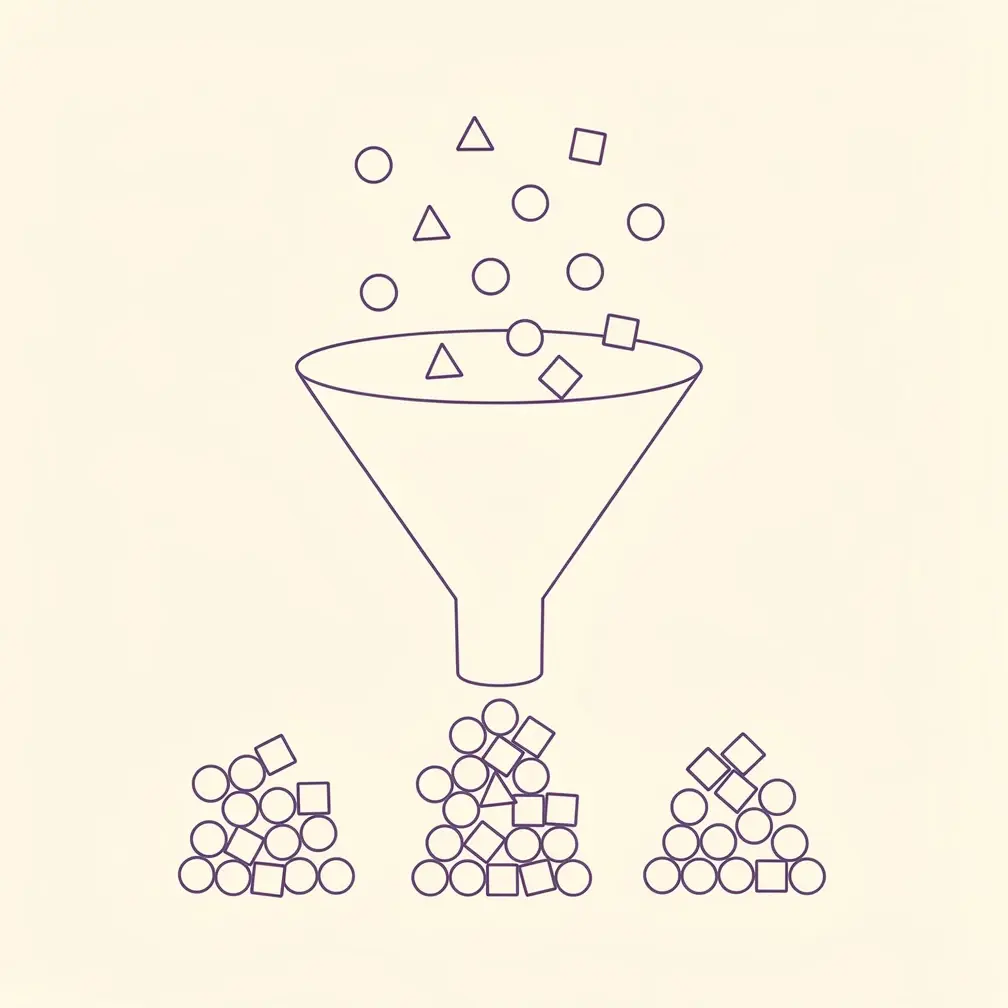
The inbound lead qualification process is a five-step workflow: capture the lead with the right form fields, enrich missing data from third-party sources, score on ICP fit and intent signals, route to the right next action, and nurture or disqualify the rest. Done well, it runs in under five minutes per lead and is mostly automated.
Step 1: Capture the right data without killing conversion
Every form field cuts conversion. The HubSpot research on this is brutal: dropping from four fields to three lifts conversion by about 50%. So you can’t ask for everything upfront. Instead, ask for what you can’t enrich: business email, company name, and the one or two questions that reveal intent (use case, timeline, current solution).
Use progressive profiling on returning visitors. The first form asks for email. The second asks for company size. The third asks for budget. Each visit, you learn one more thing without rebuilding the form.
Step 2: Enrich the lead with firmographic and technographic data
Enrichment runs the moment the form submits. Pull company size, industry, revenue band, tech stack, and funding stage from a data provider (Clay, Apollo, ZoomInfo, Clearbit). Match the email domain to LinkedIn and pull seniority and department. The lead record goes from {email, name} to a 30-field profile in two seconds.
Pro tip
If your enrichment provider doesn’t return a clean company match within five seconds, route the lead to a fallback SDR queue for manual research instead of holding the form response. Speed beats data completeness for inbound.
Step 3: Score on fit and intent
Lead scoring is two columns: fit (do they match the ICP?) and intent (are they likely to buy soon?). Fit comes from the enriched firmographic data. Intent comes from behavioral signals: pages viewed, pricing-page visits, free-trial activity, third-party intent (G2, 6sense, Bombora), and the form they filled.
A common starting model uses A/B/C/D fit grades and 1/2/3/4 intent scores, then routes the combined score:
| Score | Definition | Action |
|---|---|---|
| A1, A2, B1 | Strong ICP fit + high intent | Auto-route to AE for same-day demo |
| A3, B2, B3, C1 | Decent fit, moderate intent | Route to SDR for discovery call |
| A4, B4, C2, C3 | Fit but cold | Send to marketing nurture sequence |
| C4, D-anything | Poor fit | Disqualify or send self-serve resources |
Layer in negative scoring: free-email domains, student titles, competitor companies, and territories you don’t sell into all subtract points or auto-disqualify. See our guide to video-based lead scoring for how engagement with video content factors into intent.
Step 4: Route to the right next action
Routing is a CRM workflow. In HubSpot or Salesforce, write rules that assign by score, territory, industry, and rep capacity. Round-robin within a tier so no rep gets overloaded. For top-tier leads, fire a real-time Slack alert and a meeting-booker link before the lead leaves the page.
Record One Video. AI Personalizes Thousands.
Sendspark is the AI video personalization platform for B2B sales. Record once, and AI voice cloning generates thousands of individually personalized videos with dynamic backgrounds and personalized thumbnails — each prospect hears their name, sees their website, in your voice. Sales teams see 2-3x more replies.
Get Started NowStep 5: Nurture or disqualify
Most inbound leads will not turn into pipeline this quarter. That is fine. Send the cold-but-fit leads into a content-led nurture sequence and revisit when intent rises. Send the misfit leads to self-serve resources or a polite decline. The worst outcome is leaving a poor-fit lead in the AE’s queue, where it clogs the pipeline and trains the rep to ignore inbound.
For nurture tooling, see our breakdown of the best lead nurturing software for B2B teams.
Inbound Qualification Frameworks: BANT, MEDDIC, CHAMP, FAINT
Qualification frameworks are checklists for the discovery call, structured around the questions a rep needs answered before advancing a deal. BANT, MEDDIC, CHAMP, and FAINT are the four most common in B2B. Each fits a different deal motion — pick the one that matches your average contract value, sales cycle, and committee size.
Quick comparison
| Framework | Best for | Key dimensions | Sales cycle |
|---|---|---|---|
| BANT | Transactional, SMB | Budget, Authority, Need, Timeline | Weeks |
| MEDDIC | Complex enterprise | Metrics, Economic buyer, Decision criteria, Decision process, Identify pain, Champion | 3-12 months |
| CHAMP | Relationship-led, mid-market | Challenges, Authority, Money, Prioritization | 1-3 months |
| FAINT | Hesitant or new-category buyers | Funds, Authority, Interest, Need, Timing | Variable |
BANT: the classic, still useful for SMB
BANT (Budget, Authority, Need, Timeline) was built by IBM in the 1960s and still works for transactional deals where the buyer has a defined budget and a clear decision process. It struggles when buyers don’t have allocated budget yet — common in new categories — because “no budget” gets you disqualified even when the deal is real.
MEDDIC: the enterprise rigor framework
MEDDIC adds the structure missing from BANT: metrics (the quantified value), economic buyer (the actual signer), decision criteria, decision process, pain identification, and champion. It’s standard in companies running six-figure deals through procurement. Per Salesforce’s State of Sales, sellers in complex deals close more often when they map all six dimensions before proposal.
CHAMP: lead with pain
CHAMP (Challenges, Authority, Money, Prioritization) reorders BANT to start with the buyer’s problem instead of the budget question. It fits relationship-led sales where the first conversation is about discovery, not negotiation. Most modern B2B SaaS teams default to a CHAMP variant.
FAINT: for new categories and hesitant buyers
FAINT (Funds, Authority, Interest, Need, Timing) replaces “Budget” with “Funds” — does the prospect have the financial capability, even if no budget line exists yet? It’s the right fit when you’re selling into a new category where buyers haven’t done a budget cycle yet.
Advanced strategy
Don’t run the framework like a checklist on the first call. Use it as a scoring rubric afterward. A discovery call should feel like a conversation, not an interrogation, but your CRM notes should hit every dimension within the first two meetings.
How to Qualify Inbound Leads Faster With AI Video
The fastest way to qualify high-intent inbound leads is to replace the generic “thanks for your demo request, here’s a calendar link” with a 30-second personalized video reply that opens with the lead’s name and shows their company website behind the rep. It compresses the discovery window from days to minutes by letting the lead see the rep, hear the rep, and book the meeting in a single click.
This used to be impossible at volume — recording a one-off video for every demo request doesn’t scale past a handful of reps. AI voice cloning and dynamic backgrounds change the math. You record one video, and the platform generates thousands of personalized variants, each addressing the lead by name in your cloned voice with their own website on screen behind you.
The sub-five-minute workflow
The end-to-end flow lives in your CRM. When a lead crosses the SQL score threshold, an automation triggers a personalized video draft, the rep approves it (or it auto-sends for top-tier leads), and the lead receives a real reply within minutes of the form submission — not days. Engagement data flows back into the CRM so the next rep on the call already knows whether the lead watched 10 seconds or two minutes.
Why video lifts qualification accuracy
A short video reply is a built-in qualification signal. If the lead watches 75% of it and clicks the meeting link, you have a strong intent signal beyond the form fill. If they don’t open it, you’ve learned something too — the lead was lower-intent than the form suggested, and your SDR can save the energy.
Sendspark customers using AI video personalization on inbound replies see 40-50% more meetings booked from the same lead volume, and SDRs reclaim 10+ hours a week previously spent on first-touch outreach. Pair it with intent-based prospecting and you can route the right lead to the right rep with a video that matches their context.
What the SDR keeps doing
AI doesn’t replace the qualification call. It buys the call. The discovery conversation — running BANT, MEDDIC, or CHAMP — still happens with a human rep. What changes is the speed of the first response and the share of inbound leads that show up to the call already warm. See our sales prospecting solution for the full workflow.
Summary of the Inbound Lead Qualification Playbook
| Stage | What happens | Who owns it | Tool category |
|---|---|---|---|
| Capture | Minimal form, progressive profiling | Marketing | Forms / landing pages |
| Enrich | Firmographic + technographic data | RevOps | Clay, Apollo, ZoomInfo |
| Score | Fit and intent scoring rules | Marketing + RevOps | HubSpot, Marketo, Salesforce |
| Route | Auto-assign by tier and territory | RevOps | CRM workflows, LeanData |
| Engage | Sub-5-min personalized video reply | SDR / AE | Sendspark, video platform |
| Nurture or disqualify | Cold-fit to nurture, misfit to self-serve | Marketing | Email automation |
Frequently Asked Questions
What is inbound lead qualification?
Inbound lead qualification is the process of evaluating marketing-sourced leads — form fills, demo requests, content downloads, free trials — to determine which match your ideal customer profile and warrant a real-time sales response. The output is a routing decision: pass to sales, send to nurture, or disqualify.
What’s the difference between inbound and outbound lead qualification?
Inbound qualification evaluates leads who have already shown intent by raising their hand. Outbound qualification evaluates accounts the rep targets cold. Inbound moves faster, relies more on behavioral data, and focuses on filtering misfits. Outbound moves slower, relies more on firmographic data, and focuses on earning the conversation.
What is the best inbound lead qualification framework?
For most B2B SaaS teams selling mid-market deals, CHAMP (Challenges, Authority, Money, Prioritization) is the best default — it leads with the buyer’s problem instead of the budget question. Use BANT for transactional SMB sales, MEDDIC for complex enterprise deals, and FAINT for new-category sales where buyers don’t have allocated budget yet.
How fast should you respond to inbound leads?
Respond within five minutes for top-tier leads. Harvard Business Review research found firms that contacted leads within an hour were seven times more likely to qualify them than those who waited an hour longer. Set up auto-routing so high-score leads trigger a personalized response before the buyer leaves your site.
What questions should I ask to qualify an inbound lead?
Start with the problem they’re trying to solve, then move to context: who else is involved in the decision, what they’re using today, their timeline, and how they’ll measure success. Avoid leading with budget — it positions you as a vendor instead of a partner. Use the framework (CHAMP, MEDDIC, BANT) as a rubric for your notes, not a script for the call.
How do I score inbound leads for sales-readiness?
Use two columns: fit (firmographic ICP match) and intent (behavioral signals like pricing-page visits, free-trial activity, content downloads, third-party intent data). A common starting model uses A/B/C/D fit grades and 1/2/3/4 intent scores. Auto-route A1-B1 to AEs, B2-C1 to SDRs, and C2-D4 to nurture or disqualify.
Can AI qualify inbound leads automatically?
AI can handle enrichment, scoring, and routing automatically, and it can draft a personalized video or email response in seconds. The discovery conversation still belongs to a human rep — AI buys the call, it doesn’t replace it. The best workflows use AI to compress the response window from days to minutes, then hand off a warmer lead to the SDR for the qualification call.
Sources & References
- Harvard Business Review — “Firms that tried to contact potential customers within an hour of receiving a query were nearly seven times as likely to qualify the lead.” (2011, MIT study)
- Gartner — “B2B buyers spend only 17% of their purchase time meeting with potential suppliers; when comparing multiple vendors, it drops to 5-6% per supplier.” (Ongoing research)
- Salesforce State of Sales — Annual research on sales productivity, qualification rigor, and rep workflows in complex deals. (2025)
- HubSpot — Practitioner guidance on lead qualification process, form-field conversion impact, and MQL/SQL handoff. (2024)
Record One Video. AI Personalizes Thousands.
Sendspark is the AI video personalization platform for B2B sales. Record once, and AI voice cloning generates thousands of individually personalized videos with dynamic backgrounds and personalized thumbnails — each prospect hears their name, sees their website, in your voice. Sales teams see 2-3x more replies.
Get Started Now