80% of new leads never convert without structured follow-up. That’s not a pipeline problem — it’s a nurture problem. Most B2B sales teams focus energy on generating leads, then let them sit idle until they either convert on their own or go cold. A lead nurturing campaign closes that gap by systematically moving prospects from interest to decision with timed, relevant touchpoints.
This guide covers everything you need: five campaign types, a 6-step build framework, real sequence examples with timing and subject lines, and the KPIs that tell you whether it’s working. By the end, you’ll have a clear blueprint to build lead nurturing campaigns that actually move pipeline. For a broader look at the strategy, see our complete B2B lead nurturing guide.
Key Takeaways
- A lead nurturing campaign is a structured, multi-touch sequence — nurtured leads produce 20% more sales opportunities than non-nurtured leads, per the DemandGen Report
- There are 5 core campaign types for B2B sales: welcome/onboarding, educational drip, re-engagement, demo follow-up, and video-led AI personalization
- AI-personalized video at key nurture touchpoints delivers 2–3x more replies than email-only sequences — Sendspark’s AI voice cloning generates hundreds of personalized videos from a single recording
- A successful campaign needs 6 components: segmented ICP, clear goals, funnel-mapped content, multi-channel delivery, automation, and defined KPIs
- Track pipeline velocity and meeting-booked rate alongside open/click rates — downstream metrics tell you if your campaign actually moves deals
What Is a Lead Nurturing Campaign?
A lead nurturing campaign is a structured, multi-touch sequence designed to build trust with prospects and guide them from initial interest toward a purchase decision. Unlike a standalone email blast, a campaign is segmented by audience, sequenced by timing, and sustained over days or weeks — each touchpoint delivering value rather than just pushing for a reply. The goal is to be present and relevant during the long periods between a prospect’s first contact and their final decision.
The data is clear on why this matters. According to the Salesforce State of Sales Report, 80% of new leads never convert without some form of structured follow-up. The DemandGen Report found that companies with active nurture programs generate 50% more sales-ready leads at 33% lower cost. And according to data from HubSpot’s lead nurturing research, nurtured leads produce 20% more sales opportunities than non-nurtured leads and make purchases 47% larger.
The contrast with one-off emails is stark. Lead nurturing emails get 4–10 times the response rate of standalone email blasts, according to Campaign Monitor citing Marketo research. That’s not because nurture emails are better written — it’s because they reach prospects at the right moment in their buying journey, with content that matches where they are, not where you want them to be.
The canonical definition: A lead nurturing campaign is a series of timed, personalized touchpoints — emails, videos, content pieces, and calls — designed to build trust and move a prospect toward a buying decision without requiring active daily effort from the sales rep.
5 Types of Lead Nurturing Campaigns for B2B Sales
Five campaign types cover the core use cases for B2B sales teams: welcome/onboarding, educational drip, re-engagement, demo follow-up, and video-led AI personalization. Choosing the right type comes down to where the prospect is in the funnel and what specific action you want them to take. Each type has a different structure, cadence, and channel mix.
Here is a quick comparison of each campaign type:
| Campaign Type | When to Use | Primary Channel | Typical Length | Primary Goal |
|---|---|---|---|---|
| Welcome / Onboarding | First 7 days after signup or MQL conversion | Email + video | 3–5 touches | Deliver quick wins and set expectations |
| Educational Drip | Problem-aware but not solution-ready | Email + content | 4–6 weeks | Build trust and category authority |
| Re-engagement | Leads cold or silent for 30–90 days | Email + LinkedIn | 3–4 touches | Reignite interest with a pattern interrupt |
| Demo Follow-up | Post-demo momentum window (5–7 days) | Email + video | 4–6 touches | Address objections, accelerate decision |
| Video-led AI Personalization | High-value accounts or targeted outbound | AI video + email | 4–6 touches | Deep personalization to stand out at scale |
1. Welcome / Onboarding Campaign
Your first impression campaign. It delivers immediate value — resources, training, quick wins — in the first seven days after a lead converts or signs up for a trial. The goal is to reduce time-to-value: the faster a prospect sees results or understands the product, the more likely they are to move forward. Keep it to 3–5 touches over the first week, spaced 1–2 days apart.
2. Educational Drip Campaign
Designed for prospects who understand they have a problem but haven’t decided on a solution. This is a non-pitchy sequence of 6–12 emails over 4–6 weeks, focused on teaching the prospect about the problem category, common mistakes, and industry benchmarks. You’re building trust and establishing your brand as the authority — the close comes later, after you’ve earned it.
3. Re-engagement Campaign
When a lead goes quiet for 30–90 days, a re-engagement campaign tries to restart the conversation with a “pattern interrupt.” The subject line alone can do heavy lifting here — phrases like “Did we lose you?” or “Is [pain point] no longer a priority?” drive opens because they break the normal sales email mold. A personalized video at touch 2 is especially effective: prospects who ignored five text emails will watch a 30-second video that mentions their name and shows their company’s website. For full strategy, see our guide on building an effective follow-up cadence.
4. Demo / Trial Follow-up Campaign
The window immediately after a demo or trial signup is high-stakes. Momentum fades fast in B2B — if you don’t follow up within 24 hours, the likelihood of booking a next step drops significantly. This campaign runs 5–7 days and addresses the most common post-demo objections (price, timing, internal approval) while keeping the energy of the demo alive. See how to structure the sequence in our qualification call guide.
5. Video-led AI Personalization Campaign
This is the highest-effort, highest-reward campaign type — and the one where Sendspark’s AI video personalization platform is purpose-built to help. The idea: record one video, and AI voice cloning generates a unique version for every prospect on your list, each one using their name, mentioning their company, and showing their company website as the dynamic background. These AI-personalized videos consistently drive 2–3x more replies than email-only outreach. Best suited for high-ACV outbound sequences and re-engagement of strategic accounts.
How to Build a Lead Nurturing Campaign in 6 Steps
Building a lead nurturing campaign comes down to six decisions: who to target, what success looks like, what content to deliver at each funnel stage, which channels to use, how to automate the sequence, and what to measure. Skip any one of these and your campaign will underperform — usually because the wrong message is reaching the wrong person at the wrong time.
Step 1: Define and Segment Your ICP
Not all leads get the same nurture sequence. Sending an SDR basics drip to a VP of Sales won’t convert — it will get you unsubscribed. Segment your leads by company size, industry vertical, funnel stage (MQL vs SQL vs PQL), and behavioral triggers (pricing page visited, demo requested, specific feature used). The tighter the segment, the more relevant your content, and the higher your reply rate.
Key segmentation variables for B2B SaaS/tech teams: company headcount (SMB vs mid-market vs enterprise), tech stack (HubSpot vs Salesforce), and funnel entry point (organic vs outbound vs event). Each combination warrants at least slightly different messaging.
Step 2: Set Campaign Goals and Conversion Definition
Before writing a single email, define what “converted” means for this campaign. Is it a booked meeting? A trial activation? A proposal requested? Set one primary KPI per campaign — not five. Adding secondary metrics is fine, but the campaign’s success or failure should hinge on one number. Also set your timeline: most B2B nurture campaigns run 4–12 weeks, depending on sales cycle length and deal complexity.
Step 3: Map Content to Funnel Stage
The content in your nurture sequence should match where the prospect is — not where you want them to be. Three tiers:
- TOFU (awareness): Educational content — what problems your category solves, industry data, common mistakes. No pitch.
- MOFU (consideration): Comparison content — how to evaluate tools, case studies, ROI frameworks. Soft pitch.
- BOFU (decision): Urgency content — demos, trials, customer proof, objection handling. Direct ask.
A common mistake is loading BOFU content into a TOFU sequence. Prospects who just learned your brand exists aren’t ready for a pricing conversation. Match the ask to the stage.
Step 4: Choose Your Channels
Email is still the primary B2B nurture channel — but the highest-performing sequences add video for key touchpoints. According to Gartner’s B2B sales research, personalization and relevance are the strongest predictors of buyer engagement. Adding an AI-personalized video at touch 3 or 4 in your sequence — where Sendspark’s AI voice cloning addresses each prospect by name with their company website visible — drives 2–3x more replies than email alone. LinkedIn sequences and well-timed calls round out enterprise-tier campaigns.
Pro tip
Space touches 48–72 hours apart — never more than one per day. Back-to-back sends feel like spam, not nurturing. The standard B2B rule: frequency builds familiarity, but crowding the inbox destroys trust.
Step 5: Build the Sequence and Automate
In HubSpot, Outreach, or Apollo: set enrollment triggers (form fill, behavior score, manual add), define delays between touches (day 1, 3, 7, 14…), and set clear exit conditions (replied, booked meeting, unsubscribed). The exit conditions are as important as the entry — if a prospect books a meeting mid-sequence, they should automatically exit the nurture flow and enter a deal progression sequence. For more on automation, see our guide to automated lead nurturing.
Step 6: Define KPIs Before Launch
Agree on success metrics before you send the first touch. Without pre-defined KPIs, different teams interpret results differently — marketing says it “performed well” on opens, sales says it “didn’t book any meetings.” Core KPIs: open rate, click-through rate, reply rate, meetings booked, and pipeline influenced. Set targets, then measure against them weekly.
Record One Video. AI Personalizes Thousands.
Sendspark is the AI video personalization platform for B2B sales. Record once, and AI voice cloning generates thousands of individually personalized videos with dynamic backgrounds and personalized thumbnails — each prospect hears their name, sees their website, in your voice. Sales teams see 2-3x more replies.
Get Started NowLead Nurturing Campaign Examples
The best way to understand lead nurturing campaigns is to see them in action. The two examples below cover the most common B2B scenarios: converting a free trial user to paid, and re-engaging a lead that went cold 60+ days ago. Both examples show the exact touch sequence, timing, and content type for each step.
Example 1: 7-Touch SaaS Free Trial Nurture Sequence
Goal: Convert free trial users to paid subscribers | Segment: Free trial signups, days 0–21
| Touch | Day | Type | Subject / Action |
|---|---|---|---|
| 1 | 0 | “Your free trial starts now — here’s what to do first” | |
| 2 | 2 | “The #1 thing teams do in week 1 that drives results” | |
| 3 | 5 | Case study: how a similar company used the tool to achieve X | |
| 4 | 8 | AI-personalized video | Rep’s voice saying prospect’s name, their company site in background |
| 5 | 12 | “Feature spotlight: [key feature they haven’t activated]” | |
| 6 | 16 | Objection handler — “What if I’m not ready to upgrade?” | |
| 7 | 19 | “Your trial ends in 2 days — here’s what you’d keep” |
The video at touch 4 is the sequence’s highest-leverage point. By day 8, a prospect has received three emails but hasn’t yet replied. A 30-second AI-personalized video — with the rep’s cloned voice saying their name, their company’s website visible in the background — creates a moment of genuine surprise. It signals that a real person reviewed their account, not an automated drip. This is exactly where Sendspark’s AI video personalization makes personalization at scale possible: one recorded video, hundreds of individualized versions delivered automatically.
Example 2: 5-Touch Video Re-engagement Campaign
Goal: Book a call with a lead that went cold | Segment: MQLs silent for 60+ days
| Touch | Day | Type | Content |
|---|---|---|---|
| 1 | 0 | “Checking in — is [pain point] still a priority for you?” | |
| 2 | 3 | AI-personalized video | Rep’s voice, prospect’s name, company website as dynamic background |
| 3 | 6 | New resource directly relevant to their industry or role | |
| 4 | 9 | Social proof: a customer in their exact space achieved X | |
| 5 | 12 | Break-up email — “Should I stop reaching out?” |
Touch 2 is the pattern interrupt that typically doubles reply rate in re-engagement sequences. Using Sendspark’s AI voice cloning, a rep records one 30-second video once — then the platform generates a version for every cold lead on the list, each one addressing the prospect by name with their company’s website visible in the background. Prospects who haven’t opened an email in 60 days watch these videos. The video signals genuine effort in a way no text email can replicate. For more on building the full sequence, see our AI lead nurturing guide.
“B2B buyers spend only 17% of their total buying journey meeting with potential suppliers. The rest is independent research, internal deliberation, and peer consultation. Lead nurturing gives you presence during the 83% when buyers aren’t talking to a rep — and that’s when decisions are actually forming.”
Lead Nurturing Campaign Metrics to Track
Track six KPIs for every lead nurturing campaign: email open rate, click-through rate, reply rate, meeting-booked rate, pipeline velocity, and campaign ROI. The key rule: set benchmarks before you launch, not after. Without a pre-agreed baseline, optimization discussions devolve into debate rather than decisions.
| Metric | What It Measures | B2B Benchmark | Action if Below Benchmark |
|---|---|---|---|
| Email open rate | Subject line effectiveness and sender reputation | 25–35% | A/B test subject lines; improve personalization tokens |
| Click-through rate | Content relevance and CTA clarity | 4–6% | Tighten CTA copy; ensure content matches funnel stage |
| Reply rate | Engagement and purchase intent | 2–5% | Add AI-personalized video; refine the ask |
| Meeting-booked rate | Pipeline conversion from engaged leads | 5–15% | Add a direct calendar link; review the BOFU ask timing |
| Pipeline velocity | Speed from MQL to close for nurtured vs. non-nurtured cohorts | Varies by ACV | Compare cohort close rates; identify drop-off stage |
| Campaign ROI | Revenue attributed to nurture efforts vs. campaign cost | 3–5x cost | Track source-to-close in CRM; review audience targeting |
Advanced strategy
Use Sendspark’s video analytics to go beyond email open rates. You can see exactly which prospects watched your AI-personalized video, for how long, and whether they clicked the CTA — then trigger the next touch based on view data, not just email opens. A prospect who watched 85% of a video but didn’t reply is a warmer lead than one who opened an email and bounced in 3 seconds.
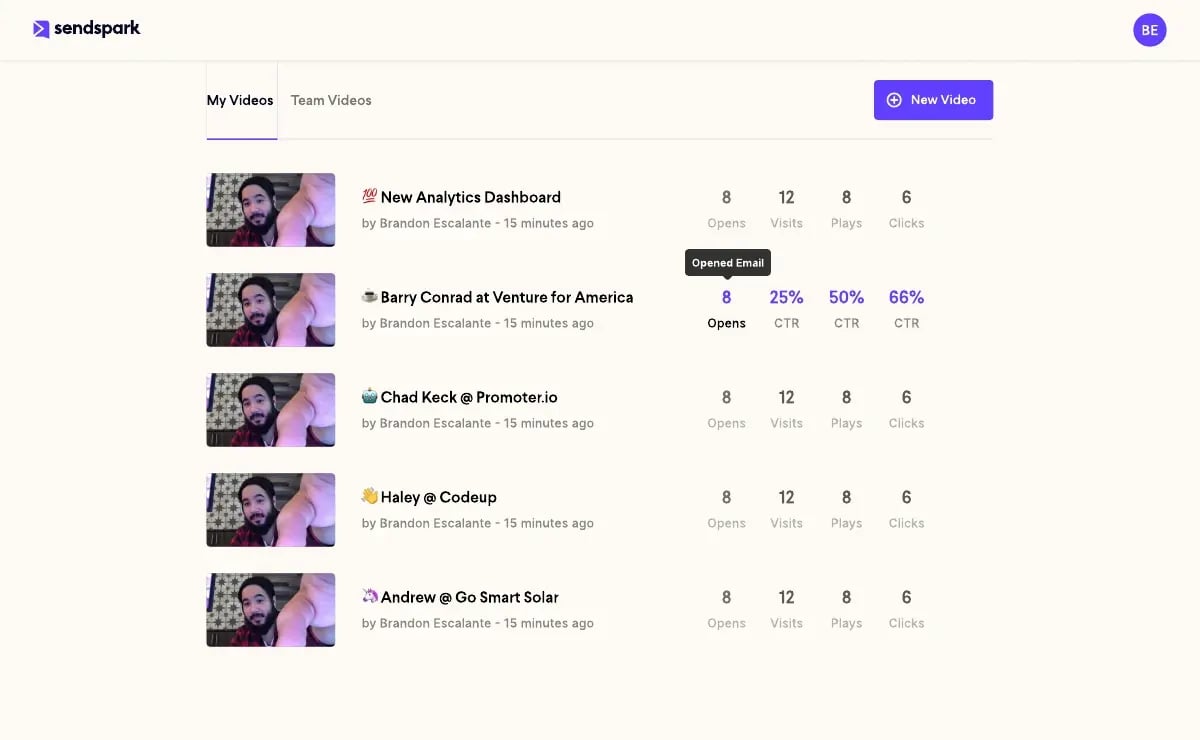
The most underused metric is pipeline velocity — the speed at which nurtured leads move from MQL to closed/won compared to non-nurtured leads. McKinsey research on B2B sales effectiveness consistently shows that personalized, multi-touch nurture sequences accelerate deal cycles by 20–30% in mid-market B2B. Track this by tagging leads in your CRM as “nurtured” vs. “non-nurtured” at the MQL stage, then compare time-to-close across cohorts quarterly. See how Sendspark integrates with HubSpot to sync video engagement data directly into deal timelines.
Summary: 5 Campaign Types at a Glance
| Campaign Type | Funnel Stage | Touches | Duration | Top KPI |
|---|---|---|---|---|
| Welcome / Onboarding | Post-signup | 3–5 | 7 days | Feature activation rate |
| Educational Drip | TOFU / MOFU | 6–12 | 4–6 weeks | CTR + content engagement |
| Re-engagement | Cold leads | 3–4 | 2 weeks | Reply rate |
| Demo Follow-up | BOFU | 4–6 | 7 days | Meeting-booked rate |
| Video-led AI Personalization | High-value outbound | 4–6 | 2–3 weeks | Reply rate + pipeline created |
Published July 2026
Frequently Asked Questions
What is the purpose of a lead nurturing campaign?
The purpose of a lead nurturing campaign is to build trust with prospects over time and move them toward a buying decision without requiring active daily effort from the sales team. Most B2B prospects aren’t ready to buy on first contact — nurture campaigns stay present through the research and evaluation phases, so your brand is top of mind when they are ready. According to the DemandGen Report, nurtured leads produce 20% more sales opportunities than non-nurtured leads.
How many touches does a lead nurturing campaign need?
Most B2B lead nurturing campaigns require between 5 and 12 touches to move a prospect to a decision, depending on deal size and sales cycle length. Short campaigns (re-engagement, demo follow-up) typically run 3–5 touches over 7–14 days. Longer educational campaigns may include 8–12 touches over 4–8 weeks. The key variable is the prospect’s stage: BOFU leads need fewer, more direct touches; TOFU leads need more educational content spread over a longer period.
What is the best channel for lead nurturing?
Email remains the primary channel for B2B lead nurturing due to its scalability and measurability. The highest-performing sequences add AI-personalized video for key touchpoints — video in nurture sequences drives 2–3x more replies than email-only approaches. LinkedIn message sequences work well as a supplementary channel for outbound and re-engagement. For enterprise-tier sequences, a well-timed phone call at touch 3 or 4 significantly increases meeting-booked rates.
How do you measure lead nurturing campaign success?
Measure lead nurturing success with six KPIs: email open rate (benchmark: 25–35%), click-through rate (4–6%), reply rate (2–5%), meeting-booked rate (5–15% of engaged leads), pipeline velocity (compare nurtured vs. non-nurtured close times), and campaign ROI (target 3–5x cost). The most important metric for sales teams is meeting-booked rate — it’s the clearest signal that nurture is actually creating pipeline, not just email engagement.
What is the difference between a lead nurturing campaign and a drip campaign?
A drip campaign sends a pre-set sequence of emails at fixed intervals, regardless of prospect behavior. A lead nurturing campaign is behavior-triggered — it adapts based on what the prospect does (opened an email, clicked a link, visited a pricing page, booked a meeting). If a prospect books a meeting mid-drip, a drip campaign keeps sending. A nurture campaign removes them from the sequence and routes them to the appropriate next stage. Nurture campaigns are always more complex to build but consistently outperform drips because they deliver relevance at every step.
How long should a lead nurturing campaign run?
The right duration depends on your sales cycle. For SaaS products with a 30-day average sales cycle, nurture campaigns typically run 3–4 weeks. For enterprise deals with a 3–6 month cycle, campaigns can run 8–12 weeks. A general rule: run the campaign for half the length of your typical sales cycle, then reassess. If a prospect hasn’t engaged after the full campaign, move them to a quarterly “keep warm” sequence rather than continuing active nurture.
Can you use video in a lead nurturing campaign?
Yes — and personalized video is one of the highest-impact channels for lead nurturing, especially at re-engagement or demo follow-up touchpoints. AI-personalized video, using a platform like Sendspark’s AI video personalization, lets sales reps record one video and generate hundreds of individually personalized versions — each one addressing the prospect by name, with their company’s website visible as the dynamic background. This type of AI-personalized video outreach consistently drives 2–3x more replies than email-only touches at the same point in a sequence.
Sources & References
- Salesforce State of Sales Report — “80% of new leads never convert without structured follow-up; personalization is the leading driver of B2B buyer engagement” (2024)
- HubSpot, Lead Nurturing Benchmarks — “Nurtured leads produce 20% more sales opportunities and make purchases 47% larger than non-nurtured leads” (2023)
- Harvard Business Review — “The Short Life of Online Sales Leads” — Research showing response speed and sustained follow-up as the primary determinants of lead conversion (2011)
- Gartner, The B2B Buying Journey — “B2B buyers spend only 17% of their buying journey meeting with potential suppliers; personalization drives engagement during the other 83%” (2023)
- McKinsey, B2B Sales Effectiveness Research — “Personalized, multi-touch nurture sequences accelerate deal cycles by 20–30% in mid-market B2B sales” (2023)
Record One Video. AI Personalizes Thousands.
Sendspark is the AI video personalization platform for B2B sales. Record once, and AI voice cloning generates thousands of individually personalized videos with dynamic backgrounds and personalized thumbnails — each prospect hears their name, sees their website, in your voice. Sales teams see 2-3x more replies.
Get Started Now