Published August 2026
A lead nurturing funnel is a stage-mapped system that delivers the right content and outreach to prospects at each step of their buying journey, from first awareness through final decision. According to HubSpot research, nurtured leads make 47% larger purchases than non-nurtured leads, yet most B2B teams still blast the same generic content to every contact regardless of where they are in the funnel. The result is wasted pipeline, faster lead decay, and lost revenue at the stages where personalization matters most.
Key Takeaways
- A lead nurturing funnel maps specific content and tactics to each stage of the buyer journey, from awareness through decision, so prospects receive relevant value at every step rather than generic blasts.
- According to HubSpot research, nurtured leads make 47% larger purchases than non-nurtured leads, making stage-aligned nurturing a revenue driver rather than just a courtesy touch.
- Top-of-funnel nurturing focuses on educational content (blog posts, guides, industry data), while mid-funnel shifts to consideration content (case studies, webinars, comparison tools) and bottom-of-funnel accelerates with personalized outreach.
- AI video personalization lets you record one video and generate thousands of individually personalized variants with dynamic backgrounds, making bottom-of-funnel outreach scalable without losing the personal touch.
- The most common funnel-mapping mistake is treating all leads the same regardless of stage, which sends decision-ready prospects back to awareness content and wastes warm leads.
What Is a Lead Nurturing Funnel?
A lead nurturing funnel is a structured framework that aligns nurturing content and outreach tactics to each stage of a buyer’s journey, ensuring that prospects receive relevant, stage-appropriate value from first contact through purchase. Unlike a generic drip campaign that sends the same sequence to everyone, a nurturing funnel recognizes that a prospect evaluating solutions needs different content than one who just discovered the problem exists. According to Salesforce, lead nurturing is the process of providing valuable offers and resources that persuade prospects to advance through the sales funnel.
Nurturing is one piece of the bigger picture — for the full funnel structure and the metrics that determine whether it converts, check out our guide to the SaaS sales funnel.
The key distinction is intent-awareness. A lead nurturing funnel acknowledges that buyer intent shifts as prospects move deeper into evaluation. At the top, they need to understand a problem. In the middle, they need to compare solutions. At the bottom, they need confidence in their choice. Sending a case study to someone who does not yet know they have a problem is premature. Sending a definitional blog post to someone ready to buy is a missed opportunity.
Lead Nurturing Funnel vs. Sales Funnel
A sales funnel tracks deal stages from a seller’s perspective (prospecting, qualification, proposal, close). A lead nurturing funnel tracks the buyer’s journey from the prospect’s perspective (awareness, consideration, decision). The two overlap but serve different purposes: the sales funnel is about pipeline management, while the nurturing funnel is about content and engagement strategy that feeds that pipeline. For a deeper dive on the seller’s side, see our guide to sales pipeline stages.
Why Stage-Mapped Nurturing Outperforms Generic Campaigns
Generic campaigns fail because they ignore context. A prospect who downloaded a beginner’s guide is not ready for a pricing comparison, and a prospect who requested a demo does not need an introductory explainer. According to Gartner, 80% of B2B buyers now prefer a rep-free or digital-first buying experience, which means your content must guide them through the journey without a human at every step. Stage-mapped nurturing ensures each touchpoint meets the prospect where they are, building trust and advancing the deal at a pace that matches their readiness.
Pro tip
Audit your existing nurturing content and tag each piece with a funnel stage (TOFU, MOFU, or BOFU). If more than 60% sits in one stage, you have a content gap that is leaking prospects at the under-served stage.
The Three Stages of a Lead Nurturing Funnel
A lead nurturing funnel has three stages that mirror the classic buyer journey: top-of-funnel (TOFU) awareness, middle-of-funnel (MOFU) consideration, and bottom-of-funnel (BOFU) decision. Each stage has distinct goals, content types, channels, and success metrics. Mapping the right tactic to each stage is what separates a funnel that converts from one that just sends emails into the void. Video content follows this same structure – see our guide on building a video marketing funnel for how to map specific video formats to each stage.
The table below summarizes how content, goals, and metrics shift across the three funnel stages.
| Funnel Stage | Buyer Goal | Content Types | Primary Channel | Success Metric |
|---|---|---|---|---|
| TOFU (Awareness) | Understand the problem | Blog posts, guides, industry reports, social content | Organic search, social, paid ads | Lead capture rate |
| MOFU (Consideration) | Evaluate solutions | Case studies, webinars, comparison guides, ROI calculators | Email sequences, retargeting | MQL conversion rate |
| BOFU (Decision) | Choose and buy | Personalized demos, proposal videos, testimonials, pricing pages | 1:1 email, AI-personalized video, sales calls | SQL-to-close rate |
TOFU: Awareness Stage
The awareness stage is where prospects first recognize they have a problem worth solving. They are not evaluating vendors yet, so promotional content here actively repels them. The goal is to attract, educate, and capture contact information so you can continue the conversation. Content at this stage should answer the questions prospects type into Google and ChatGPT: “what is lead nurturing,” “how to reduce churn,” “why are my email reply rates dropping.”
According to HubSpot, companies that excel at lead nurturing generate 50% more sales-ready leads at 33% lower cost, and most of that advantage comes from a strong TOFU content engine. Top-of-funnel nurturing feeds into your broader demand generation strategy, ensuring a steady flow of qualified contacts enter the funnel.
MOFU: Consideration Stage
The consideration stage is where prospects have defined their problem and are comparing approaches. They know they need a solution, but they have not decided which one. Content here should build trust in your approach, demonstrate expertise, and create preference for your brand without hard-selling. Case studies, comparison guides, webinars, and interactive tools (like ROI calculators) are the workhorses of this stage.
Mid-funnel is also where lead engagement signals become critical. A prospect who attends a webinar and then visits your pricing page is signaling strong intent. This is where lead engagement tracking and lead scoring work together to identify which prospects are ready to advance to BOFU outreach.
Advanced strategy
Use Sendspark’s AI video personalization to create consideration-stage content that stands out. Record one video introducing a case study, then use AI voice cloning to personalize the intro for each prospect by name and company. This lifts MOFU engagement rates significantly compared to a generic case study email.
BOFU: Decision Stage
The decision stage is where prospects are ready to buy but need a final push. They have evaluated options, narrowed their shortlist, and are weighing final considerations like pricing, implementation, and vendor confidence. This is the stage where personalization has the highest ROI. A prospect who has been nurtured through TOFU and MOFU content deserves a 1:1 touchpoint, not another automated email.
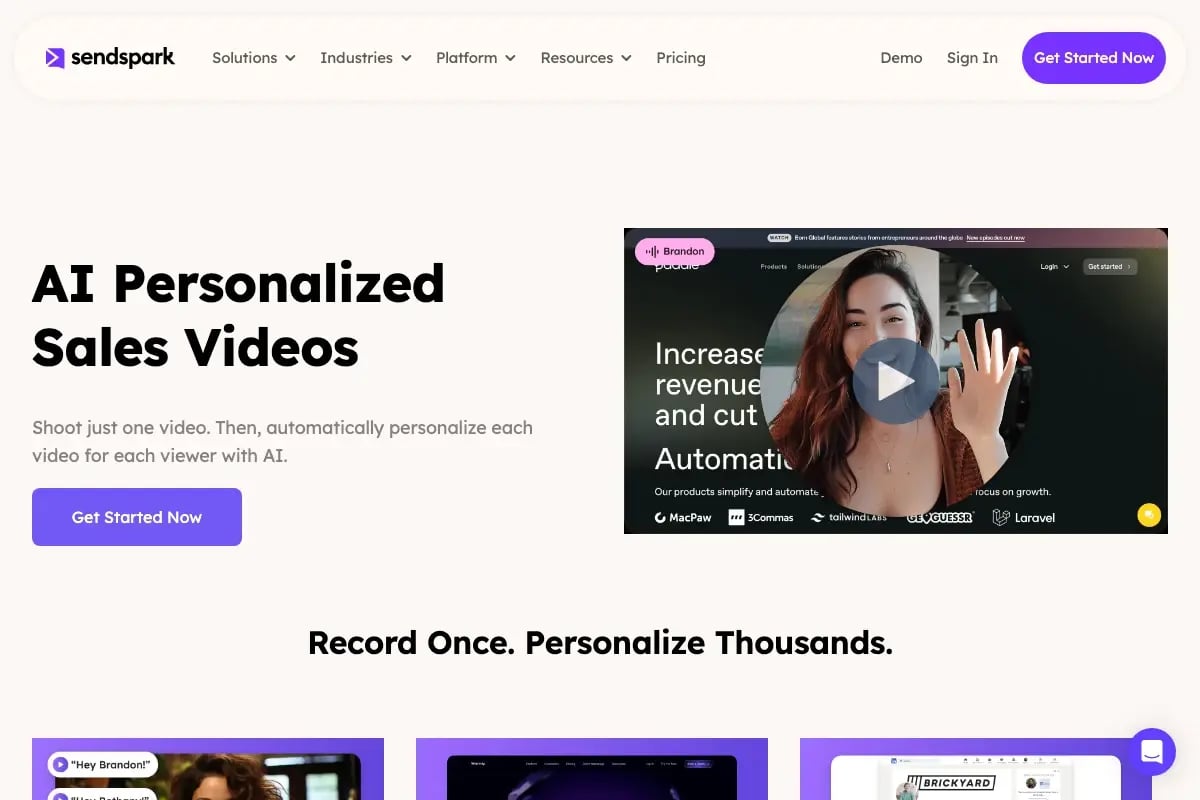
AI-personalized video outreach is the most effective BOFU tactic because it combines the personal touch of a one-to-one recording with the scale of automation. Sendspark’s AI video personalization platform lets you record one video and generate thousands of individually personalized variants using AI voice cloning and dynamic backgrounds. Each prospect hears their name, sees their company website behind the speaker, and receives a message tailored to their specific stage of evaluation. Sales teams using Sendspark see 2-3x more replies and 40-50% more meetings booked from BOFU outreach.
For a deeper comparison of how AI-personalized video fits into the broader nurturing stack, see our guide on AI lead nurturing and our video personalization feature page.
Record One Video. AI Personalizes Thousands.
Sendspark is the AI video personalization platform for B2B sales. Record once, and AI voice cloning generates thousands of individually personalized videos with dynamic backgrounds and personalized thumbnails, each prospect hears their name, sees their website, in your voice. Sales teams see 2-3x more replies.
Get Started NowHow to Build a Lead Nurturing Funnel in 5 Steps
Building a lead nurturing funnel requires mapping content to buyer journey stages, setting up lead scoring to trigger transitions, choosing the right channels per stage, automating workflows in your CRM, and measuring per-stage conversion rates. Each step builds on the previous one, and skipping any step creates leaks where prospects fall out of the funnel. The goal is a system that moves leads from awareness to decision without manual intervention at every touchpoint.
Step 1: Map Content to Buyer Journey Stages
Start by auditing your existing content library and tagging each piece with a funnel stage. A blog post explaining “what is lead nurturing” is TOFU. A comparison guide titled “best lead nurturing software” is MOFU. A personalized demo video is BOFU. According to MarketingProfs, companies that align content to the buyer journey see 2-3x higher conversion rates at each stage. If you have content gaps at any stage, prioritize creating or curating content to fill them before launching the funnel.
Step 2: Set Up Lead Scoring to Trigger Stage Transitions
Lead scoring is the mechanism that tells your funnel when a prospect has graduated from one stage to the next. Assign points for engagement signals: downloading a TOFU guide (10 points), attending a webinar (25 points), visiting the pricing page (30 points), requesting a demo (50 points). Set threshold scores that trigger stage transitions: 30 points moves a lead from TOFU to MOFU sequences, 70 points moves from MOFU to BOFU outreach. This ensures prospects receive stage-appropriate content based on demonstrated behavior, not assumptions. For a structured approach to qualification signals, see our B2B lead qualification framework.
Step 3: Choose Channels per Stage
Each funnel stage has channels that perform best. TOFU favors owned and earned channels: organic search, social media, guest content, and paid awareness ads. MOFU shifts to nurture-specific channels: email sequences, retargeting, and community engagement. BOFU demands high-touch, personalized channels: 1:1 email, AI-personalized video, phone calls, and direct sales engagement. The table below maps channels to stages.
| Stage | Primary Channels | Cadence | Personalization Level |
|---|---|---|---|
| TOFU | Blog, SEO, social, paid ads | Weekly | Segment-level |
| MOFU | Email sequences, retargeting, webinars | 2-3x per week | Role and industry |
| BOFU | 1:1 email, AI-personalized video, phone | Daily to weekly | 1:1 individual |
Step 4: Automate Stage-Based Workflows in Your CRM
Once content, scoring, and channels are mapped, automate the workflows in your CRM. According to HubSpot marketing statistics, 68% of high-performing marketing teams use automated workflows to move leads through funnel stages. Set up enrollment triggers (lead score crosses 30) and unenrollment triggers (lead advances to BOFU or goes cold). Configure branching logic for different personas or industries so a SaaS prospect receives different MOFU content than an agency prospect. Connect your CRM with HubSpot integration to trigger AI-personalized video sends automatically when a lead enters the BOFU stage. For more on automation strategy, see our guide to automated lead nurturing.
Step 5: Measure and Optimize Per-Stage Conversion Rates
The final step is measurement. Track conversion rates at each stage transition: what percentage of TOFU leads advance to MOFU, what percentage of MOFU leads advance to BOFU, and what percentage of BOFU leads close. These stage-by-stage rates reveal exactly where your funnel leaks. If 80% of TOFU leads never advance to MOFU, your awareness content may not be compelling enough or your scoring threshold may be too high. If MOFU-to-BOFU conversion is low, your consideration content may not build enough trust. For the broader pipeline perspective, see our guide to building a lead pipeline that converts.
The table below summarizes the 5-step build process with key actions and success indicators.
| Step | Key Action | Success Indicator |
|---|---|---|
| 1. Content mapping | Tag all content with TOFU/MOFU/BOFU | No stage has less than 20% of content |
| 2. Lead scoring | Set thresholds for stage transitions | Score accurately predicts stage readiness |
| 3. Channel selection | Match channels to stage intent | No BOFU leads in generic email blasts |
| 4. Workflow automation | Build CRM-triggered stage workflows | Leads auto-advance without manual touch |
| 5. Per-stage measurement | Track stage-by-stage conversion rates | Identifiable leak points with fix plans |
Lead Nurturing Funnel Metrics That Matter
The metrics that matter for a lead nurturing funnel are per-stage conversion rates, time-in-stage, content engagement by stage, and nurture-to-pipeline velocity. Tracking only overall funnel conversion hides where prospects drop off, while stage-level metrics pinpoint the exact leak. According to HubSpot research, nurtured leads make 47% larger purchases than non-nurtured leads, but only if the nurturing is stage-appropriate. Measuring per-stage performance is how you confirm your content is doing its job at each step.
Per-Stage Conversion Rates
This is the percentage of leads who advance from one stage to the next. A healthy TOFU-to-MOFU conversion rate is 20-30%. MOFU-to-BOFU should be 15-25%. BOFU-to-close depends on your sales cycle but typically runs 20-40% for well-nurtured leads. If any stage falls below these benchmarks, investigate the content and channel strategy at that stage.
Time-in-Stage
Time-in-stage measures how long leads spend at each funnel step before advancing or dropping off. Long time-in-stage at TOFU suggests your awareness content is not compelling enough to drive action. Long time-in-stage at MOFU means your consideration content is not building enough urgency. According to Gartner, B2B buying teams now spend 27% more time in the consideration stage than they did five years ago, making MOFU content quality a competitive differentiator.
Nurture-to-Pipeline Velocity
Velocity combines volume, conversion rate, and cycle time to measure how fast leads move from funnel entry to closed-won. Calculate it as: (number of leads entering the funnel) x (overall conversion rate) / (average days to close). Higher velocity means your nurturing funnel is efficiently moving prospects from awareness to decision. Improving any stage’s conversion rate or reducing any stage’s time-in-stage lifts overall velocity.
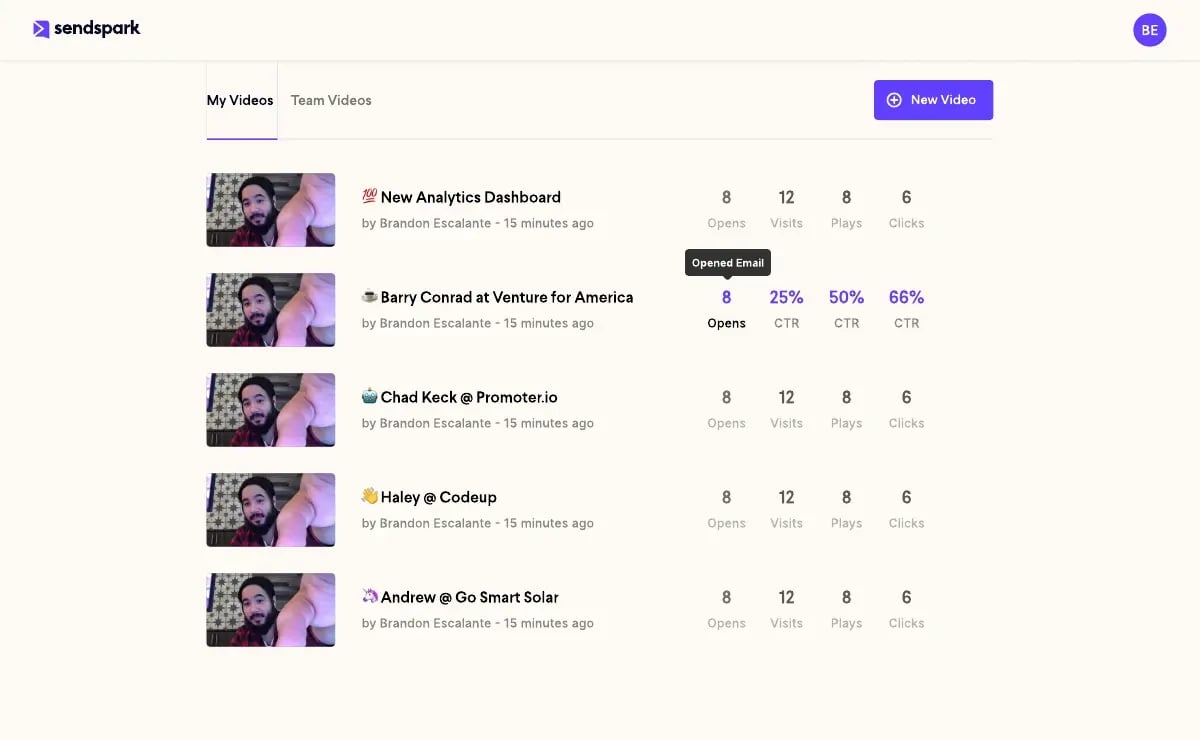
The table below compares the key metrics, what they reveal, and benchmark ranges.
| Metric | What It Reveals | Benchmark |
|---|---|---|
| TOFU-to-MOFU rate | Awareness content quality | 20-30% |
| MOFU-to-BOFU rate | Consideration content trust-building | 15-25% |
| BOFU-to-close rate | Decision-stage personalization | 20-40% |
| Time-in-stage (MOFU) | Urgency and content relevance | 14-30 days |
| Nurture-to-pipeline velocity | Overall funnel efficiency | Trend upward |
Common Lead Nurturing Funnel Mistakes (and How to Fix Them)
The most common lead nurturing funnel mistakes are sending the same content to all stages, ignoring lead scoring signals, lacking stage-transition automation, and neglecting bottom-of-funnel personalization. Each mistake creates a specific type of leak in the funnel, and each has a straightforward fix. Identifying which mistake is costing you the most pipeline requires looking at where leads drop off and matching the pattern to the failure mode.
“The biggest mistake we see is companies treating nurturing as a single sequence rather than a stage-mapped journey. When you send a decision-ready prospect an awareness-level ebook, you lose them. They wanted a conversation, not a brochure.”
According to HubSpot’s State of Marketing report, nurtured leads spend 47% more than non-nurtured leads, but only when the nurturing matches the stage.
Mistake 1: Sending the Same Content to All Stages
This is the most damaging mistake because it wastes every stage. TOFU leads get overwhelmed, MOFU leads get underserved, and BOFU leads get ignored. The fix is to segment your nurturing list by stage and map content accordingly. Use lead scoring (Step 2 above) to automate stage assignment and ensure each segment receives only stage-appropriate content. For a broader framework, see our B2B lead nurturing guide.
Mistake 2: Ignoring Lead Scoring Signals
Without lead scoring, stage transitions are manual guesses. A sales development rep has to eyeball whether a prospect is ready for BOFU outreach, which is slow and inconsistent. The fix is to implement a scoring model with behavioral triggers (content downloads, page visits, email engagement) and demographic criteria (role, company size, industry). Set threshold scores that automatically move leads between stages. See our lead qualification process guide for scoring model templates.
Mistake 3: No Stage-Transition Automation
If leads do not automatically advance between stages, they get stuck. A prospect who attended a webinar (strong MOFU signal) but is still receiving TOFU blog digests will disengage. The fix is to set up CRM workflows that enroll leads in the next stage’s sequence when their score crosses the threshold. This requires automated lead nurturing infrastructure, but the payoff is a funnel that runs without manual babysitting.
Common mistake
Do not set your stage-transition threshold too low. Moving leads to BOFU outreach before they are ready burns sales capacity and creates awkward “why are you calling me?” conversations. A 30-point TOFU-to-MOFU threshold and a 70-point MOFU-to-BOFU threshold is a proven starting point.
Mistake 4: Neglecting Bottom-of-Funnel Personalization
BOFU is where revenue happens, and it is also where most funnels fail. Sending a generic “any questions?” email to a prospect who just consumed three case studies and visited your pricing page is a missed close. The fix is to deploy high-personalization tactics at BOFU: AI-personalized video that addresses the prospect by name and references their specific evaluation, 1:1 proposal walkthroughs, and tailored ROI calculations. Sendspark’s AI video personalization lets you record one video and use AI voice cloning to personalize it for each BOFU prospect at scale, with dynamic backgrounds showing the prospect’s own website. Teams using this approach see 2-3x more replies and 40-50% more meetings booked from their BOFU stage.
The table below summarizes each mistake, its funnel impact, and the fix.
| Mistake | Impact on Funnel | Fix |
|---|---|---|
| Same content all stages | Every stage underperforms | Segment by score, map content per stage |
| No lead scoring | Manual, inconsistent stage transitions | Implement behavioral + demographic scoring |
| No stage-transition automation | Leads get stuck at stages | Build CRM workflows with score thresholds |
| No BOFU personalization | Lost closes from warm leads | Deploy AI-personalized video at BOFU |
Frequently Asked Questions
What is a lead nurturing funnel?
A lead nurturing funnel is a framework that maps specific content and outreach tactics to each stage of a buyer’s journey, from awareness through consideration to decision. Unlike a generic drip campaign, it ensures prospects receive stage-appropriate value at every step, which HubSpot research shows leads to 47% larger purchases from nurtured leads.
How does a lead nurturing funnel differ from a sales funnel?
A sales funnel tracks deal stages from the seller’s perspective (prospecting, qualification, close), while a lead nurturing funnel tracks the buyer’s journey (awareness, consideration, decision). The sales funnel manages pipeline, while the nurturing funnel manages the content strategy that feeds that pipeline.
What content works best at the top of the nurturing funnel?
Top-of-funnel (TOFU) nurturing works best with educational, non-promotional content: blog posts, industry guides, research reports, and social content. The goal is to attract prospects who are just recognizing their problem and capture their contact information for continued nurturing.
How many emails should be in a lead nurturing sequence?
A lead nurturing sequence typically includes 5-7 emails per stage, spaced over 2-3 weeks. The exact number depends on your sales cycle length and the prospect’s engagement signals. According to HubSpot, 5-7 touchpoints is the sweet spot before diminishing returns set in for most B2B nurture sequences.
What is the purpose of a lead funnel?
The purpose of a lead funnel is to guide prospects from initial awareness through to purchase by delivering the right content at the right time. It prevents leads from going cold by maintaining consistent, stage-appropriate engagement, and it creates a predictable, measurable path from first contact to closed-won revenue.
How do you measure lead nurturing funnel success?
Measure lead nurturing funnel success by tracking per-stage conversion rates (TOFU-to-MOFU, MOFU-to-BOFU, BOFU-to-close), time-in-stage, content engagement by stage, and nurture-to-pipeline velocity. These metrics reveal exactly where prospects drop off and which content or channel changes will improve overall funnel performance.
What are some examples of lead nurturing activities?
Lead nurturing activities include sending educational blog digests at TOFU, sharing case studies and hosting webinars at MOFU, and delivering personalized demos and AI-personalized video outreach at BOFU. Other activities include retargeting campaigns, ROI calculator tools, email sequences triggered by lead scoring, and re-engagement campaigns for cold leads.
Sources & References
- Salesforce — “Lead nurturing is the process of providing valuable offers and resources that persuade prospects to advance through the sales funnel” (2026)
- HubSpot — “Nurtured leads make 47% larger purchases than non-nurtured leads” (2026)
- HubSpot Marketing Statistics — “68% of high-performing marketing teams use automated workflows to move leads through funnel stages” (2026)
- Gartner — “80% of B2B buyers prefer a rep-free or digital-first buying experience” (2026)
- MarketingProfs — “Companies that align content to the buyer journey see 2-3x higher conversion rates at each stage” (2026)
Record One Video. AI Personalizes Thousands.
Sendspark is the AI video personalization platform for B2B sales. Record once, and AI voice cloning generates thousands of individually personalized videos with dynamic backgrounds and personalized thumbnails, each prospect hears their name, sees their website, in your voice. Sales teams see 2-3x more replies.
Get Started Now