
Ask a B2B sales rep who sends personalized video outreach today, and you'll hear the same objection surfacing on calls: "Is that an AI avatar, or is it actually you?" Prospects are getting sharper at spotting synthetic video, and the answer to that question is starting to decide whether a cold outreach video gets watched or deleted.
The short answer: for one-to-one sales outreach, a real recorded video personalized by AI at scale gets more replies than a fully synthetic AI avatar. Avatars are built for one-to-many marketing video, not for convincing a single named buyer that a human actually reached out. This guide breaks down what each approach actually is, when an avatar still makes sense, and how to choose the right one for your sales motion.
Key Takeaways
- An AI avatar is a fully synthetic digital presenter; Sendspark's approach starts from a real recorded video and uses AI only to clone the rep's voice and personalize details at scale.
- 78% of consumers say they trust videos featuring real people more than AI-generated content, according to Animoto's State of Video 2026 Report — a trust gap that matters most in 1:1 cold outreach.
- AI avatar generators like HeyGen, Synthesia, and Tavus are built for one-to-many marketing video at scale, not the one-to-one authenticity that gets a named prospect to reply.
- Sendspark customers see 200-300% higher email response rates by keeping the real rep on camera and personalizing only the name, company, and background per recipient.
- The right choice depends on funnel stage: avatars can work for broad top-of-funnel marketing clips, but 1:1 sales outreach converts better with a real recorded video personalized by AI.
What's the Difference Between an AI Avatar and a Real Personalized Video?
An AI avatar is a fully synthetic digital presenter generated from a face model, a cloned or synthesized voice, and a text script, with no camera recording behind it. A real personalized video starts with an actual person recording once on camera, after which AI clones their voice and swaps details like name, company, and background for each recipient. The presenter is real; only the personalization is automated.
An AI avatar is a computer-generated video presenter assembled from a synthetic face model and a cloned or text-to-speech voice. Tools like HeyGen, Synthesia, and Tavus build the avatar once from a photo or short reference clip, then generate unlimited new videos by feeding in new scripts — no camera, no re-recording, ever.
Real video personalization is the opposite workflow. A sales rep records one authentic video on camera, and AI voice cloning plus dynamic backgrounds do the personalizing — swapping in each prospect's name, company, and even a live screenshot of their website — without regenerating the rep's face or voice from scratch. This is the model Sendspark's AI-personalized video is built around: record one video, then let AI clone your voice to personalize it for each prospect at scale.
93% of marketers report a strong return on investment from video marketing, according to Wyzowl's 2025 State of Video Marketing survey (cited by HubSpot). That baseline explains why both avatar generators and personalization platforms exist — video simply outperforms text. The real decision isn't whether to use video. It's whether the video needs to feel like a real person showed up, or whether reach and speed matter more than that.
Quick Comparison: AI Avatar Tools vs. Real Video Personalization
AI avatar tools trade authenticity for infinite scale, while real video personalization trades a small amount of manual setup — recording once — for a video prospects are more likely to trust. The table below compares both approaches across the five factors that matter most for B2B sales outreach: authenticity, setup time, ideal use case, personalization depth, and pricing model.
How we evaluated: We compared both approaches on how a cold-outreach recipient actually experiences the video — whether it looks and sounds like a real person, how much setup a rep needs before the first send, whether per-recipient details personalize automatically, and what it costs to run at outbound volume. We did not evaluate general video-editing or production features, since that's a separate buying decision from sales outreach.
| Approach | Authenticity | Setup Time | Best Use Case | Personalization Depth | Pricing Model |
|---|---|---|---|---|---|
| AI Avatar (HeyGen, Synthesia, Tavus) |
Synthetic face and voice; some buyers flag it as robotic | Minutes to build the avatar, but every new script needs re-generation | Broad, one-to-many marketing and training video | Script-level text swaps only, no visual personalization | Per-minute or per-credit generation pricing |
| Real Video + AI Personalization (Sendspark) |
Real recorded rep on camera | One recording, reused for every send | 1:1 cold outreach, follow-ups, deal progression | Name, company, and dynamic background swapped per recipient | Seat + video volume pricing, from $49/mo |
HeyGen, Synthesia, and Tavus have built genuinely useful products for marketing teams that need the same script delivered by the same "face" across dozens of localized or A/B-tested variants. That's a different job than a rep trying to get one named VP to reply to a cold email — a comparison we cover in more depth in our roundup of the best AI video tools for sales, our breakdown of Vidyard's AI avatars, and our HeyGen alternatives comparison.
Pro tip
Before picking either approach, watch one of your own avatar-generated test videos with the sound off first. If the mouth movement or blink timing looks slightly off to you, it will look off to a prospect who's never met you.
Why Does Trust Matter More in Cold Sales Outreach?
Trust decides whether a cold outreach video gets watched past the first three seconds, and 78% of consumers say they trust video featuring real people more than AI-generated content, according to Animoto's State of Video 2026 Report. That gap matters most in outbound sales, where the entire pitch depends on a stranger believing a human actually reached out to them.
In sales community discussions, reps who've tested avatar-generated outreach commonly report the same pushback: prospects call the video "robotic" or say it feels "off," even when they can't quite say why. Other reps push back that any video, avatar or real, beats a wall of text — the debate among practitioners is genuinely unresolved.
"The data's clear: consumers are curious about AI, but confident in humans."
That skepticism carries directly into B2B buying. A Gartner survey found that 69% of B2B buyers still turn to a human sales rep to validate AI-generated insights before trusting them, even as those same buyers use AI tools throughout their own purchase process.
"B2B buyers are more comfortable using digital channels and GenAI to navigate the purchase process on their own, but that does not eliminate the role of the seller."
Sendspark customers who lead with a real face on camera and personalize the rest with AI see 200-300% higher email response rates and a 2:1 meeting-to-reply ratio compared to text-only email. The video still has to look like a person took the time — an avatar can't fake that the same way a real recording can.
Record One Video. AI Personalizes Thousands.
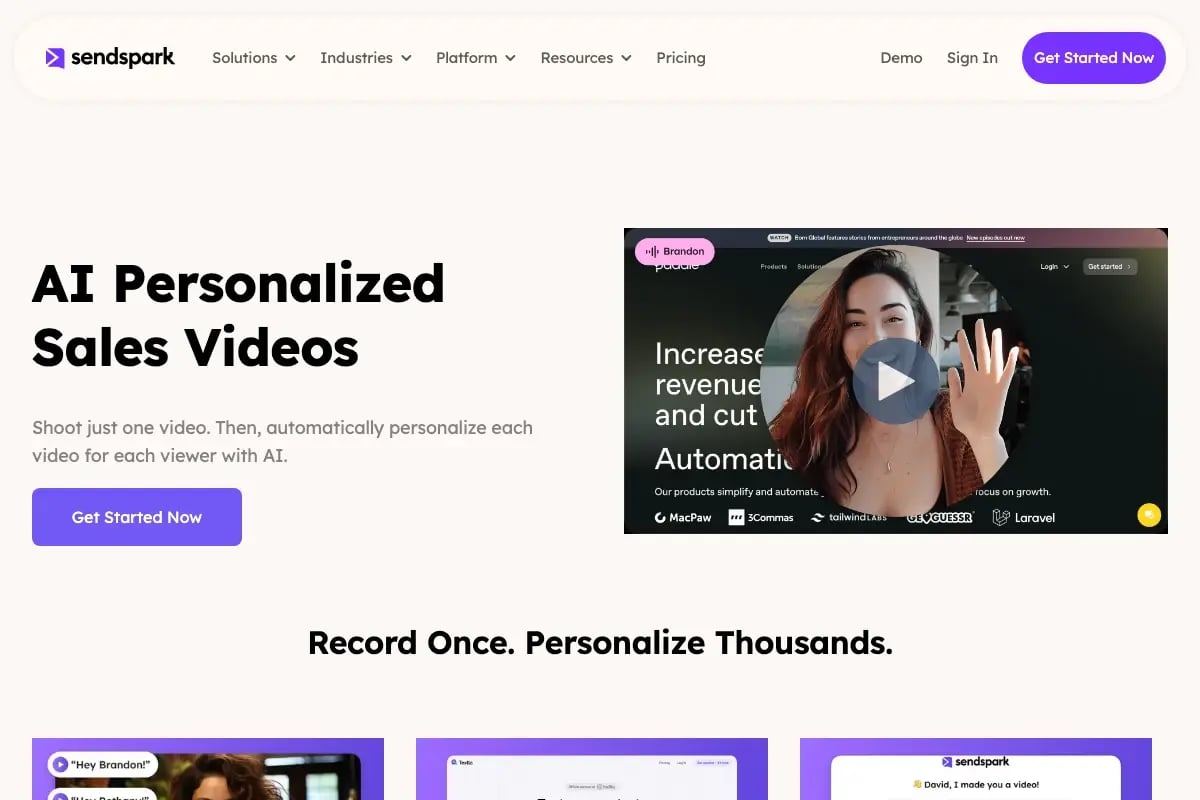
Sendspark is the AI video personalization platform for B2B sales. Record once, and AI voice cloning generates thousands of individually personalized videos with dynamic backgrounds and personalized thumbnails — each prospect hears their name, sees their website, in your voice. Sales teams see 2-3x more replies.
Get Started NowWhen Do AI Avatars Actually Make Sense?
AI avatars make sense when the same message needs to reach a broad, anonymous audience at marketing scale — think product explainer videos, internal training modules, or localized ad variants in a dozen languages. They make far less sense in 1:1 cold sales outreach, where the entire point is convincing one named buyer that a specific person reached out to them.
Good fit for AI avatars:
- Product explainer or landing-page videos watched by an anonymous audience
- Internal training and onboarding content delivered at company scale
- Rapid localization of the same script into multiple languages
- A/B testing many script variants without booking studio time
Poor fit for AI avatars:
- Cold outbound video sent to a single named decision-maker
- Post-demo or deal-progression follow-ups where trust is already being built
- Any touchpoint where the prospect is deciding whether to trust your company
Common mistake
Sending an avatar-generated video to a named decision-maker in a cold email. If the prospect senses it's synthetic, the personalization backfires — they don't feel targeted, they feel like a line in a spreadsheet.
Confusion between the two categories is common enough that it comes up on live sales calls: prospects directly ask reps whether a personalized video used an "AI avatar" or a real recording. Sendspark's answer is always the same — it's a real video of the rep, with AI handling only the voice cloning, lip-sync for the personalized name, and the background swap. No synthetic face, ever.
That distinction also shows up in how each approach handles international names and accents. Reps running outbound into international markets have flagged pronunciation as a real concern for any AI-driven personalization, avatar or not. The fix in practice is the same either way: minimal word swaps rather than full re-generation, so the model has less room to mispronounce a name it hasn't seen before, and a human reviews the output before it goes out at volume.
How Do You Choose the Right Video Approach for Your Sales Team?
Choose based on funnel stage and volume, not on which tool looks more advanced: broad top-of-funnel marketing content can use an AI avatar, but any video going to a named prospect in outbound, follow-up, or deal-progression stages should be a real recorded video personalized by AI. That's the difference between a video that gets deleted and one that gets a reply.
Personalization itself is the bigger lever than most teams realize. According to Gong's analysis of more than 30,000 prospecting emails, company-specific personalization triples reply rates among executive buyers, and individual-level personalization more than doubles reply rates for other roles. Video is simply the highest-trust format for delivering that personalization.
Sendspark's sales prospecting workflow is built around this decision framework: record one video, then let AI voice cloning and dynamic backgrounds handle the name, company, and background per recipient. And within "real recorded video," you still have a choice of how much AI personalization to layer on — see our guide to AI personalization levels for how to pick between merge-tag word-swaps, dynamic backgrounds, and full AI voice cloning. For deal progression, combined videos let you pair a personalized intro with a reusable demo recording, so reps aren't re-recording the same walkthrough for every deal. Engagement data — opens, plays, watch time, CTA clicks — flows back into HubSpot per recipient, something a one-way avatar link can't do.
One advanced tactic worth calling out on its own: use dynamic backgrounds to personalize at what Sendspark customers call "Level 4" — showing each prospect's own website behind you as you speak, generated automatically per recipient. This signals genuine research and stops the scroll in a way no avatar template can replicate, because the background alone proves a specific person looked at that specific company before hitting send.
For a deeper walkthrough of building an outbound motion around this approach, see our comprehensive guide to video prospecting. Teams already running AI-personalized video follow-ups report meaningful time savings — see how SDRs personalize 1,000+ videos without recording each one, and how other teams have approached automating personalized video follow-ups without losing the human feel that makes them work. Per-recipient watch time and click data land back in video analytics for sales follow-ups, so reps know who actually watched before they call. And if budget is the deciding factor, Sendspark's pricing starts at $49/mo, generally lower than per-minute avatar-generation credits at outbound volume.
Decision Framework at a Glance
| Funnel Stage | Recommended Approach | Why |
|---|---|---|
| Cold outbound prospecting | Real video + AI personalization | Prospect needs to believe a real person reached out |
| Follow-up / deal progression | Real video + AI personalization | Existing relationship raises the trust bar even further |
| Broad marketing / explainer content | AI avatar | Reach and scale matter more than 1:1 trust |
| Internal training / onboarding | AI avatar | Audience already trusts the brand internally |
Published August 2026
Frequently Asked Questions
What is an AI avatar in sales videos?
An AI avatar is a fully synthetic video presenter generated from a face model, a cloned or text-to-speech voice, and a script, with no camera recording involved. Tools like HeyGen, Synthesia, and Tavus create the avatar once, then generate new videos on demand from new scripts.
Is there a free AI avatar tool?
Most AI avatar platforms, including HeyGen and Synthesia, offer limited free trials or credit-based free tiers, but full sales-volume usage almost always requires a paid plan. The free tiers are typically capped at a small number of minutes or exports per month, not enough for regular outbound sending.
How much does an AI avatar cost?
AI avatar tools generally price by generation minutes or credits, with paid plans commonly starting in the $20-90/month range and scaling up sharply with volume. That's separate from Sendspark's seat-and-video-volume pricing, which starts at $49/mo and covers real recorded video personalized at scale.
Can AI avatars replace salespeople?
No. Gartner's 2026 survey found that 69% of B2B buyers still turn to a human sales rep to validate AI-generated insights before trusting them, meaning the seller's role persists even as AI tools handle more of the surrounding workflow. Avatars can support marketing content, but they don't replace the rep a buyer wants to hear from directly.
Do prospects know when a video is AI-generated?
Often, yes. Animoto's State of Video 2026 Report found that 78% of consumers trust video featuring real people more than AI-generated content, which suggests many viewers can sense — or at least suspect — when a presenter isn't real.
Which converts better in cold email: an AI avatar or a real video?
A real recorded video personalized by AI converts better in cold email because the recipient can tell a specific person actually reached out to them. AI avatars are built for one-to-many marketing reach, not the one-to-one authenticity that drives a reply from a named buyer.
Is Sendspark an AI avatar tool?
No. Sendspark is an AI video personalization platform for B2B sales — you record one real video, and AI clones your voice and swaps dynamic backgrounds and personalized thumbnails to generate thousands of individually personalized videos. There's no synthetic avatar or generated face involved at any point.
Sources & References
- HubSpot Blog (citing Wyzowl's 2025 State of Video Marketing survey) — "93% of marketers report a strong ROI from video marketing" (2025)
- Animoto, State of Video 2026 Report — "78% of consumers trust videos featuring real people more than AI-generated content" (2026)
- Gartner — "69% of B2B buyers turn to sales reps to validate AI-generated insights" (2026)
- Gong — "Company-specific personalization triples prospecting email reply rates for executive buyers; individual-based personalization more than doubles it for other roles" (analysis of 30,000+ emails)
Record One Video. AI Personalizes Thousands.
Sendspark is the AI video personalization platform for B2B sales. Record once, and AI voice cloning generates thousands of individually personalized videos with dynamic backgrounds and personalized thumbnails — each prospect hears their name, sees their website, in your voice. Sales teams see 2-3x more replies.
Get Started Now