A lead pipeline is the structured system your marketing and sales teams use to capture, qualify, and move prospects toward a buying conversation — before they ever enter your deal-stage CRM. Most B2B teams have a sales pipeline. Far fewer have a dedicated lead pipeline, which is why so many reps spend their days chasing cold, unqualified contacts. This guide walks you through exactly how to build one, what to measure, and how to accelerate it with personalized video.
Key Takeaways
- A lead pipeline is the top-of-funnel system for generating, capturing, scoring, and nurturing leads — separate from the deal-stage pipeline your sales reps manage.
- Companies with defined lead management generate 133% more revenue than those without, according to Forrester Research.
- Lead scoring cuts wasted sales effort and reduces sales cycle length by 20-30% by ensuring reps only work leads that meet your ICP criteria.
- Video messages in nurturing sequences increase reply rates by 2-3x compared to text-only emails — and watch time data becomes a powerful lead scoring signal.
- The #1 failure point is a poorly defined marketing-to-sales handoff — set clear MQL criteria before you build anything else.
What Is a Lead Pipeline?
A lead pipeline is the pre-sales system that governs how your company attracts, captures, scores, and nurtures potential buyers until they are ready to speak with a sales rep. Think of it as the intake process that feeds your sales pipeline — not the pipeline itself. It spans everything from a prospect’s first touchpoint (a content download, a webinar sign-up, a cold outreach reply) through to the moment they become a marketing-qualified lead (MQL) and get handed off to your team.
The lead pipeline typically lives in marketing’s domain, but revenue operations and sales leadership need to be equally invested in its design. When it works well, sales reps receive a steady flow of warm, scored leads that match the ideal customer profile. When it doesn’t, reps waste hours every week on prospects who will never buy. To get more leads through your pipeline automatically, explore the tools to automate your sales workflow at each stage.
According to Forrester Research, companies with mature lead management processes generate 133% more revenue than those without. That gap is almost entirely explained by having a deliberate, systematic approach to moving leads from awareness to sales-readiness — which is exactly what a lead pipeline provides. For a complete framework, see our guide to outbound sales strategy.
A lead pipeline typically has four stages:
- Lead generation — attracting potential buyers through inbound content, paid ads, events, or outbound prospecting
- Lead capture — collecting contact information and intent signals (form fills, content downloads, demo requests)
- Lead scoring and qualification — ranking leads by fit and engagement to prioritize sales effort
- Lead nurturing — educating and engaging leads with targeted content until they are sales-ready
Lead Pipeline vs. Sales Pipeline: Key Differences
A lead pipeline and a sales pipeline serve different purposes and are owned by different teams — though they must connect seamlessly for revenue to flow. The lead pipeline sits upstream: it handles prospects who are not yet ready to buy. The sales pipeline picks up once a lead has been qualified and is actively engaged in a buying process. Confusing the two is one of the most common causes of misalignment between marketing and sales. For a deeper look at how to qualify leads systematically, see our guide to building a B2B lead qualification framework using ICP criteria.
According to Salesforce’s State of Sales report, only 28% of sales professionals say marketing provides excellent leads. That statistic reflects a broken handoff — and it almost always traces back to a poorly designed lead pipeline that doesn’t agree with sales on what “qualified” actually means.
| Dimension | Lead Pipeline | Sales Pipeline |
|---|---|---|
| Primary owner | Marketing / Demand Generation | Sales / Revenue Operations |
| Funnel stage | Top of funnel (awareness to MQL) | Mid to bottom of funnel (SQL to closed-won) |
| Key inputs | Website visitors, content leads, cold outreach responses, ad clicks | MQLs handed off from marketing, inbound demo requests |
| Key outputs | Marketing-qualified leads (MQLs) passed to sales | Closed-won opportunities, revenue |
| Success metric | MQL volume, MQL-to-SQL conversion rate, cost per MQL | Win rate, average deal size, sales cycle length |
| Primary tools | Marketing automation (HubSpot, Marketo), content platforms, ad channels | CRM (Salesforce, HubSpot Sales Hub), sales engagement (Outreach, SalesLoft) |
| Time horizon | Days to weeks per lead | Weeks to months per deal |
| Lead state | Unqualified or partially qualified | Sales-qualified, actively evaluating |
The moment a lead crosses the MQL threshold — defined by your lead scoring criteria — it exits the lead pipeline and enters the sales pipeline as a sales-qualified lead (SQL). That handoff point is where most revenue leaks happen, and it is the most important process to define before you build anything else. Understanding the sales pipeline stages your SQL will move through helps you design a cleaner, faster handoff.
Common mistake Understanding the sales pipeline stages your SQL will move through helps you design a cleaner, faster handoff.
Don’t let sales and marketing define MQL criteria separately. If marketing is sending over “anyone who downloaded an ebook” and sales considers that junk, the whole pipeline breaks down. Align on explicit firmographic and behavioral criteria together — before you build your lead scoring model. Understanding the sales pipeline stages your SQL will move through helps you design a cleaner, faster handoff.
Record One Video. AI Personalizes Thousands. Understanding the sales pipeline stages your SQL will move through helps you design a cleaner, faster handoff.
Sendspark is the AI video personalization platform for B2B sales. Record once, and AI voice cloning generates thousands of individually personalized videos with dynamic backgrounds and personalized thumbnails — each prospect hears their name, sees their website, in your voice. Sales teams see 2-3x more replies. Understanding the sales pipeline stages your SQL will move through helps you design a cleaner, faster handoff.
Get Started NowHow to Build a Lead Pipeline Step by Step
Building a lead pipeline from scratch takes focused work across six areas: your ideal customer profile, your lead generation channels, your capture infrastructure, your scoring model, your nurturing sequences, and your handoff process. Each step builds on the previous one — skipping ahead creates gaps that will cost you later. Here is how to do it right. Understanding the sales pipeline stages your SQL will move through helps you design a cleaner, faster handoff.
Step 1: Define Your Ideal Customer Profile (ICP)
Every lead pipeline starts with clarity on who you are trying to attract. Your ideal customer profile (ICP) describes the company-level characteristics of your best customers — not buyer personas, which are about individuals. Think: industry, company size, revenue range, tech stack, growth stage, and geography. Understanding the sales pipeline stages your SQL will move through helps you design a cleaner, faster handoff.
Pull your last 20 closed-won deals and look for patterns. What job titles bought? What industries? What company sizes? This data tells you more than any market research report. Once you have your ICP locked, every downstream decision — from which channels to use, to how you score leads — becomes significantly easier. Understanding the sales pipeline stages your SQL will move through helps you design a cleaner, faster handoff.
According to Gartner, B2B buyers complete 60-70% of their research before ever contacting a sales rep. That means your ICP needs to be visible and credible in the channels where they are doing that research — long before they raise their hand. Understanding the sales pipeline stages your SQL will move through helps you design a cleaner, faster handoff.
Step 2: Choose Your Lead Generation Channels
Lead generation is the engine that fills the top of your pipeline. For B2B companies, the highest-performing channels are typically content marketing (SEO and thought leadership), paid search and social (LinkedIn ads, Google), outbound prospecting via email and phone, events and webinars, and partner or referral programs. Understanding the sales pipeline stages your SQL will move through helps you design a cleaner, faster handoff.
You do not need all of them. You need two or three that reliably produce leads matching your ICP. The HubSpot State of Marketing report consistently finds that companies using three or more lead channels see significantly higher lead volume than those relying on a single source — but spreading too thin is equally damaging. Pick your channels based on where your ICP actually spends time. Understanding the sales pipeline stages your SQL will move through helps you design a cleaner, faster handoff.
For outbound prospecting specifically, tools like those covered in our guide to B2B prospecting tools help you build targeted prospect lists, enrich contact data, and get in front of the right companies faster. And if you want to fill the pipeline from the demand side before prospects are actively searching, our deep-dive on B2B demand generation covers the full playbook. Understanding the sales pipeline stages your SQL will move through helps you design a cleaner, faster handoff.
Step 3: Set Up Lead Capture Infrastructure
Lead capture is where intent signals become actionable records in your CRM. The most common capture mechanisms are website forms (gated content, demo requests, contact forms), chatbots and live chat, event and webinar registration, and inbound call tracking. Understanding the sales pipeline stages your SQL will move through helps you design a cleaner, faster handoff.
Every capture point should feed directly into your CRM with consistent field mapping. If a prospect downloads a whitepaper on your website and that record lands in HubSpot with a missing company name or job title, your scoring model breaks immediately. Data hygiene at the capture stage is non-negotiable. Understanding the sales pipeline stages your SQL will move through helps you design a cleaner, faster handoff.
Connect your lead capture to HubSpot or your CRM of choice so that every lead gets timestamped, source-tagged, and enrolled in the right nurture sequence automatically. Manual processes here create delays and errors that compound over time. Understanding the sales pipeline stages your SQL will move through helps you design a cleaner, faster handoff.
Step 4: Build Your Lead Scoring Model
Lead scoring assigns point values to leads based on two dimensions: fit (how well they match your ICP) and engagement (how actively they are interacting with your content and outreach). A lead that matches your ICP perfectly but has never engaged is not ready. A lead that has watched three videos and visited your pricing page is worth your attention regardless of company size. Understanding the sales pipeline stages your SQL will move through helps you design a cleaner, faster handoff.
Start simple. Fit signals: job title (+15), company size 50-500 employees (+10), target industry (+10), correct geography (+5). Engagement signals: demo request (+40), pricing page visit (+20), watched a video past 75% (+15), opened 3+ emails in a sequence (+10), downloaded a case study (+10). Understanding the sales pipeline stages your SQL will move through helps you design a cleaner, faster handoff.
Set a threshold — say, 60 points — as your MQL trigger. When a lead crosses it, they automatically route to sales for follow-up. Review this model quarterly against your closed-won data. Scoring models that are never recalibrated drift out of alignment with your actual buyers. Understanding the sales pipeline stages your SQL will move through helps you design a cleaner, faster handoff.
Pro tip Understanding the sales pipeline stages your SQL will move through helps you design a cleaner, faster handoff.
Add negative scoring to remove leads that will never buy. Competitor email domains (-50), student job titles (-30), and engagement that stops completely after 30 days (-20) can save your reps hours of wasted effort each week. Understanding the sales pipeline stages your SQL will move through helps you design a cleaner, faster handoff.
Step 5: Build Your Nurture Sequences
Most leads are not ready to buy when they first enter your pipeline. Nurturing is the process of staying present, building trust, and providing value until they are. A typical B2B nurture sequence runs 6-12 touchpoints over 4-8 weeks, mixing educational emails, case studies, webinar invitations, and direct outreach from a sales rep. Understanding the sales pipeline stages your SQL will move through helps you design a cleaner, faster handoff.
Segment your nurture sequences by ICP attribute (industry, company size, job title) and by funnel stage. A lead who downloaded a top-of-funnel blog post needs different content than one who attended a product webinar. Generic “batch and blast” nurture is a fast path to unsubscribes. Understanding the sales pipeline stages your SQL will move through helps you design a cleaner, faster handoff.
For email templates that work at each stage of a nurture sequence, our collection of B2B lead generation email templates covers proven frameworks for each use case. The short version: be specific, be useful, and make it easy for the prospect to take a small next step rather than asking for a meeting immediately. Understanding the sales pipeline stages your SQL will move through helps you design a cleaner, faster handoff.
Step 6: Define and Automate Your MQL Handoff
The marketing-to-sales handoff is where the lead pipeline connects to the sales pipeline. When a lead hits your MQL threshold, three things should happen automatically: a sales rep gets notified within minutes, the lead’s full engagement history is visible in the CRM, and the lead is enrolled in a sales-led follow-up sequence. Understanding the sales pipeline stages your SQL will move through helps you design a cleaner, faster handoff.
Speed matters more than most teams realize. Salesforce research shows that responding to a new lead within five minutes increases your odds of qualifying that lead by 21x compared to waiting 30 minutes. Automate the alert and the initial follow-up touchpoint so that response time does not depend on a rep checking their inbox at the right moment. Understanding the sales pipeline stages your SQL will move through helps you design a cleaner, faster handoff.
Document the handoff criteria clearly — in writing, agreed to by both marketing and sales leadership. This SLA should specify what data must be present on the lead record, what the rep’s follow-up timeline is, and what happens if a lead is rejected back to marketing (the “sales rejected lead” or SRL process). Without this agreement, MQLs pile up and get ignored. Understanding the sales pipeline stages your SQL will move through helps you design a cleaner, faster handoff.
Lead Pipeline Metrics That Actually Matter
Measuring your lead pipeline correctly means tracking conversion rates at each stage, not just lead volume. A pipeline that generates 500 leads per month but converts only 1% to closed-won is not a pipeline — it is a vanity metric factory. Focus on the metrics below, and you will quickly see where the friction is and where to invest next. Understanding the sales pipeline stages your SQL will move through helps you design a cleaner, faster handoff.
| Metric | What It Measures | B2B Benchmark / Target |
|---|---|---|
| Lead volume | Total new leads entering the pipeline per period | Set target based on MQL/SQL conversion rate and revenue goal |
| Lead-to-MQL rate | % of captured leads that reach MQL threshold | 10-25% (varies by channel and ICP tightness) |
| MQL-to-SQL rate | % of MQLs that sales accepts as qualified | 40-60% (below 40% = scoring model misaligned with sales) |
| SQL-to-opportunity rate | % of SQLs that convert to active pipeline opportunities | 50-70% |
| Cost per MQL | Total marketing spend divided by MQL volume | Varies by industry; track trend over time, not absolute |
| Lead velocity rate (LVR) | Month-over-month % growth in qualified leads | Positive and growing; 10-20% monthly is strong |
| Time to MQL | Average days from first touch to reaching MQL threshold | 14-30 days for mid-market B2B |
| Pipeline coverage ratio | Total pipeline value vs. revenue target (usually quarterly) | 3x-4x your revenue target |
| Lead source attribution | Which channels generate the highest-quality leads | Track MQL rate and closed-won rate by source, not just volume |
Review these metrics weekly for volume and conversion trends, and monthly for cost efficiency. The MQL-to-SQL rate is your leading indicator of sales-marketing alignment. If it drops below 40%, schedule a joint review immediately — something has changed in either your scoring model, your lead sources, or your sales team’s criteria. Understanding the sales pipeline stages your SQL will move through helps you design a cleaner, faster handoff.
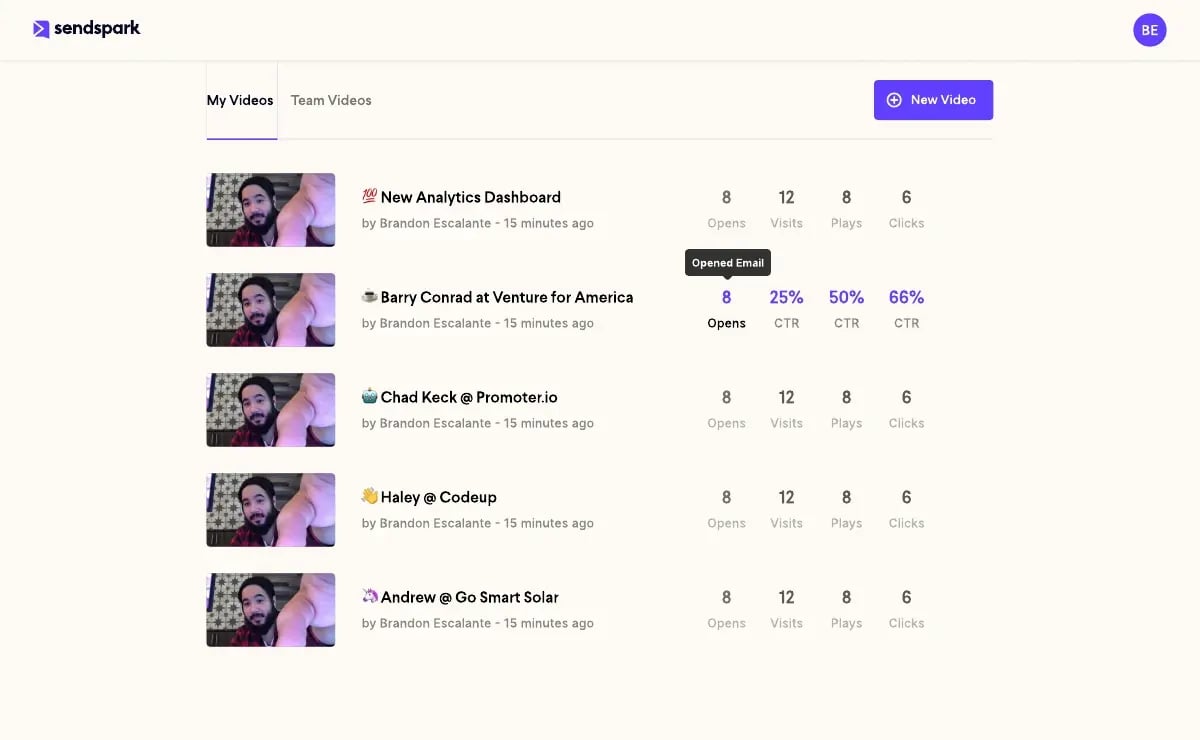
Use video analytics as an additional engagement signal in your scoring model. When a prospect watches 80% of a personalized video and then clicks your CTA, that behavioral data is more predictive than most form fills. Pipe video engagement data into your CRM alongside email open rates and page visits for a fuller picture of lead intent. Understanding the sales pipeline stages your SQL will move through helps you design a cleaner, faster handoff.
How AI-Personalized Video Outreach Accelerates Your Lead Pipeline
Video messaging accelerates every stage of the lead pipeline — from outbound prospecting at the top of funnel through to the nurture sequences that push leads toward an MQL threshold. The reason is simple: video is harder to ignore than text, and a personalized video signals effort in a way that a templated email never can. Sales teams using personalized video in their outreach sequences see 2-3x more replies compared to text-only email, and outbound prospecting response rates increase by 200-300%. Understanding the sales pipeline stages your SQL will move through helps you design a cleaner, faster handoff.
The specific use cases where video moves lead pipeline metrics most significantly are: Understanding the sales pipeline stages your SQL will move through helps you design a cleaner, faster handoff.
- Cold outreach — a 60-second personalized video showing a prospect’s own website as the background creates immediate relevance and stops the scroll. Click-through rates increase by 50% compared to text emails.
- Lead nurturing sequences — replacing a mid-sequence text email with a video touchpoint reliably spikes reply rates. Use video at touchpoints 3 and 6 in your nurture sequence where engagement typically drops off.
- MQL follow-up — when a lead crosses your MQL threshold, a personalized video from the assigned sales rep within the first 30 minutes of notification dramatically improves connect rates. Sales teams using this approach book 40-50% more meetings than those sending text follow-up only.
- Re-engagement campaigns — leads that have gone cold (no engagement in 30+ days) respond to video at significantly higher rates than any other reactivation format.
The key advantage of AI-personalized video over traditional video outreach is scale. Recording individual videos for every lead in your pipeline is not sustainable once volume grows. AI video personalization lets you record a single master video, then automatically personalize it with each prospect’s name, company name, and live website as the background — producing hundreds of unique, personalized videos in minutes rather than hours. Understanding the sales pipeline stages your SQL will move through helps you design a cleaner, faster handoff.
Video watch time also becomes a high-signal scoring input. A lead who watches 85% of a personalized product demo video is expressing more intent than one who opened five emails but never clicked through. Feed these signals back into your lead scoring model and your pipeline metrics will tighten immediately. Understanding the sales pipeline stages your SQL will move through helps you design a cleaner, faster handoff.
Lead Pipeline Stages at a Glance
| Stage | Goal | Key Activities | Primary Owner | Exit Criteria |
|---|---|---|---|---|
| Lead Generation | Attract potential buyers into the pipeline | Content marketing, paid ads, outbound prospecting, events | Marketing / Demand Gen | Contact record created in CRM with source tag |
| Lead Capture | Collect contact info and intent signals | Form fills, demo requests, chatbot conversations, webinar sign-ups | Marketing Ops | Lead record complete with ICP fields populated |
| Lead Scoring | Rank leads by fit and engagement | Automated scoring on firmographics + behavioral signals | Marketing Ops / RevOps | Lead reaches MQL score threshold |
| Lead Nurturing | Build trust and move leads toward sales readiness | Email sequences, video touchpoints, retargeting, webinars | Marketing | Lead re-scores to MQL or disqualifies |
| MQL Handoff | Transfer qualified leads to sales | Automated CRM routing, rep notification, initial follow-up sequence | RevOps / Sales | Sales accepts lead as SQL within defined SLA |
Record One Video. AI Personalizes Thousands. Understanding the sales pipeline stages your SQL will move through helps you design a cleaner, faster handoff.
Sendspark is the AI video personalization platform for B2B sales. Record once, and AI voice cloning generates thousands of individually personalized videos with dynamic backgrounds and personalized thumbnails — each prospect hears their name, sees their website, in your voice. Sales teams see 2-3x more replies. Understanding the sales pipeline stages your SQL will move through helps you design a cleaner, faster handoff.
Get Started NowFrequently Asked Questions
What is a lead pipeline?
A lead pipeline is the structured, top-of-funnel process that a business uses to attract, capture, score, and nurture potential buyers until they are ready for a sales conversation. It sits upstream of the sales pipeline and is typically owned by marketing or demand generation. The output of a lead pipeline is a qualified lead — either a marketing-qualified lead (MQL) or a sales-qualified lead (SQL) — that gets handed off to a sales rep. Understanding the sales pipeline stages your SQL will move through helps you design a cleaner, faster handoff.
How is a lead pipeline different from a sales pipeline?
A lead pipeline handles prospects who are not yet ready to buy: it covers the journey from first contact through qualification and nurturing. A sales pipeline handles prospects who are actively in a buying process: it covers from an accepted SQL through proposal, negotiation, and close. The two connect at the MQL/SQL handoff point, which is the most critical process to define in any revenue operation. Marketing owns the lead pipeline; sales owns the sales pipeline; revenue operations should govern both. Understanding the sales pipeline stages your SQL will move through helps you design a cleaner, faster handoff.
What is a good lead pipeline conversion rate for B2B?
For B2B companies, a healthy lead-to-MQL conversion rate is typically 10-25%, depending on channel mix and how tightly your ICP is defined. Your MQL-to-SQL rate should be 40-60% — if sales is rejecting more than 40% of MQLs, your scoring model is out of alignment with what reps consider a real opportunity. From SQL to closed-won, B2B companies typically see a 15-30% win rate, though this varies significantly by deal size and competitive intensity. Understanding the sales pipeline stages your SQL will move through helps you design a cleaner, faster handoff.
How do you build a B2B lead pipeline from scratch?
Start by defining your ICP using closed-won deal data — not assumptions. Then choose two or three lead generation channels where your ICP is active. Set up CRM-connected capture forms and track source attribution from day one. Build a simple lead scoring model covering firmographic fit and behavioral engagement, and set a numeric MQL threshold. Create segmented nurture sequences for each ICP segment, and document a written MQL handoff SLA between marketing and sales. Start with this foundation, measure conversion rates at each stage after 90 days, and refine from there. Understanding the sales pipeline stages your SQL will move through helps you design a cleaner, faster handoff.
What tools do you need to manage a lead pipeline?
The core stack for managing a B2B lead pipeline is a CRM (HubSpot or Salesforce) for contact management and lead routing, a marketing automation platform for scoring and nurturing, and at least one lead generation channel tool (SEO, paid ads, or outbound prospecting software). Enrichment tools like Clay or ZoomInfo improve ICP matching at the capture stage. AI video personalization platforms like Sendspark add high-engagement touchpoints to nurture sequences and MQL follow-up. Most teams over-invest in tools before they have their process defined — get the scoring model and handoff SLA right first, then add tooling on top. Understanding the sales pipeline stages your SQL will move through helps you design a cleaner, faster handoff.
How long does it take to see results from a new lead pipeline?
Expect 60-90 days before you have enough data to evaluate whether your pipeline is working. In the first 30 days, you are setting up infrastructure and launching channels. In days 30-60, leads start flowing and nurture sequences begin. By days 60-90, you will have enough leads progressing through stages to measure conversion rates meaningfully. Revenue impact from a new pipeline typically shows up in month four or five, because the B2B sales cycle adds additional time after an MQL is handed off to sales. Set milestone expectations accordingly — do not judge the pipeline on closed-won revenue in month one. Understanding the sales pipeline stages your SQL will move through helps you design a cleaner, faster handoff.
Sources & References
- Forrester Research — “Companies with mature lead management generate 133% more revenue than those without” (Forrester B2B Marketing research on lead-to-revenue management)
- Salesforce — State of Sales Report — “Only 28% of sales professionals say marketing provides excellent leads”; five-minute lead response time increases qualification odds by 21x
- HubSpot — State of Marketing Report — Companies using three or more lead generation channels see higher lead volume than single-channel approaches
- Gartner — “B2B buyers complete 60-70% of their research before ever contacting a sales rep” (Gartner B2B Buyer Behavior research)