Most sales reps send one email, hear nothing, and move on. That’s a mistake. According to RAIN Group research, 80% of sales require 5-12 follow-up touches — yet 44% of reps give up after just one attempt. The sales follow-up email isn’t a courtesy; it’s where deals actually close. This guide gives you the proven templates, timing rules, and personalization strategies that turn silence into replies. For a step-by-step framework, see our guide on how to follow up on an email.
Key Takeaways
- 80% of sales require 5-12 follow-ups, yet 44% of reps quit after one attempt — persistence is the single biggest differentiator in follow-up success
- Send your first follow-up 2-3 days after initial outreach; waiting more than 5 days drops reply rates significantly
- Specific CTAs (“15 minutes Thursday at 2pm?”) outperform open-ended asks (“let me know if you’re interested”) by a wide margin
- Personalizing your subject line with the prospect’s name or company lifts open rates by 26%, per Salesforce State of Sales data
- Adding AI-personalized video to follow-up emails — each one showing the prospect’s website in the background — increases reply rates 2-3x vs text-only messages
What Makes a Sales Follow-Up Email Effective?
An effective sales follow-up email has four core elements: it arrives at the right time (before the prospect forgets you), opens with something new rather than repeating your first message, delivers a clear next-step CTA, and feels personal rather than automated. Miss any one of those four, and the email reads like noise. For a deeper toolkit, our how to follow up without being annoying walks through the 3-3-7-14 cadence and seven specific templates.
Most reps fail on the second element. They send “Just following up on my last email” as the opener — a phrase that signals you have nothing new to offer. Every follow-up should add value: a relevant insight, a case study, a short stat, or a specific observation about the prospect’s business.
The structure that consistently outperforms generic lead nurturing email templates looks like this:
| Element | What Effective Looks Like | What Ineffective Looks Like |
|---|---|---|
| Subject line | “Quick question about [Company]’s outreach stack” | “Following up on my previous email” |
| Opening line | New value, observation, or trigger event | “Just wanted to check in” / “Bumping this to the top” |
| Body | 1-2 sentences connecting the new value to their problem | Repeating the pitch from the first email verbatim |
| CTA | Specific time/date: “10 min this Thursday at 3pm?” | Open-ended: “Let me know if you’d like to chat” |
| Length | Under 100 words | Longer than the original outreach email |
| Tone | Conversational, direct, one-to-one | Promotional, formal, “Dear [First Name]” |
The Salesforce State of Sales report consistently shows that buyers respond to reps who demonstrate they’ve done their homework. That means your subject line and first sentence should reference something specific — the prospect’s industry, a recent company announcement, or a pain point tied to their role. For more on writing subject lines that actually get opens on touch 2-7, see our breakdown of 35+ follow-up email subject line templates.
Internal linking note: if you’re still building your first-touch email, see our sales introduction email template guide before diving into follow-ups. For the full multi-touch sequence, the sales cadence best practices post covers the complete workflow.
Pro tip
Write your follow-up notes immediately after every sales call or prospect interaction. A 60-second voice note while the conversation is fresh gives you three specific details to personalize your next email — details that make it obvious you were actually paying attention.
Sales Follow-Up Email Timing: When to Send Each Message
The optimal first follow-up window is 2-3 business days after your initial outreach. This gives the prospect time to see your first email without letting the thread go cold. After that, space follow-ups progressively — 4-5 days between touches in the first two weeks, then one final reach-out after a week’s gap if you’ve heard nothing. HubSpot research shows Tuesday and Thursday are the highest-response days for B2B outreach. For event leads, this window is even tighter — see our trade show follow-up guide for event-specific timing and templates.
| Touch | Timing | Purpose | Format |
|---|---|---|---|
| Initial outreach | Day 0 | Introduce yourself + core value prop | Email (or email + LinkedIn) |
| Follow-up 1 | Day 2-3 | Add new value (insight, stat, resource) | Email reply to same thread |
| Follow-up 2 | Day 7-8 | Social proof or case study angle | Email + LinkedIn connection |
| Follow-up 3 | Day 12-14 | Different channel or format (video, phone) | Video email or call |
| Follow-up 4 | Day 21 | Break-up email — creates urgency | Short email, final ask |
How Many Follow-Ups Should You Send?
Send between 4-6 follow-ups before marking a prospect as not interested. RAIN Group’s research on B2B buyer behavior shows that the majority of deals close between the 5th and 12th contact — which means the average rep who gives up at touch 2 is leaving a significant portion of closeable deals on the table.
The key is varying your message each time. A sequence of four “just checking in” emails is worse than no follow-up at all — it trains prospects to ignore you. Each touch should have a distinct angle: a new data point, a social proof story, a different format (video instead of text), or a direct challenge to a known pain point.
Best Days and Times to Send Follow-Up Emails
For B2B prospects, Tuesday through Thursday mornings (8-10am recipient local time) consistently yield the highest open and reply rates. Avoid Monday mornings (inbox overload from the weekend) and Friday afternoons (mentally checked out). If you’re using a sales engagement platform like HubSpot, set up send-time optimization to auto-schedule emails based on each recipient’s historical open patterns.
Record One Video. AI Personalizes Thousands.
Sendspark is the AI video personalization platform for B2B sales. Record once, and AI voice cloning generates thousands of individually personalized videos with dynamic backgrounds and personalized thumbnails — each prospect hears their name, sees their website, in your voice. Sales teams see 2-3x more replies.
Get Started NowSales Follow-Up Email Templates for Every Scenario
Effective sales follow-up email templates give you a starting structure — subject line, opening line, value add, and CTA — that you then adapt to each prospect. These five templates cover the most common follow-up scenarios in B2B outreach. For a broader library of first-touch and multi-stage emails, see our full sales email templates guide.
Template 1: First Follow-Up After No Response
Subject: One thought on [Company]’s outreach
Opening: I noticed [Company] recently [relevant trigger — funding announcement, new product launch, hiring surge]. Teams growing this fast usually hit a wall with personalizing outreach at scale.
Body: We help B2B teams record one video and have AI automatically personalize it for every prospect — name, company, website backdrop — without recording hundreds of individual clips. [Customer name] added this to their sequences and saw reply rates jump 40% in the first month.
CTA: Worth a 15-minute call this Thursday or Friday?
Template 2: Post-Demo Follow-Up
Subject: Next steps for [Company] — quick summary
Opening: Thanks for the time earlier today. Here’s a quick recap of what we covered and the three things I think matter most for your team.
Body: [3 specific bullet points from the demo — tied to their stated pain points, not generic product features]. I’ve also attached a quick clip of our AI voice cloning feature since that seemed to resonate most with your SDR workflow.
CTA: I can hold a spot on [specific date] to loop in [their manager/technical buyer name]. Does that work?
Template 3: After Silence for 2+ Weeks
Subject: Still relevant for [Company]?
Opening: Haven’t heard back — which usually means either bad timing or I missed the mark entirely.
Body: If timing’s off, no problem — happy to follow up in [specific month]. If I got something wrong about your situation, I’d rather know so I can send you something actually useful.
CTA: Either way, a quick yes/no would help me out. Are you still exploring ways to [core problem they mentioned]?
Template 4: Follow-Up With a Relevant Resource
Subject: Quick resource for [First Name]
Opening: Thought of you when I saw this — [Company X] shared how they cut their video personalization time from 4 hours to 20 minutes per campaign.
Body: The specific move they made was switching from one-off recordings to a single video with AI-personalized intros. Their full breakdown: [link to case study or blog post relevant to the prospect’s role]. It’s worth 3 minutes if scaling outreach is still on your radar.
CTA: If you want to see exactly how they set it up, I can walk you through it on a call.
Template 5: The Break-Up Email
Subject: Should I close your file?
Opening: I’ve reached out a few times and haven’t heard back, so I’ll assume the timing isn’t right.
Body: I’ll close out your file for now — but if [specific pain point: “outreach reply rates”, “video personalization at scale”, “prospecting efficiency”] comes back up in the next quarter, reach back out and I’ll pick it up from here. No hard feelings.
CTA: If I’ve got the timing wrong and you do want to reconnect, here’s my calendar: [link].
Common mistake
Don’t open every follow-up with a variation of “Just checking in” or “Bumping this.” These phrases signal that you have nothing new to offer. Even a single new data point or a one-sentence observation about the prospect’s business makes your follow-up worth opening.
How to Personalize Follow-Up Emails at Scale With AI
AI personalization lets you scale the quality of one-to-one follow-ups without scaling the time. Instead of writing individual follow-ups for every prospect, you record a single follow-up video, and AI clones your voice to personalize the greeting — each prospect hears their name spoken in your voice, with their company website visible behind you in the video. At 100+ prospects, this is the only approach that maintains genuine personalization without burning hours on manual recording.
Sendspark’s AI Personalized Video platform is built exactly for this use case. You record a single follow-up video once — the core message stays the same across your sequence — and AI automatically generates a personalized version for every prospect in your list. Sales teams using this approach see 2-3x more replies compared to text-only follow-ups, and meetings booked increase by 40-50%.
The mechanics are straightforward:
- Step 1: Record a single follow-up video (30-60 seconds covering your new value point and CTA)
- Step 2: Upload your prospect list with names, company names, and website URLs
- Step 3: AI voice cloning generates a personalized greeting for each prospect (“Hey Sarah, saw you’re building out the SDR team at Acme…”)
- Step 4: Dynamic backgrounds pull in each prospect’s website so the video feels hand-crafted
- Step 5: Embed the personalized video thumbnail in your follow-up email via your sales engagement platform
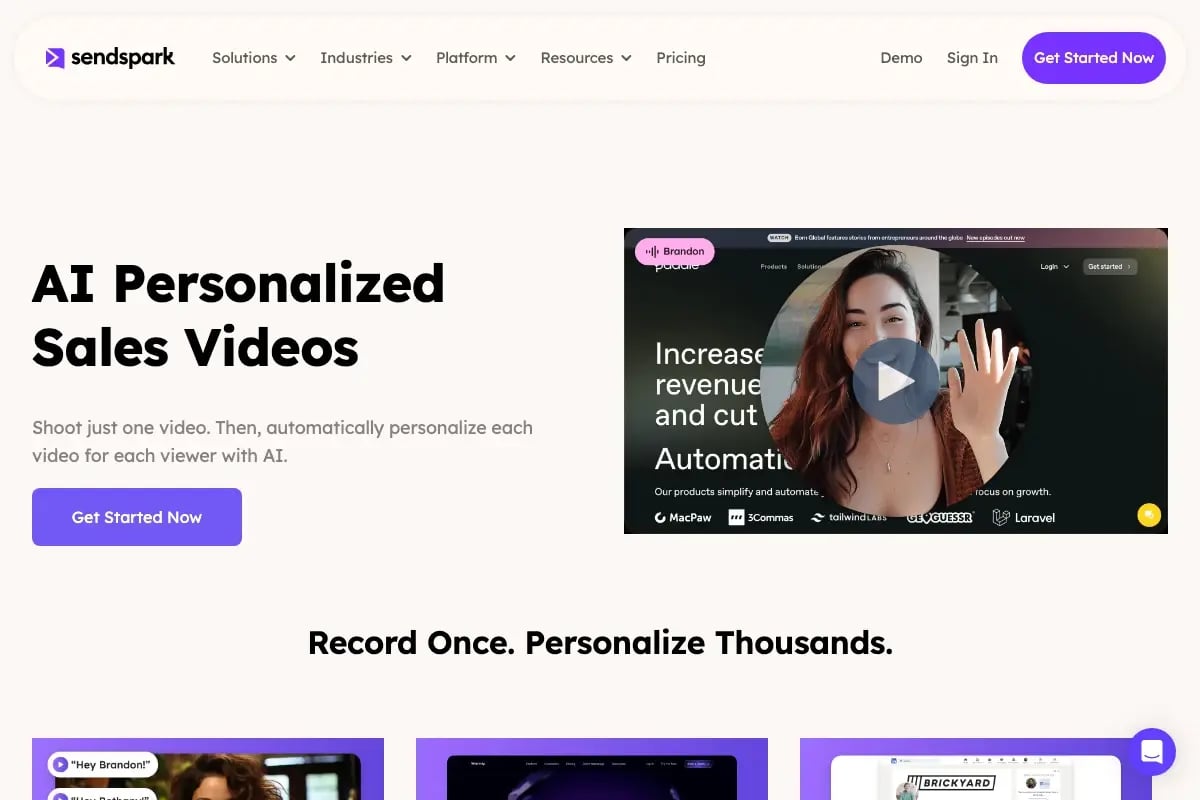
For teams running sales prospecting at scale, this is the follow-up that actually stops the scroll. A static text email looks like every other follow-up in the inbox. A video thumbnail showing your prospect’s own website is impossible to ignore.
The Gong Labs research on what drives email replies consistently points to personalization as the top differentiator — not length, not subject line formula. Reps who demonstrate they’ve researched the prospect outperform generic outreach by a significant margin. AI-personalized video delivers that signal at scale.
Advanced strategy
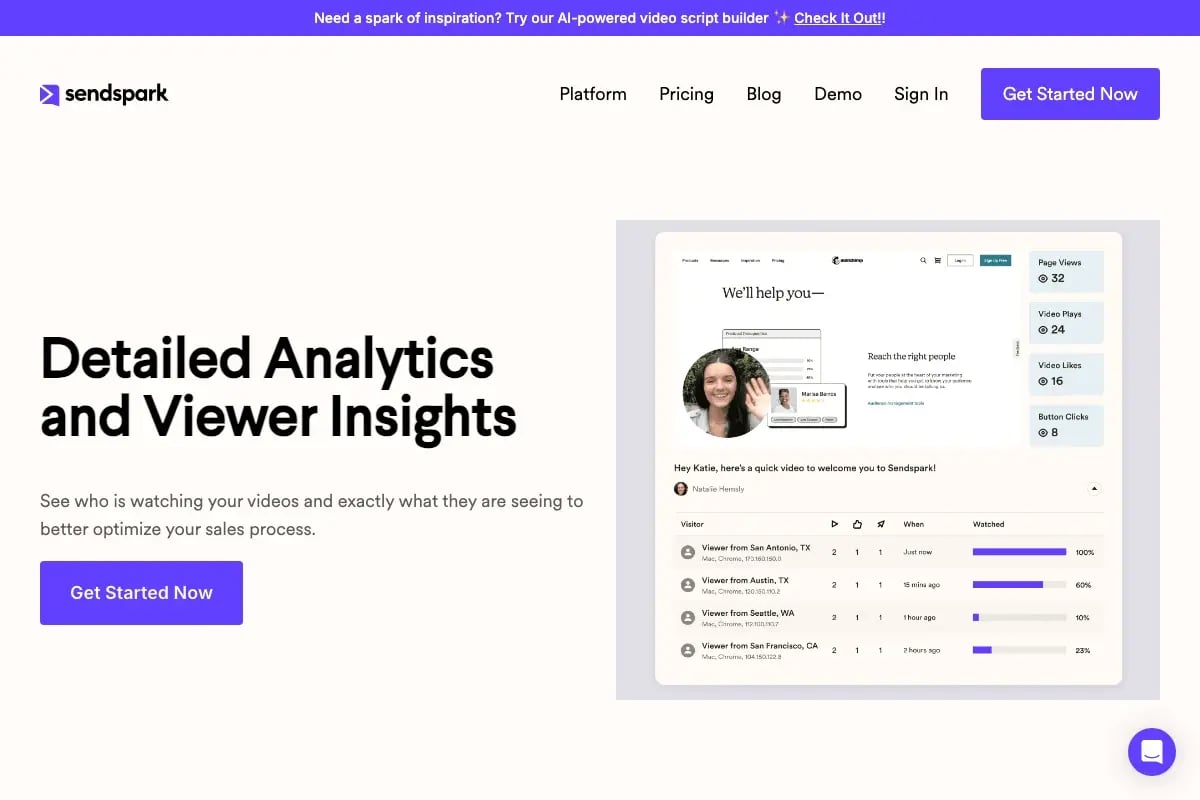
Use Sendspark’s video analytics to track which prospects watched your follow-up video — and for how long. A prospect who rewatched your 45-second video three times is a warm lead worth calling immediately. Trigger a same-day follow-up call when you see sustained video engagement.
Sales Follow-Up Email Summary: What Works
The most consistent pattern across high-performing sales follow-up emails is simple: add new value every time, be specific about the next step, and don’t give up before the fifth touch. Here’s how the key follow-up types compare:
| Follow-Up Type | Best Use Case | Key Differentiator | Expected Outcome |
|---|---|---|---|
| Value-add follow-up | Touch 1-2 after no response | New insight, stat, or resource tied to their pain | Highest reply rate for cold outreach |
| Social proof follow-up | Touch 2-3 in sequence | Customer story relevant to their role/industry | Builds credibility, surfaces objections |
| Video follow-up | Touch 3 — pattern interrupt | AI-personalized video with dynamic background | 2-3x higher reply rate vs text |
| Resource follow-up | Mid-sequence nurture | Genuinely useful content (not a sales pitch) | Keeps you top of mind without pressure |
| Break-up email | Final touch (4-6) | Creates urgency and invites a definitive response | Often generates the reply that earlier emails couldn’t |
The complete cold email follow-up guide covers sequence-level strategy in depth — including how to structure a 5-touch cadence across email, LinkedIn, and phone. For the full multi-channel picture, the sales cadence best practices post is worth reading alongside this one. For more, see our guide to LinkedIn follow-up messages.
Sources & References
- RAIN Group — “80% of sales require 5-12 follow-up touches; 44% of reps give up after one attempt” (research on B2B sales touchpoints)
- HubSpot Sales Statistics — “Tuesday and Thursday are the highest-response days for B2B outreach” (email timing research)
- Salesforce State of Sales — “Personalized subject lines lift open rates by 26%; buyers respond to reps who demonstrate research” (annual B2B buyer behavior report)
- Gong Labs — “Personalization is the top driver of email reply rates in B2B sales outreach” (revenue intelligence research)
Frequently Asked Questions
What should a sales follow-up email say?
A sales follow-up email should add something new to the conversation — a relevant insight, a customer story, a useful resource, or a direct observation about the prospect’s business. Never open with “just checking in” or a restatement of your original pitch. Keep it under 100 words and end with a specific, time-bound CTA like “10 minutes this Thursday?”
How many sales follow-up emails should you send?
Send 4-6 follow-ups before moving a prospect to inactive. RAIN Group’s research shows 80% of sales require 5-12 touches, which means most deals close well after the first two emails. Space your touches 2-5 days apart in the first two weeks, then reduce frequency. Always vary your message — each follow-up should take a different angle or format.
When should you send a sales follow-up email?
Send your first follow-up 2-3 days after initial outreach. After that, follow up every 4-7 days. HubSpot research identifies Tuesday through Thursday mornings (8-10am in the prospect’s time zone) as peak response windows for B2B email. Avoid Monday mornings and Friday afternoons — both yield lower open and reply rates.
What is the best subject line for a sales follow-up email?
The best follow-up subject lines reference something specific to the prospect — their company name, a recent trigger event, or the core problem you discussed. Examples that consistently perform well: “Quick question about [Company]’s outreach”, “One thought for [First Name]”, and “Still relevant for [Company]?” Avoid generic subject lines like “Following up” or “Checking in” — they signal you have nothing new to offer.
How do you follow up without being annoying?
You avoid being annoying by adding genuine value every time you reach out. Each follow-up should bring something new: a relevant data point, a customer success story, a useful resource, or a different format (like a short personalized video). Reps who send four “just checking in” emails are annoying. Reps who send four emails each with a distinct, relevant angle are persistent in a way prospects actually appreciate.
What is the difference between a cold email follow-up and a sales follow-up email?
A cold email follow-up is specifically the follow-up sent after a cold outreach email where there was no prior relationship. A sales follow-up email is broader — it applies after any sales interaction, including demos, discovery calls, proposals, or warm inbound leads. Cold follow-ups focus on earning attention; sales follow-ups focus on advancing an existing conversation to the next stage.
How can AI improve sales follow-up emails?
AI improves sales follow-up emails in two main ways: personalization and scale. Instead of writing individual follow-ups for every prospect, you can use AI video personalization to record one follow-up video and have AI clone your voice to personalize it for each recipient — saying their name, showing their company website in the background. Sendspark’s AI Personalized Video platform delivers this at scale, with sales teams reporting 2-3x higher reply rates compared to text-only follow-ups.
Record One Video. AI Personalizes Thousands.
Sendspark is the AI video personalization platform for B2B sales. Record once, and AI voice cloning generates thousands of individually personalized videos with dynamic backgrounds and personalized thumbnails — each prospect hears their name, sees their website, in your voice. Sales teams see 2-3x more replies.
Get Started Now