Updated September 2026
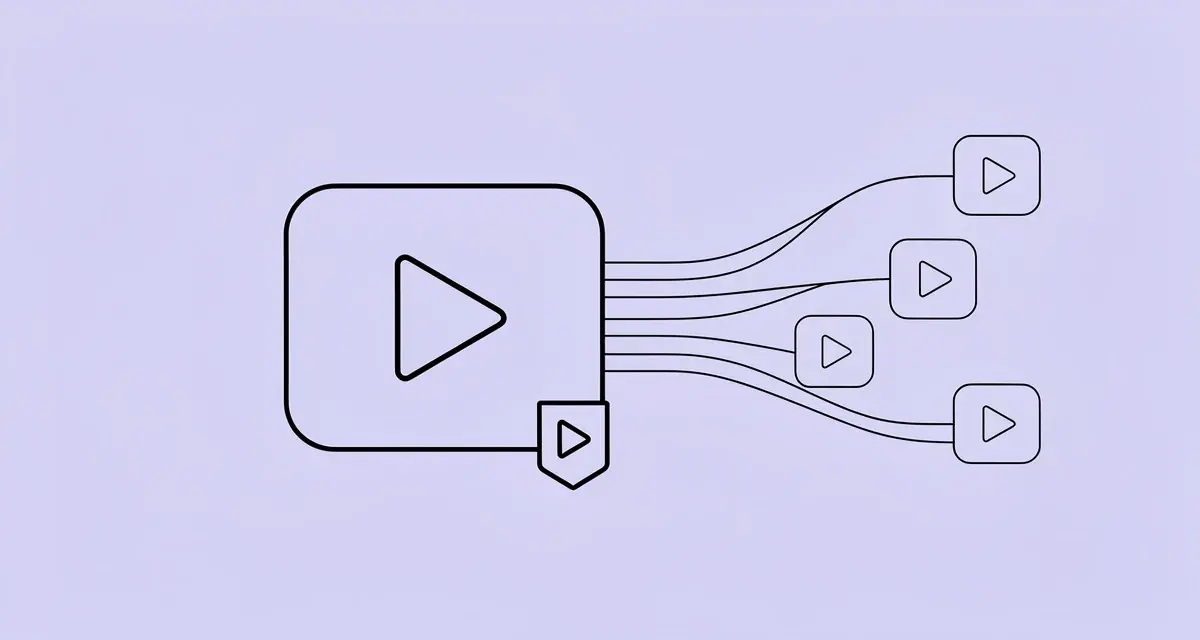
Adding a logo to a video used to mean one thing: opening a thumbnail editor, searching for a business name, and clicking “save” before you hit send. That still works fine for a single video. But if you’re sending outreach to 200 prospects a week, editing 200 thumbnails by hand isn’t a workflow — it’s a full-time job. Today, AI can generate a personalized, on-brand thumbnail (and even a personalized background) for every recipient automatically, using the same one video you already recorded.
Say you’re an SDR sending a prospecting video to 40 target accounts this week. Manually, that’s 40 trips through a thumbnail editor, 40 logo searches, 40 chances to grab the wrong file or forget one entirely. With automated personalization, you record the video once, and each of those 40 versions goes out with that specific company’s logo already in place — no extra editing per send.
This guide covers both approaches: the manual steps for adding a logo to a single video in Sendspark, and how AI video personalization now handles that same job at scale, for every prospect, without a rep touching a thumbnail editor 40 separate times.
Key Takeaways
- Custom, branded video thumbnails see 60-70% higher click-through rates than auto-generated screenshots, and 90% of top-performing videos use one.
- Manually adding a logo to a video thumbnail in Sendspark takes four steps and works well for one-off videos.
- Sendspark’s AI voice cloning and dynamic backgrounds let you record one video and have AI auto-generate a personalized thumbnail and background for every prospect, at scale.
- McKinsey research finds personalization drives a 10-15% average revenue lift (up to 25% in some sectors) when it’s executed well.
- Poorly-executed personalization can backfire: a 2025 Gartner survey found it created negative experiences for 53% of customers.
Why a Branded Video Thumbnail Increases Click-Through Rate
A branded video thumbnail increases click-through rate because it signals professionalism and familiarity before a viewer ever presses play. According to Backlinko’s analysis of YouTube performance data, videos with custom thumbnails see 60-70% higher click-through rates on average compared to auto-generated screenshots, and 90% of top-performing videos use a custom thumbnail rather than a random frame grab.
In a sales inbox, that effect is even more pronounced. A thumbnail with your logo — or better, your prospect’s logo — breaks through the wall of gray attachment icons and stock video-call screenshots that fill most inboxes. It tells the recipient, before they click, that this message was made specifically for them rather than blasted to a list.
The psychology behind this is simple: people scan before they read. A thumbnail is the only part of a video message a recipient sees before deciding whether it’s worth their time. Our guide on why thumbnails matter for video engagement goes deeper into the mechanics of that first-impression effect, but the short version is that a generic, unbranded thumbnail reads as an ad, while a branded one reads as a message meant for that specific person.
Pro tip
If you’re sending a video to a specific company, use their logo on the thumbnail instead of your own. It reads as “I made this for you” rather than “here’s my ad,” and it’s one of the simplest ways to boost reply rates on cold outreach.
Video itself carries outsized weight in modern marketing: HubSpot’s 2026 marketing data shows video now accounts for over 82% of all online traffic, and landing pages with embedded video convert up to 86% higher than pages without one. A thumbnail is the first — and sometimes only — impression a viewer forms of that video before deciding whether to watch it, which is why the few seconds spent branding it are rarely wasted.
It’s also worth testing rather than assuming. Two thumbnails for the same video — one with your logo, one with the recipient’s — can produce meaningfully different open rates on the exact same list. If you’re not sure which performs better with your specific audience, send a small batch of each before committing to one style across an entire campaign. The difference usually shows up within the first few dozen sends.
How to Add a Logo to a Video in Sendspark (Manual Method)
To add a logo to a video in Sendspark, record or upload your video, open the thumbnail editor from the share screen, then search for or upload the logo you want displayed on the preview image. The whole process takes under a minute for a single video, which makes it the right choice any time you’re sending a one-off message rather than a batch.
This manual approach still has a clear place in most workflows. A customer success manager recording a single onboarding check-in, or an AE sending one proposal walkthrough to a specific champion, doesn’t need automation — they need thirty seconds and the right logo file. Here’s exactly how that works.
1. Record or upload a video
Open Sendspark and click the purple “New Video” button. You can either record a new video, or upload a pre-made one.
2. Open the thumbnail editor
Once your video is recorded or uploaded, click “Share Video” in the top right corner. Hover over the video preview and select “Edit Thumbnail” to open the editing panel, where you can add a caption, a timestamp, and a logo. See our guide on how to customize a video thumbnail for the full range of options beyond just the logo.
3. Select or upload a logo
Type a business name into the logo search bar at the bottom of the editor. If the logo you want doesn’t appear, click the dotted-line placeholder in the top-left corner of the preview to upload your own square logo file instead. Any brand’s logo can be represented this way, whether it’s your own or a customer’s, regardless of whether it shows up in the built-in search.
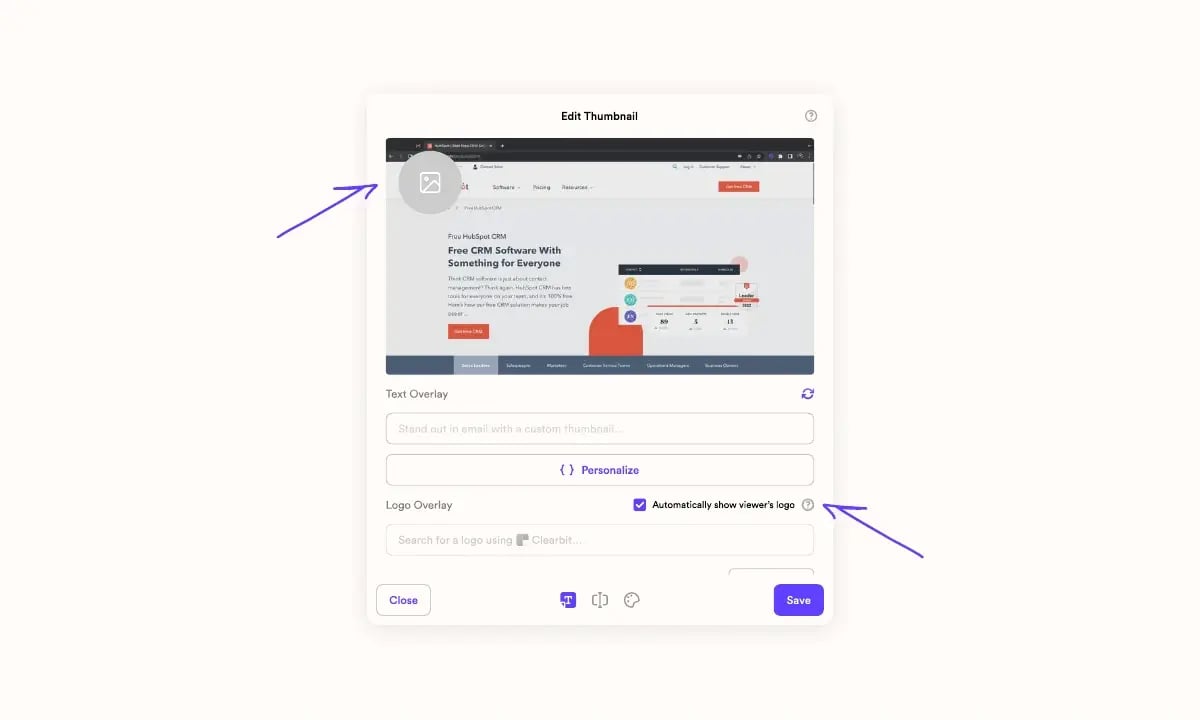
Notice the “Automatically show viewer’s logo” toggle in that same panel — that’s the setting that turns this into automated personalization instead of a one-time manual edit, which the next section covers in detail.
4. Share your video
Save your changes and share the video by email, Slack, LinkedIn, text, or embed it directly on a webpage. Once it’s live, that logo-branded thumbnail is what shows up everywhere the video link appears — inbox previews, social shares, and embedded players alike.
When manual is genuinely the better choice
Don’t treat manual editing as the “old way” you’re supposed to outgrow. It’s still correct any time you’re sending a single, high-stakes video: a renewal conversation with a champion who just changed roles, a proposal walkthrough for a deal you’ve been working for months, or a thank-you video after a big contract signs. In those moments, the extra care of picking the logo yourself, checking it looks right, and sending it personally is the point — automation would strip out exactly the attention to detail that makes the video land.
How AI Personalizes Video Thumbnails and Branding at Scale
AI personalizes video thumbnails and branding at scale by automatically generating a unique thumbnail — and in some cases an entirely different on-screen background — for every recipient from a single recorded video, without a rep manually editing each one. Instead of searching for one logo at a time, the platform pulls each prospect’s company details from your CRM or spreadsheet and applies them automatically across an entire send list.
This is the core shift behind Sendspark’s “record one video, personalize at scale” approach: you record a single video once, and AI voice cloning combined with dynamic video backgrounds generates thousands of individually personalized versions — each with the prospect’s name, that prospect’s company logo on screen, and your voice saying it — in minutes rather than hours of manual editing. Automated thumbnail generation is what makes that possible without a rep opening a single editor.
From CRM field to custom thumbnail
In practice, this works by mapping a column in your spreadsheet or a field in your CRM — company name, domain, or logo URL — to the thumbnail template. When you launch a campaign to a list of 500 contacts, the platform loops through each row and renders a thumbnail with that specific prospect’s branding, the same way a mail-merge fills in a name, except it’s filling in a logo, a background image, and sometimes a spoken name as well.
Dynamic backgrounds take it further
Where manual logo overlay stops at the thumbnail, dynamic backgrounds extend personalization into the video itself. Instead of just branding the preview image, the system swaps in the prospect’s own website or product screenshot behind you while you talk, so the video looks and feels custom-built for that account even though you only recorded it once. Our guide on dynamic backgrounds for personalized videos covers how that background-swapping works in more detail.
Common mistake
Personalization at scale can backfire if it’s sloppy. A 2025 Gartner survey found that poorly-executed personalization created negative experiences for 53% of customers, who were 3.2x more likely to regret a purchase afterward. Always preview a sample batch of auto-generated thumbnails before a full send — a mismatched logo or broken merge field is worse than no personalization at all.
Watch-through rate is one of the clearest ways to see this pay off: a thumbnail personalized with the prospect’s own branding tends to earn a longer watch-through rate than a generic one, because the viewer already recognizes it as relevant to them before the video even starts playing. Combined with dynamic backgrounds that swap in a prospect’s website or product screenshot behind you as you talk, the same recorded video can feel like it was made fresh for each recipient.
This kind of automated thumbnail generation is why outbound sales teams increasingly treat brand consistency as a solved problem rather than a manual task assigned to whoever has time. It’s also why McKinsey’s research on personalization ROI found that companies executing it well see a 10-15% average revenue lift — automation is what makes that consistency achievable across hundreds of prospects instead of just a handful. For a broader look at how this fits into a full outreach strategy, our complete guide to personalized video marketing covers the strategy layer that sits above thumbnail and background personalization specifically.
Manual Logo Overlay vs. AI-Generated Personalized Thumbnails: Quick Comparison
The right approach depends on volume: manual logo overlay works fine for a handful of videos, but AI-generated personalization is built for outreach at list scale. Here’s how they compare directly.
| Factor | Manual Logo Overlay | AI-Generated Personalized Thumbnails |
|---|---|---|
| Best for | One-off videos, single customer | Outbound campaigns, list-based sends |
| Time per video | ~1 minute | Seconds, applied automatically across the list |
| Personalization source | Manual logo search or upload | CRM/spreadsheet fields (company name, logo, website) |
| Consistency across sends | Depends on the rep doing it each time | Consistent by default across every send |
| Dynamic background support | Not available | Yes — swaps prospect’s site or product behind you |
| Voice personalization | Not applicable | AI voice cloning speaks each prospect’s name |
Most teams end up using both: manual thumbnail editing for high-touch, one-to-one videos like personalized customer success check-ins, and automated personalization for anything sent to a list of prospects at once.
Record One Video. AI Personalizes Thousands.
Sendspark is the AI video personalization platform for B2B sales. Record once, and AI voice cloning generates thousands of individually personalized videos with dynamic backgrounds and personalized thumbnails — each prospect hears their name, sees their website, in your voice. Sales teams see 2-3x more replies.
Get Started NowFrequently Asked Questions
How do I add a logo to a video?
Open your video in Sendspark’s thumbnail editor, search for the business name you want to display, and select the matching logo. If it doesn’t appear in search, you can upload your own square logo file directly. Preview the thumbnail before saving to make sure the logo isn’t cropped or stretched, then save and share as normal.
Can I add my customer’s logo to a sales video instead of my own?
Yes, and it’s often more effective than using your own logo. Adding your customer’s logo to a sales video signals that the message was made specifically for them, which tends to earn a stronger reply rate than a generic branded thumbnail. This works especially well in account-based outreach, where a single champion or company is the entire audience for that video.
What’s the difference between a video watermark and a personalized thumbnail?
A watermark is a static logo overlay that appears the same way on every video regardless of who receives it. A personalized thumbnail changes per recipient, typically showing that specific prospect’s own logo, name, or company details automatically. Watermarking protects and brands your content uniformly; thumbnail personalization tailors the first impression to each individual viewer.
Does adding a logo to a video actually increase click-through rate?
Yes. Research from Backlinko shows videos with custom, branded thumbnails see 60-70% higher click-through rates than auto-generated screenshots, and custom thumbnails appear on 90% of top-performing videos. The effect holds in sales contexts too, where a branded thumbnail stands out against the generic gray previews most video tools generate by default.
Can AI personalize video thumbnails automatically for each prospect?
Yes. Platforms like Sendspark can pull each prospect’s company name, logo, or website from a CRM or spreadsheet and generate a unique thumbnail and dynamic background for every recipient from a single recorded video, without manual editing per send. This is typically set up once as a campaign template, after which every new contact added to the list gets their own personalized version automatically.
What image format works best for a video logo overlay?
A square (1:1 aspect ratio) PNG or JPG with a transparent or solid background works best. Square logo files display cleanly in most thumbnail editors, including Sendspark’s, without stretching or cropping awkwardly. If you’re personalizing at scale from a CRM, sourcing consistent square logo files in advance saves cleanup work later.
Do personalized video thumbnails work in cold outbound email?
Yes, and they can matter more there than anywhere else. A recognizable, brand-relevant thumbnail in a cold email helps a video stand out from generic screenshots and can meaningfully increase the odds a prospect presses play instead of scrolling past. Since cold outbound already faces low trust by default, a thumbnail that visibly references the recipient’s own company is one of the fastest ways to earn a second of attention.
Sources & References
- Backlinko — “Videos with custom thumbnails see 60-70% higher click-through rates; 90% of top-performing videos use a custom thumbnail” (2026)
- HubSpot — “Video accounts for over 82% of all online traffic; landing pages with video convert up to 86% higher” (2026)
- McKinsey & Company — “Personalization most often drives a 10-15% revenue lift, ranging 5-25% by sector”
- Gartner — “Personalization done poorly creates negative experiences for 53% of customers, who are 3.2x more likely to regret a purchase” (June 2025)
Record One Video. AI Personalizes Thousands.
Sendspark is the AI video personalization platform for B2B sales. Record once, and AI voice cloning generates thousands of individually personalized videos with dynamic backgrounds and personalized thumbnails — each prospect hears their name, sees their website, in your voice. Sales teams see 2-3x more replies.
Get Started NowTopics: Tips & Tricks