Most sales managers understand that coaching matters. Yet research consistently shows managers spend less than half their time on activities that directly develop their reps — and most 1:1s devolve into deal status updates. “Where are you on the Acme deal?” is not coaching. It’s a pipeline review with a different name. For more, see our guide to sales leadership coaching framework.
One-on-one sales coaching is a different discipline entirely. When done right, it’s the single highest-leverage activity a sales manager can do. This guide walks you through exactly how to structure it — the right frequency, the right agenda, what to actually cover, and how to measure whether it’s working.
Key Takeaways
- Weekly 30–45 minute 1:1 sessions outperform monthly reviews — managers who coach weekly see 19% higher quota attainment according to RAIN Group research
- A structured 1:1 agenda covers three zones: metrics check (5 min), skill development (20 min), deal coaching (15 min) — and stays consistent every session
- The most effective coaching questions are ask-don’t-tell: “What’s your biggest obstacle right now?” surfaces real blockers faster than prescriptive advice
- Between sessions, AI-personalized video coaching messages via Sendspark reinforce lessons more effectively than email — reps watch them on their own schedule
- Track three 90-day leading indicators per rep: stage-to-stage conversion rates, activity-to-outcome ratios, and average deal velocity — not just quota percentage
What Is One-on-One Sales Coaching?
One-on-one sales coaching is a structured, recurring conversation between a sales manager and a single rep, focused entirely on developing that rep’s selling skills — not reviewing deals, not discussing admin, and not checking in on quota. It’s a dedicated 30–45 minute investment, held consistently (weekly or bi-weekly), where the manager acts as a coach rather than a supervisor.
The distinction from other management activities matters more than it sounds. Most managers conflate three different conversations:
- Pipeline reviews — focused on deal health, next steps, and forecast accuracy. You’re managing revenue, not developing skills. Running a pipeline review is a separate discipline from coaching.
- Performance reviews — retrospective evaluations against targets, typically quarterly or annual. They assess past results. Coaching is forward-looking and continuous.
- Group training — useful for introducing new methodologies across the team, but incapable of addressing each rep’s individual skill gaps at the depth required for real development.
One-on-one coaching is effective because it’s personalized and continuous. A manager who runs structured weekly 1:1s can spot a specific pattern — say, a rep consistently losing deals at the demo stage — and target that exact skill over multiple sessions until it improves. Group training never gets that granular.
“Companies that implement a formal sales coaching program see 16.7% higher revenue growth than companies with no formal coaching. The most significant driver of this gap is manager coaching quality, not frequency alone.”
— RAIN Group, “Top 7 Principles of Effective Sales Coaching”
This is why a complete sales coaching program always includes structured 1:1s at its core. The coaching conversation — not the methodology taught in a group workshop — is where skill change actually happens.
How Often Should You Run 1:1 Coaching Sessions?
Run weekly 1:1 coaching sessions for new and developing reps, and bi-weekly for experienced reps who are at or above quota. Consistency matters more than duration. A 30-minute session every week produces more skill development than a 90-minute session once a month — the shorter gap between sessions lets reps practice a skill, get feedback, adjust, and repeat within the same cycle. Our comparison of sales roleplay training methods covers how to structure that practice between sessions so it does not depend on both calendars lining up.
The Salesforce State of Sales report consistently finds that reps who receive frequent coaching — weekly or bi-weekly — significantly outperform peers who receive coaching monthly or less. The compounding effect of regular, targeted feedback is the mechanism behind faster ramp times and higher quota attainment.
When managing 10+ reps, scaling coaching time requires batching: dedicate specific days to specific rep profiles. Mondays for new hires, Wednesdays for struggling reps, Thursdays for your experienced team. This structures your week so coaching doesn’t get crowded out by deal escalations and admin.
| Rep Profile | Recommended Frequency | Session Length | Primary Focus |
|---|---|---|---|
| New hire (0–6 months) | Weekly | 45–60 min | Foundational skills, process adherence, role-play |
| Ramp phase (6–12 months) | Weekly | 45 min | Skill refinement, objection handling, pipeline discipline |
| Experienced / on quota | Bi-weekly | 30–45 min | Advanced techniques, strategic deal coaching, career growth |
| Struggling rep | Weekly | 60 min | Root cause analysis, targeted skill work, accountability |
| Top performer | Monthly | 30 min | Strategic insights, thought partnership, leadership development |
One rule applies to every profile: once you set the cadence, protect the calendar slot. The single biggest coaching failure isn’t bad technique — it’s canceling sessions when a deal needs attention. If you reschedule coaching whenever deals get urgent, reps learn that their development comes last.
The 1:1 Sales Coaching Agenda Template That Works
The most effective 1:1 coaching agenda has three zones: a 5-minute metrics check, a 20-minute skill development block, and a 15-minute deal coaching section. Running the same structure every week removes decision fatigue — both you and the rep know what’s coming — and trains reps to bring prepared responses to each zone.
Zone 1: Metrics Check (5 minutes)
Open with 2–3 leading indicators that reflect the rep’s activities and early-stage outcomes — not just quota attainment. Examples: discovery-to-demo conversion rate, emails sent this week, call-to-meeting ratio. The goal isn’t to judge the numbers — it’s to ground the conversation in data before moving into skill work. Keep it brief. Five minutes maximum.
Zone 2: Skill Development (20 minutes)
This is where coaching happens. Pick one skill to focus on and use ask-don’t-tell questions throughout. The ask-don’t-tell method works because it forces reps to articulate their own thinking — and people change behavior more readily when they discover the insight themselves than when a manager tells them what to do.
Effective coaching questions for this zone:
- “What did you try differently this week based on last session’s action item?”
- “Walk me through that call — where did the energy shift, and what do you think caused it?”
- “If you could replay that opening email, what would you change?”
- “What’s the one thing you want to improve in your next three discovery calls?”
- “What’s your hypothesis about why that prospect went quiet after the demo?”
Zone 3: Deal Coaching (15 minutes)
Limit this zone to two deals maximum. Have the rep present each deal — their strategy, their read on the buyer, where they’re stuck. Your job is to ask questions, not give answers. “What’s your next impactful action, and why?” is a more powerful question than “Here’s what I’d do.” The rep doing the thinking is the rep building the skill.
Close the session with one specific action item — not a list of five — and confirm the date of the next session. A single commitment is more likely to be completed than a laundry list.
Common mistake
Don’t let deal updates eat the skill development time. The moment your 1:1 becomes “tell me where each deal is,” you’ve lost the coaching session and reverted to a pipeline review. Protect Zone 2 fiercely — it’s the only part of the week dedicated exclusively to the rep’s skill growth.
Record One Video. AI Personalizes Thousands.
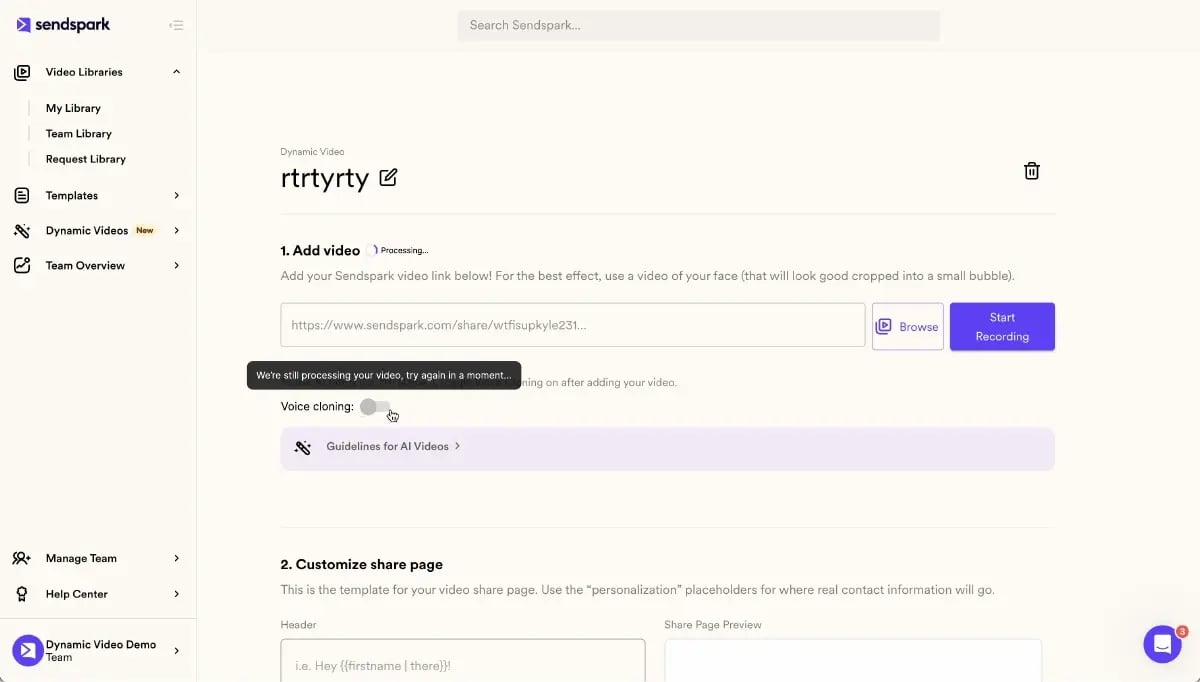
Sendspark is the AI video personalization platform for B2B sales. Record once, and AI voice cloning generates thousands of individually personalized videos with dynamic backgrounds and personalized thumbnails — each prospect hears their name, sees their website, in your voice. Sales teams see 2-3x more replies.
Get Started NowWhat to Cover in Each 1:1 Coaching Session
Each 1:1 should cover a brief metrics review, one specific skill (not everything you noticed), and one or two deals coached Socratically. Keeping scope narrow is the discipline most managers struggle with — every session you try to fix five things, you end up fixing zero. One focused topic, done well, moves the needle.
Metrics to Review
Quota attainment tells you the outcome, not the skill level. Focus on the leading indicators that reps can actually change through behavior. These sales rep productivity metrics are the right inputs for coaching:
- Stage-to-stage conversion rates — discovery-to-demo rate, demo-to-proposal rate. These pinpoint exactly where deals are getting stuck.
- Activity-to-outcome ratios — calls-to-meetings-booked for SDRs/BDRs. This shows whether effort is translating into pipeline.
- Average deal velocity — is time-to-close shortening? Slower velocity often indicates stalling, not just effort issues.
- Email reply rates — especially for outbound-heavy roles. These respond quickly to targeted coaching on subject lines and openers.
Pull these from your CRM — HubSpot surfaces stage conversion data directly in the deal pipeline view. Walk through one or two relevant metrics, note the trend, and move on. Don’t turn the metrics zone into an interrogation.
Skill Development Topics (One at a Time)
Choose one skill to work on per session. Rotate through the rep’s development areas across sessions, but never tackle more than one in a single meeting. Common skill development topics for B2B sales prospecting and closing include:
- Cold email subject lines and opening hooks
- Discovery questioning technique — moving from surface-level to pain-uncovering questions
- Demo structure and value articulation
- Objection handling for specific, recurring objections
- Multi-threading — identifying and engaging multiple stakeholders in a deal
- Negotiation and discounting discipline
Call Review: Short Clips, Not Full Recordings
Instead of replaying an entire call, pull a 2–3 minute clip at a specific moment — a challenging objection, a weak discovery question, or a strong closing move. Then listen together and ask the rep to self-assess first: “What did you notice?” This single practice is the core of sales call coaching. Reps who hear themselves and articulate what to change are far more likely to change than reps who just receive written feedback.
Between-Session Reinforcement with AI-Personalized Video
Coaching doesn’t end when the 1:1 does. The research from Harvard Business Review on structuring effective 1:1s emphasizes that follow-through between sessions is where development either compounds or stalls. The problem: writing a follow-up email to each rep — referencing their specific call, their specific deal, their specific action item — takes time you don’t have.
This is where Sendspark changes the equation. After a coaching session, record one short video reinforcing the skill you worked on — for example, a two-minute breakdown of how to open a discovery call. Then use Sendspark’s AI voice cloning and dynamic backgrounds to send a personalized video coaching note to each rep on your team. Each rep hears their own name, sees their company name in the background, and gets a message that references their specific context — without you recording ten individual videos. Record one video. AI personalizes it for every rep at scale.
Reps consume AI-personalized video messages on their own schedule. Video analytics shows you who watched and for how long — so you can see who’s engaging with the reinforcement material before the next session. This is a fundamentally different capability from email, where you have no visibility into whether the rep read and absorbed the feedback.
Pro tip
Focus on ONE skill per session, not everything you noticed. Reps who receive targeted feedback on a single behavior improve significantly faster than those given five things to fix simultaneously. Pick the highest-leverage gap and stay there until you see the metric move.
How to Measure Whether Your Coaching Is Working
Measure leading indicators — skill-level conversion rates — over a 90-day window, not just quota. Quota is a lagging outcome that reflects decisions made 60–90 days ago. If you wait for quota numbers to validate your coaching, you’ll get feedback too late to course-correct. The metrics that move first are conversion rates at specific pipeline stages, activity efficiency ratios, and deal velocity.
The HubSpot research on sales manager effectiveness shows that managers who track leading indicators alongside quota are more effective coaches because they can intervene earlier — before a bad quarter shows up in the numbers. Establish a 90-day metric set per rep and review it quarterly:
- Stage-to-stage conversion rates — is the rep’s discovery-to-demo rate trending up? This is the earliest signal that discovery skills are improving.
- Activity-to-outcome ratio — is the calls-to-meetings ratio improving? A consistent ratio means consistent skill; an improving ratio means the coaching is working.
- Average deal velocity — deals moving faster through the pipeline indicate the rep is better at driving urgency and multi-threading.
A qualitative signal is also worth tracking: does the rep start answering coaching questions without being prompted? When a rep says “I noticed my demo-to-proposal conversion dropped and I think it’s because I’m not confirming budget before presenting,” that’s coaching internalized. You’re no longer managing the behavior — they are. This is the goal of effective sales performance coaching.
Keep a simple coaching log for each rep: date, skill focus, action item, and outcome at the next session. It takes two minutes to maintain and surfaces patterns you’d otherwise miss — like the fact that a rep’s objection handling improved but their discovery is still weak three months in.
| Metric | What It Measures | How to Track | Signal Type |
|---|---|---|---|
| Stage conversion rate | Skill quality at each pipeline stage | CRM pipeline report, weekly | Leading |
| Activity/outcome ratio | Efficiency of outreach effort | CRM activity log, weekly | Leading |
| Average deal velocity | Rep’s ability to drive urgency | CRM deal age report, monthly | Leading |
| Win rate | Overall deal execution quality | CRM closed-lost analysis, quarterly | Lagging |
| Quota attainment | Overall revenue output | CRM revenue dashboard, monthly | Lagging |
| Video coaching engagement | Rep engagement with between-session reinforcement | Sendspark video analytics, per send | Leading |
The full coaching system — structured 1:1s, between-session reinforcement, and metric tracking — builds on each other. If you want a broader framework for the manager role, see the best sales coaching tools that support each component.
Frequently Asked Questions
What is one-on-one sales coaching?
One-on-one sales coaching is a structured, recurring meeting between a sales manager and a single rep dedicated entirely to developing the rep’s selling skills. Unlike pipeline reviews (which focus on deal status) or performance reviews (which assess past results), 1:1 coaching is forward-looking and focused on improving specific behaviors — discovery technique, objection handling, prospecting cadence — through targeted conversation and practice.
How often should sales managers do 1:1 coaching sessions?
Weekly for new and developing reps (first 12 months), and bi-weekly for experienced reps performing at or above quota. Consistency matters more than session length — a 30-minute weekly session produces more skill growth than a 90-minute monthly session. Protect the scheduled time: canceling when deals get urgent trains reps that their development comes last.
What should be on a 1:1 sales coaching agenda?
A proven structure divides the session into three zones: a 5-minute metrics check (leading indicators, not just quota), a 20-minute skill development block (focus on one skill, ask-don’t-tell questions), and a 15-minute deal coaching section (two deals maximum, rep leads with Socratic coaching). Close with one action item and confirm the next session date.
How is one-on-one coaching different from a pipeline review?
A pipeline review focuses on deal health, forecast accuracy, and next steps within specific opportunities — it’s a revenue management activity. One-on-one coaching focuses on the rep’s skills and behaviors: why they’re losing discovery calls, how to improve their objection handling, what they can change about their demo approach. Doing both is important, but confusing them undermines both.
How do you measure the effectiveness of sales coaching?
Track leading indicators over a 90-day window: stage-to-stage conversion rates, activity-to-outcome ratios, and average deal velocity. These change faster than quota and directly reflect skill improvements. A qualitative signal: reps begin diagnosing their own performance gaps without prompting. Quota attainment and win rate validate the leading indicators over a longer horizon.
How can sales managers reinforce coaching between sessions?
Send a short coaching video after each session that reinforces the skill you worked on. With Sendspark’s AI voice cloning and dynamic backgrounds, you can record one video and personalize it for every rep by name and context — without recording ten individual messages. Reps consume AI-personalized video coaching notes on their own schedule, and video analytics shows you who engaged with the material before the next session.
Sources & References
- RAIN Group — “Top 7 Principles of Effective Sales Coaching” — “Companies that implement a formal sales coaching program see 16.7% higher revenue growth; coaching quality drives the gap more than frequency alone”
- Salesforce — State of Sales Report — Reps who receive frequent coaching (weekly or bi-weekly) significantly outperform peers who receive coaching monthly or less
- Harvard Business Review — “The Right Way to Use One-on-Ones” — Follow-through between 1:1 sessions is where development either compounds or stalls; structured agendas and clear action items are essential
- HubSpot Sales Blog — “The Secret to Better Sales Coaching” — Managers who track leading indicators alongside quota are more effective coaches because they can intervene earlier in the development cycle
Record One Video. AI Personalizes Thousands.
Sendspark is the AI video personalization platform for B2B sales. Record once, and AI voice cloning generates thousands of individually personalized videos with dynamic backgrounds and personalized thumbnails — each prospect hears their name, sees their website, in your voice. Sales teams see 2-3x more replies.
Get Started NowPublished July 2026