Updated August 2026
Sales reps who get weekly call coaching close 27% more deals than reps who don’t, according to research from CSO Insights, yet most sales managers spend less than three hours a week actually coaching. The gap between knowing coaching works and doing it consistently is where most pipeline leaks out. This guide walks through the exact framework, cadence, and tools high-performing sales managers use to turn call recordings into rep development, with a focus on what changes in 2026 when agentic AI review and AI-personalized video reinforcement enter the loop. For a deeper treatment of coaching within the broader enablement stack, see our comprehensive guide to video sales enablement. For the tactical companion on rep-by-rep sessions, see our one-on-one sales coaching playbook.
Key Takeaways
- Structured sales coaching lifts win rates by 25-29% versus unstructured or no coaching (CSO Insights, Sales Management Association).
- Coach one or two specific skills per session, not a list of everything that went wrong. Focus compounds; noise dilutes.
- A consistent weekly cadence of 30-45 minute 1:1 call reviews outperforms heroic, sporadic feedback every quarter.
- Agentic AI call review now scores every recorded call against a rubric automatically, surfacing the two coaching moments a manager would have missed manually.
- AI-personalized video reinforcement lets one manager deliver a named, deal-specific coaching nudge to every rep, in the manager’s cloned voice, at the moment the rep needs it.
What Is Sales Coaching?
Sales coaching is a structured, recurring process in which a sales manager reviews a rep’s recorded calls, identifies one or two specific behaviors to change, and works with the rep to practice and apply the change on the next call. It is not training, not annual reviews, and not deal inspection. The unit of work is one call, one skill, one rep, every week. For a full list of proven B2B sales techniques that move deals forward, see our dedicated guide.
The distinction matters because most sales orgs conflate four different activities — training, mentoring, deal coaching, and call coaching — and end up doing none of them well. Training teaches the playbook. Mentoring shapes a career. Deal coaching focuses on a specific opportunity. Call coaching, the focus of this guide, builds the underlying skill that wins more deals across the entire pipeline.
Why Sales Coaching Drives Win Rates
Sales coaching drives win rates because it changes rep behavior on the highest-leverage moments of the buying conversation: discovery, objection handling, multi-threading, and closing. The CSO Insights “Sales Performance Optimization Study” found that organizations with a formal coaching process see a 27% higher win rate than those with informal or no coaching, and reps under structured coaching hit quota at meaningfully higher rates. For the related skill of structuring those conversations, see our guide to discovery call questions that uncover real buying intent.
“The best sales coaches focus on what reps need to do differently next time, not on cataloging everything that went wrong last time. They limit feedback to one or two themes per session and make the rep own the next move.”
— Harvard Business Review, “Research: The Best Sales Coaches Do Three Things Well” (2017)
The compounding effect on team performance
Coaching compounds because skills are durable. A rep who learns to surface budget in discovery week one keeps doing it forever. Multiplied across an SDR or AE team of ten, a 5-10% individual improvement turns into a measurable shift in team-wide pipeline coverage within a quarter. That compounding is also why the absence of coaching hurts more than managers realize: skill gaps that go unaddressed in week one show up as lost deals in week twelve.
Coached vs. uncoached reps: the comparison
| Metric | Uncoached reps | Reps in structured call coaching | Source |
|---|---|---|---|
| Win rate | Baseline | +25-29% | CSO Insights, Sales Management Association |
| Quota attainment | Baseline | +10-19% more reps at quota | CSO Insights |
| Rep ramp time | 9-12 months | 4-6 months | SiriusDecisions, Salesforce State of Sales |
| Rep retention (year 1) | Baseline | +15-30% higher | Sales Management Association |
| Skill durability post-training | ~13% retention at 30 days | ~70% retention at 30 days | HBR / training retention research |
Record One Video. AI Personalizes Thousands.
Sendspark is the AI video personalization platform for B2B sales. Record once, and AI voice cloning generates thousands of individually personalized videos with dynamic backgrounds and personalized thumbnails — each prospect hears their name, sees their website, in your voice. Sales teams see 2-3x more replies.
Get Started NowThe 5-Step Sales Coaching Framework
The 5-step sales coaching framework is a weekly loop: record the call, review it against a rubric, identify one or two coaching moments, co-create the fix with the rep, and schedule the next review. The loop is intentionally narrow. Managers who try to coach every call on every skill end up coaching nothing well. The cadence is what makes it stick, and most teams pair it with a consistent rep-by-rep sales cadence so coaching time is protected on the calendar.
Step 1: Record every relevant call
If you cannot replay a call, you cannot coach it. Use a recording system that captures discovery calls, demos, and live objection handling. Most modern CRM and conversation-intelligence platforms record automatically. Ensure prospects are notified per your jurisdiction’s two-party consent rules — every reputable platform handles this. The goal is a library of calls you can return to, not a highlights reel of the deals you remember.
Step 2: Review against a written rubric
Pick five to seven behaviors that correlate with closed-won in your pipeline. Examples: discovery question quality, talk-time versus listen-time ratio, multi-threading mentions, next-step specificity, objection acknowledgment. Score the call against the rubric before you meet with the rep — not during the session. Pre-scoring turns the meeting from a debate into a discussion of evidence.
Step 3: Identify one or two coaching moments
You will see ten things wrong on every call. Pick the two with the biggest impact on the deal — usually one mechanical skill (e.g., “you asked a closed-ended discovery question here”) and one strategic skill (e.g., “you never surfaced the second economic buyer”). Everything else gets noted for later.
Pro tip
Send the rep the recording with timestamps before the coaching session, with one question: “What would you do differently at minute 12?” Self-diagnosis dramatically outperforms top-down feedback. For a deep dive into structuring these sessions, see our guide to sales call coaching at the rep level.
Step 4: Co-create the fix
Ask, don’t tell. The GROW model (Goal, Reality, Options, Will) is the most common coaching scaffold for this conversation. The rep should leave the meeting with a specific behavior they will try on a specific upcoming call, in their own words. A fix the rep generates is a fix the rep owns; a fix the manager hands down is a fix the rep forgets by Friday.
Step 5: Schedule the next review
Calendar the next 30-45 minute review before the rep leaves the call. Without a recurring meeting, the loop breaks within two weeks. Top-performing sales managers spend roughly half their week on coaching, structured around protected, non-negotiable 1:1 time.
Sales Coaching Techniques That Actually Work
The most effective sales coaching techniques are question-led, clip-based, and tied to a specific upcoming opportunity in the rep’s pipeline. Generic feedback (“be more consultative”) does nothing. Specific feedback tied to a deal (“on the Acme call Thursday, open with the question we practiced”) changes behavior immediately and lets you measure whether the coaching worked. For the wider toolkit, our roundup of the best sales coaching tools for B2B teams covers the platforms that make clip-based review fast.
GROW: the default coaching frame
GROW is the most widely used coaching scaffold across sales, executive coaching, and athletic coaching. Goal: what does the rep want to achieve on the next call? Reality: what’s actually happening today? Options: what could they try? Will: which option will they commit to? The rep generates the options; the manager just keeps the conversation moving. Managers who skip the “Will” step lose most of the benefit — commitment without a stated next move evaporates.
Build a clip library
Clip the 30-60 second moment from a great call (a perfect discovery question, a clean handle of “we already have something”) and a not-great version of the same moment. Reps learn faster from contrast than from abstract advice. Most modern conversation-intelligence platforms let you clip, tag, and share calls in a few clicks. A shared library turns one rep’s best moment into the whole team’s new standard.
Role-play, then re-record
Ask the rep to redo the moment as if the call were starting over. Record their second attempt. Review both side by side. This is the single fastest way to lock in a behavior change because the rep hears themselves doing it right. The skill decay curve is steep in the first week after coaching; a recorded re-attempt flattens that curve.
Peer coaching
Once a week, run a 30-minute team coaching session where one rep brings a call and the team gives feedback using the rubric. Peer pressure to bring better calls is real, and reps learn from listening to other reps’ deals. Peer coaching also surfaces team-wide patterns no single 1:1 would reveal — often the same objection is stalling three reps at once.
Common Sales Coaching Mistakes (and How to Avoid Them)
The most common sales coaching mistakes are telling instead of asking, coaching on too many skills at once, skipping the recording, and only coaching when a rep is missing quota. Each of these breaks the loop that makes coaching work. The fix in every case is to narrow scope and increase frequency, not the other way around. Our sales leadership coaching playbook covers how to set the standard from the top so these mistakes don’t become team culture.
Common mistake
Coaching reps only when they’re behind quota. By then it’s too late. The reps who most need coaching are your mid-performers — small improvements in their behavior have the biggest absolute impact on team revenue, because there are more of them than top performers or stragglers.
Telling instead of asking
The instinct is to say “here’s what you should have done.” The discipline is to ask “what could you have done differently there?” Reps who self-diagnose retain the lesson; reps who get told forget it before the next call. If a rep genuinely cannot see the moment, play the clip and ask them to describe what they notice before offering your read.
Trying to fix everything at once
Five pieces of feedback equals zero behavior change. Two pieces of feedback equals one behavior change. Pick the two highest-leverage moments and let the rest go into a backlog for a future session. Managers who hand over a ten-item list are doing performance review, not coaching.
Skipping the recording
Coaching from notes or memory is opinion against opinion. The recording removes ambiguity — the rep hears exactly what they said and exactly what the prospect said. Most coaching conflict disappears when both parties are looking at the same source of truth. In 2026, with conversation intelligence recording most calls by default, there is no good reason to coach from memory.
Coaching only reactively
Reactive coaching (“you missed quota, let’s talk”) is performance management dressed up as coaching. Real coaching runs on a fixed weekly cadence regardless of whether the rep is overperforming, on target, or behind. Your top reps still benefit from coaching, often more than your bottom reps because their delta to quota is highest and the deals they’re closing are the largest.
How AI and Agentic Call Review Are Reshaping Sales Coaching in 2026
Agentic AI call review is reshaping sales coaching in 2026 by moving the manager from reviewer-in-chief to pattern-curator. An agentic AI sales coach can now score every recorded call against your rubric, surface the two coaching moments that matter most, and deliver a personalized coaching nudge to the rep — then a manager spends their shrinking 1:1 time on the judgment work an AI cannot do: context, motivation, and the strategic call the rubric doesn’t capture. McKinsey’s 2026 state-of-AI research notes that organizations pairing AI assistance with manager judgment see materially higher productivity gains than either layer alone, and the same pattern applies to coaching.
The shift matters because the old model has a hard ceiling. A manager coaching one rep at a time, 45 minutes a week, can personally review maybe 5-8 calls a week. A team of ten SDRs produces 40-80 recorded calls a week. The math forces a choice: review a sample and miss the moments that matter, or burn out trying to review everything. Autonomous call scoring — rubric-based AI review that grades every call without a human in the loop — breaks that trade-off. Every call gets reviewed, and the manager spends their time on the highest-value conversations the AI flags.
Pattern detection across hundreds of calls
AI pattern detection across hundreds of calls surfaces team-wide patterns the manager would never see manually: which discovery questions correlate with closed-won, which objections cause stalls, which keywords show up in lost deals. Coaching moves from “this one call” to “the systemic skill gap on the team.” That reframes the manager-as-curator role: the AI finds the pattern, the manager decides which pattern is worth a team-wide training moment and which is a single-rep fix.
Personalized video as coaching reinforcement
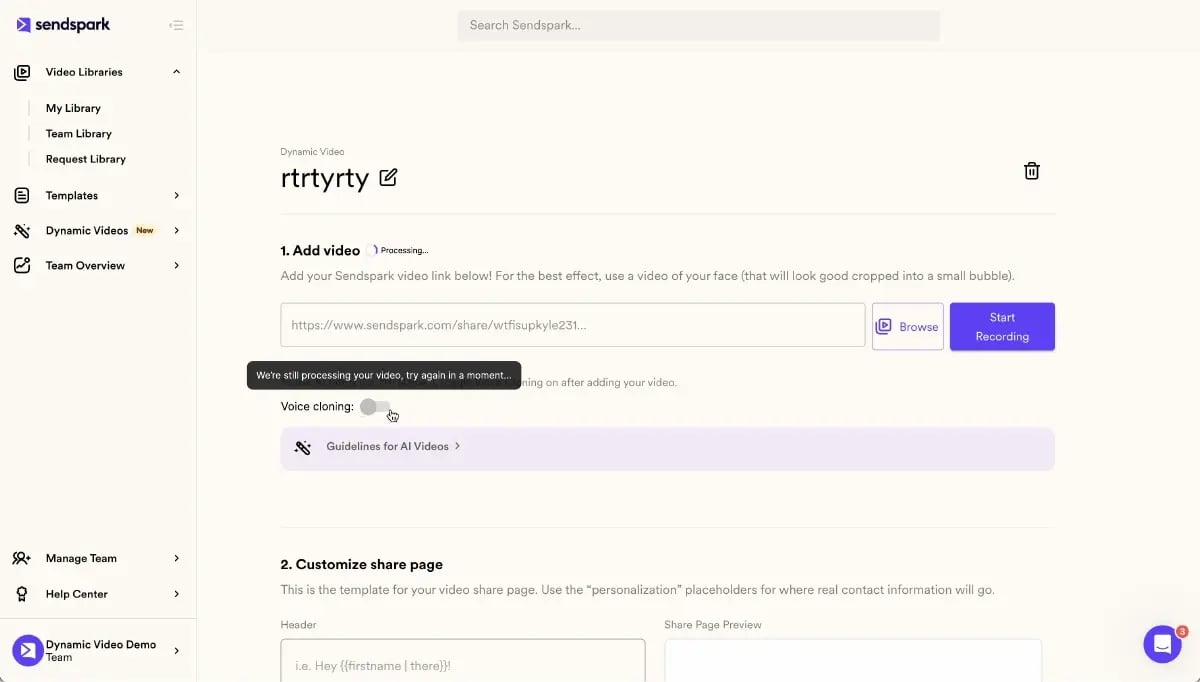
The hardest part of coaching is making the lesson stick after the meeting ends. Coaching reinforcement at scale is the 2026 answer to that problem. AI-personalized video lets a manager record one coaching explainer on a recurring skill — say, “how to handle ‘we already have something’” — and deliver it as a personalized message to each rep, addressing them by name and referencing the specific deal in their pipeline, in the manager’s cloned voice. It is the closest thing to scaling 1:1 attention, and it directly addresses the skill-decay problem that sinks most coaching programs within a month.
Coaching SDRs on outbound
For SDR teams running outbound prospecting, the coaching loop applies just as well to cold calls. Record outbound calls, score against a rubric (opener, qualification, next step), and pair coaching with the rep’s actual performance plan. Our sales performance coaching playbook breaks down how to connect coaching to quota outcomes, and the HubSpot integration keeps coaching notes alongside the deal record so the lesson lives where the work happens.
Tracking coaching impact with video analytics
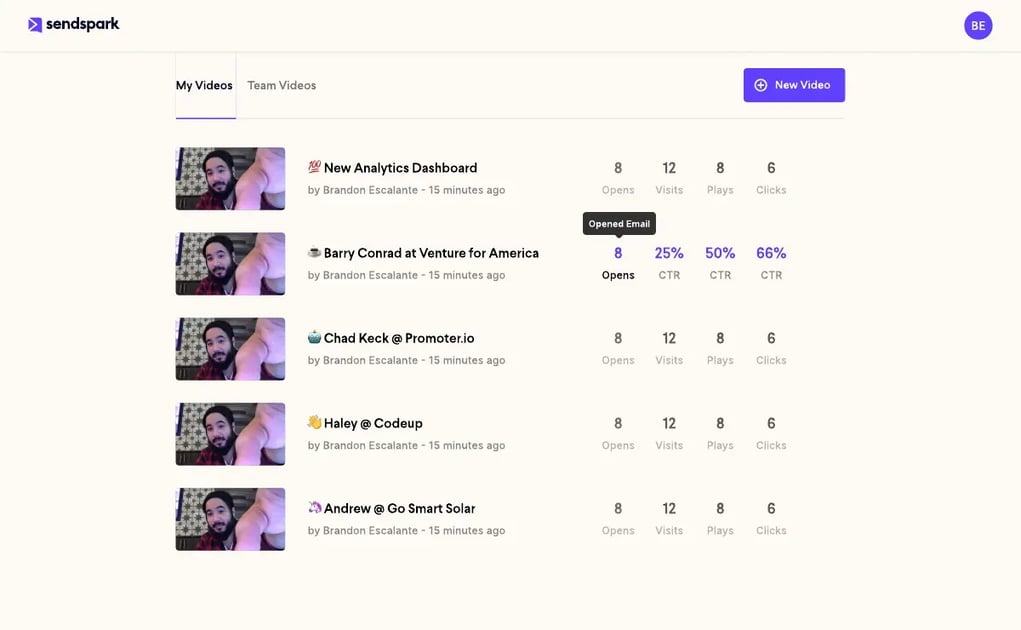
Whether you coach over Zoom or via asynchronous video, video analytics let you see whether reps actually watched the coaching content and whether the message landed. Coaching that no one watches is no different from coaching that never happened. The reinforcement step is where most coaching programs quietly fail — analytics makes that failure visible and fixable before the next deal slips.
Advanced strategy
Record one coaching video on a recurring skill and use Sendspark’s AI voice cloning to generate personalized versions for each rep, addressing them by name and referencing the specific deal in their pipeline. Reinforcement at scale, in your voice, on demand — the same record-once-personalize-thousands motion your reps use on prospects, turned inward on your own team.
Sales Coaching Quick Reference
The table below is a one-page summary of the framework, common cadences, and the 2026 tooling shift for the typical B2B sales org. Use it as the agenda for your next coaching meeting or as the rubric you hand a new front-line manager on day one.
| Element | What good looks like | Common cadence |
|---|---|---|
| Recording | Every discovery, demo, and objection call captured automatically with consent | Continuous (platform default) |
| Rubric review | 5-7 behaviors scored pre-meeting, not during | Weekly, per rep |
| Coaching moments | One mechanical + one strategic, tied to a specific upcoming call | Weekly, per rep |
| Coaching frame | GROW (Goal, Reality, Options, Will); rep owns the next move | Every session |
| Reinforcement | AI-personalized video nudge in manager’s cloned voice, referencing the deal | Within 48 hours of session |
| Agentic AI review | Autonomous call scoring surfaces the top 2 moments per rep automatically | Every recorded call |
| Peer coaching | One rep brings a call, team gives rubric-based feedback | Weekly, 30 minutes |
A note on where this guide sits relative to the broader enablement picture: this is the tactical, week-to-week coaching playbook. For leaders ready to go beyond tactical coaching, our executive sales coaching guide covers the strategic competencies that senior sellers and revenue leaders need. For the strategic view — how coaching connects to onboarding, enablement content, and buyer-facing video — pair it with our comprehensive guide to video sales enablement, which covers the full training-to-coaching loop. And for the reps who are also sharpening their outbound, our cold email best practices and buyer enablement guides cover the other half of the conversation. Great coaching makes reps better; great enablement gives them something better to say.
Frequently Asked Questions
What is sales coaching?
Sales coaching is a structured, recurring 1:1 process where a manager reviews a rep’s recorded calls, identifies one or two specific behaviors to change, and co-creates the fix with the rep for the next call. It is distinct from training (one-to-many), mentoring (career-shaped), and deal coaching (opportunity-specific). The unit of work is one call, one skill, one rep, every week.
How often should sales managers coach reps?
Most high-performing B2B teams run a 30-45 minute 1:1 call review every week, per rep, on a fixed recurring meeting. Cadence beats intensity: a consistent weekly review outperforms a heroic quarterly session every time. Reactive coaching only when a rep misses quota is performance management, not coaching.
What is the GROW model for sales coaching?
GROW is a coaching scaffold with four steps: Goal (what the rep wants to achieve on the next call), Reality (what is actually happening today), Options (what they could try), and Will (which option they commit to). The rep generates the options; the manager keeps the conversation moving. The “Will” step is the one most managers skip, and it is the one that makes the lesson stick.
How does AI change sales coaching in 2026?
Agentic AI call review now scores every recorded call against your rubric automatically and surfaces the top coaching moments per rep, which moves the manager from reviewer-in-chief to pattern-curator. AI-personalized video then delivers a named, deal-specific coaching nudge to each rep in the manager’s cloned voice, which directly attacks the skill-decay curve that sinks most coaching programs within a month.
What are the most common sales coaching mistakes?
The four most common mistakes are telling instead of asking, coaching on too many skills at once, skipping the recording, and coaching only when a rep is behind quota. Each breaks the loop that makes coaching work. The fix is the same in every case: narrow scope to one or two skills, increase frequency to a fixed weekly cadence, and always coach from the recording.
How do you measure sales coaching effectiveness?
Measure coaching effectiveness with the same metrics you measure reps against: win rate, quota attainment, rep ramp time, and 30-day skill retention. The CSO Insights benchmark is a 25-29% win-rate lift for structured coaching. Pair the lagging metrics with a leading indicator — whether reps actually watched the coaching reinforcement video — so you catch a failing program within the quarter, not at year-end.
What is the difference between sales coaching and sales training?
Sales training is one-to-many and introduces a concept to a group. Sales coaching is one-to-one and applied: it embeds that concept into how a specific rep handles a specific moment in a specific call. Without coaching, roughly 87% of training content is forgotten within 30 days. Coaching is the step that converts a one-time lesson into a durable behavior.
Sources & References
- Gartner Sales Insights — Sales management and coaching benchmarks (2026).
- Harvard Business Review — “Research: The Best Sales Coaches Do Three Things Well” (2017).
- Gong — “Sales Coaching: The Ultimate Guide” — conversation-intelligence coaching patterns (2026).
- Sales Hacker — “Sales Coaching: The Complete Guide” — cadence and framework patterns (2026).
- McKinsey & Company — “The State of AI” — AI-assisted productivity gains (2026).
- HubSpot Blog — Sales coaching frameworks and rep development (2026).
Record One Video. AI Personalizes Thousands.
Sendspark is the AI video personalization platform for B2B sales. Record once, and AI voice cloning generates thousands of individually personalized videos with dynamic backgrounds and personalized thumbnails — each prospect hears their name, sees their website, in your voice. Sales teams see 2-3x more replies.
Get Started Now