Most B2B sales managers spend fewer than 30 minutes per week coaching each rep — not because they don’t care, but because they don’t have the tools to do it efficiently at scale. The right sales coaching tools change that equation entirely: they surface what’s actually happening on calls, identify skill gaps by rep, and let managers deliver targeted feedback without sitting in on every meeting. For the full framework, see our comprehensive sales coaching guide. For more, see our guide to sales leadership coaching.
This guide covers the 8 best sales coaching tools for B2B teams in 2026, including conversation intelligence platforms, video coaching tools, AI role-play simulators, and sales readiness platforms. Whether you run a five-person SDR team or a 50-seat AE org, there’s a combination here that fits your workflow. For the weekly loop that turns recorded calls into rep development, see our guide to structured sales call coaching framework.
Key Takeaways
- Sales coaching tools fall into four categories: conversation intelligence, video coaching, AI role-play, and sales readiness LMS — high-performing teams typically combine two or three.
- According to Salesforce’s State of Sales, 80% of the top-performing sales teams rate their coaching as outstanding or above average — making structured coaching a reliable predictor of quota attainment.
- Async video coaching via Sendspark’s AI video personalization lets managers record feedback once and deliver personalized video messages to every rep, saving 10+ hours per week at scale.
- The best tools connect directly to HubSpot, Salesforce, Outreach, and SalesLoft so coaching insights live inside your existing workflow — not in a separate silo.
- For B2B teams with 5–25 reps, pairing conversation intelligence with an async video coaching platform covers 80% of coaching use cases without enterprise-level complexity or cost.
What Are Sales Coaching Tools?
Sales coaching tools are software platforms that help sales managers identify skill gaps, deliver structured feedback, and track rep improvement over time. They go beyond CRM activity logging to analyze what actually happens during conversations, practice sessions, and outreach — giving managers visibility into the behaviors that drive (or kill) deals.
The category breaks down into four distinct types:
- Conversation Intelligence — Records and transcribes calls, then uses AI to surface coaching moments, talk-time ratios, filler words, and deal risk signals. Examples: Gong, Chorus.ai.
- Video Coaching Platforms — Let managers send async video feedback and let reps record video practice submissions for review. Examples: Sendspark, Allego, Brainshark.
- AI Role-Play Simulators — Use AI to simulate prospect conversations so reps can practice pitches, objection handling, and discovery questions without a live call. Example: Second Nature AI.
- Sales Readiness LMS — Combine training content, assessments, and certifications into a structured learning platform. Examples: Mindtickle, Seismic Learning.
Most enterprise teams use at least one tool from each category. For smaller B2B teams, starting with conversation intelligence and a video coaching platform covers the highest-impact use cases first.
According to Salesforce’s State of Sales report, 80% of top-performing sales teams rate their coaching programs as outstanding or above average. That’s not coincidence — structured, data-driven coaching is one of the most reliable levers for quota attainment. The challenge is delivering that coaching efficiently when your managers are also carrying pipeline.
Pro tip
Before buying any coaching tool, audit where your reps are losing deals. If it’s discovery, you need conversation intelligence. If it’s pitch delivery, you need video coaching or role-play. The tool should match the gap — not the other way around.
How We Evaluated These Sales Coaching Tools
We evaluated each tool on five criteria: core coaching features (recording, feedback, scoring), integration depth (HubSpot, Salesforce, Outreach, SalesLoft), ease of use for managers and reps, pricing transparency, and verified G2 ratings from B2B sales users. We focused on tools purpose-built for B2B sales teams of 5–100 reps — not generic LMS platforms adapted for sales.
| Tool | Best For | Primary Feature | Starting Price | G2 Rating |
|---|---|---|---|---|
| Gong | Enterprise teams | AI conversation intelligence | Custom | 4.7/5 |
| Mindtickle | Large sales orgs | Sales readiness scoring | Custom | 4.7/5 |
| Sendspark | All team sizes | AI video coaching & outreach | $49/mo | 4.8/5 |
| Allego | Mid-market to enterprise | Video practice & coaching | Custom | 4.6/5 |
| Second Nature AI | New rep onboarding | AI role-play simulation | Custom | 4.6/5 |
| Seismic Learning | Content-heavy programs | Sales training LMS | Custom | 4.7/5 |
| Brainshark | Field sales teams | Video coaching & AI scoring | Custom | 4.4/5 |
| Chorus.ai | ZoomInfo users | Conversation intelligence | Custom | 4.6/5 |
8 Best Sales Coaching Tools for B2B Teams in 2026
The following tools represent the strongest options across each coaching category. For each, we’ve covered what it does, who it’s best for, and where it fits in a B2B sales team’s stack.
1. Gong — Best for AI-Driven Conversation Intelligence
Gong is the category leader in conversation intelligence for enterprise B2B sales teams. It records and transcribes every call, email, and meeting, then uses AI to surface coaching moments: when a rep talked too much, when a competitor was mentioned, when pricing came up too early, or when discovery questions were skipped. Managers can build coaching playlists from real call snippets, share them with the whole team, and comment directly on specific moments. For a deeper look at how managers drive these outcomes, see our structured sales performance coaching program.
What separates Gong from simpler call recorders is the deal intelligence layer. Managers can see which reps are having the right conversations and which deals are at risk based on engagement patterns — not just CRM data someone typed in. Gong Labs research has found consistent patterns in how top performers handle discovery, follow-up, and objection handling, and those benchmarks are built into the platform’s coaching recommendations.
Best for: Enterprise B2B sales teams (25+ reps) with a full-cycle AE motion who need call coaching at scale.
Pricing: Custom — typically $1,200–$1,600 per user per year for larger teams.
Integrations: Salesforce, HubSpot, Outreach, SalesLoft, Zoom, Microsoft Teams.
2. Mindtickle — Best for Sales Readiness and Certification
Mindtickle takes a readiness-first approach to sales coaching. Rather than starting with call analysis, it measures whether each rep is ready to sell before they get on a call. The platform combines structured learning paths, competency assessments, manager-assigned coaching missions, and AI-scored video practice into a single “sales readiness score” per rep.
For VP Sales and enablement leaders who need to certify reps on new product launches, competitive messaging updates, or compliance training, Mindtickle is particularly strong. You can roll out a new pitch, assign a video practice challenge, have AI score submissions based on a rubric, and track completion across the whole org — without a single manager sitting in on a call.
Mindtickle also integrates with Gong and Chorus, so conversation intelligence data feeds into the readiness dashboard to show whether reps who scored well on practice are actually converting those skills in live conversations.
Best for: Large B2B sales orgs (50+ reps) with dedicated sales enablement teams and complex onboarding programs.
Pricing: Custom — contact for pricing.
Integrations: Salesforce, HubSpot, Gong, Chorus, Workday, Zoom.
3. Sendspark — Best for Async Video Coaching and AI-Personalized Outreach Training
Sendspark brings a different angle to sales coaching that most teams overlook: async video. Instead of scheduling a 30-minute coaching call to review one rep’s cold outreach performance, a manager records a single video — walks through what’s working, what to change, and how to personalize the next outreach campaign — and delivers it to each rep with AI-personalized context specific to their territory or accounts. For a deep dive into structuring these sessions, see our guide to one-on-one coaching.
This matters especially as video outreach becomes a core SDR motion. Sendspark’s video sales enablement capabilities mean managers can coach reps not just on what to say, but on how to record and deliver AI-personalized video that converts — showing dynamic backgrounds, personalized thumbnails, and AI voice-cloned greetings that prospects actually open.
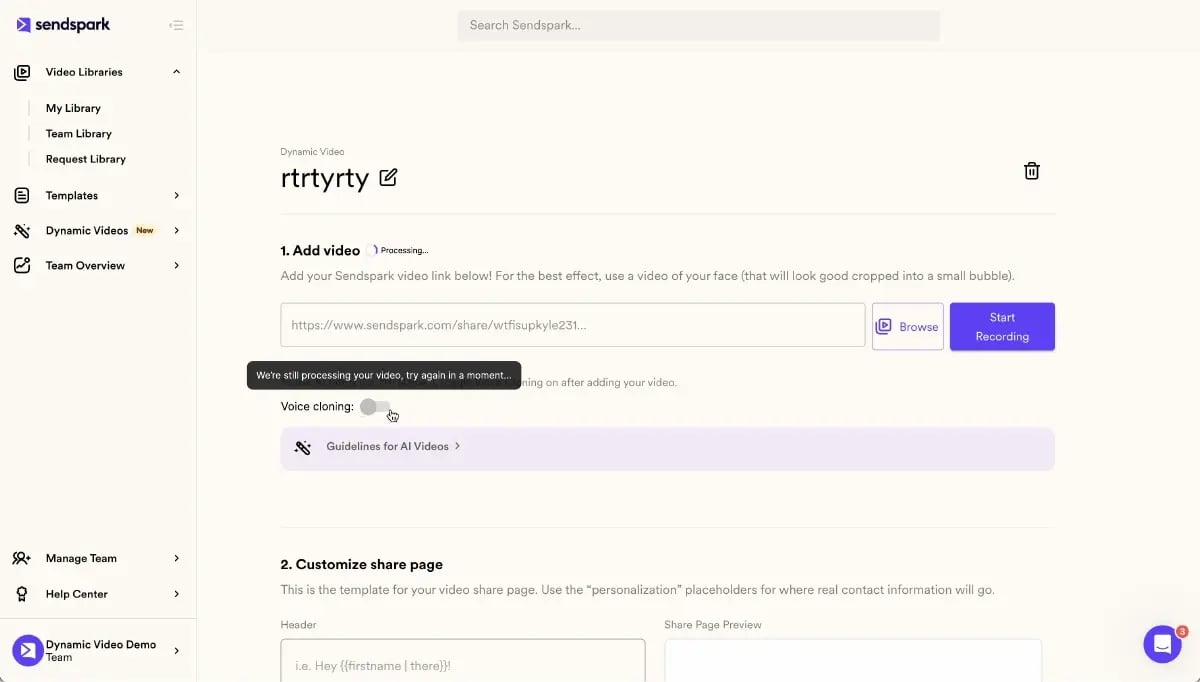
Reps who learn to record one template video and let Sendspark’s AI clone their voice to personalize it for each prospect save hours per week while generating 2–3x more replies than text-only outreach. For a manager coaching a 10-rep SDR team, that’s a measurable performance multiplier with a simple training workflow: record one coaching video, personalize it for each rep’s current pipeline stage, and track engagement via video analytics.
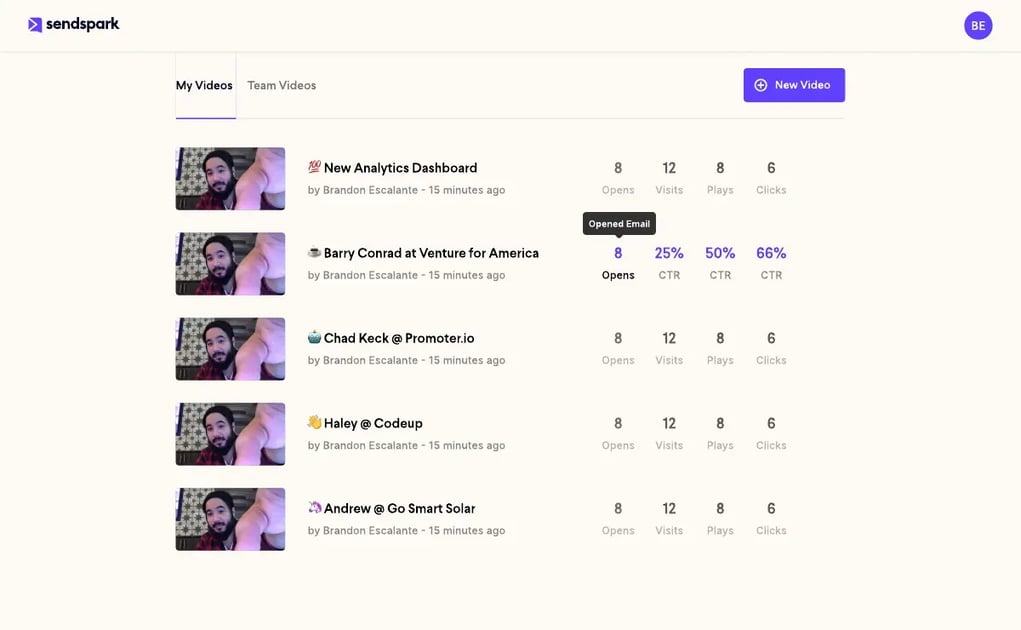
Sendspark also connects directly to HubSpot and Salesforce, so reps can send personalized coaching follow-ups and track opens inside their existing CRM workflow.
Best for: B2B teams of all sizes who want to coach reps on video outreach, deliver async feedback at scale, and improve SDR/AE personalization skills.
Pricing: Starts at $49/mo (Solo) — Growth plan at $99/mo includes 3 seats and API access.
G2 Rating: 4.8/5 (350+ reviews)
Integrations: HubSpot, Salesforce, Outreach, SalesLoft, Apollo, Gmail, LinkedIn.
Record One Video. AI Personalizes Thousands.
Sendspark is the AI video personalization platform for B2B sales. Record once, and AI voice cloning generates thousands of individually personalized videos with dynamic backgrounds and personalized thumbnails — each prospect hears their name, sees their website, in your voice. Sales teams see 2-3x more replies.
Get Started Now4. Allego — Best for Video Practice and Knowledge Sharing
Allego focuses on video-based learning and peer coaching. Reps record video submissions — a pitch, a discovery call roleplay, an objection response — and managers review, score, and annotate directly on the video timeline. Allego’s AI-scoring feature can automatically evaluate submissions against a rubric (energy level, key phrases used, structure) so managers don’t have to watch every recording personally.
One standout feature is the content hub: Allego lets enablement teams build a searchable library of winning call clips, onboarding modules, and competitive battlecards that reps access in the flow of work — not in a separate learning portal they ignore. This makes it effective for both formal coaching programs and informal, just-in-time learning.
Allego is a strong choice for organizations that already use video internally (town halls, product updates) and want to extend that culture into frontline coaching. It pairs well with conversation intelligence tools by giving reps a structured way to practice what they’ve learned from call analysis.
Best for: Mid-market to enterprise teams (20–200 reps) building a formal video coaching and enablement program.
Pricing: Custom — contact for a demo.
Integrations: Salesforce, HubSpot, Microsoft Teams, Zoom, Slack.
5. Second Nature AI — Best for AI Role-Play Simulation
Second Nature AI is purpose-built for sales role-play practice. Its AI acts as a realistic prospect, conducting a full simulated conversation — asking follow-up questions, raising objections, pushing back on pricing — while the rep responds live. After each session, the AI generates a detailed scorecard: talk time, empathy cues, solution positioning, use of company differentiators.
The value is volume. A manager can set up a role-play scenario once, assign it to the whole SDR team, and have every rep complete it 10 times in a week — far more practice repetitions than any manager-led coaching session could achieve. RAIN Group research on sales coaching effectiveness consistently shows that deliberate practice — not just reviewing recordings — is the fastest path to skill acquisition for new reps.
Second Nature AI is especially effective during new rep onboarding (see the AE ramp-up framework for how to structure onboarding for faster quota attainment) and when rolling out a new sales motion or competitive positioning update.
Best for: Teams onboarding 5+ reps per quarter, or any org rolling out a new pitch, product, or competitive narrative.
Pricing: Custom — contact for pricing.
Integrations: Salesforce, HubSpot, Slack, LMS integrations.
Common mistake
Don’t use role-play tools as a one-time onboarding checkbox. The reps who see the biggest improvement run 5–10 practice sessions per scenario, not 1–2. Set minimum completion thresholds and build practice into the weekly rhythm, not just ramp week.
6. Seismic Learning — Best for Structured Sales Training Programs
Seismic Learning (formerly Lessonly) is a sales training LMS that turns coaching content into structured, repeatable learning programs. Managers and enablement teams build lessons with text, video, quizzes, and practice scenarios — then assign them to specific reps or teams with completion tracking and scoring.
Where Seismic Learning differentiates from generic LMS platforms is its B2B sales focus. It includes templates for onboarding programs, product certification courses, and quarterly skills refreshers specifically designed for SDR, AE, and CSM roles. The Seismic integration also pulls in deal intelligence and content usage data, so you can see whether reps who completed a specific training module are using the corresponding content in deals.
For teams already using Seismic for sales content management, adding Seismic Learning creates a unified environment where content and coaching reinforce each other — a rep reads a competitive battlecard, then immediately completes a practice scenario on handling that competitor’s objections.
Best for: Teams with dedicated enablement resources who want structured, trackable training programs with certification.
Pricing: Custom — bundled with Seismic platform or standalone.
Integrations: Salesforce, HubSpot, Slack, Zoom, BambooHR, Workday.
7. Brainshark — Best for Video-Based Readiness with AI Scoring
Brainshark (now part of Bigtincan) combines video coaching, content authoring, and AI-powered scoring into a sales readiness platform aimed at enterprise field sales teams. Reps submit video responses to coaching prompts — a product pitch, an elevator pitch, a demo walkthrough — and Brainshark’s AI evaluates submissions for completeness, keyword usage, and delivery quality without requiring manager review time.
The platform’s strength is automating the evaluation layer. At organizations where managers oversee 10–20 reps each, manually reviewing video submissions is impractical. Brainshark’s AI scoring lets managers set the rubric once, auto-score all submissions, and review only the reps who fall below a threshold — focusing human coaching time where it has the most impact.
Brainshark also includes a content library and sales training module builder, making it a reasonable all-in-one option for mid-size teams that want readiness and coaching in one platform without the complexity of a full-suite enterprise tool.
Best for: Mid-to-enterprise field sales teams (30+ reps) who need AI-scored video practice without heavy manager involvement.
Pricing: Custom — part of Bigtincan platform.
Integrations: Salesforce, HubSpot, SharePoint, Zoom.
8. Chorus.ai — Best for Teams Already on the ZoomInfo Stack
Chorus.ai is a conversation intelligence platform acquired by ZoomInfo that records, transcribes, and analyzes sales calls to identify coaching moments. It surfaces deal risk, tracks keywords and competitor mentions, and generates call summaries with next steps — all fed back into Salesforce or HubSpot automatically.
Chorus’s strongest differentiator is its position within the ZoomInfo ecosystem. Teams already using ZoomInfo for prospecting data get access to Chorus at a bundled rate, making the total cost of ownership significantly lower than standalone conversation intelligence tools. For ZoomInfo users, adding Chorus is a natural next step before investing in a more specialized coaching platform.
The coaching features are solid but not as deep as Gong — Chorus doesn’t have Gong’s deal boards or the breadth of AI deal intelligence. For organizations primarily focused on call coaching (not full deal intelligence), that trade-off is often worth the cost savings. Teams scaling their sales prospecting motion can use Chorus call data to identify exactly which discovery questions correlate with booked meetings, then coach the whole team on replicating that behavior.
Best for: B2B teams already using ZoomInfo who want conversation intelligence at a bundled price without switching data providers.
Pricing: Custom — typically bundled with ZoomInfo Enterprise.
Integrations: Salesforce, HubSpot, Outreach, SalesLoft, Zoom, Microsoft Teams.
How to Choose the Right Sales Coaching Tool for Your Team
The right sales coaching tool depends on three factors: where your reps are losing, how large your team is, and what tools you’re already running. Start by diagnosing the gap before selecting a platform.
Match the Tool Type to the Coaching Gap
- Losing deals in discovery? Start with conversation intelligence (Gong or Chorus). You need visibility into what’s actually being said before you can coach it.
- Reps delivering inconsistent pitches or demos? Add video practice (Allego or Brainshark) so reps can record, review, and improve before they’re live with prospects.
- New reps ramping slowly? AI role-play (Second Nature AI) accelerates deliberate practice without scheduling coaching sessions. Pair it with a structured onboarding curriculum.
- Managers overwhelmed by coaching volume? Async video coaching via Sendspark lets managers deliver personalized feedback at scale — record one coaching video and deliver it to every rep in their territory with AI-personalized context.
- Complex onboarding or certification needs? A full LMS (Mindtickle or Seismic Learning) gives you trackable, structured programs with role-specific learning paths.
Consider Your Team Size and Budget
| Team Size | Recommended Stack | Why |
|---|---|---|
| 1–10 reps | Sendspark + Chorus | Low cost, async coaching, call intelligence without enterprise overhead |
| 10–25 reps | Gong + Sendspark | Gong surfaces what to coach; Sendspark delivers that coaching async at scale |
| 25–75 reps | Gong + Allego or Second Nature | Scale formal practice alongside call analysis; structured manager coaching workflows |
| 75+ reps | Gong + Mindtickle or Seismic | Full readiness platform with certification; analytics across the full org |
Check CRM and SEP Integrations First
Any coaching tool you adopt needs to connect to your CRM (HubSpot or Salesforce) and sales engagement platform (Outreach, SalesLoft, or Apollo). Coaching data that lives in a silo doesn’t influence rep behavior — it gets ignored. Before signing any contract, verify the integration is native (not Zapier-dependent) and that data flows bi-directionally so coaching insights update deal records automatically.
Teams using HubSpot should look specifically at which tools have a 5-star native HubSpot integration. Sendspark’s HubSpot integration is rated 5/5, and Gong has a deep Salesforce connector. For the rest of your stack, check integration depth before assuming “integrates with Salesforce” means anything more than a basic data sync.
For senior sellers and revenue leaders who need strategic coaching beyond tools, our executive sales coaching guide covers the decision frameworks and program structures that develop top-tier talent. For a broader view of how coaching tools fit into your full sales stack, see our guide to the best sales enablement platforms and how to track coaching ROI using sales rep productivity metrics.
Frequently Asked Questions
What are sales coaching tools?
Sales coaching tools are software platforms designed to help sales managers identify skill gaps in their reps, deliver structured feedback, and track performance improvement over time. They include conversation intelligence platforms that analyze call recordings, video coaching tools for async feedback, AI role-play simulators for practice, and sales readiness LMS platforms for structured training programs.
What is the best sales coaching tool for small B2B teams?
For small B2B sales teams (under 15 reps), Sendspark and Chorus.ai offer the best combination of value and impact. Sendspark’s AI video personalization lets managers send personalized coaching feedback at scale without scheduling individual sessions, starting at $49/month. Chorus.ai provides conversation intelligence at a bundled rate for ZoomInfo users. Together they cover call coaching and async video feedback without enterprise-level cost.
How do sales coaching tools improve rep performance?
Sales coaching tools improve performance by making coaching objective and consistent. Instead of relying on a manager’s memory of one observed call, conversation intelligence tools analyze every call and surface specific, repeatable coaching moments. Video coaching and role-play tools allow reps to practice skills outside of live selling situations, building muscle memory before the actual conversation. According to LinkedIn’s State of Sales report, reps who receive structured coaching significantly outperform those who don’t on key metrics including quota attainment and deal size.
What is the difference between conversation intelligence and video coaching?
Conversation intelligence (Gong, Chorus.ai) analyzes real conversations that already happened — it records, transcribes, and surfaces patterns from live sales calls. Video coaching (Sendspark, Allego, Brainshark) is prospective — managers send feedback videos to reps, or reps record practice submissions for review before having live conversations. Most high-performing B2B teams use both: conversation intelligence to identify what needs coaching, and video tools to deliver that coaching asynchronously and practice the corrected behavior.
How much do sales coaching tools cost?
Sales coaching tool pricing varies widely by category. Video coaching platforms like Sendspark start at $49/month for a solo seat and scale to $99/month for team plans. Conversation intelligence platforms like Gong and Chorus.ai are custom-priced, typically ranging from $1,200–$1,600 per user per year for enterprise. Sales readiness platforms like Mindtickle and Seismic Learning are also custom-priced and generally positioned for organizations with 50+ reps and dedicated enablement budgets. Starting with a video coaching tool and adding conversation intelligence once you have baseline call data is the most cost-effective path for growing teams.
Do sales coaching tools integrate with HubSpot and Salesforce?
Most modern sales coaching tools offer native integrations with HubSpot and Salesforce, but integration depth varies significantly. Gong has a deep Salesforce integration with bi-directional data sync. Sendspark is rated 5/5 on the HubSpot Marketplace with full CRM sync. Chorus.ai integrates with both. Before purchasing, test the specific integration for your CRM — ask the vendor to demo how coaching data, call recordings, and rep performance metrics appear inside your CRM deal records, not just that an integration “exists.”
Can sales coaching tools help with new rep onboarding?
Yes — sales coaching tools are among the highest-ROI investments for rep onboarding. AI role-play tools like Second Nature AI let new reps practice pitch and discovery scenarios dozens of times before their first live call. Video coaching platforms let managers record personalized onboarding guidance for each new rep. Sales readiness platforms like Mindtickle and Seismic Learning build structured certification programs that ensure every rep completes the same baseline training before hitting the phone. For AE-focused teams, a structured ramp-up plan that incorporates these tools consistently reduces time-to-first-deal by 20–30%.
Sources & References
- Salesforce State of Sales — “80% of top-performing sales teams rate their coaching as outstanding or above average” (2024)
- Gong Labs Research — Conversation intelligence benchmarks on discovery, follow-up, and objection handling patterns in B2B sales calls (2024)
- RAIN Group — Sales Coaching Research — “Deliberate practice, not recording review, is the primary driver of skill acquisition for sales reps” (2023)
- LinkedIn State of Sales Report — Data on rep coaching frequency and correlation with quota attainment (2024)
Record One Video. AI Personalizes Thousands.
Sendspark is the AI video personalization platform for B2B sales. Record once, and AI voice cloning generates thousands of individually personalized videos with dynamic backgrounds and personalized thumbnails — each prospect hears their name, sees their website, in your voice. Sales teams see 2-3x more replies.
Get Started Now