Sales reps spend only 28% of their workweek actually selling, according to Salesforce’s State of Sales report. The rest goes to data entry, scheduling, email formatting, follow-up reminders, and a dozen other tasks that a machine can do faster. Sales automation software exists to reclaim those hours. This guide covers what it is, the five core categories, what to look for when evaluating platforms, and how to build a stack that scales. For a complete look at AI tools for your stack, check out this guide to the best AI sales tools for B2B teams.
Key Takeaways
- Sales automation software removes manual, repetitive tasks so reps can focus on conversations that close deals.
- According to Salesforce, reps spend only 28% of their time actually selling — automation reclaims the rest.
- The best stacks combine CRM automation, sequencing, and AI-powered personalization rather than relying on a single tool.
- AI video personalization — record once, personalize at scale — is one of the fastest-growing automation categories in B2B outreach.
- Evaluate platforms on CRM integration depth, analytics, and personalization capability — not feature count.
What Is Sales Automation Software?
Sales automation software is any tool that replaces manual, repetitive sales tasks with automated workflows — things like sending follow-up emails, logging CRM activity, scheduling calls, enriching prospect data, and routing leads. Instead of a rep doing these tasks by hand, the software handles them based on triggers, rules, or AI.
The category sits at the intersection of CRM, sales engagement, and AI productivity tooling. A narrow definition covers just CRM workflow automations (auto-assigning leads, updating deal stages). A broader definition includes sequencing tools, AI prospecting platforms, and AI-powered video personalization.
According to the Salesforce State of Sales report, the average sales rep spends 72% of their workday on non-selling activities. That includes manual data entry (17%), internal meetings (11%), and administrative work (14%). Sales automation software targets these hours directly.
For B2B teams, the ROI is concrete. When a 10-person SDR team eliminates 2 hours/day of manual admin per rep, that’s 20 hours/day returned to pipeline-building activity. At scale, the impact compounds fast.
Sales Automation vs. Marketing Automation
These two categories overlap but serve different functions. Marketing automation (HubSpot, Marketo, Pardot) manages top-of-funnel lead nurturing at high volume — automated email campaigns, lead scoring, and content delivery before a rep gets involved. Sales automation software picks up after a lead enters the sales funnel — sequencing outbound touches, automating CRM updates, and personalizing 1:1 outreach at scale. For a deeper look at your options, see our guide to lead nurturing tools.
The key distinction: marketing automation is largely broadcast (one message, many recipients); sales automation is personal (tailored messages to specific prospects based on behavior, firmographics, or where they are in the deal cycle).
Pro tip
Don’t try to automate everything at once. For a step-by-step framework, see our complete guide to sales process automation. Start with your highest-volume, lowest-value tasks first — data entry, follow-up reminders, and meeting scheduling. Once those run automatically, layer in sequencing and personalization.
The 5 Core Categories of Sales Automation Tools
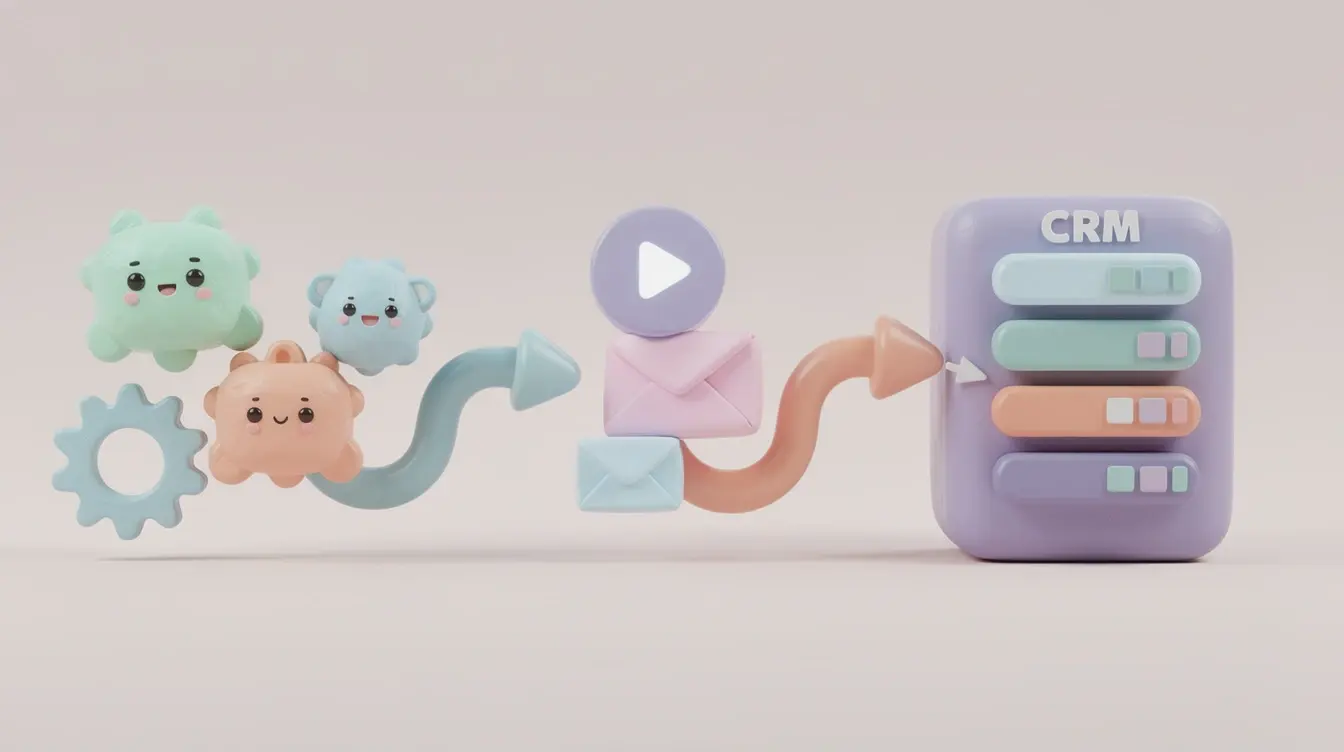
Sales automation isn’t one product — it’s a category of tools, each targeting a different part of the sales workflow. Understanding these categories helps you build a stack that covers your actual gaps rather than duplicating capabilities you already have. For a full comparison of options, see our guide to the best dedicated outreach software for B2B sales teams. For a broader view of how sales and marketing metrics connect, see our guide to revenue operations (RevOps).
Before mapping out your automation stack, it helps to understand the broader sales operations landscape — the best sales operations software guide covers how CRM, engagement, forecasting, and AI video tools fit together into a complete revenue operations system.
| Category | What It Automates | Example Platforms | Best For |
|---|---|---|---|
| CRM Automation | Lead routing, deal stage updates, activity logging, task creation | Salesforce, HubSpot CRM | Teams of all sizes as the foundation |
| Sales Engagement / Sequencing | Multi-step outreach sequences across email, phone, LinkedIn | Outreach, SalesLoft, Apollo | SDR/BDR teams doing high-volume outbound |
| AI Prospecting & Enrichment | Contact discovery, data enrichment, ICP scoring, intent signals | Clay, ZoomInfo, Apollo | Teams building targeted prospect lists at scale |
| AI Video Personalization | Personalized video creation at scale — one recording, thousands of unique videos | Sendspark | AEs and SDRs doing 1:1 outreach who need to stand out |
| Contract & Proposal Automation | Proposal generation, e-signature, contract management, renewal reminders | PandaDoc, DocuSign, Proposify | AEs closing deals and CS teams managing renewals |
1. CRM Automation
Your CRM is the hub of your sales automation stack. Without good CRM automation, data quality deteriorates fast — reps forget to log calls, deals sit in the wrong stage, and handoffs between SDR and AE break down. Modern CRMs like Salesforce and HubSpot come with workflow engines that handle lead routing, automatic task creation on deal stage changes, and activity sync from other tools in your stack.
The core automation use cases here: auto-assign inbound leads based on territory or round-robin rules, auto-create follow-up tasks when a call is logged, and automatically move deals through stages when specific criteria are met (email opened, demo booked, proposal sent). If you want a done-for-you option rather than self-serve software, explore our guide to lead nurturing services for managed alternatives.
2. Sales Engagement and Sequencing
Sales engagement platforms like Outreach and Apollo automate the cadence of outbound touches. Instead of manually sending each email and logging each call, reps enroll prospects into multi-step sequences — and the platform handles scheduling, sending, and logging automatically. According to research by RAIN Group, it takes an average of 8 touches to book a first meeting. Without automation, that’s 8 manual actions per prospect, multiplied across hundreds of accounts per rep per month.
These platforms also surface engagement signals — who opened your email, who clicked a link, who watched a video — so reps can prioritize follow-up on warm prospects rather than working a flat list. Our breakdown of the best B2B prospecting tools covers how these platforms compare for SDR teams.
3. AI Prospecting and Enrichment
Prospecting tools like Clay and ZoomInfo automate the research and list-building phase. They pull firmographic data (company size, industry, tech stack, funding), identify contacts within your ICP, and score them by fit and intent signals. What used to take an SDR an hour per account — researching on LinkedIn, pulling data from multiple sources, verifying contact info — happens in seconds at scale.
The most sophisticated platforms now pull real-time intent signals: what topics a company is actively researching, which tools they just started evaluating, whether they just raised a funding round. These signals let you time outreach to when prospects are most likely to be receptive. For a complete guide to setting up your virtual stack, see the best virtual selling tools for B2B.
4. AI Video Personalization
This is the newest and fastest-growing category. Instead of text emails that look like every other message in a prospect’s inbox, AI-powered video personalization lets you record a single video once and have the AI personalize it for each prospect — inserting their name, company, and even showing their own website as the video background.
Sendspark’s video personalization platform works exactly this way: record once, let the AI clone your voice for the intro greeting, and deliver thousands of unique video messages automatically. Sales teams using this approach see 2-3x more replies compared to text-only outreach. For outbound sales prospecting, a personalized video stops the scroll in a way text simply can’t.
Record One Video. AI Personalizes Thousands.
Sendspark is the AI video personalization platform for B2B sales. Record once, and AI voice cloning generates thousands of individually personalized videos with dynamic backgrounds and personalized thumbnails — each prospect hears their name, sees their website, in your voice. Sales teams see 2-3x more replies.
Get Started Now5. Contract and Proposal Automation
Once a deal is ready to close, proposal and contract tools automate the final steps. Platforms like PandaDoc and DocuSign pull CRM data directly into pre-built proposal templates, eliminating the copy-paste work of building each proposal manually. E-signature workflows replace the back-and-forth of emailing PDFs. And renewal automation in customer success platforms alerts CS managers when contracts are approaching expiry — reducing churn through proactive outreach rather than reactive firefighting.
Key Features to Look For in Sales Automation Software
The right sales automation platform depends on your team’s size, existing stack, and primary bottleneck. That said, there are five features that separate the best platforms from the adequate ones — regardless of the specific category you’re evaluating.
1. Bidirectional CRM Sync
Every tool in your stack should sync data both ways with your CRM — not just push data in, but pull CRM data back to keep context current. When a rep updates a deal stage in Salesforce, that should trigger downstream actions in your sequencing tool. When a prospect replies to a video, that engagement data should flow back into HubSpot contact records automatically. Unidirectional integrations (data goes one way only) create stale records and force manual reconciliation. Sendspark’s HubSpot integration is rated 5/5 on G2 specifically because of this two-way sync depth.
2. Multi-Channel Sequence Capability
The most effective outreach combines email, phone, LinkedIn, and video in a coordinated sequence — not a single-channel blast. According to a Forrester analysis of B2B buyer behavior, prospects increasingly expect outreach across multiple channels before engaging. A platform that only handles email forces reps to manually manage the other channels, defeating the purpose of automation.
3. AI Personalization at Scale
Mass outreach without personalization gets filtered out — by spam filters and by humans. Look for platforms that can inject prospect-specific variables at scale: not just {FirstName} mail-merge tokens, but dynamic content blocks, personalized video backgrounds, or AI-written opening lines based on LinkedIn activity or company news. The goal is automation that feels personal.
4. Engagement Analytics and Intent Signals
You need to know not just whether an email was delivered, but whether it was opened, whether the video was watched (and for how long), whether a link was clicked, and at what point in the sequence prospects disengaged. Sendspark’s video analytics give per-recipient data: who watched, for how long, and how many times — feeding back into your prioritization queue. This kind of granular signal data is what separates activity-based selling from outcome-based selling. For teams evaluating tools, see our breakdown of the best dedicated sales analytics software.
5. Workflow Triggers and API Access
The best sales automation platforms act as workflow engines, not just standalone tools. They fire triggers — based on email opens, deal stage changes, form submissions, or time-based rules — that kick off downstream actions across other tools in your stack. For teams running complex workflows (e.g., trigger a personalized video send when a prospect visits the pricing page), open API access is non-negotiable. Look for Zapier/Make.com compatibility at minimum, native integrations with your existing stack, and webhooks for custom logic.
Common mistake
Buying a platform because it has the most features, then only using 20% of them. Start with your team’s top 2-3 pain points, pick the tool that solves those well, and expand from there. Feature bloat creates complexity without ROI.
How to Build Your Sales Automation Stack
Building a sales automation stack is a sequenced process — not a one-time purchase. Start with the foundation, validate each layer before adding the next, and connect everything back to your CRM as the source of truth.
Step 1: Anchor on Your CRM
No other automation investment compounds without a well-configured CRM. Before adding sequencing or AI tools, make sure your CRM has clean data, consistent pipeline stages, and basic workflow rules running (lead routing, task creation, activity logging). According to HubSpot’s Sales Enablement research, teams with CRM adoption above 75% close 26% more deals than teams with poor adoption. Fix your CRM first.
Step 2: Add a Sales Engagement Platform
Once your CRM is running cleanly, add a sequencing layer — Outreach, SalesLoft, or Apollo — to automate multi-step outbound touches. Build 2-3 core sequences for your main use cases (cold outbound, inbound follow-up, post-demo follow-up) and start automating the scheduling and sending. This alone typically saves each SDR 60-90 minutes per day.
Our guide to cold email strategies covers how to structure high-performing email sequences that work alongside automation.
Step 3: Layer In AI Personalization
This is where good automation becomes great. Once sequences are running, inject personalization that makes each message feel genuinely individual. For text, tools like Clay can pull company-specific data points and write custom opening lines. For video, Sendspark lets you record once and personalize at scale — the AI handles voice cloning for the personalized intro and sets each prospect’s website as the video background. Adding a personalized video to sequence step 2 or 3 (after initial email touch) consistently lifts reply rates.
McKinsey’s B2B growth research found that companies excelling at personalization generate 40% more revenue from those activities than average players. Video personalization is the channel where this gap is most pronounced, because text personalization is now table stakes.
Step 4: Connect Your Analytics
A stack that doesn’t report back to a single source of truth creates decision paralysis. Route all engagement data — email opens, video views, call outcomes, deal stage changes — back into your CRM dashboards. Use video engagement analytics to identify which prospects are most active and prioritize call blocks accordingly. Build rep-level reporting so managers can see output velocity alongside pipeline quality.
Step 5: Stack by Team Size
| Team Size | Recommended Stack | Approximate Budget |
|---|---|---|
| Solo / 1-2 reps | HubSpot Free/Starter CRM + Apollo free tier + Sendspark Solo | ~$49–$100/mo |
| Small team (3–10 reps) | HubSpot Sales Pro or Salesforce Starter + Apollo or Outreach + Sendspark Growth/Team | $400–$1,200/mo |
| Mid-market (10–25 reps) | Salesforce + Outreach/SalesLoft + Clay + Sendspark Team/Business | $2,000–$6,000/mo |
| Enterprise (25+ reps) | Salesforce Enterprise + Outreach Enterprise + Clay Enterprise + Sendspark Enterprise/Agency | $10,000+/mo |
“The teams winning outbound right now are the ones treating their sales stack like a product. They iterate, A/B test sequences, and add tools incrementally based on what the data tells them — not based on what a vendor demo showed them.” — Common perspective shared by sales ops leaders at RAIN Group research roundtables
For a complete view of what Sendspark integrates with, visit the features page — it covers the full 50+ platform connection ecosystem.
According to Gartner’s sales force automation analysis, organizations that implement a structured SFA approach see an average 15% increase in sales volume within the first year of adoption. The ROI comes not from the individual tools but from the compounding effect of connecting them into a single workflow.
Summary: Sales Automation Software at a Glance
| What You Automate | Category | Time Saved (typical) | Revenue Impact |
|---|---|---|---|
| Lead routing & CRM logging | CRM Automation | 30–45 min/day | Cleaner data, faster response time |
| Outbound email sequences | Sales Engagement | 60–90 min/day | 2-4x more consistent follow-up |
| Prospect list building & enrichment | AI Prospecting | 2–4 hrs/week | Higher ICP targeting accuracy |
| Personalized video outreach | AI Video | 10+ hrs/campaign | 2-3x more replies vs. text email |
| Proposal & contract generation | Contract Automation | 1–3 hrs/deal | Shorter sales cycle, fewer stalls |
Frequently Asked Questions
What is sales automation software?
Sales automation software is any tool that replaces manual, repetitive sales tasks — like CRM data entry, follow-up email scheduling, lead routing, and prospect list building — with automated workflows. It covers a range of categories including CRM automation, sales engagement platforms, AI prospecting tools, and AI video personalization.
How does sales automation software improve productivity?
According to Salesforce, reps spend only 28% of their week actually selling. The remaining 72% goes to administrative tasks. Sales automation software handles those tasks automatically — logging calls, sending scheduled follow-ups, enriching contact data — so reps spend more time in conversations that move deals forward.
What’s the difference between sales automation and CRM?
A CRM is the database at the center of your sales operation — it stores contact records, deal history, and activity logs. Sales automation is what makes the CRM work for you rather than the other way around: automated workflows that update the CRM, trigger follow-up tasks, and route leads without manual input. Most modern CRMs include basic automation features, but purpose-built sales automation platforms go much deeper.
Is AI video part of sales automation software?
Yes. AI video personalization platforms like Sendspark automate what would otherwise be a manually intensive channel: recording individual videos for each prospect. Instead, you record once and the AI personalizes each video with the prospect’s name, company, and website background. This fits squarely into the “personalized outreach at scale” definition of sales automation, and connects directly to your CRM and sequencing platforms via integrations.
What sales automation software is best for small B2B teams?
For teams of 1-5 reps, the most cost-effective stack is HubSpot CRM (free or Starter) for automation and pipeline management, Apollo for prospecting and sequencing, and Sendspark for AI video personalization. This combination covers the core automation needs — lead capture, sequencing, and personalized outreach — at a monthly cost well under $200 total. The right tools to automate your sales workflow can save your team 10+ hours per week — see our breakdown of tools to automate your sales workflow by stage.
How does sales automation software integrate with existing tools?
The best platforms offer native integrations with major CRMs (Salesforce, HubSpot), sequencing tools (Outreach, SalesLoft, Apollo), and communication platforms (Gmail, Outlook, LinkedIn). Look for bidirectional sync — not just data going in, but engagement data flowing back. Sendspark integrates with 50+ platforms and syncs video engagement data directly into CRM contact records in real time.
For enterprise teams managing data across multiple systems — CRMs, ERPs, data warehouses, and legacy databases — DreamFactory provides governed API access to any data source from a single self-hosted platform. Instead of building fragile point-to-point integrations, DreamFactory generates secure REST API endpoints for any database in minutes, with role-based access control and identity passthrough built in.
Sources & References
- Salesforce State of Sales Report — “Sales reps spend only 28% of their workweek actually selling; the rest goes to administrative tasks.” (2024)
- McKinsey & Company — The New B2B Growth Equation — “Companies excelling at personalization generate 40% more revenue from those activities than average players.” (2023)
- HubSpot Sales Enablement Research — “Teams with CRM adoption above 75% close 26% more deals than teams with poor CRM adoption.” (2024)
- Gartner — Sales Force Automation — “Organizations implementing structured SFA see an average 15% increase in sales volume within the first year.” (2024)
- Forrester — Sales Automation Trends — “B2B buyers increasingly expect multi-channel outreach before engaging with a sales rep.” (2024)
Record One Video. AI Personalizes Thousands.
Sendspark is the AI video personalization platform for B2B sales. Record once, and AI voice cloning generates thousands of individually personalized videos with dynamic backgrounds and personalized thumbnails — each prospect hears their name, sees their website, in your voice. Sales teams see 2-3x more replies.
Get Started Now