
Most B2B sales teams generate far more leads than they close — not because their product is wrong, but because they’re spending time on the wrong prospects. According to Salesforce’s State of Sales report, reps spend only 28% of their time actually selling. The rest goes to admin, research, and — critically — chasing leads that were never going to buy. A disciplined lead qualification process changes this. When you know how to qualify sales leads properly, you stop chasing and start converting the prospects who matter. For the full breakdown, see our complete a documented lead qualification process.
Key Takeaways
- Lead qualification separates high-intent prospects from tire-kickers — qualifying your pipeline correctly is the fastest way to increase close rates without adding headcount.
- BANT (Budget, Authority, Need, Timeline) is the most widely used B2B framework, but MEDDIC and CHAMP offer more depth for complex enterprise deals.
- A 5-step process — ICP match, lead scoring, discovery call, stakeholder mapping, and fast handoff — gives every rep a repeatable qualification system.
- AI-personalized video outreach surfaces buying intent 2-3x faster than text emails, letting you qualify leads before you spend 45 minutes on a discovery call.
- Disqualifying a lead early is a win — it reclaims time for prospects who are actually ready to buy.
What Is Lead Qualification?
Lead qualification is the process of evaluating whether a prospect has a realistic chance of buying your product. A qualified lead meets your core criteria — budget, authority to purchase, a real business need, and a timeline to act. Without a qualification process, your pipeline fills with noise: prospects who look good on paper but will never close this quarter, or ever.
The stakes are real. Gartner research shows B2B buying decisions now involve an average of 6 to 10 stakeholders. That means every unqualified lead you pursue doesn’t just waste your time — it burns hours you could have spent with a buying committee that was actually ready. Strong qualification compresses your sales cycle and protects your team’s energy for deals that can close. — for a practical tool to apply these criteria, see our structured lead qualification checklist. See our guide to IT services lead generation for how this plays out in a specific technical vertical.
The difference between a qualified and an unqualified lead comes down to four core signals:
- Budget — Does the company have funds allocated for this purchase?
- Authority — Are you talking to someone who can approve the deal?
- Need — Is there a real, pressing business problem your product solves?
- Timeline — Is the prospect evaluating solutions now, or “maybe next year”?
These four signals form the foundation of the BANT framework — still the most common starting point for B2B qualification. For deeper context on ICP-driven qualification, see our guide to the B2B lead qualification framework and ICP.
Top Lead Qualification Frameworks for B2B Teams
The best lead qualification frameworks give your team a shared language for evaluating every prospect against the same criteria. BANT, MEDDIC, and CHAMP are the three most widely used in B2B sales — each suited to a different level of deal complexity. Pick one that fits your deal size and buying cycle, train your team on it, and apply it consistently. Consistency across your team matters more than finding the “perfect” framework.
BANT (Budget, Authority, Need, Timeline)
BANT was developed by IBM and remains the default framework for most B2B sales teams, especially in SMB and mid-market deals. It’s fast to apply and easy to remember. The limitation: BANT treats qualification as a binary checklist. A prospect might have budget and a clear need, but no authority to approve — and a BANT-trained rep can waste weeks before discovering this. Use BANT as a starting filter, not a complete qualification system.
MEDDIC (Metrics, Economic Buyer, Decision Criteria, Decision Process, Identify Pain, Champion)
MEDDIC was built for enterprise deals where the buying process is complex and involves multiple stakeholders. It forces reps to understand the economic impact on the prospect’s business, identify a champion inside the account, and map the full decision process before committing too much time. More work upfront — but it dramatically reduces late-stage losses on six-figure deals where a surprise procurement block kills months of work.
CHAMP (Challenges, Authority, Money, Prioritization)
CHAMP flips the BANT sequence by starting with the prospect’s challenges rather than their budget. This makes conversations feel more consultative and less transactional. RAIN Group research on top-performing sales reps shows they consistently focus on the prospect’s challenges before introducing solutions — exactly what CHAMP is designed to facilitate. If your team struggles with discovery calls feeling like interrogations, CHAMP is worth the switch.
Here’s how the frameworks compare side by side:
| Framework | Best For | Starts With | Complexity | Typical Deal Size |
|---|---|---|---|---|
| BANT | SMB and mid-market | Budget | Low | $5K–$50K |
| MEDDIC | Enterprise, long cycles | Metrics / Pain | High | $100K+ |
| CHAMP | Consultative, mid-market | Challenges | Medium | $20K–$100K |
| GPCTBA/C&I | Inbound-heavy teams (HubSpot method) | Goals | Medium-High | $20K–$100K |
Most B2B SaaS teams selling to companies with 50–500 employees do well with BANT or CHAMP. MEDDIC is worth the overhead if your deals routinely involve procurement reviews and six-figure contract values.
How to Qualify Sales Leads: A 5-Step Process
Qualifying leads well requires a repeatable process that every rep follows — not just gut feel. These five steps, from initial ICP screening through final handoff, create consistency across your pipeline and surface the deals most likely to close. Run every lead through this process and you’ll stop being surprised by deals that stall at the finish line. For a full breakdown of available options, see our guide to lead qualification services for B2B teams.
Step 1: Match the Lead to Your Ideal Customer Profile
Before any conversation happens, screen every inbound lead or outbound prospect against your Ideal Customer Profile (ICP). Your ICP defines the firmographic and technographic attributes of your best existing customers: industry, company size, revenue range, tech stack, and growth stage. If a lead doesn’t match at least 80% of your ICP criteria, deprioritize it immediately or route it to a low-touch nurture sequence.
For most B2B SaaS companies targeting sales teams, ICP criteria include: 50–500 employees, Series A or beyond, using HubSpot or Salesforce as a CRM, and a dedicated sales team of five or more reps. This isn’t guesswork — pull your top 20 customers and look for the patterns they share. Tighten your ICP annually as you learn more about who actually renews and expands.
Step 2: Score Leads Before You Call
Not every ICP-matched lead deserves equal urgency. Lead scoring lets you rank prospects by active buying intent before your first outreach. Assign points for behaviors like visiting your pricing page, starting a trial, attending a webinar, opening multiple emails, or engaging with your LinkedIn content. Combine behavioral signals with firmographic fit to get a composite score that tells each rep where to focus first.
Your CRM can automate most of this. Our HubSpot integration pipes video engagement data — who played your personalized video, how long they watched, and whether they clicked your CTA — directly into the contact record, adding intent signal on top of standard lead scoring. A lead who opened your email, watched your personalized video to the end, and visited your pricing page within 24 hours is a very different prospect than one who opened and ignored.
Step 3: Run a Structured Discovery Call
The discovery call is where qualification becomes concrete. Your job is not to pitch — it’s to ask good questions and listen. Use your chosen framework (BANT, CHAMP, or MEDDIC) as a guide rather than a rigid script. Cover budget, authority, need, and timeline, but let the conversation flow naturally. A checklist approach will kill rapport. Plan for 60–70% of the call to be the prospect talking, and less than 30% to be you.
Take notes in your CRM in real time. At the end of the call, you should be able to answer four questions with confidence: Does this prospect have budget? Are they the actual decision-maker? Is their problem one we genuinely solve? And are they evaluating on a timeline that works for both sides?
Record One Video. AI Personalizes Thousands.
Sendspark is the AI video personalization platform for B2B sales. Record once, and AI voice cloning generates thousands of individually personalized videos with dynamic backgrounds and personalized thumbnails — each prospect hears their name, sees their website, in your voice. Sales teams see 2-3x more replies.
Get Started NowStep 4: Map the Buying Committee
In B2B sales, your contact is rarely the only decision-maker. After your discovery call, ask directly: “Who else needs to be involved in evaluating a solution like this?” Map the full buying committee: the economic buyer (final approval authority), your champion (internal advocate), the technical evaluator, and any potential blockers like procurement, legal, or IT security.
If your contact won’t — or can’t — introduce you to the economic buyer after two or three meetings, treat that as a disqualification signal. Without access to the true decision-maker, your deal will stall no matter how strong your product is. Understanding pipeline dynamics from the start is essential — our breakdown of sales pipeline stages covers how stakeholder mapping gates into each stage of a healthy B2B deal.
Step 5: Qualify In or Disqualify Fast
After steps 1 through 4, you have enough information to make a call. Either move the lead into your active pipeline with a defined next step, or disqualify them and reclaim your time. Disqualification is not failure — it’s a data-driven decision that protects your quota. Document the reason for each disqualification in your CRM. Over time, these patterns reveal where your ICP needs refinement and which channels attract the lowest-quality leads.
A graceful handoff to a longer-term nurture sequence is almost always better than dragging out a deal that won’t close. Many disqualified leads will come back 6–12 months later when priorities shift, and how you handled the initial disqualification will determine whether they remember you positively.
Pro tip
Set a hard cap on follow-up attempts before automatic disqualification — most B2B teams use 5 to 8 touches over 2 to 3 weeks. If a prospect hasn’t engaged by then, route them to a low-touch nurture sequence and refocus on leads showing active intent.
The Best Sales Qualification Questions to Ask
Good qualification questions open conversations rather than close them down. They’re open-ended, they invite honesty, and they give you actionable information — not just confirmation of what you hoped to hear. Group your questions into four categories matching your qualification criteria: budget, authority, need, and timeline. Use these in your discovery calls, not as a sequential checklist, but as a guide to make sure you cover all four areas before the call ends.
Budget Questions
- “Do you have a budget set aside for solving this problem this year?”
- “What does your company typically invest in tools like this?”
- “Is funding already approved, or does this need to go through a budget request?”
- “Have you invested in similar solutions before? What did that look like financially?”
Authority and Stakeholder Questions
- “Who else would be involved in evaluating a solution like ours?”
- “Who ultimately signs off on a purchase at this price point?”
- “What does your internal decision process typically look like for software?”
- “Have you bought software at this scale before? How did that decision get made?”
Need and Pain Questions
- “What’s the biggest challenge your sales team is facing with outreach right now?”
- “What happens to the business if this problem isn’t solved in the next six months?”
- “What have you tried before to address this? What worked and what didn’t?”
- “How is this impacting your team’s numbers — reply rates, meetings booked, pipeline?”
Timeline and Urgency Questions
- “When would you ideally want to have a solution in place?”
- “Is there a specific event, quarter-end, or deadline driving this evaluation?”
- “How long do decisions like this typically take at your company?”
- “Are you actively evaluating other options right now?”
These questions feed directly into your prospecting strategy. For tactics on getting more prospects into your qualification funnel, see our guides on sales prospecting techniques and how to prospect for clients.
Common mistake
Don’t lead with budget questions. Opening with “What’s your budget?” feels transactional and puts prospects on guard immediately. Start with their challenges and goals, then introduce cost as a natural part of scoping the solution.
How Personalized Video Accelerates Lead Qualification
Personalized video surfaces buying intent signals that text emails simply can’t. When a prospect watches 90% of your AI-personalized video, clicks your CTA, and forwards it to their VP of Sales — that’s a stronger qualification signal than any reply to a cold email. Video engagement data lets your team prioritize the right leads before spending 45 minutes on a discovery call that goes nowhere.
The core problem with traditional qualification outreach is reach. According to HubSpot Research, average B2B email open rates hover around 20–25%, with reply rates significantly lower. Most prospects never respond to the outreach that was supposed to start your qualification process. You never get the chance to qualify them at all.
AI-personalized video outreach changes this dynamic at scale. With Sendspark, you record a single qualification intro or demo video — and AI voice cloning generates individually personalized versions for every prospect on your list. Each video addresses the prospect by name, shows their company website as a dynamic background, and plays in your voice. Sales teams using this approach consistently see 2-3x higher reply rates than text-only sequences, meaning you’re reaching more prospects and collecting intent signals faster.
The analytics layer is what makes this a true qualification tool. Sendspark’s video analytics show you exactly who played your video, how long they watched, and whether they clicked your call to action. A prospect who watches your video to the end and clicks “Book a Demo” has already partially qualified themselves. One who opens but drops off at five seconds is telling you they’re not ready — without you having to schedule a call to find that out.
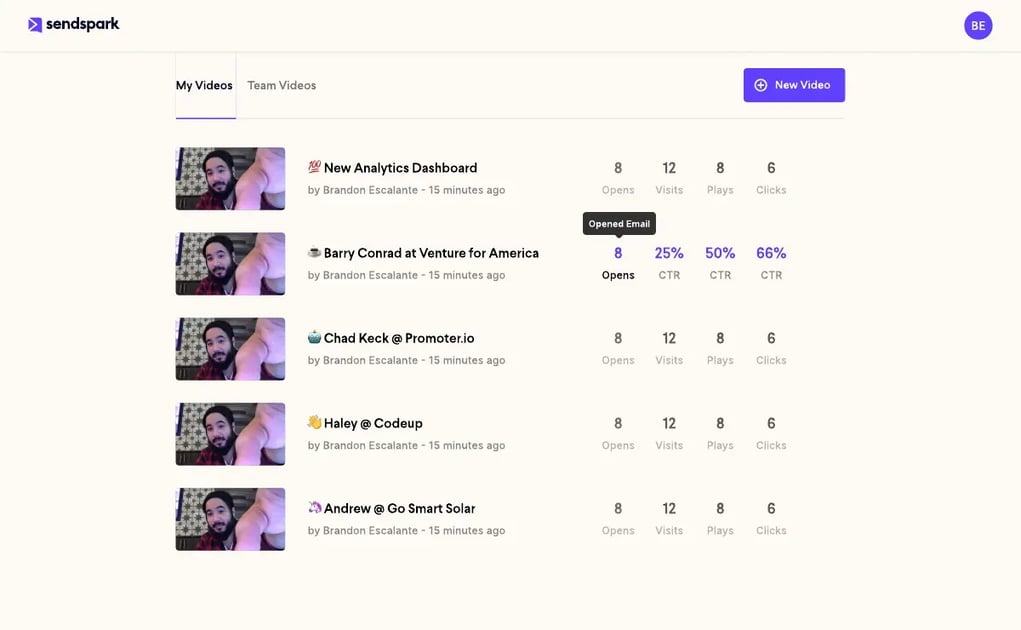
For B2B sales prospecting teams running high-volume outbound sequences, AI-personalized video turns qualification from reactive — “let’s hope they reply” — into proactive: “let’s see how they engage, then decide whether to invest in a discovery call.” Combined with your lead scoring data in HubSpot or Salesforce, video engagement becomes one of the strongest intent signals available before you ever pick up the phone.
Use this table to quickly assess whether any lead belongs in your active pipeline or a longer-term nurture sequence:
| Signal | Qualified Lead | Unqualified Lead |
|---|---|---|
| ICP Match | Meets 80%+ of ICP criteria | Outside target industry, size, or stage |
| Budget | Budget confirmed or accessible | No budget, frozen spend, or out of range |
| Authority | Decision-maker or champion identified | Gatekeeper only, no access to buyer |
| Need | Clear, painful problem your product solves | Vague interest, no defined problem |
| Timeline | Evaluating now with a real deadline | “Maybe next year,” no urgency |
| Engagement | Watches videos, clicks CTAs, responds quickly | Low engagement, slow to respond |
| Stakeholder Access | Willing to introduce you to the economic buyer | Refuses to connect you with decision-maker |
Frequently Asked Questions
What does it mean to qualify a sales lead?
Qualifying a sales lead means evaluating whether a prospect has the budget, authority, need, and timeline to realistically purchase your product. A qualified lead matches your ICP, has a genuine business problem you solve, and is actively looking for solutions. Unqualified leads fail one or more of these criteria and should be deprioritized or moved to a low-touch nurture sequence rather than consuming your active selling time.
How do you qualify sales leads quickly?
The fastest approach is to combine ICP screening with intent signals before your first conversation. Use lead scoring based on firmographic fit and behavioral data — pricing page visits, demo requests, email opens — to prioritize the prospects most worth calling. AI-personalized video outreach also surfaces strong intent signals (watch time, CTA clicks) without requiring a live call, letting you qualify or disqualify a lead from engagement data alone.
What is the BANT qualification framework?
BANT stands for Budget, Authority, Need, and Timeline. It’s the most widely used lead qualification framework in B2B sales. To qualify a lead using BANT, confirm they have available budget, that you’re speaking with someone who has decision-making authority, that they have a real problem your product solves, and that they have a timeline to act. BANT works best for SMB and mid-market deals with relatively straightforward buying processes.
What are the best questions to ask when qualifying a sales lead?
The most effective qualification questions are open-ended and cover all four BANT criteria. For budget: “Do you have funds set aside for solving this problem this year?” For authority: “Who else is involved in decisions like this?” For need: “What happens if this problem isn’t addressed in the next six months?” For timeline: “When do you need a solution in place?” Avoid leading questions — you want honest signals, not validation of what you hoped to hear.
How do you disqualify a sales lead without burning the relationship?
Frame disqualification as a timing issue rather than a rejection. Tell the prospect you don’t think the timing is right for a strong fit right now, and ask if it’s okay to check back in later in the year. Move them to a low-touch nurture sequence with relevant content. Many leads that get disqualified early return 6 to 12 months later when budget or priorities shift — and how you handled the initial disqualification determines whether they come back to you first.
What is the difference between lead scoring and lead qualification?
Lead scoring is an automated process that assigns numeric points based on firmographic attributes and behavioral signals — website visits, email opens, demo requests, video watch time. Lead qualification is a human judgment call made during or after a discovery conversation using those signals plus what you learn in the call. Lead scoring tells you which leads to qualify first. It’s an input to qualification, not a replacement for the discovery process itself.
Sources & References
- Salesforce State of Sales — “Sales reps spend only 28% of their time actually selling; the remainder goes to administrative work, research, and pursuing unqualified leads.” (2024)
- Gartner Sales Research — “B2B buying decisions now involve an average of 6 to 10 stakeholders, making stakeholder mapping a critical part of deal qualification.” (2024)
- RAIN Group — “Top-performing sales reps consistently focus on the prospect’s challenges before introducing solutions — the consultative approach underpinning CHAMP and MEDDIC frameworks.” (2024)
- HubSpot Research — “Average B2B email open rates hover around 20–25%, making video and multi-channel outreach essential for reaching enough prospects to qualify at scale.” (2024)
Record One Video. AI Personalizes Thousands.
Sendspark is the AI video personalization platform for B2B sales. Record once, and AI voice cloning generates thousands of individually personalized videos with dynamic backgrounds and personalized thumbnails — each prospect hears their name, sees their website, in your voice. Sales teams see 2-3x more replies.
Get Started Now