
Deals where account executives actively use a mutual action plan close at a 26% higher win rate than deals without one, according to Outreach’s own platform data. That gap doesn’t come from a fancier template. It comes from making the buyer a co-owner of the plan to close, instead of leaving them guessing what happens next.
A mutual action plan (MAP) is the single document that keeps a complex B2B deal from dying by a thousand silent delays. Below is what a MAP actually is, why deals stall without one, how to decide between a template, dedicated software, or a video-enhanced approach, and the exact steps to build one buyers will actually follow.
Key Takeaways
- Deals where AEs actively use a mutual action plan close at a 26% higher win rate than deals without one, according to Outreach’s own platform data.
- A MAP works backward from the close date, mapping who does what by when across both the buyer’s and seller’s teams – not just the seller’s task list.
- 79% of sales organizations miss their forecast by more than 10% (Salesforce) – a MAP surfaces early warning signs by showing exactly which milestone is slipping and why.
- Teams can build a MAP three ways: a DIY template, dedicated MAP software, or a video-enhanced MAP that uses personalized check-ins to confirm real stakeholder engagement.
- The most common MAP failure isn’t a missing template – it’s a plan the seller builds alone that the buyer never actually co-owns.
What Is a Mutual Action Plan?
A mutual action plan is a shared, co-owned roadmap between a buyer and a seller that maps every milestone, owner, and deadline needed to reach a purchase decision. It isn’t an internal sales checklist you send for visibility. It’s a working document both sides edit, sign off on, and use to track progress together.
You’ll also hear it called a go-live plan, mutual success plan, or joint execution plan. The name varies by vendor and industry, but the mechanics are the same: work backward from the close or go-live date, and map who does what by when.
The distinction that matters is ownership. A traditional sales plan lives in your CRM and belongs to you. A mutual action plan belongs to both the buying committee and your deal team. If you build it alone and email it over as a PDF, it isn’t mutual, no matter what you call it. It’s just a to-do list the buyer never agreed to.
Build the first draft of the MAP live, on a call with your champion, instead of sending a finished document. Watching them add or edit a step is the fastest signal you have real buy-in, not just a polite yes.
Why Deals Stall Without a Mutual Action Plan
Deals stall without a mutual action plan because nobody has a shared view of what’s actually blocking the close, so problems surface only after they’ve already cost weeks. 79% of sales organizations miss their forecast by more than 10%, according to Salesforce – a gap that a documented, dated plan is built specifically to close.
Modern B2B deals rarely involve one buyer. You’re often coordinating with five, ten, or more stakeholders across procurement, security, legal, and the end-user team, a pattern multi-threading exists to manage. Without a single source of truth, you end up chasing each person separately, getting conflicting answers, and losing track of who actually agreed to what.
The classic failure mode is a champion who gets promoted, reassigned, or simply goes quiet right when the deal needs them most. A mutual action plan forces you to name every stakeholder and their role up front, so a missing signature or a stalled review shows up as a gap in the plan immediately – not as a surprise three weeks later when the deal has gone cold. That same milestone-level visibility is also a cleaner input into sales forecasting than a CRM stage alone, since it shows exactly which specific step is behind schedule.
This matters most in the mid-funnel window between a qualified discovery call and a signed contract – the stretch Sendspark’s own deal progression use case is built around. A deal that looks healthy on a CRM stage view can still be quietly dying if the security reviewer never got looped in, or if the economic buyer hasn’t seen anything since the demo. A mutual action plan is what turns “the deal is in legal” from a vague status update into a dated, owned line item you can actually act on.
“A mutual action plan reframes the conversation from ‘Here’s what we need from you to close the sale’ to ‘Here’s how we can deliver value to your organization.’”
— Molly Clarke, Product Marketing Director, Salesforce
Mutual Action Plan Template vs. Software: Which Fits Your Team?
The right way to build a mutual action plan depends on deal complexity and team size, not personal preference: a DIY template works for simple deals, dedicated MAP software fits high-volume complex sales, and a video-enhanced MAP adds objective engagement data on top of either one. Here’s how the three approaches compare.
How we evaluated: we compared these approaches on setup effort, how visible the plan actually is to the buyer (not just to your sales manager), and whether buyer engagement is measured objectively or just assumed from silence.
| Approach | Best For | Setup Effort | Buyer Engagement Visibility | Typical Cost |
|---|---|---|---|---|
| DIY template (Google Sheets, Notion, Word) | Small teams, simple deals, early-stage motion | Low | Low – you find out if it’s dead by asking | Free |
| Dedicated MAP software (Salesloft, Highspot, Aviso, Dock.us, GetAccept) | Mid-market to enterprise, high deal volume | Medium-High | High – interactive, tracked opens | Per-seat subscription |
| Video-enhanced MAP (personalized video check-ins layered on either approach) | Teams that need proof of real stakeholder engagement, not just a document open | Medium | Very high – per-recipient watch data, not just an open receipt | Per-seat subscription |
A DIY template costs nothing and is fast to stand up, but it tells you almost nothing about whether the buyer is actually engaging – a shared Google Sheet doesn’t tell you who opened it or read past line one. Dedicated MAP software fixes that with tracked links and reminders, at the cost of another tool your AEs have to adopt and your team has to pay for.
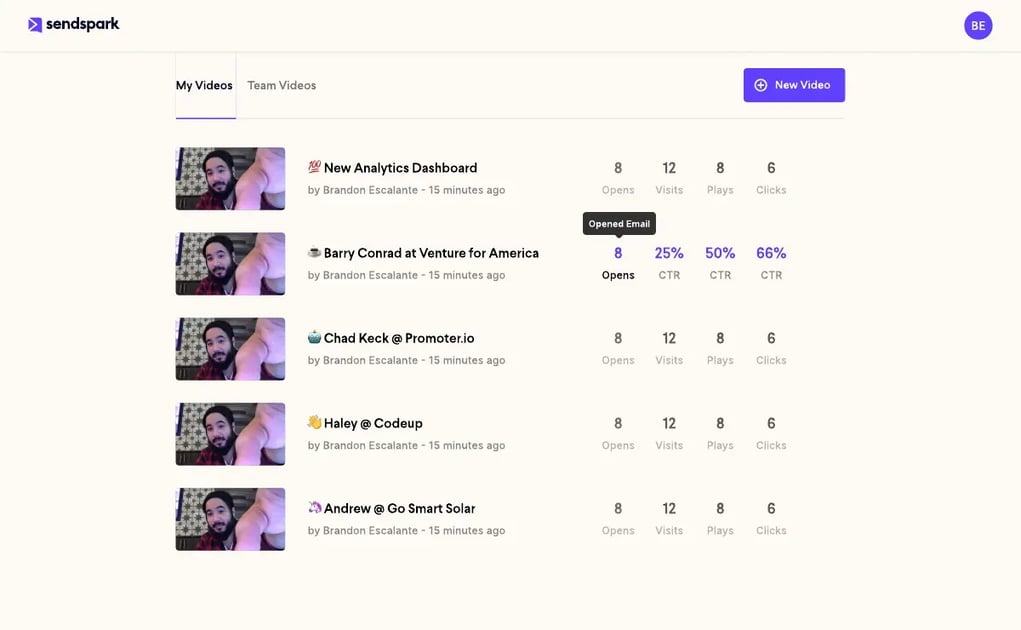
The video-enhanced approach doesn’t replace either one – it layers on top. Record one short video per milestone update, use AI voice cloning to keep it in your voice, and record one video, personalize at scale so each stakeholder gets their own name and context without you re-recording anything. Sendspark’s per-recipient video analytics show exactly who watched, how much, and whether they clicked through – a more objective signal than an unanswered email thread.
How to Build a Mutual Action Plan Buyers Actually Follow
Building a mutual action plan buyers actually follow takes six steps: define the value statement, map the buying committee, set dates working backward from the close date, assign owners to every deliverable, attach projected ROI, and run short recurring check-ins. Skipping the check-ins is the single most common reason a MAP goes stale.
1. Start with the objective and value statement
Open the plan with a plain statement of what the buyer is trying to achieve and why they’re evaluating you to get there. If you can’t state their goal in one sentence without mentioning your product, the plan is built around your pitch instead of their outcome.
2. Map the buying committee
List every stakeholder by name and role: champion, economic buyer, technical evaluator, security/legal reviewer, end users. This is the same discovery work that feeds a strong discovery meeting and a solid pre-call plan – the MAP is where that stakeholder map becomes a living, dated document instead of a note in your CRM.
3. Set key dates working backward from the close date
Start from the target close or go-live date and work backward, slotting in security review, legal redlines, procurement approval, and internal sign-offs with realistic timelines. If legal review typically takes two weeks at the buyer’s company, don’t schedule three days and hope. If a competing vendor is also in the mix, add that internal bake-off as its own milestone rather than letting it happen invisibly — and make sure whoever is fielding those internal comparisons has a battlecard for that specific competitor, not a generic pitch.
4. Assign named owners to every deliverable
Every milestone needs one named owner on each side, not “the buyer’s team.” If a deliverable has no owner, it has no deadline that means anything, and it’s the first thing that slips when the deal gets busy. Naming an owner also tells you who to follow up with directly when a step stalls, instead of sending a status-check email into a group thread nobody responds to.
5. Attach projected ROI and outcomes
Tie each major milestone back to the business outcome the buyer is chasing, not just the next step in your sales process. This keeps the plan framed as their project to complete, not your quota to hit. If the buyer’s goal is faster reply rates from outbound video, tie the “go-live” milestone directly to a projected reply-rate lift they can report back to their own leadership.
6. Run short, recurring check-ins
Deals where AEs engage buyers with a mutual action plan see a 26% higher win rate than deals without one, and that lift comes from the discipline of keeping the plan alive, not from having a document. Schedule a short weekly or biweekly check-in with your champion, update dates as they slip, and add stakeholders as they surface.
Advanced strategy
Instead of a status-update email before each check-in, record a 60-second video walking through what’s done, what’s due next, and what you need from the buyer’s side this week. Use a dynamic background showing the buyer’s own environment so it reads as their update, not a form letter, and check the watch data before the call so you know exactly what still needs explaining live.
Common Mutual Action Plan Mistakes
The most common mutual action plan mistakes are building it alone instead of co-creating it, cramming in too many or too few steps, and never revisiting it after kickoff. Each one turns a plan meant to build trust into paperwork the buyer quietly ignores.
Common mistake
Sending a finished mutual action plan as a PDF attachment. If the buyer never helped shape it, they’ll treat it as another vendor requirement to check off, not a plan they own.
Seller builds it alone. Walk through the plan live with your champion instead of sending a finished version. Ask them to add or adjust steps – their edits are the clearest signal you have real buy-in.
Too many or too few steps. A 30-plus-step plan becomes overhead nobody follows; a five-step plan is too vague to catch real risk. Aim for 8-12 milestones that are each significant enough to matter and specific enough to assign an owner and a date.
Never revisited after kickoff. A MAP goes stale the moment a stakeholder changes or a date slips and nobody updates the document. Treat every check-in as an edit session, not a status report.
| Mistake | Fix |
|---|---|
| Seller builds the plan alone | Co-create it live with the champion on a call |
| Too many or too few steps | Aim for 8-12 milestones with named owners |
| Never revisited after kickoff | Update dates and owners at every check-in |
| No visibility into buyer engagement | Layer in tracked links or personalized video check-ins |
Record One Video. AI Personalizes Thousands.
Sendspark is the AI video personalization platform for B2B sales. Record once, and AI voice cloning generates thousands of individually personalized videos with dynamic backgrounds and personalized thumbnails -- each prospect hears their name, sees their website, in your voice. Sales teams see 2-3x more replies.
Get Started NowFrequently Asked Questions
What is a mutual action plan?
A mutual action plan is a shared, co-owned roadmap between a buyer and seller that maps every milestone, owner, and deadline needed to reach a purchase decision. It’s also called a go-live plan, mutual success plan, or joint execution plan, depending on the vendor or industry.
How do you build a mutual action plan?
Start with a clear objective and value statement, map every stakeholder in the buying committee, set key dates working backward from the close date, assign a named owner to every deliverable, attach projected ROI, and run short recurring check-ins to keep the plan current.
What’s the difference between a mutual action plan and a sales playbook?
A sales playbook is an internal guide your team uses across every deal – scripts, objection handling, qualification criteria. A mutual action plan is specific to one deal and shared directly with the buyer, listing that deal’s exact milestones, owners, and dates.
Does a mutual action plan guarantee you’ll close the deal?
No. A mutual action plan doesn’t guarantee a close, but deals where AEs actively use one see a 26% higher win rate than deals without one, according to Outreach’s platform data, because it surfaces stalled milestones and missing stakeholders early instead of at the eleventh hour.
How do you get buyer buy-in on a mutual action plan?
Build the first draft together on a call instead of sending a finished document, and let the buyer add or edit steps themselves. A plan the buyer helped shape gets treated as their project; a plan you email over gets treated as your homework for them.
What software is best for managing a mutual action plan?
It depends on deal volume and complexity. Small teams with simple deals do fine with a shared Google Sheet or Notion doc. Mid-market and enterprise teams with higher deal volume typically move to dedicated software like Salesloft, Highspot, Aviso, Dock.us, or GetAccept for tracked links and CRM integration.
How many steps should a mutual action plan have?
Aim for 8-12 milestones. That’s enough to catch real risk at each stage of the deal without turning the plan into overhead nobody actually follows. Each step should be specific enough to assign one named owner and one real date.
When in the sales cycle should you create a mutual action plan?
Build it right after a qualified discovery call, once you know the buyer’s timeline and have identified the champion, not at the final contract stage. Introducing it late makes it feel like a formality instead of the shared plan it’s meant to be.
Sources & References
- Salesforce — “79% of sales organizations miss their forecast by more than 10%,” plus the definition and reframing quote used above, from Molly Clarke, Product Marketing Director (2024)
- Outreach — “Deals where AEs have engaged buyers with a mutual action plan have a 26% higher win rate than those without,” from first-party platform usage data (2024)
- Salesloft — The “10 elements of effective mutual action plans” framework and alternate naming (go-live plan, mutual success plan, joint execution plan) (2021)
- Highspot — Definition cross-reference and framing of mutual action plans as a deal-risk-reduction tool for mid-market and enterprise B2B teams
Published September 2026
Record One Video. AI Personalizes Thousands.
Sendspark is the AI video personalization platform for B2B sales. Record once, and AI voice cloning generates thousands of individually personalized videos with dynamic backgrounds and personalized thumbnails -- each prospect hears their name, sees their website, in your voice. Sales teams see 2-3x more replies.
Get Started Now