Published September 2026
Only 52% of sales professionals actually use the enablement content their company builds for them, even though 79% of them call it crucial for closing deals, according to HubSpot’s compiled sales statistics. If your sales battlecards live in a shared drive nobody opens, you don’t have a content problem. You have a format and distribution problem, and it’s fixable.
This guide covers what a sales battlecard actually needs to contain, why most of them go unread, a one-page framework for writing content reps can use mid-call, and a five-step process for building a battlecard program that survives past its launch week — the same reinforcement problem covered in our guide to sales kickoff reinforcement, since both usually launch strong at a live event and fade without a follow-up cadence.
Key Takeaways
- Only 52% of sales professionals use enablement content like battlecards, even though 79% call it crucial for closing deals — the real problem is adoption, not content quality.
- The Fact-Impact-Act framework keeps a battlecard to one page: what’s true about the competitor, why it matters to this buyer, and what to say next.
- Static battlecards go stale the day they’re published. Competitive intel teams using AI-assisted monitoring report 60% daily usage, versus the old quarterly-refresh cycle.
- A short recorded video walkthrough, organized by competitor in a shared library, fits how reps actually work mid-deal better than a slide deck nobody reopens.
- Win-loss reviews should feed directly back into battlecard updates — treat it as a living program with a named owner, not a one-time document.
What Is a Sales Battlecard?
A sales battlecard is a one-page (or one-video) resource that gives a rep exactly what they need to compete against a specific rival or handle a specific objection in the moment: positioning, pricing context, feature gaps, and pre-approved rebuttals. It’s a tactical cheat sheet for live conversations, not a marketing overview reps read once and file away.
A useful battlecard usually covers four things. Positioning: the one or two sentences that frame why you win, stated as plainly as possible. Pricing context: how your packaging compares, and the questions that reframe a pure price objection around total value. Objection rebuttals: the specific pushback reps hear most often about this competitor, with a response that’s already been tested. And “landmines” — the features or claims a competitor will raise that actually hurt you if a rep isn’t ready for them.
Product marketing or sales enablement typically owns the content, pulling from product roadmaps, win-loss interviews, and competitive monitoring. But ownership shouldn’t mean writing in a vacuum. As LinkedIn’s own definition puts it, a battlecard is meant to be “a concise educational resource that empowers sales reps and teams to competitively position products and services” — and reps only trust content they helped shape. If your battlecards are drafted entirely by people who’ve never been on the call, reps will quietly stop opening them, which is exactly the adoption problem the next section covers.
It helps to be specific about what a battlecard is not. It’s not a full competitive analysis deck, not a win-loss report, and not a general product comparison page you’d hand to a prospect directly. Those documents serve a real purpose, but they’re built for research and planning, not for the 30 seconds a rep has mid-call to answer “why are you better than X?” A battlecard’s only job is to shorten that 30 seconds into a confident, specific answer.
Why Most Sales Battlecards Go Unused
Most sales battlecards go unused because they’re built like a one-time launch asset instead of a living reference. Only 52% of sales professionals actually use the enablement content built for them, even though 79% call it crucial for closing deals — a real adoption gap, not a sign that reps don’t value competitive intel.
Part of the problem is staleness. Competitive intelligence teams have historically treated a battlecard like a document: research it once, publish it, move on. By the time a rep actually needs it in a live deal, the pricing has changed, the competitor shipped a new feature, and the “landmine” section is describing a product that no longer exists. Teams that have moved to AI-assisted competitive monitoring report meaningfully better freshness — Product Marketing Alliance cites research from Klue putting daily active usage among competitive intelligence teams at 60%, a sharp contrast to the quarterly-refresh cadence most static battlecards get.
“Sales battlecards solve for these issues by centralizing key information, so when the competitive topic comes up on a call, you’re ready to respond instantly.”
— Austin Hitchcock, Sr. Director, Account Development, Highspot
That’s the promise. In practice, most battlecards fail to deliver it because of format, not intent. A rep on a live call with a prospect who just said “Competitor X is cheaper” doesn’t have time to open a 20-page PDF and search for the pricing section. They freeze, improvise, or lose the thread of the conversation — and the next time that battlecard gets updated, they’ve already stopped checking it.
Common mistake
Building battlecard content once at launch and never touching it again. Competitors change pricing, messaging, and features on their own schedule, not yours — a battlecard is a living program, not a one-time deliverable.
Record One Video. AI Personalizes Thousands.
Sendspark is the AI video personalization platform for B2B sales. Record once, and AI voice cloning generates thousands of individually personalized videos with dynamic backgrounds and personalized thumbnails — each prospect hears their name, sees their website, in your voice. Sales teams see 2-3x more replies.
Get Started NowWhat to Include: The Fact-Impact-Act Framework
The Fact-Impact-Act framework keeps a battlecard to one page by forcing every line to answer three questions: what’s objectively true about the competitor, why that fact matters to this specific buyer, and what the rep should say or do next. Skip any of the three and the content turns back into a data dump nobody can use live.
Fact is neutral and verifiable — a pricing tier, a missing feature, a certification the competitor doesn’t have. Impact translates that fact into a consequence the buyer actually cares about: not “they have a free tier” but “a free tier lowers the barrier to entry for their IT team, which makes it harder for you to prove security ROI early in the cycle.” Act is the specific question or statement a rep uses in the moment, like “ask what their plan is for compliance reporting once they’re past 50 seats.”
Most teams need more than one battlecard, and each type has a different trigger and focus:
| Battlecard Type | Trigger | Content Focus |
|---|---|---|
| Competitor battlecard | Prospect names a specific rival | Positioning, feature gaps, pricing comparison, rebuttals for that competitor by name |
| Objection battlecard | Prospect pushes back on cost, timing, or risk | Acknowledge-reframe-redirect scripts and proof points tied to that specific objection |
| Persona battlecard | Meeting shifts to a new stakeholder (CFO, IT, end user) | Language and ROI framing tuned to that role’s priorities, not the champion’s |
| Pricing battlecard | Negotiation phase or price sensitivity detected | Discount authority levels, value-based justification, bundling options |
Pro tip
Keep each battlecard to one page or a 60-90 second video. If it takes longer than that to consume, it won’t survive a live call — it’ll just become one more document reps skip.
If you’re actively working a competitive deal, objection scripts and battlecard “landmine” content usually overlap — both exist to give a rep language they’ve already rehearsed instead of something improvised under pressure. And persona battlecards line up directly with the buying-committee roles most B2B deals actually involve: the economic buyer cares about ROI, the technical evaluator cares about integration risk, and a battlecard written for one will fall flat with the other.
How to Build a Battlecard Program Reps Actually Use
Building a battlecard program reps actually use takes five steps: assign a single owner, source intel from win-loss interviews instead of public research alone, draft with the Fact-Impact-Act structure, distribute where reps already work instead of a shared drive, and set a review cadence tied to competitor changes, not just the calendar.
1. Assign an owner. Without one person accountable for accuracy and updates, battlecard maintenance becomes everyone’s job and therefore no one’s. Most teams put this with product marketing or a sales enablement lead — the same person who should already be running your win-loss review process.
2. Source intel from win-loss interviews, not just the competitor’s website. Anyone can read a competitor’s pricing page. Your reps have conversations that page doesn’t show — the specific objection that killed a deal, the exact feature comparison a prospect brought up unprompted. Ask reps directly: who did you lose to, and what did the prospect say the competitor offered that you didn’t?
3. Draft with the Fact-Impact-Act structure. Keep it to bullet points and bold key phrases. If you’re building a video battlecard instead of a document, script it for 60-90 seconds — long enough to cover the Fact, Impact, and Act, short enough that a rep will actually watch it between calls.
4. Distribute where reps already work. This is the step most programs skip, and it’s the one that determines whether any of the first three steps matter. A static PDF in a shared drive gets opened once, during onboarding, and never again — and battlecards matter most during active deal progression, exactly when a rep has the least time to go looking for one.
A workable alternative: record a short “how we win against Competitor X” video once, and keep it organized by competitor inside a shared video library, the same way you’d organize any other sales asset.
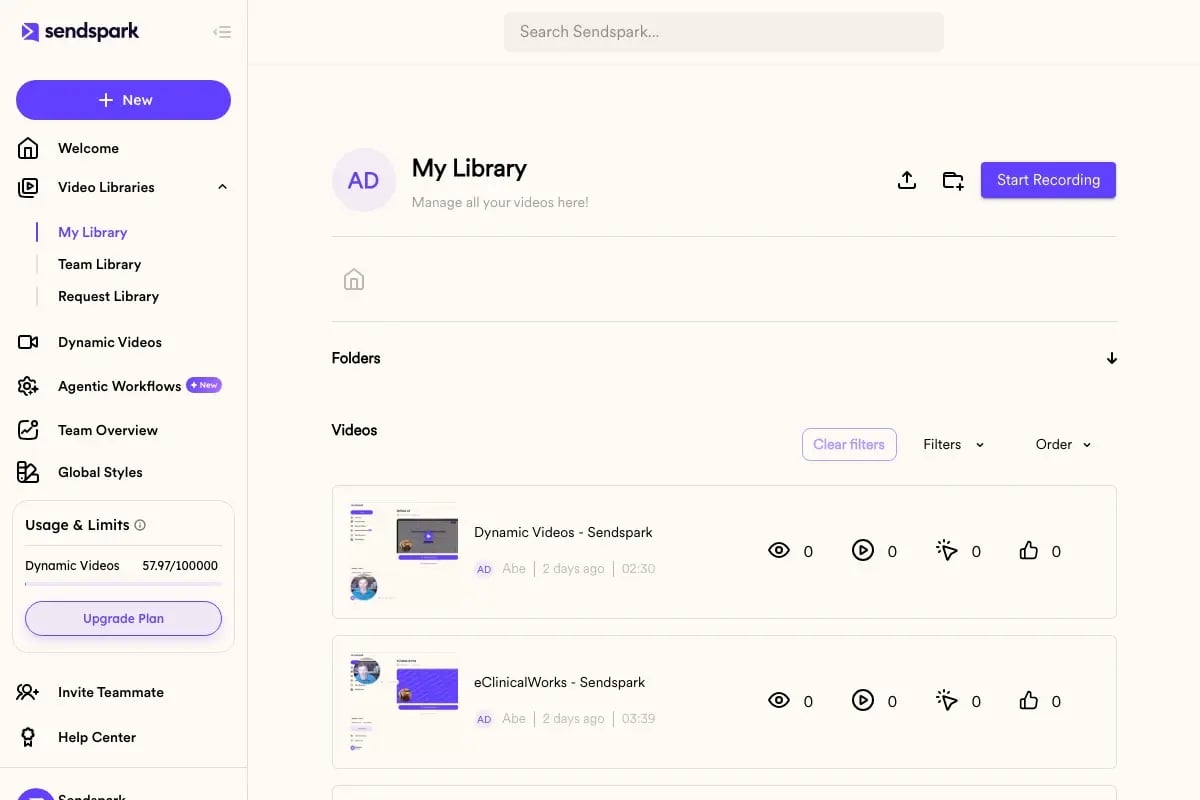
When a rep identifies a competitive deal, a manager or enablement lead can pull the right video and forward it with a short personalized intro attached — a Combined Video, in Sendspark’s case — instead of a generic broadcast link. That fits how reps actually move through a deal: they’re in their CRM or inbox, not digging through a shared drive mid-call. It also solves the tracking problem a static PDF can’t: a video analytics dashboard shows whether the battlecard was actually watched, not just whether it was sent, which is the first real signal of whether your content is working at all.
5. Set a review cadence tied to competitor changes. A quarterly review is a reasonable floor, but it shouldn’t be the only trigger. If a competitor announces a new feature or changes pricing, the owner should update the relevant battlecard within days, not wait for the next scheduled review. Treat the content like software that needs patches, not a report that ships once and sits still.
None of this requires new tooling most B2B sales teams don’t already have. A shared video library, a folder per competitor, and a habit of recording a two-minute update whenever something material changes is a lower lift than most teams assume — the barrier has never really been the effort to create the content, it’s been the effort to keep it current and get it opened.
Teams building out a broader deal-progression process alongside this — tracking stakeholder engagement, or building a mutual action plan for a specific deal — will find battlecards fit naturally into that same discipline: both only work if someone owns them past the day they were created.
Common Sales Battlecard Mistakes
The most common sales battlecard mistakes all trace back to treating the content as a one-time deliverable instead of an owned program: no assigned owner, no update cadence, content that’s too dense for a live call, no real distribution plan, and no feedback loop back from actual deals.
| Mistake | Why It Fails | Fix |
|---|---|---|
| No assigned owner | Content goes stale and inconsistent; no one is accountable | Name a single owner in product marketing or sales enablement |
| No update cadence | Reps stop trusting data that’s visibly out of date | Quarterly review, plus trigger-based updates on competitor news |
| Too long or dense | Reps can’t use it mid-call; it feels like homework | One page or one 60-90 second video, using Fact-Impact-Act |
| No distribution plan | Content sits in a shared drive and gets opened once | Deliver via targeted video, organized by competitor, sent per deal |
| Never closes the loop | No one knows if the content is actually helping win deals | Track views and correlate with win-loss outcomes, not just distribution |
One more mistake worth naming: confusing a battlecard with a playbook. A sales methodology or playbook covers the whole sales process end to end. A battlecard is narrow on purpose — one competitor, one objection, one persona at a time. Trying to make a single document do both jobs is how you end up with the 20-page PDF nobody opens mid-call in the first place.
Frequently Asked Questions
What is a sales battlecard?
A sales battlecard is a concise, tactical resource, usually one page or one short video, that gives reps exactly what they need to compete against a specific competitor or handle a specific objection during a live sales conversation. It typically includes positioning, pricing context, feature comparisons, and pre-approved rebuttals.
Who should own and create sales battlecards?
Product marketing or sales enablement usually owns the content, but the strongest battlecards are co-created with reps. Reps supply the ground-truth intel from actual deals and win-loss conversations, while the owner keeps the format consistent and the content current.
How often should you update a sales battlecard?
Review every battlecard at least quarterly, and update any card immediately when the relevant competitor changes pricing, ships a major feature, or shifts their messaging. Waiting for the next scheduled review to fix outdated content is how battlecards lose reps’ trust.
What’s the difference between a battlecard and a sales playbook?
A sales playbook covers the entire sales process end to end, from prospecting through close. A battlecard is deliberately narrow, built for one competitor, objection, or persona at a time, so a rep can use it in the middle of a live conversation without reading through unrelated content.
How many sales battlecards does a team actually need?
Most teams need one battlecard per major competitor, per recurring objection, and per key buyer persona rather than one document trying to cover everything. Start with whichever handful of competitors and objections come up most often in your lost-deal data, then expand from there.
How do you measure whether a sales battlecard is working?
Track whether the content is actually being opened or watched, not just whether it was distributed, and correlate that usage with win rates on competitive deals. Video-based battlecards make this easier to measure than static documents, since you can see per-viewer watch data instead of guessing.
Sources & References
- HubSpot Blog, compiled sales statistics — “52% of sales professionals use sales enablement content, and 79% consider it crucial for closing deals” (2026)
- Product Marketing Alliance — “Research from Klue puts daily AI usage among competitive intelligence teams at 60%” (2026)
- Highspot, Austin Hitchcock — “Sales battlecards solve for these issues by centralizing key information, so when the competitive topic comes up on a call, you’re ready to respond instantly” (2026)
- LinkedIn Sales Navigator — definition of a sales battle card and its role in competitive positioning (2026)
Record One Video. AI Personalizes Thousands.
Sendspark is the AI video personalization platform for B2B sales. Record once, and AI voice cloning generates thousands of individually personalized videos with dynamic backgrounds and personalized thumbnails — each prospect hears their name, sees their website, in your voice. Sales teams see 2-3x more replies.
Get Started NowA battlecard is only as good as the system that keeps it current and gets it in front of a rep at the right moment. Start with one competitor, build the Fact-Impact-Act version, and see whether reps actually open it before you build the other nine. If competitive battlecards are one piece of a bigger prospecting and outreach overhaul, our comprehensive guide to video prospecting covers the wider playbook this fits into.