Your champion just went quiet. No reply to your last three emails, no answer on the follow-up call, and the deal that looked closed-won two weeks ago is now stuck in limbo. This is what happens when you sell to one person instead of a room full of them — and it’s the single most common reason healthy-looking B2B deals die.
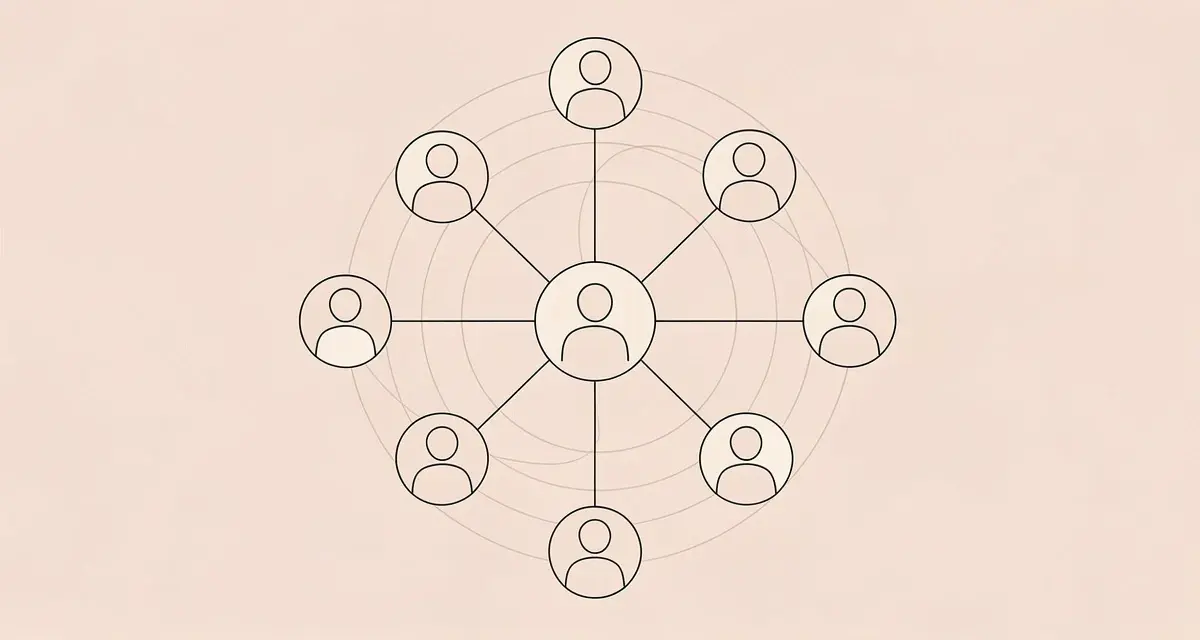
Multi-threading is the fix: building relationships with several stakeholders inside one account instead of betting the whole deal on a single internal contact. According to Gartner, B2B buying groups now average 6-10 stakeholders for complex purchases, climbing to 11-20+ for large enterprise deals. If you’re only talking to one of them, you’re negotiating blind.
Key Takeaways
- B2B buying committees now average 6-10 stakeholders for complex deals and 11-20+ for large enterprise deals, according to Gartner — a single-champion pitch is a structural risk, not just a missed opportunity.
- Closed-won deals include 67% more contacts than closed-lost deals, according to Gong Labs data — engaging more people correlates directly with winning.
- Top sales performers connect with 7+ decision-makers per deal, nearly double the 24% rate among average performers, per LinkedIn’s Sales Blog research.
- AI-personalized video lets you record once and tailor the message for each stakeholder role — a CFO cut, a technical-buyer cut, an end-user cut — instead of re-recording from scratch for every contact.
- Video engagement analytics show exactly which stakeholders are watching and which are silent, giving you an early warning system for deals that look multi-threaded on paper but aren’t in practice.
Published August 2026
What Is Multi-Threading in B2B Sales?
Multi-threading in sales is the practice of building relationships with multiple stakeholders inside a single account instead of relying on one internal champion to carry the deal. It replaces a single point of contact with a network of contacts across departments, so the deal survives even if any one person goes quiet. Whether that first contact started as a warm introduction or a cold outbound send, multi-threading is what keeps the deal alive once the relationship expands past one person.
A decade ago, one department head could often approve a purchase alone. That’s no longer true. According to Gartner’s 2025 B2B sales survey, buying groups for complex purchases now average 6-10 stakeholders, and that number climbs to 11-20+ people for large enterprise deals. Gartner’s same research found that 74% of B2B buyer teams show unhealthy conflict during the decision process — meaning the people in the room frequently disagree with each other, and a rep who only talks to one of them has no way to see that conflict coming.
Each stakeholder in that group cares about something different. IT and security worry about integration risk. Finance worries about total cost. The end user worries about whether the tool actually makes their job easier. A single champion, however well-intentioned, can only relay a fraction of those concerns back to you — and often relays them filtered through their own biases and internal politics.
Common mistake
Treating your champion as your only source of truth. Champions get promoted, laid off, or simply lose interest — and if they’re your only thread into the account, the deal often dies with their departure.
Multi-threading doesn’t mean copying everyone in the company on every email. It means identifying the handful of people who actually influence the decision and engaging each of them with something relevant to their specific role — often through personalized video rather than another templated email. Done well, it turns a sale that depends on one relationship into one that’s backed by several, and it’s the difference between a deal that stalls the moment your champion changes jobs and one that keeps moving without them. This work usually happens during deal progression, once an account has already cleared your qualification bar.
Single-Threading vs. Multi-Threading: Why It Changes Win Rates
Single-threaded deals depend on one contact to carry information, build internal consensus, and push the deal to close — and that dependency shows up directly in the numbers. According to Gong Labs, closed-won deals include 67% more contacts than closed-lost deals. Deals that engage more people close more often, in other words, and that’s not a coincidence — it’s a direct result of broader visibility into what the buying committee actually needs.
| Factor | Single-Threading | Multi-Threading |
|---|---|---|
| Primary contact | One champion carries the deal | Multiple stakeholders engaged directly |
| Risk if a contact leaves | Deal often stalls or dies | Other relationships keep it moving |
| Visibility into objections | Filtered through one person’s perspective | Heard directly from each stakeholder |
| Typical deal size | Limited to the champion’s use case | Expands as cross-team needs surface |
| Contacts in the deal (Gong Labs data) | Fewer — correlates with closed-lost | 67% more — correlates with closed-won |
The gap shows up in performance data, too. LinkedIn’s Sales Blog found that 46% of top sales performers have connections with 7 or more decision-makers on a deal, compared with just 24% of average performers. Buying committees now average 11+ people, per the same research — so a rep working only two or three contacts is missing the majority of the people who’ll actually decide.
The most damaging failure mode in single-threaded selling is a champion going dark mid-deal. There’s no internal advocate left to push things forward, no one to explain a delay, and no way to tell whether the deal is stalled because of budget, politics, or just a change in priorities. In a multi-threaded deal, you already have other relationships to lean on — you can ask a different stakeholder what changed, instead of guessing.
How to Map and Engage Every Stakeholder in the Buying Committee
Mapping a buying committee means identifying who holds budget authority, who evaluates technical fit, who’ll use the product daily, and who has a reason to say no — then engaging each of them with a message relevant to their specific concern, not a copy of what you sent the champion.
Most buying committees break down into a handful of recurring roles:
- Economic buyer — signs off on budget, usually a VP or C-level exec. Cares about ROI and business outcomes, not feature lists.
- Champion — feels the pain point most acutely and advocates for you internally. Valuable, but not a substitute for direct access to others.
- Technical evaluator — checks integration, security, and fit with the existing stack. Usually IT, security, or engineering.
- End user — uses the product daily and cares about workflow and time saved. Can quietly kill adoption even after the deal closes.
- Blocker — has a reason to resist: loyalty to an incumbent vendor, fear of change, or a competing priority. Best identified early, not discovered at the finish line. If the incumbent is a specific named competitor, a battlecard built for that rival gives every rep on the deal the same rebuttal instead of a different improvised answer each time the blocker raises it.
You surface these roles during discovery, not after. Ask direct questions: “Who else will be using this day to day?” “Who needs to sign off before this moves forward?” “Who would be affected if we don’t solve this?” Write down every name your champion mentions, then follow up with each one directly instead of only asking your champion to relay the message. Our guide to B2B sales tactics covers buying-committee mapping as one piece of a broader discovery process, if you want the fuller framework. Turning each of these roles into a full buyer persona is what tells you what to actually say to each one, not just who they are.
Advanced strategy
Ask your champion to introduce you to at least one other stakeholder before you send a proposal. A warm introduction from an internal advocate gets a response far more reliably than a cold email to a name you found in a directory.
Getting access to the economic buyer is only half the job — you also need their own team to validate you, not just hear from you directly. As Gong’s research on selling to executives puts it:
“Executives want to hear from their teams that the solution is valuable and worth prioritizing, not from a salesperson.”
— Jen Allen-Knuth, enterprise sales practitioner, via Gong
That’s why the goal isn’t just reaching every name on your map — it’s giving your champion and other internal advocates something easy to forward, so the validation comes from inside the account rather than only from you. A comparison one-pager, a short case study relevant to their industry, or a personalized video addressing their specific role all work better than another generic deck.
How to Multi-Thread at Scale Without Recording 10 Different Videos
The practical barrier to multi-threading isn’t strategy, it’s time: personalizing a pitch for five, ten, or twenty stakeholders by hand doesn’t scale, so most reps default back to one generic message and call it multi-threading. Recording once and letting AI personalize the result per recipient removes that bottleneck entirely.
Sendspark is an AI video personalization platform for B2B sales built around exactly this problem: record one video, personalize at scale. A rep records a single AI-personalized intro, and AI voice cloning and dynamic backgrounds generate a version tailored to each stakeholder — a CFO-facing cut that opens with ROI, a technical-evaluator cut that opens with integration details, an end-user cut that opens with day-to-day workflow, all from the same recording. Instead of re-shooting five different pitches, you tailor the framing per role while the core message stays consistent. At Sendspark’s Growth plan or above, this scales to an entire buying committee without adding production time to a rep’s day.
The Combined Videos approach makes this even more efficient for a real buying committee: record one detailed product demo a single time, then attach a short, personalized 10-15 second intro in front of it for each stakeholder — “Hi Priya, sharing this because it addresses the integration question you raised” — while the demo itself never needs to be re-recorded. You get consistent product messaging with a personal opening for every contact in the account.
Video engagement analytics turn this into an early-warning system, not just a delivery mechanism. If the economic buyer watches your video twice and the technical evaluator never opens it, that’s a specific, actionable signal — not a guess. You know exactly where to focus your next follow-up instead of sending the same generic check-in to everyone on the thread.
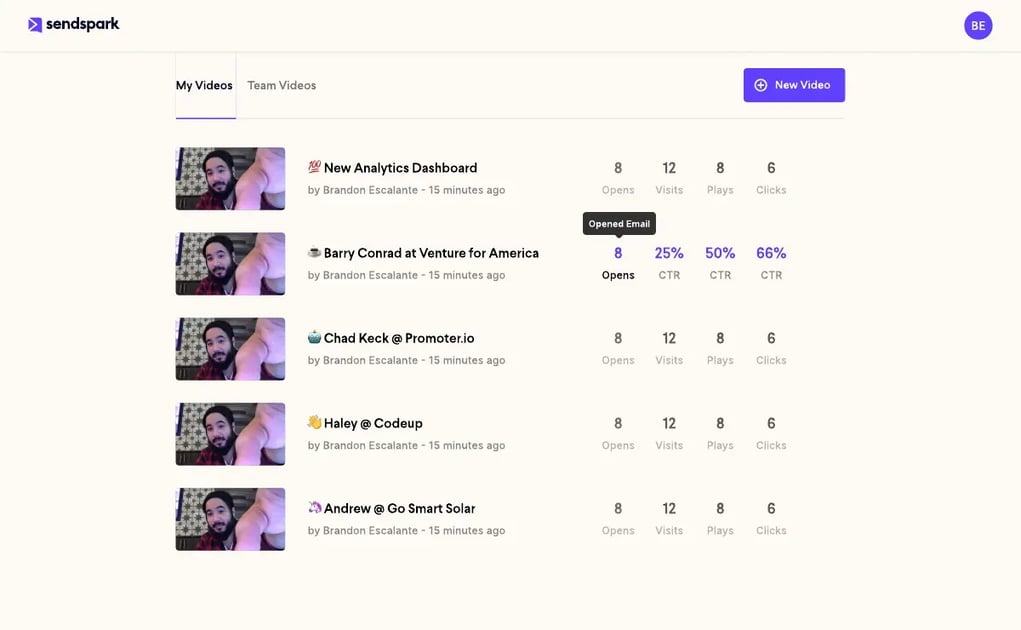
Keep each stakeholder-specific intro short — 10 to 15 seconds is enough to signal relevance (“I made this for you because…”) before handing off to the shared demo or core pitch. None of this replaces the relationship-building described above — you still need to identify who’s in the buying committee and understand what each of them cares about. What it removes is the excuse that personalizing per stakeholder takes too much production time. A rep can record once, generate five role-specific cuts in minutes, and send each stakeholder a message that’s actually about them.
Record One Video. AI Personalizes Thousands.
Sendspark is the AI video personalization platform for B2B sales. Record once, and AI voice cloning generates thousands of individually personalized videos with dynamic backgrounds and personalized thumbnails — each prospect hears their name, sees their website, in your voice. Sales teams see 2-3x more replies.
Get Started NowCommon Multi-Threading Mistakes to Avoid
The most common multi-threading mistakes are starting too late, sending the same generic message to every contact, and ignoring silence from stakeholders who never respond — each of which quietly turns a “multi-threaded” deal back into a single-threaded one.
Waiting too long to multithread. Reps often wait until a deal feels advanced before reaching beyond the champion. By then the technical evaluator has already formed an opinion, and the economic buyer has already heard a competitor’s pitch. Start mapping the committee during your first or second call, not after a demo.
Sending the same message to every contact. If the CFO and the end user get an identical email, both notice, and both discount it as a mass send rather than genuine outreach. Each stakeholder should hear something specific to what they care about.
Ignoring engagement signals. A stakeholder who never opens your emails or watches your video isn’t a stakeholder to write off — they’re a data point. Silence can mean disinterest, or it can mean someone else is blocking them from engaging. Investigate before assuming.
Relying on your champion to relay everything. Champions filter information, intentionally or not. If you never speak with the technical evaluator or economic buyer directly, you’re negotiating with a secondhand version of their objections.
| Mistake | Why it hurts the deal | Fix |
|---|---|---|
| Multi-threading too late | Other stakeholders have already formed opinions without you | Start mapping the committee on call one or two |
| One generic message for everyone | Reads as a mass send, not genuine outreach | Tailor the opening to each stakeholder’s role |
| Ignoring silent stakeholders | Misses early warning signs of a stalled deal | Use engagement data to prioritize follow-up |
| Relying only on your champion | Objections and politics get filtered or lost | Build at least one direct relationship beyond the champion |
Multi-threading works alongside a deliberate account-based selling approach and structured discovery — it’s not a replacement for either, it’s what you do once you’ve already decided an account is worth this level of investment. That structured discovery is the core of consultative selling — you can’t map a buying committee accurately without first understanding what each stakeholder actually cares about. Track your stakeholder map in your CRM (Sendspark’s HubSpot integration logs video engagement per contact automatically) so nothing depends on memory alone. For deals complex enough to need a documented, buyer-facing plan, formalize that stakeholder map into a mutual action plan both sides can track together. For a broader walkthrough of building this kind of outreach motion end to end, see our complete guide to video prospecting. This is also exactly the kind of deal where a fully autonomous AI SDR platform falls short and a recorded human voice earns its keep — see AI SDR vs. AI video personalization for where each fits.
Frequently Asked Questions
What is multi-threading in sales?
Multi-threading in sales is the practice of building relationships with multiple stakeholders inside one account instead of relying on a single internal champion to carry the deal. It reduces the risk of a deal stalling if any one contact leaves or goes quiet.
How many stakeholders should I engage in a B2B deal?
Aim to identify and engage every role that influences the decision: the economic buyer, the champion, at least one technical evaluator, and an end user at minimum. Gartner reports buying groups average 6-10 stakeholders for complex deals and 11-20+ for large enterprise purchases.
What is the 2-2-2 rule in sales?
The 2-2-2 rule is a multi-threading guideline suggesting reps aim for at least 2 contacts, at 2 different levels of seniority, in 2 different departments before considering a deal properly multi-threaded. It’s a simple sanity check against relying on one champion.
What happens if my champion stops responding?
If you’ve multi-threaded the deal, you can reach out directly to another stakeholder you’ve already built a relationship with to find out what changed. If your champion is your only contact, the deal typically stalls until they re-engage or a new champion emerges.
Is multi-threading the same as account-based selling?
No. Account-based selling is about choosing which accounts to prioritize and tailoring outreach to them, starting from a clear ideal customer profile; multi-threading is what you do once you’ve engaged an account, ensuring you reach every stakeholder in it rather than a single contact.
Can AI-personalized video help with multi-threading at scale?
Yes. Recording one video and using AI voice cloning and dynamic backgrounds to generate role-specific versions lets a rep personalize outreach to five or more stakeholders without re-recording for each one, and video engagement analytics show which stakeholders are actually watching. The same personalized-video approach also works as a closing technique once every stakeholder has been engaged, and it carries into the negotiation itself — our guide to B2B sales negotiation tactics covers how to keep terms consistent across a multi-threaded buying committee once talks turn to price.
How early should I start multi-threading a deal?
Start during your first or second call, before you’ve built a full pitch around a single champion’s perspective. Mapping the buying committee early gives you time to address each stakeholder’s concerns before they harden into objections late in the cycle.
Sources & References
- Gartner — “B2B buying groups average 6-10 stakeholders for complex deals, 11-20+ for large enterprise deals; 74% of B2B buyer teams show unhealthy conflict during the decision process” (2025)
- Gong Labs — “Closed-won deals include 67% more contacts than closed-lost deals” (2026)
- LinkedIn Sales Blog — “46% of top performers have connections with 7+ decision-makers, versus 24% of average performers; buying committees now average 11+ people” (2026)
- Gong — Jen Allen-Knuth: “Executives want to hear from their teams that the solution is valuable and worth prioritizing, not from a salesperson.” (2026)
Record One Video. AI Personalizes Thousands.
Sendspark is the AI video personalization platform for B2B sales. Record once, and AI voice cloning generates thousands of individually personalized videos with dynamic backgrounds and personalized thumbnails — each prospect hears their name, sees their website, in your voice. Sales teams see 2-3x more replies.
Get Started Now