Most B2B sales teams focus obsessively on leads — but by the time a prospect submits a form, 67% of their buying decision is already made. B2B demand generation is the work that happens before that form submission: building awareness, educating your market, and creating the conditions that make prospects choose you when they’re ready to buy.
This guide covers exactly how to build a demand generation strategy that fills your pipeline with high-quality opportunities — not just raw lead counts that go nowhere.
Effective demand generation feeds directly into your lead pipeline — the structured system for capturing, scoring, and nurturing demand-generated leads until they are sales-ready.
Key Takeaways
- B2B demand generation builds awareness and trust before prospects are ready to buy, filling your pipeline with future customers — not just today’s leads.
- According to Gartner, B2B buyers spend only 17% of their buying journey meeting with vendors — demand gen shapes the other 83%.
- The 6 highest-ROI B2B demand gen channels are: content marketing, SEO, paid search, social selling, video outreach, and event marketing.
- Video outreach drives 2-3x more replies than text email, making it one of the most effective demand gen tactics for outbound teams.
- Measure demand gen by pipeline contribution, MQL-to-SQL conversion rate, CAC, and brand search volume growth — not just raw lead count.
What Is B2B Demand Generation?
B2B demand generation is a marketing and sales approach that creates awareness, educates your target market, and builds preference for your product or service — before a prospect is actively ready to buy. It combines outbound outreach, content marketing, paid advertising, and sales engagement into a coordinated program that keeps your brand visible across the entire buyer journey. Unlike lead generation (which captures contacts), demand gen creates the demand those leads are responding to.
The term gets used loosely, but there’s a clear functional definition: demand generation covers every tactic that moves a potential buyer from “never heard of you” to “actively interested.” That includes the content a prospect reads six months before they start comparing vendors, the LinkedIn post that plants the idea of switching tools, and the video email that re-engages a cold account.
According to Forrester Research, 67% of the B2B buyer journey is complete before a prospect ever contacts sales. That means two-thirds of your sales process happens without a sales rep involved — demand gen is what fills that space.
Why Demand Generation Matters More Than Ever
B2B buyers have changed. According to Gartner, B2B buyers now spend only 17% of their buying journey in direct meetings with potential suppliers. The rest is independent research, peer conversations, and content consumption. If your brand isn’t present in that 83%, you’re invisible when the buying decision gets made.
Demand gen solves this by creating a consistent presence across channels — so that when a prospect does raise their hand, your brand is already familiar, trusted, and top of mind.
What Demand Generation Is Not
Demand generation is not simply running ads and collecting leads. It is not a one-time campaign. And it is not the same as lead generation, though the two are often confused. Demand gen is a long-term, multi-channel program that builds market awareness over months and years — not a single quarter’s pipeline play.
Demand Generation vs. Lead Generation: Key Differences
Demand generation and lead generation solve different problems. Demand gen creates awareness and intent in the market — it makes people want what you offer. Lead generation captures contact information from people who’ve already shown some level of interest. You need both, but they operate at different stages of the funnel and should be measured differently.
Here’s how they compare across the most important dimensions:
| Dimension | Demand Generation | Lead Generation |
|---|---|---|
| Primary goal | Create awareness and market-wide interest | Capture contact information from interested buyers |
| Funnel stage | Top of funnel (and ongoing) | Mid to lower funnel |
| Timeline | Long-term (3-12+ months to compound) | Shorter-term (campaigns, offers) |
| Tactics | Content, SEO, social, video outreach, events | Gated content, demos, contact forms, paid ads |
| Key metric | Pipeline contribution, brand awareness, MQL volume | Lead volume, CPL (cost per lead), form conversion rate |
| Content approach | Ungated, educational, freely available | Gated behind a form for contact capture |
| Success looks like | More inbound, shorter sales cycles, brand recognition | More contacts in CRM, more MQLs passed to sales |
The most effective B2B go-to-market programs use both in sequence. Demand gen fills the top of the funnel with aware, educated buyers. Lead gen captures the ones ready to engage. Then sales converts. Understanding the difference between inbound and outbound sales motions will help you see where each fits in your own pipeline.
Record One Video. AI Personalizes Thousands.
Sendspark is the AI video personalization platform for B2B sales. Record once, and AI voice cloning generates thousands of individually personalized videos with dynamic backgrounds and personalized thumbnails — each prospect hears their name, sees their website, in your voice. Sales teams see 2-3x more replies.
Get Started NowHow to Build a B2B Demand Generation Strategy
A B2B demand generation strategy is built in five steps: define your ICP, map the buyer journey, select channels, build a content plan, and set a measurement framework. Most teams skip steps 1 and 2, which is why their demand gen programs produce lots of activity but little pipeline. Here’s how to do it right.
Step 1: Define Your Ideal Customer Profile (ICP)
Your ICP is the specific type of company most likely to buy from you and get value from your product. For B2B SaaS teams, this means industry, company size, tech stack, revenue range, and buying team structure — not just “midmarket companies.”
A tight ICP makes every downstream demand gen decision easier. You know which LinkedIn audiences to target, which conferences to sponsor, which content topics to prioritize, and which accounts to run outbound plays against.
Start with your best existing customers. Identify the 10-20 accounts that have the highest retention, fastest time-to-value, and best NPS. The patterns across those accounts define your ICP.
Step 2: Map the Buyer Journey
Most B2B purchases involve 6-10 stakeholders across 3-9 months, according to Gartner. Before you pick channels or create content, understand how your specific buyers move from problem-aware to vendor-evaluating to purchase-ready.
For each stage, identify: what questions are they asking? What content formats do they consume? Where are they spending time online? The answers dictate your demand gen mix. If your buyers do most research on LinkedIn and in industry communities, that’s where your demand gen budget should concentrate.
Step 3: Select Your Channels
Pick 2-3 primary channels and go deep before expanding. Teams that spread across six channels from day one rarely do any of them well. The best demand gen programs own a small number of channels rather than half-executing on many.
Your channel selection should be driven by ICP behavior, not what’s popular or what competitors do. For enterprise B2B, LinkedIn and content marketing tend to outperform. For SMB, SEO and paid search often work faster.
Step 4: Build a Content Engine
Content is the fuel for every demand gen channel. According to HubSpot Research, content marketing generates 3x more leads than outbound and costs 62% less. But not all content is equal — demand gen content should be educational and ungated, not promotional and hidden behind a form.
The highest-performing B2B demand gen content answers the questions your ICP is Googling right now. It builds trust by being genuinely helpful without requiring anything in return. Gate content only for the bottom of the funnel — when the prospect is ready to exchange their contact info for something specific.
Pro tip
Publish your 10 most common sales objections as ungated articles. These rank well in search, attract buyers already comparing solutions, and pre-handle objections before the first sales call.
Step 5: Set a Measurement Framework
The most common mistake in demand gen is measuring it like lead gen — using volume metrics (number of leads) rather than quality metrics (pipeline contribution). Set up your measurement framework before you launch so you’re tracking the right signals from day one.
The key demand gen metrics are covered in detail in the measurement section below.
The 6 Best B2B Demand Generation Channels
The six highest-ROI B2B demand generation channels are: content marketing and SEO, paid search and social advertising, LinkedIn social selling, personalized video outreach, cold email sequences, and virtual events and webinars. Most high-growth B2B companies use 3-4 of these in combination, with the mix depending on deal size, sales cycle length, and buyer behavior. Here’s what each delivers and when to use it.
Learn more about systematic growth testing.
1. Content Marketing and SEO
Content marketing is the highest-leverage long-term demand gen channel because every piece you publish compounds over time. A well-ranked article can drive qualified traffic for 3-5 years with no additional investment. According to the Demand Gen Report, B2B buyers consume an average of 3-5 pieces of content before engaging with sales — and content marketing is where most of that consumption happens.
The formula is simple: write in-depth, ungated content that answers the questions your ICP is searching for. Optimize for intent, not just keywords. Focus on problems your buyers have six months before they’re ready to buy — when they’re researching the problem, not the solution.
2. Paid Search and Social Advertising
Paid channels accelerate demand gen but don’t replace organic. Use paid search to capture buyers actively searching for solutions in your category. Use paid social (primarily LinkedIn for B2B) to reach your ICP at the awareness stage — before they’re searching.
The best B2B paid social strategies target buying committees by job title and company size, and retarget website visitors with bottom-of-funnel offers after they’ve consumed top-of-funnel content. Layer retargeting on top of organic demand gen content to convert the audience you’ve already educated.
3. LinkedIn Social Selling
LinkedIn is the primary platform for B2B demand generation because it has the highest concentration of business decision-makers in any single channel. Social selling on LinkedIn works by building a consistent presence through posts, comments, and direct outreach — creating familiarity before any sales conversation starts.
The most effective LinkedIn demand gen combines founder/rep personal content (authentic perspective-sharing) with targeted connection and message outreach to ICP accounts. This is also where video messaging on LinkedIn outperforms text — a personalized video message in a LinkedIn connection request gets dramatically higher acceptance and reply rates than a generic text note.
4. Personalized Video Outreach
Video outreach has become one of the highest-converting demand gen tactics for outbound teams, precisely because it’s still differentiated. Most prospects receive dozens of identical text emails every week. A personalized video that shows their company name, website, or a relevant detail stops the scroll and creates a human connection that text simply can’t.
Sendspark’s video messaging platform lets you record one video and automatically personalize it for each prospect — showing their website as the background, opening with their name via AI voice cloning, and generating a unique thumbnail for every email. Sales teams using AI-personalized video see 2-3x higher reply rates compared to standard text outreach, and the meeting-to-reply ratio runs at 2:1 versus text email.
For demand gen specifically, video works well at two moments: the first cold touch (to create awareness with a personalized, memorable first impression) and at re-engagement (to revive cold accounts that have gone dark). Use AI-personalized video intros to scale this across your full prospecting list without recording individual videos for each contact.
Advanced strategy
Create a “trigger video sequence” — when a prospect from your ICP visits your pricing page or views a product video, automatically trigger a personalized Sendspark video from their assigned rep within 2 hours. This combines intent signals from your website with the reply-rate advantage of personalized video.
5. Cold Email Outreach Sequences
Cold email remains one of the most cost-effective B2B demand gen channels when done correctly. The problem isn’t cold email itself — it’s the generic, templated approach most teams use. Personalized cold email sequences that reference specific company context, recent news, or role-specific pain points consistently outperform spray-and-pray campaigns.
Effective B2B email templates are short (under 100 words), personalized to the specific recipient, and focused on a single relevant pain point. Include a video thumbnail in your cold email sequence — it adds a visual element that increases click-through rates by 50% compared to text-only emails.
The best demand gen email sequences use marketing automation to trigger follow-ups based on behavior — not just a fixed cadence. If a prospect clicks your video but doesn’t reply, that’s a warm signal worth a more specific follow-up. Syncing this with your CRM via HubSpot or Salesforce means the entire sequence runs on autopilot while still feeling personal.
6. Virtual Events and Webinars
Events — whether virtual or in-person — are unique in demand gen because they create high-engagement interactions that no other channel can replicate. A well-run webinar can move a prospect from awareness to active evaluation in 60 minutes. According to the Salesforce State of Sales, sales teams using multiple engagement channels see 27% higher revenue than single-channel teams.
Virtual events (webinars, roundtables, online conferences) are especially effective for ABM demand gen — you can target specific companies and job titles with paid promotion, then use the event attendance data to prioritize outreach. Companies that engage with an event are much further along in the buyer journey than cold contacts.
Consider pairing your webinar follow-up with personalized video messages to registered attendees who didn’t show up, or to attendees who asked specific questions. This converts event interest into pipeline faster than a standard follow-up email.
How to Measure B2B Demand Generation Success
Measure B2B demand generation by pipeline contribution, MQL-to-SQL conversion rate, customer acquisition cost (CAC), and brand search volume growth — not by lead count alone. Lead count is a vanity metric; pipeline contribution tells you whether demand gen is actually impacting revenue. For a complete view of which sales metrics matter most at each stage of the revenue cycle, see our 20 B2B sales metrics to track guide. Here are the metrics that matter and how to track them.
| Metric | What It Measures | Target Benchmark | Why It Matters |
|---|---|---|---|
| Pipeline contribution | % of pipeline sourced by demand gen activities | 40-60% for mature programs | Direct link between demand gen and revenue |
| MQL-to-SQL conversion | % of MQLs that sales accepts as qualified | 20-30% for B2B SaaS | Measures lead quality, not just quantity |
| CAC (demand gen portion) | Total demand gen spend ÷ new customers from that cohort | Depends on ACV; aim for 3:1 LTV:CAC ratio | Efficiency measure for budget allocation |
| Brand search volume | Monthly searches for your brand name (Google Search Console) | 5-10% MoM growth in early stage | Lags by 3-6 months but reflects true demand gen effectiveness |
| Sales cycle length | Average days from first touch to close for demand-gen-sourced leads | Should decrease as program matures | Demand gen that works shortens sales cycles |
| Content-influenced pipeline | Pipeline where a prospect consumed 2+ content pieces before engaging | 30-50% of all pipeline | Validates content marketing investment |
Setting Up Attribution
The hardest part of measuring demand gen is attribution — multiple touchpoints influence each deal, and the first touch might happen 9 months before close. Use multi-touch attribution rather than first-touch or last-touch, which both distort the picture.
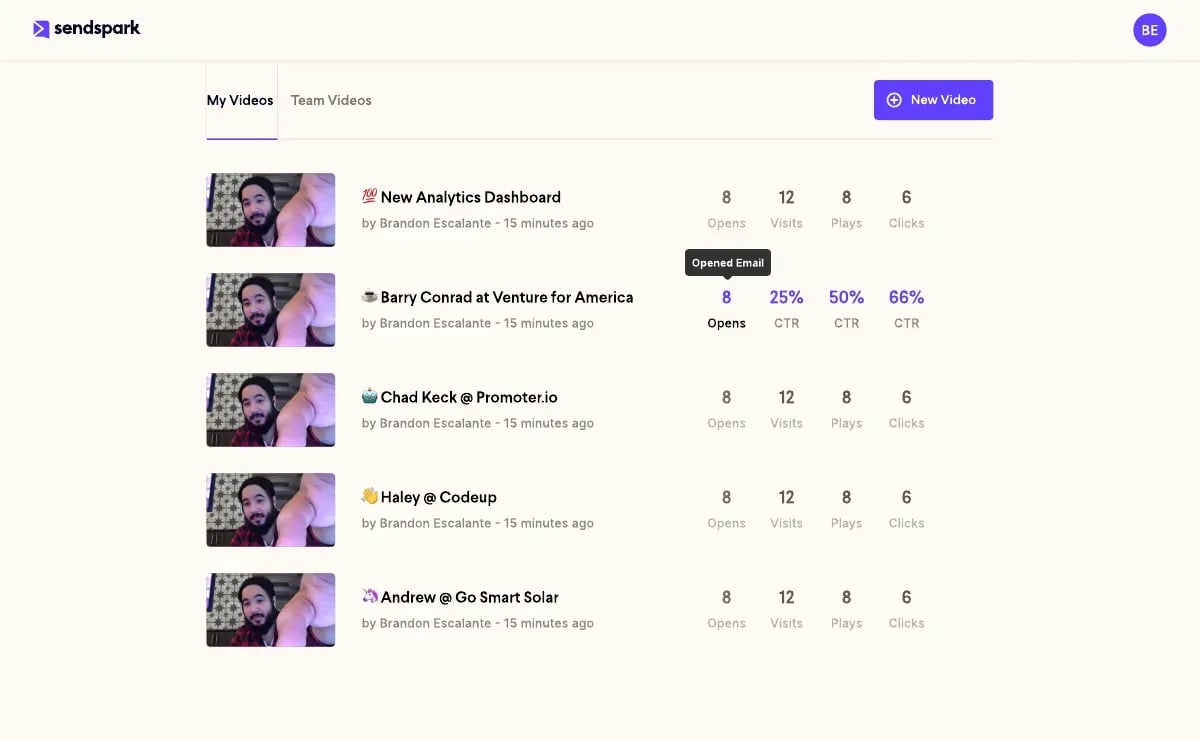
Syncing all your demand gen channels (email, video, ads, web analytics) into a central CRM is essential. Sendspark’s marketing integrations ensure video engagement data — views, watch time, CTA clicks — flows directly into HubSpot or Salesforce so video-influenced pipeline is automatically attributed. Track video analytics alongside other channel metrics to build a complete picture of which touchpoints drove each deal.
The 90-Day Demand Gen Scorecard
In the first 90 days, demand gen metrics will not show pipeline impact — there’s a lag. Use leading indicators instead: content traffic growth, email engagement rates, video view rates, and social follower growth. These signal whether you’re building the right habits before the revenue outcomes arrive. Check outreach software metrics to monitor email and video sequence performance during this early phase.
After 90 days, add MQL volume and MQL-to-SQL rate to your scorecard. After 6 months, add pipeline contribution. This staggered approach prevents premature judgement of a program that takes time to compound.
Frequently Asked Questions
What is B2B demand generation?
B2B demand generation is a marketing and sales approach that creates awareness, builds interest, and develops preference for your product or service before a prospect is actively ready to buy. It combines content marketing, paid advertising, social selling, video outreach, and email sequences into a program that keeps your brand visible across the entire buyer journey — not just at the moment someone searches for a solution.
What is the difference between demand generation and lead generation?
Demand generation creates interest and awareness in a market that doesn’t yet know they need your product. Lead generation captures contact information from people who’ve already shown interest. Demand gen happens before lead gen — it’s the reason prospects show interest in the first place. Most B2B teams need both: demand gen fills the top of the funnel, lead gen captures the people ready to engage, and sales closes them.
How long does B2B demand generation take to see results?
Expect 3-6 months before demand gen activities show meaningful pipeline impact. Content marketing and SEO take the longest to compound; paid channels and video outreach show engagement metrics faster (within 30 days) but still require 60-90 days to build reliable pipeline contribution. The leading indicators to watch in the first 90 days are content traffic growth, email open and reply rates, and brand search volume.
What is the best B2B demand generation channel?
There is no single best channel — the right mix depends on your ICP, deal size, and sales cycle. For enterprise B2B SaaS, content marketing and LinkedIn social selling typically produce the highest-quality pipeline. For mid-market, personalized video outreach and cold email sequences deliver faster pipeline at lower cost. Most teams see the best results from combining 2-3 channels rather than optimizing a single one.
How much should I budget for B2B demand generation?
B2B companies typically allocate 5-15% of ARR to marketing, with 40-60% of that marketing budget going to demand generation activities. Early-stage companies (pre-Series B) should lean toward content and outbound — high-leverage, low-cost channels. Growth-stage companies add paid advertising and events as they establish product-market fit and can measure CAC reliably. Start with what your team can execute consistently rather than spreading budget too thin.
How do I measure B2B demand generation ROI?
Measure demand gen ROI by pipeline contribution — the percentage of revenue pipeline sourced by demand gen activities — divided by total demand gen spend. A healthy B2B demand gen program generates $3-5 in pipeline for every $1 spent (3:1 to 5:1 pipeline ROI). Track this alongside MQL-to-SQL conversion rate and sales cycle length, which both improve as demand gen matures and delivers better-educated, higher-intent buyers to sales.
What role does video play in B2B demand generation?
Video is one of the highest-converting demand gen tactics for outbound teams because it creates a personal, human connection that text cannot match. Personalized video outreach — where a prospect sees their name, company, and website in a video sent specifically to them — drives 2-3x higher reply rates than text email. For awareness-stage demand gen, video content (webinars, LinkedIn videos, product demos) builds trust faster than written content alone.
Sources & References
- Forrester Research — “67% of the B2B buyer journey is complete before a prospect contacts sales” (SiriusDecisions)
- Gartner — “B2B buyers spend only 17% of their buying journey in meetings with potential suppliers; purchases now involve 6-10 stakeholders over 3-9 months” (2023)
- HubSpot Research — “Content marketing generates 3x more leads than outbound and costs 62% less” (2024)
- Demand Gen Report — “B2B buyers consume an average of 3-5 pieces of content before engaging with sales” (2024)
- Salesforce State of Sales — “Sales teams using multiple engagement channels see 27% higher revenue than single-channel teams” (2024)
Record One Video. AI Personalizes Thousands.
Sendspark is the AI video personalization platform for B2B sales. Record once, and AI voice cloning generates thousands of individually personalized videos with dynamic backgrounds and personalized thumbnails — each prospect hears their name, sees their website, in your voice. Sales teams see 2-3x more replies.
Get Started Now