Published August 2026
Account-based selling flips the traditional sales funnel upside down. Instead of casting a wide net and hoping qualified leads surface, you start with a carefully selected list of high-value target accounts and orchestrate personalized, multi-stakeholder engagement designed to close each one. According to Gartner, 75% of B2B buyers now prefer a rep-free sales experience, which means the personalized digital touchpoints you deploy across the buying committee matter more than ever. This guide breaks down what account-based selling is, how it compares to traditional outbound, and how to build a strategy that actually wins enterprise deals.
Key Takeaways
- Account-based selling (ABS) targets a small set of high-value accounts with personalized, multi-stakeholder outreach instead of broad-volume prospecting.
- Gartner reports 75% of B2B buyers prefer a rep-free sales experience, making personalized digital engagement across buying committees essential.
- Deals with multiple stakeholders engaged are 37% more likely to close (HubSpot), which is why ABS focuses on reaching entire buying committees, not single contacts.
- Sendspark’s AI video personalization lets you record one video and use AI voice cloning to generate account-specific videos with dynamic backgrounds showing each prospect’s website.
- A successful ABS program requires a defined ICP, a tiered target account list of 50-200 accounts, sales-marketing alignment, and a multi-channel cadence spanning email, LinkedIn, phone, and AI-personalized video.
What Is Account-Based Selling?
Account-based selling is a B2B sales strategy that concentrates sales and marketing resources on a small number of high-value target accounts, engaging each one with personalized, multi-stakeholder outreach across multiple channels. Unlike traditional volume-based prospecting, which casts a wide net and filters responses, ABS starts with a curated account list and works backward to design account-specific campaigns that address each stakeholder’s priorities. The goal is deeper engagement with fewer accounts, leading to larger deal sizes and higher win rates.
The approach mirrors a fundamental shift in B2B buying behavior. According to Gartner, 75% of B2B buyers prefer a rep-free sales experience, meaning they research, evaluate, and shortlist vendors independently before ever speaking with sales. When buying committees of 6-10 stakeholders are doing their homework asynchronously, generic outreach gets ignored. ABS addresses this by delivering relevant, personalized content to each stakeholder through their preferred channels.
Research from HubSpot shows that deals where multiple stakeholders are engaged are 37% more likely to close. This is the core statistical argument for ABS: widening engagement within an account directly correlates with winning it. A single champion can be overridden, redirected, or leave the company. A multi-stakeholder consensus builds organizational momentum that survives internal changes.
How ABS Differs From Traditional Outbound Sales
Traditional outbound sales optimizes for volume: contact as many prospects as possible, qualify responses, and advance the interested ones through a linear pipeline. ABS optimizes for depth: select fewer accounts, invest more per account, and coordinate outreach across the entire buying committee. The trade-off is higher cost per account but larger average deal size and stronger customer relationships.
The key structural difference is alignment. In traditional outbound, marketing generates leads and sales works them independently. In ABS, sales and marketing operate as a unified team on the same account list, sharing account intelligence, co-creating content, and coordinating touchpoints. This is why ABS is often described as the sales-side execution of account-based marketing (ABM) strategy.
How ABS Intersects With Account-Based Marketing
Account-based selling and account-based marketing are two sides of the same coin. ABM is the marketing discipline of creating account-specific campaigns, content, and experiences. ABS is the sales discipline of orchestrating personalized outreach, multi-stakeholder engagement, and account-level deal progression. When both functions align on the same target account list, the combined effect is what Forrester calls “one-to-one account engagement” — the highest maturity level of account-based go-to-market.
In practice, the boundary between ABS and ABM blurs. Sales reps personalized direct outreach while marketing runs account-targeted ads and creates custom landing pages. The unifying principle is that every touchpoint is designed for a specific account, not a generic segment.
Advanced strategy
Use AI-personalized video as your account-specific touchpoint multiplier. Record one video, and Sendspark’s AI voice cloning generates individually personalized versions for each stakeholder, showing their company website as a dynamic background. This scales the personalization that ABS demands without the manual recording overhead.
Account-Based Selling vs. Traditional Sales: Which Works Better?
Neither ABS nor traditional outbound is universally better. The right approach depends on your average deal size, sales cycle length, buying committee complexity, and available resources. ABS outperforms traditional outbound for enterprise deals with long cycles and large buying committees. Traditional outbound wins for transactional deals with shorter cycles and higher volume. Most B2B sales organizations benefit from a hybrid model that applies ABS discipline to top-tier accounts and traditional volume-based prospecting to the long tail.
The comparison table below breaks down the structural differences across six dimensions:
| Dimension | Account-Based Selling | Traditional Outbound Sales |
|---|---|---|
| Target volume | 50-200 named accounts | 1,000+ prospects in sequence |
| Personalization depth | Account- and stakeholder-specific | Segment-level or template-based |
| Average deal size | $50K-$500K+ ACV | $5K-$50K ACV |
| Sales cycle | 3-9 months | 2-8 weeks |
| Team alignment | Sales + marketing co-own accounts | Marketing hands off to sales |
| Primary channels | Email, LinkedIn, phone, AI-personalized video, direct mail | Email, phone, sequence tools |
When to Use Account-Based Selling
ABS is the right choice when your average contract value exceeds $50,000, your B2B sales cycle spans multiple quarters, and buying decisions involve 5+ stakeholders. It also makes sense when your ideal customer profile is narrow enough that the total addressable market is measured in hundreds, not thousands, of accounts. If your top 100 accounts represent 60% or more of your revenue potential, ABS concentrates effort where it matters most.
When Traditional Outbound Still Wins
Traditional outbound remains effective for SMB and mid-market deals with shorter cycles, simpler buying processes, and higher volume requirements. If your ACV is under $25,000 and deals close in weeks rather than months, the overhead of ABS coordination may not pay off. Teams selling sales prospecting tools to small businesses, for example, often achieve better results with high-volume email sequences than with account-by-account campaigns.
The Hybrid Model: ABS for Top Accounts, Outbound for the Rest
Most B2B sales teams adopt a tiered approach. Tier 1 accounts (your top 20-50) get full ABS treatment: dedicated account teams, custom content, multi-channel cadences, and AI-personalized video outreach. Tier 2 accounts (50-150) receive a lighter ABS approach with templated but personalized campaigns. Tier 3 accounts are worked through traditional outbound sequences. This hybrid model captures the revenue concentration of ABS while maintaining pipeline volume from the long tail.
Record One Video. AI Personalizes Thousands.
Sendspark is the AI video personalization platform for B2B sales. Record once, and AI voice cloning generates thousands of individually personalized videos with dynamic backgrounds and personalized thumbnails, each prospect hears their name, sees their website, in your voice. Sales teams see 2-3x more replies.
Get Started NowHow to Build an Account-Based Selling Strategy in 5 Steps
Building an account-based selling strategy requires five sequential steps: defining your ideal customer profile, building a tiered target account list, mapping each account’s buying committee, designing a personalized multi-channel cadence, and establishing KPIs to measure and optimize. Each step builds on the previous one, and skipping any step undermines the entire program. The framework below works for teams starting from scratch or refining an existing ABS motion.
Step 1: Define Your Ideal Customer Profile (ICP)
Your ICP defines the firmographic, technographic, and behavioral characteristics of your highest-value customers. Start by analyzing your closed-won deals from the past 12-18 months. Look for patterns in company size, industry, tech stack, revenue, funding stage, and organizational structure. The goal is to identify the attributes that correlate with large deal sizes, short sales cycles, and high retention rates. A well-defined ICP lets you score and prioritize accounts before committing sales resources.
For Sendspark’s ICP, the profile is B2B SaaS and tech companies with 50-500 employees, Series A-D funding, and sales teams of 5-25 SDRs and AEs using HubSpot or Salesforce alongside Outreach or Apollo. This specificity matters: a vague ICP produces a bloated account list that dilutes effort.
Step 2: Build a Tiered Target Account List
Once your ICP is defined, build a target account list of 50-200 accounts, segmented into tiers by priority. Tier 1 accounts (your top 20-50) get the most personalized treatment: dedicated reps, custom content, and AI-personalized video. Tier 2 accounts (50-100) receive semi-personalized campaigns. Tier 3 accounts are worked with lighter-touch sequences. Use tools like Clay or ZoomInfo to enrich account data and verify that each target matches your ICP criteria.
Common mistake
Don’t build a target list of 500+ accounts and call it ABS. A list that large forces you back into volume-based tactics. Keep Tier 1 under 50 accounts so each gets genuine personalization. If you can’t personalize the outreach, the account doesn’t belong in Tier 1.
Step 3: Map the Buying Committee
For each Tier 1 account, map the buying committee. According to Harvard Business Review, B2B buying decisions now involve an average of 6-10 stakeholders, up from 5-6 a decade ago. For each account, identify the champion (internal advocate), economic buyer (budget owner), technical buyer (evaluates fit), end users (day-to-day users), and potential blockers (those who can say no). Document each person’s role, priorities, pain points, and preferred communication channels.
This is where most ABS programs stall. Mapping a buying committee requires research: LinkedIn profiles, company org charts, conference attendee lists, and mutual connections. The investment pays off because multi-stakeholder engagement is the single strongest predictor of deal closure. HubSpot’s research confirms that deals with multiple stakeholders engaged are 37% more likely to close, and the probability increases with each additional stakeholder.
Step 4: Design a Personalized Multi-Channel Cadence
With the buying committee mapped, design a multi-channel cadence that reaches each stakeholder through their preferred channels over 4-8 weeks. A typical ABS cadence includes email, LinkedIn connection requests and messages, phone calls, and AI-personalized video. The cadence should be staggered so that different stakeholders receive outreach at different times, creating the impression of coordinated, thoughtful engagement rather than a blast.
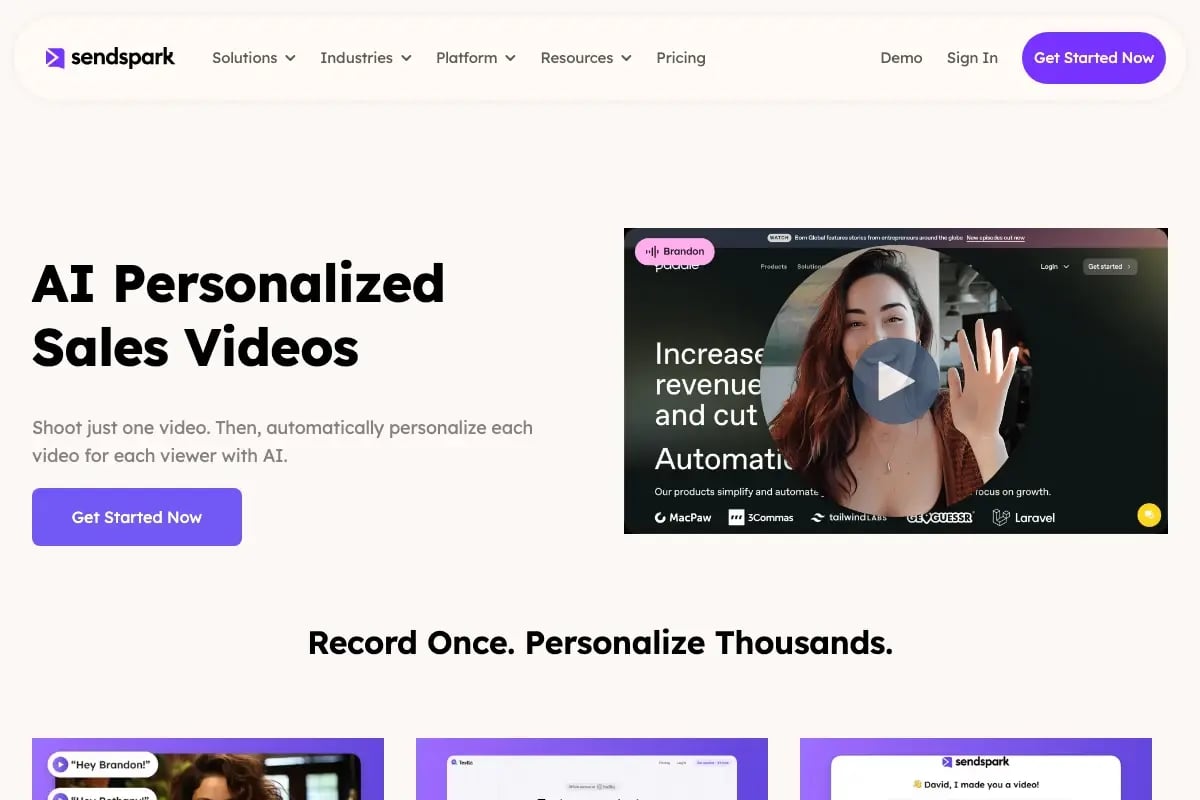
This is where AI video personalization becomes a competitive advantage. ABS demands personalization, but manually recording individual videos for each stakeholder across 50 accounts is impractical. Sendspark’s AI video personalization platform lets you record one video and use AI voice cloning to generate thousands of individually personalized versions. Each stakeholder receives a video that addresses them by name, shows their company website as a dynamic background, and speaks in your cloned voice. Sendspark customers report 200-300% increases in email response rates and 40-50% more meetings booked when using AI-personalized video in account-based outreach.
A sample ABS cadence for a Tier 1 account might look like this:
| Day | Channel | Stakeholder | Action |
|---|---|---|---|
| 1 | Champion | Personalized intro with account-specific insight | |
| 2 | Champion | Connection request with personalized note | |
| 4 | AI-personalized video | Economic buyer | 30-second video showing their company website |
| 6 | Technical buyer | Relevant case study + integration specs | |
| 8 | Phone | Champion | Follow-up call to discuss initial response |
| 10 | Economic buyer | Engage with their recent post, then message | |
| 12 | AI-personalized video | End users | Demo video personalized with their team’s use case |
| 14 | All stakeholders | Mutual action plan with clear next steps |
Step 5: Measure and Optimize with Account-Level KPIs
Traditional sales metrics like calls made and emails sent don’t capture ABS performance. Instead, track account-level engagement metrics that reflect multi-stakeholder depth. The table below shows the KPIs that matter for ABS:
| KPI | What It Measures | Target |
|---|---|---|
| Account engagement rate | % of target accounts with 2+ stakeholders engaged | 60%+ for Tier 1 |
| Stakeholders engaged per account | Average number of unique contacts responding | 3+ for Tier 1 |
| Meetings booked per account | Discovery or demo meetings secured | 1+ per Tier 1 account |
| Pipeline velocity | Days from first touch to close | Reduce by 20% YoY |
| Win rate | % of engaged accounts that close | 25%+ for Tier 1 |
| Average deal size | ACV of closed-won ABS deals | 1.5x vs. traditional |
Review these metrics in your weekly pipeline review and adjust your account list, messaging, and cadence based on what the data shows. Accounts with low engagement after 4 weeks may need a different angle or a Tier downgrade.
Pro tip
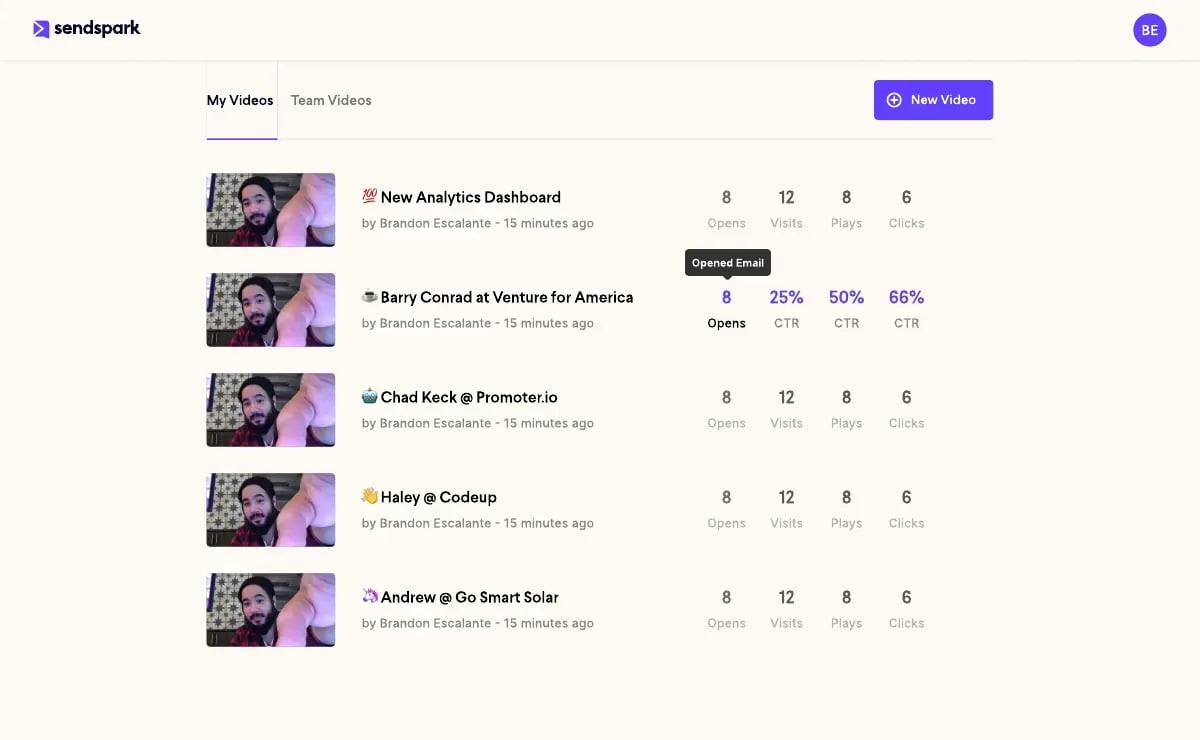
Track video engagement data back in your CRM. When a stakeholder watches 80%+ of an AI-personalized video, that is a stronger buying signal than an email open. Use Sendspark’s video analytics to trigger follow-up calls at the moment of peak interest.
Account-Based Selling Best Practices and Common Mistakes
The difference between ABS programs that produce 3x larger deal sizes and those that burn budget without results comes down to execution discipline. The best practices and common mistakes below are drawn from B2B sales teams running active account-based motions, including patterns observed across Sendspark’s 50,000+ customer base. The summary table consolidates the highest-impact practices alongside the mistakes that most often derail ABS programs.
Best Practices That Drive Results
Start with account selection, not outreach. The accounts you choose to target determine your results more than any messaging tweak. Use data from your demand generation funnel, CRM, and intent signals to prioritize accounts showing active buying behavior. According to Forrester, companies that align sales and marketing on a shared account list see 32% higher deal acceptance rates than those operating in silos.
| Best Practice | Impact | How to Execute |
|---|---|---|
| Co-own accounts with marketing | 32% higher deal acceptance | Weekly account review with both teams present |
| Tier accounts by revenue potential | Focuses effort on highest-value targets | Score accounts by ICP fit + intent signals |
| Map full buying committee | 37% higher close rate with 3+ stakeholders | Document all stakeholders in CRM account record |
| Use AI-personalized video at scale | 200-300% response rate increase | Record once, AI clones voice for each stakeholder |
| Create account-specific content | Demonstrates research, builds trust | One-page briefs, custom landing pages, tailored demos |
| Run mutual action plans | Aligns buying committee on next steps | Shared document with milestones and deadlines |
Common Mistakes and How to Fix Them
| Mistake | Why It Happens | Fix |
|---|---|---|
| Target list too large (500+ accounts) | Fear of missing opportunities | Cut to 50-200 accounts; tier by priority |
| Single-stakeholder focus | Default to working the first responder | Map and engage 3+ stakeholders per account |
| Generic messaging disguised as personalization | Template fatigue at scale | Use AI video personalization for genuine per-stakeholder relevance |
| No sales-marketing alignment | Separate goals and tools | Shared account list, shared KPIs, weekly sync |
| Measuring activity, not engagement | Legacy CRM reporting defaults | Switch to account-level engagement KPIs (see table above) |
| Abandoning accounts too early | Long ABS cycles feel unproductive | Nurture non-responders with lead nurturing campaigns for 90+ days |
The Role of AI-Personalized Video in ABS
Personalization is the hardest part of ABS to scale. Recording individual videos for each stakeholder across dozens of accounts is operationally impossible for most sales teams. This is where AI video personalization changes the economics. Instead of choosing between personalization and scale, you get both. Record one video, and Sendspark’s AI voice cloning generates thousands of individually personalized versions, each addressing the stakeholder by name, showing their company website as a dynamic background, and speaking in your cloned voice.
“When more than one contact is engaged in a deal, the deal is 37% more likely to close. The probability continues to increase as more stakeholders participate in the conversation.”
This statistic is the clearest case for multi-stakeholder engagement in ABS. The challenge has always been execution: how do you reach 6-10 stakeholders per account across 50 accounts without burning out your sales team? AI-personalized video is one answer. By automating the personalization layer, you can deliver account-specific video content to every stakeholder without the manual recording overhead, enabling the kind of multi-channel outreach that ABS requires.
For teams evaluating tools to support their ABS motion, consider how Sendspark integrates with your existing HubSpot CRM and Salesforce. Video engagement data flows bi-directionally, so you can trigger automated follow-ups based on watch behavior and track account-level video engagement alongside your other ABS KPIs. You can also embed AI-personalized video into Outreach and SalesLoft sequences, so video becomes a native channel within your existing sales engagement platform.
Common mistake
Don’t treat ABS as just “better outbound.” If your sales and marketing teams aren’t aligned on the same account list with shared KPIs, you’re running traditional prospecting with a smaller list. ABS requires organizational change, not just a smaller target list.
Equipping Your Buying Committee with the Right Content
Part of successful ABS is buyer enablement: giving each stakeholder the information they need to advocate internally. Different stakeholders need different content. The economic buyer needs ROI calculators and executive summaries. The technical buyer needs integration documentation and security reviews. End users need demo videos and workflow examples. Create an account-specific content kit that addresses each stakeholder’s evaluation criteria, and distribute it through your multi-channel cadence.
This is where a well-structured sales plan pays off. Document the account strategy, stakeholder map, content kit, cadence, and KPIs in a shared document that the entire account team can access. The plan becomes the single source of truth for the account’s ABS motion and ensures continuity if team members change.
Sources & References
- Gartner — “75% of B2B buyers prefer a rep-free sales experience” (2024)
- HubSpot — “Deals with multiple stakeholders engaged are 37% more likely to close” (2024)
- Forrester — “Companies with aligned sales and marketing see 32% higher deal acceptance rates” (2024)
- Harvard Business Review — “B2B buying decisions involve an average of 6-10 stakeholders” (2024)
- LinkedIn Sales Solutions — “Account-based selling strategy and team structure guidance” (2025)
Record One Video. AI Personalizes Thousands.
Sendspark is the AI video personalization platform for B2B sales. Record once, and AI voice cloning generates thousands of individually personalized videos with dynamic backgrounds and personalized thumbnails, each prospect hears their name, sees their website, in your voice. Sales teams see 2-3x more replies.
Get Started NowFrequently Asked Questions
What does account-based selling mean?
Account-based selling is a B2B sales strategy that focuses resources on a small number of high-value target accounts, engaging each with personalized, multi-stakeholder outreach across multiple channels. Unlike traditional volume-based prospecting, ABS starts with a curated account list and designs account-specific campaigns to win each one.
How is account-based selling different from account-based marketing?
Account-based selling is the sales-side execution of an account-based go-to-market strategy, focused on personalized outreach and multi-stakeholder engagement. Account-based marketing (ABM) is the marketing counterpart, focused on account-targeted campaigns, content, and advertising. Both disciplines work best when aligned on the same target account list.
How many accounts should you target in account-based selling?
Most ABS programs target 50-200 accounts, tiered by priority. Tier 1 (your top 20-50 accounts) receives the most personalized treatment with dedicated reps and custom content. Tier 2 (50-100 accounts) gets semi-personalized campaigns. Going beyond 200 accounts dilutes personalization and pushes the program back toward traditional outbound.
What are the key metrics for account-based selling?
The most important ABS metrics are account engagement rate (percentage of accounts with 2+ stakeholders engaged), stakeholders engaged per account (target 3+ for Tier 1), meetings booked per account, pipeline velocity, win rate for engaged accounts, and average deal size compared to traditional outbound. These account-level metrics replace activity-based metrics like calls made.
When should you use account-based selling?
Use account-based selling when your average contract value exceeds $50,000, your sales cycle spans multiple quarters, buying decisions involve 5+ stakeholders, and your total addressable market is measured in hundreds rather than thousands of accounts. ABS is most effective for enterprise B2B deals where the revenue concentration justifies the per-account investment.
What tools do you need for account-based selling?
An effective ABS tech stack includes a CRM (HubSpot or Salesforce) for account and stakeholder tracking, a sales engagement platform (Outreach or SalesLoft) for cadence management, account intelligence tools (Clay, ZoomInfo) for ICP matching and data enrichment, and an AI video personalization platform like Sendspark for scalable personalized outreach across buying committees.
How long does it take to see results from account-based selling?
Most ABS programs require 3-6 months to show measurable pipeline impact, with first closed deals typically arriving at 6-9 months. The longer timeline reflects the deliberate, multi-stakeholder nature of ABS. Teams that invest in proper ICP definition, account mapping, and sales-marketing alignment in the first 60 days tend to see faster results.