
Published October 2026
A rep closes a prospect on price, timeline, and terms, then watches the deal sit for four days while a discount request works its way through an undocumented approval chain. By the time an answer comes back, the prospect has taken a call from a competitor. This is approval drag, and it is one of the most common, least discussed reasons B2B deals stall after the hard part is already done.
Key Takeaways
- Buyers form strong preferences within about 4 hours of comparing vendors, while typical B2B quote turnaround runs 24 to 72 hours, so every day a deal desk request sits in queue is a day of win rate leaking away.
- Deal desk, RevOps, and pricing committee get confused constantly: the committee writes pricing policy, the desk applies it deal by deal, and RevOps maintains the systems both run on.
- A documented discount authority matrix with tiered, risk-based SLAs lets a governed desk clear most requests same-day instead of routing everything through one slow escalation chain.
- The five most common deal desk bottlenecks (serial approvers, undocumented exceptions, a discount authority nobody respects, the quarter-end surge, and a “department of no” reputation) are process failures, not reasons to remove the gate.
- Objective per-recipient engagement data on who actually watched a proposal and clicked through gives an AE real evidence of urgency to attach to a request, instead of asserting it.
What Is a Deal Desk, and Why Do Deals Stall There?
A deal desk is the cross-functional process, usually staffed by sales operations, finance, and legal, that reviews and approves anything that falls outside your standard price book: discount exceptions, custom payment terms, unusual configurations, and precedent-setting contracts. Deals stall there when there is no documented approval matrix, so every exception gets routed through the same ad-hoc escalation chain, regardless of how small or risky it actually is.
The function exists to protect margin at the one moment anyone can still say no: the quote. According to Revology Analytics, benchmark literature published by CPQ vendors puts typical B2B quote turnaround at 24 to 72 hours, while buyers comparing two or three suppliers form strong preferences within about 4 hours. That gap, known as approval drag, compounds with every additional approver: each one adds a queue, each queue adds a day, and the deals that wait longest are usually the biggest ones in the pipeline.
The business case for governing this well is larger than most sales leaders expect. A McKinsey analysis of B2B commercial excellence found that companies with clear pricing governance frameworks close deals 10 to 15% faster than companies without one, largely because internal friction drops once reps and approvers both know the rules in advance.
“A deal desk doesn’t need to be a department. It needs to be a documented process, a designated owner, and a set of clear thresholds.”
— Calvin D., Head of Enterprise Solutions, Rework
Most B2B SaaS companies do not need a full-time deal desk team from day one. As a process, it is worth formalizing as soon as non-standard requests start arriving weekly, usually around the first push upmarket, the first multi-product bundle, or the first time finance flags a revenue-recognition surprise after close.
Deal desk is also not an isolated gate. It is usually the last internal checkpoint in a longer sequence that includes RFI and RFP response, security review, and legal review. By the time a deal reaches the desk, a buying committee has usually already cleared every external hurdle, which is exactly why an internal pricing delay at this stage feels so avoidable to the rep carrying the quota.
Deal Desk vs. RevOps vs. Pricing Committee: Who Owns What
A deal desk applies pricing policy to individual deals, a pricing committee writes that policy on a quarterly cadence, and RevOps owns the systems and data both of them run on. Confusing the three is expensive: when one group tries to do all three jobs, you end up with either a slow committee approving single deals or a fast desk inventing policy on the fly, and both leak margin.
| Function | Decision Cadence | Owns | Does Not Own |
|---|---|---|---|
| Pricing Committee | Quarterly | List prices, floor logic, discount corridor widths, segment pricing policy | Individual deal approvals |
| Deal Desk | Deal by deal, at quote speed | Discount exceptions, non-standard terms, unusual configurations, precedent-setting deals | Setting new pricing policy, CRM or CPQ administration |
| RevOps | Ongoing | CRM/CPQ systems, data, process design, reporting infrastructure | Judgment calls on individual exceptions |
In most B2B SaaS companies, the deal desk reports into RevOps because that keeps it structurally neutral: a sales-owned desk tends to drift permissive, and a finance-owned desk tends to drift restrictive. Wherever it sits, its decisions need executive backing. A desk that any VP can overrule to save a deal is not a governance function, it is decoration. For a deeper look at where this role typically sits as a company scales, see our breakdown of revenue operations team structure and the closely related question of RevOps vs. sales ops, since deal desk ownership is one of the clearest dividing lines between the two.
The 5 Deal Desk Bottlenecks That Actually Slow Deals Down
Most deal desk delays trace back to five recurring failure patterns: serial approvers, undocumented exceptions, a discount authority nobody respects, the quarter-end surge, and a “department of no” reputation that trains reps to hide deals until signature. Each one is a fixable process gap, not a reason to remove the gate entirely.
Common mistake
When a desk gets a reputation as the “department of no,” reps stop bringing deals in early and instead present finished exceptions at signature, which is exactly when there is no time left to counter-structure the deal properly.
| Bottleneck | What It Looks Like | Fix |
|---|---|---|
| Approval archaeology | Five serial approvers each wait on the last; a routine discount takes nine days | Route approvals in parallel, with exactly one accountable approver per threshold |
| “Department of no” reputation | Reps hide deals until signature, then present a finished exception | Measure the desk on deals it improved and cycle time, not on requests it caught |
| Undocumented exceptions | A hidden discount or an expiring clause surfaces at renewal with no record | Log every exception against the opportunity, with renewal terms auto-flagged |
| Discount authority nobody respects | Every deal gets “exceptional” pricing until the price book becomes fiction | Enforce discount bands inside the quoting tool itself, not by policy memo |
| Quarter-end meltdown | Requests pile up in the final two weeks and SLAs collapse when deals are most fragile | Publish early-submission cutoffs and pre-approve common quarter-end asks in advance |
None of these require slower governance to fix. According to Revology Analytics, a desk that tiers requests by risk, rather than queuing everything in order, clears low-risk standard requests same-day because they stop waiting in line behind the complex, precedent-setting deals that actually need scrutiny.
How to Build a Deal Desk Process That Speeds Deals Up
A faster deal desk starts with defining what never needs to touch it, then adding a documented discount authority matrix, risk-tiered service levels, and a record of every exception. Most of these can be stood up in weeks, not quarters, and the speed gain comes from removing ambiguity, not from relaxing the rules.
Pro tip
Publish the standard price book, discount bands, and contract templates first. The desk’s biggest win is reducing how many deals ever reach it, not reviewing the ones that do faster.
Start by publishing the standard box: a current price book, discount bands by segment and deal size (for example, reps quote freely to 10%, managers to 20%, anything above that goes to the desk), and approved order-form clauses. Deals that fall inside this box should clear without any manual review at all.
Next, write a single discount authority matrix that maps every deviation type and size to one accountable approver, not a committee. Route requests through one intake channel, such as a CPQ workflow or a structured form, so side-channel Slack and email approvals stop happening quietly. Then tier requests by risk: standard exceptions clear same or next business day, while complex, multi-approver deals get a defined 2 to 3 day window with active follow-up from the desk itself.
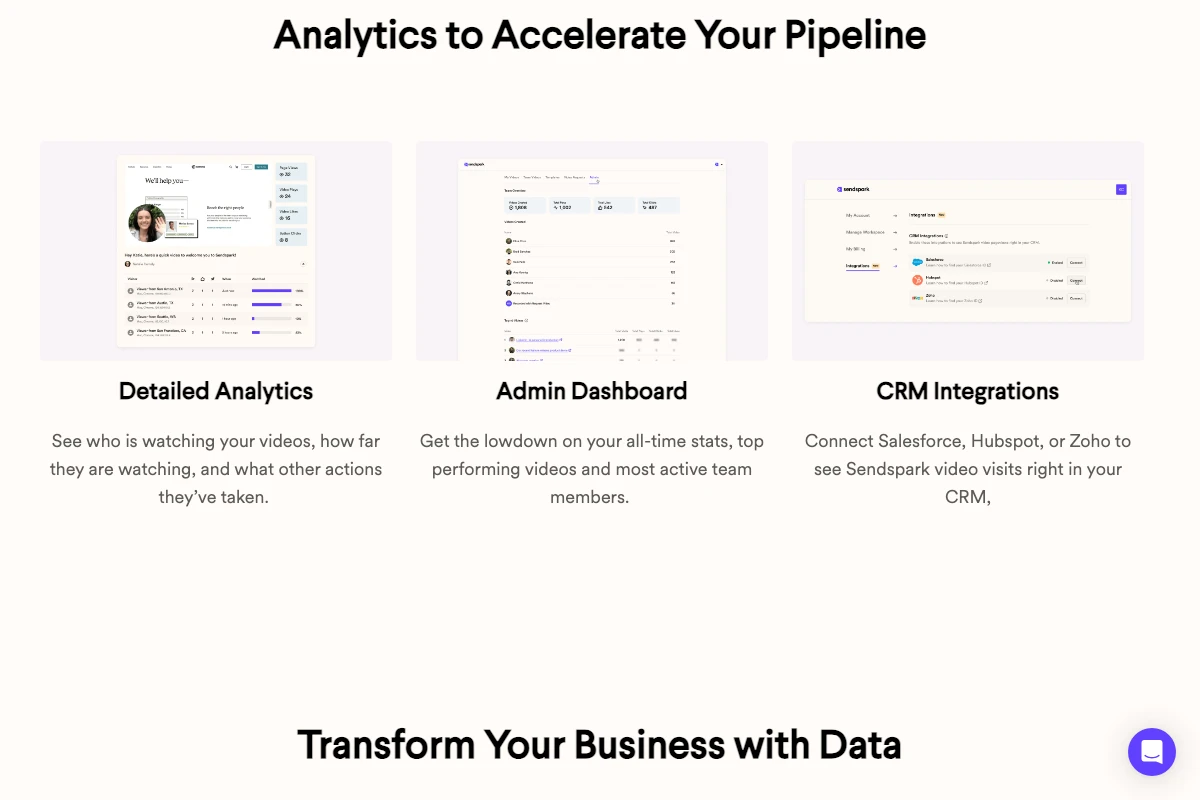
The remaining friction is usually evidentiary: a rep asserting that a deal is urgent, with nothing to back it up beyond a gut feeling. This is where per-recipient video analytics change the conversation. When an AE sends a personalized video to each stakeholder on a buying committee, the desk can see exactly who opened it, how much they watched, and whether they clicked through to a proposal, rather than taking the rep’s word for how engaged the committee actually is. That objective signal is easier to attach to a discount request than a subjective read of a Zoom call, and because Sendspark lets a rep record one video and personalize at scale with AI voice cloning across every stakeholder, the time saved on individual follow-ups is time an AE can instead spend packaging a deal desk request properly the first time, which avoids the approval archaeology that comes from an incomplete ask bouncing back for more context. When that engagement data syncs back into the CRM opportunity automatically, the way it does with a proper CRM integration, the deal desk analyst can see it without asking the rep for a status update at all.
Finally, document every exception against the opportunity record, including the justification and any renewal implications, and feed that log back into a quarterly review of discount trends by segment and rep. If the same exception gets hand-approved dozens of times a year, it belongs in the standard price book, not in the exception queue. This is also the point where deal desk data feeds into a broader win-loss review: a pattern of discounted deals that still lose is a pricing signal, not a sales-execution one.
On complex, multi-stakeholder deals, the discount request itself should not be a surprise to the desk. If the deal already has a documented mutual action plan or a strategic account plan, the pricing ask is already contextualized by who is involved, what they care about, and when they need to decide, which is most of what a deal desk analyst would otherwise have to reconstruct from scratch. This is a natural fit for deal progression workflows built around personalized video, since the same engagement data that moves a deal forward with the buying committee doubles as the evidence an internal approver needs.
| Build Step | Owner | What It Fixes |
|---|---|---|
| Publish the standard box | RevOps + Finance | Shrinks how many deals ever need review |
| Discount authority matrix | Deal Desk + Finance + Legal | Ends escalation-chain roulette |
| Risk-tiered SLAs | Deal Desk | Stops routine requests from queuing behind complex ones |
| Exception logging | Deal Desk + Sales Leadership | Prevents renewal surprises and silent margin leakage |
Approval delays are not unique to pricing. Research from DigitalApplied points to Salesforce data showing 43% of sales reps say generating quotes is the biggest time drain in their process, and cites IDC research finding that slow quoting adds roughly 20% to the average sales cycle. Organizations that formalize the quoting and approval workflow, rather than running it through email and spreadsheets, report quote cycle times falling 30 to 50%, which tracks with what a documented deal desk process does to approval drag specifically.
The underlying business risk of leaving this undocumented is not abstract. HubSpot reports that 28% of sales professionals say lengthy sales processes are the primary reason prospects back out of deals entirely, and internal approval delays are one of the structural causes it names directly, alongside late-stage legal review and procurement. A deal that clears security review and legal review only to stall on an internal discount approval is losing to a gate your own company controls, which is the most avoidable way to lose a deal that was already won.
Frequently Asked Questions
What does a deal desk do in B2B sales?
A deal desk reviews and approves non-standard deals: pricing and discount exceptions, custom payment terms, unusual configurations, and precedent-setting contracts. It exists to protect margin and keep approvals fast by replacing ad-hoc escalation emails with a documented discount authority matrix and clear service levels.
How long should a deal desk approval take?
A standard, in-policy exception should clear in one business day or less, and a complex multi-approver deal should clear in two to three business days with active follow-up from the desk. Approvals that routinely take longer usually point to serial, undocumented escalation rather than a genuinely complex request.
What is the difference between a deal desk and RevOps?
RevOps owns the systems, data, and process design that quoting and approvals run on, while the deal desk makes the judgment calls on individual non-standard deals. Deal desk is often a function that sits inside RevOps, but the two jobs are distinct: one builds the field, the other plays the game on it.
When does a company need a dedicated deal desk?
Treat it as a process, with a published price book and a discount authority matrix, as soon as non-standard requests start arriving weekly. A dedicated team usually follows once the number of AEs and the complexity of quotes exceed what finance or sales operations can review as a side task.
What discount authority should sales reps have without escalation?
A common structure lets reps quote freely within a modest band, often 0 to 10%, with managers authorized up to roughly 20% and anything beyond that routed to the desk. The exact numbers matter less than enforcing them inside the quoting tool itself and logging every exception with a justification.
Does AI replace the deal desk?
No. AI can auto-clear requests that already fall within approved floors and compile comparison data for human reviewers, but setting new pricing floors, approving first-of-kind contract clauses, and judging precedent still require human authority, since those decisions change policy rather than apply it.
How can sales reps speed up their own deal desk requests?
Bring the desk in during negotiation rather than at signature, submit every request through the same intake channel with full context the first time, and attach objective evidence of buyer urgency, such as which stakeholders engaged with a proposal, instead of asserting that the deal is time-sensitive. Reps on a plan with video analytics included already have that evidence sitting in their dashboard.
Record One Video. AI Personalizes Thousands.
Sendspark records your video once, then clones your voice to greet each prospect by name in front of their own website.
Get Started NowSources & References
- Revology Analytics: “Buyers comparing suppliers form strong preferences within about 4 hours, while typical B2B quote turnaround runs 24 to 72 hours” (2026)
- Rework: “A McKinsey analysis of B2B commercial excellence found that companies with clear pricing governance frameworks close deals 10 to 15% faster”, the required attributed quote from Calvin D., and the discount authority tier examples (2026)
- B2BProcess: Deal desk workflow definition, roles, and common failure points used to structure the bottleneck framework in this article (2026)
- DigitalApplied: “43% of sales reps say generating quotes is the biggest time drain” and slow quoting adds roughly 20% to the average sales cycle, citing Salesforce and IDC data (2026)
- HubSpot: “28% of sales professionals say lengthy sales processes are the primary reason prospects back out of deals entirely” (2026)