Most B2B deals don’t die because a rep asked for the sale wrong. They die because nobody asked at all, or because the ask only reached one person in a buying group of five. Sales closing techniques are the structured moves that turn a “this looks good” conversation into a signed contract, and the right one depends entirely on who you’re talking to and what’s actually stalling them.
The average B2B sales win rate is just 21%, according to HubSpot’s 2025 State of Sales research. That’s not because reps are bad at closing. It’s because most B2B deals now involve five decision-makers on average, and a technique built for a single buyer falls apart the moment a procurement lead or a skeptical VP enters the picture. Closing is really the last stage of a broader B2B sales technique stack that starts back at discovery, but this guide zooms in on the final stretch: 10 closing techniques that still work, when to use each one, and how to adapt them for a deal with more than one signature on it.
Key Takeaways
- There’s no single “best” closing technique. Top B2B reps match the technique to the buyer and the moment, from the assumptive close on a warmed-up deal to the cost-of-inaction close on a stalled one.
- Deals with the decision-maker actually in the room close far more often: Gong data shows enterprise deals are 233% less likely to close if the decision-maker isn’t involved.
- Multi-threading (looping in more than one stakeholder) boosts win rates by 130% in deals over $50K, according to Gong, which is why a single closing call with one buyer rarely finishes a real B2B deal.
- The average B2B win rate sits at 21%, but HubSpot and Highspot both find that teams with structured technique training and coaching push meaningfully past that baseline.
- A short personalized video recap sent to every stakeholder after the final call gives a distributed buying committee something a single closing conversation can’t: a version of the pitch each person can watch, addressed by name, on their own time.
What Are Sales Closing Techniques (And Why the Old Ones Are Losing Ground)?
A sales closing technique is a structured way of asking a qualified buyer to commit, built around timing, framing, and the specific objection standing between them and a signature. The old model assumed one buyer making one decision. Today’s B2B deal is a group decision, which is why techniques built for a single-threaded sale increasingly stall.
HubSpot’s research found that five decision-makers are involved in the average B2B sale, not one. Closing techniques that work great in a one-on-one conversation, like a hard assumptive close, can actively backfire when a procurement stakeholder who never heard the pitch reads the follow-up email cold. The technique has to survive contact with people who weren’t in the room, which is why the groundwork you lay during sales call preparation — mapping who else needs to sign off — matters just as much as the close itself.
That complexity shows up in the win-rate data. The average B2B sales win rate is 21%, per HubSpot’s 2025 report — meaning roughly four out of five qualified opportunities never close at all. Highspot’s State of Sales Enablement 2025 research found that go-to-market teams with structured, AI-guided coaching programs see win rates closer to 36%. The gap between 21% and 36% isn’t luck. It’s technique, consistency, and knowing which close fits which deal. Win rate is one of four multipliers in the sales velocity formula — closing that 21%-to-36% gap moves the whole number, not just your quota attainment.
Advanced strategy
Before you pick a closing technique, map the buying committee. A close aimed at your champion alone ignores the finance and IT stakeholders who can quietly veto the deal after the call ends.
Quick Comparison: 10 Closing Techniques at a Glance
The right closing technique depends on the buying signal you’re seeing, not a personal favorite you default to every time. The table below maps each technique to the situation it fits and the specific way it backfires when used at the wrong moment.
How we evaluated: we selected techniques with a long track record in B2B sales training, prioritizing ones that respect a multi-stakeholder buying process over pressure tactics built for a single consumer decision. Each entry below includes when it works, when it doesn’t, and a real script line you can adapt.
| Technique | Best Used When | Risk If Misused |
|---|---|---|
| Assumptive Close | Buyer is giving strong, repeated buying signals | Reads as pushy if the buyer isn’t actually ready |
| Summary Close | Long or complex deal with many discussed features | Drags on and re-opens objections if too long |
| Now-or-Never Close | A real deadline exists (budget cycle, pricing change) | Destroys trust instantly if the urgency is fake |
| Question Close | Buyer is hesitant but hasn’t said why | Feels like an interrogation if overused |
| Takeaway Close | Buyer is stalling or downplaying value | Can end the deal if the buyer takes the “no” at face value |
| Ben Franklin Close | Analytical buyer weighing two real options | Too slow for buyers who’ve already decided emotionally |
| Sharp Angle Close | Price is the one remaining objection | Can look like you had room to discount all along |
| Puppy Dog (Trial) Close | High-stakes purchase where proof beats persuasion | Adds support burden if the trial isn’t scoped tightly |
| Cost-of-Inaction Close | Buyer sees the product as “nice to have,” not urgent | Feels manipulative if the cost isn’t real and quantifiable |
| Video Recap Close | Multi-stakeholder deal where not everyone joined the call | Falls flat if it isn’t personalized per recipient |
10 Sales Closing Techniques That Actually Work in B2B
These 10 techniques cover the situations B2B reps run into most: a warmed-up buyer, a stalled deal, a price objection, and a buying committee that never all sat in the same room. Pick based on the signal in front of you, not habit.
1. The Assumptive Close
The assumptive close treats the deal as already decided and moves straight to logistics. Instead of “Do you want to move forward?” you ask, “Should implementation start the first week of next month or the following one?” It works because it removes the moment of friction where a hesitant buyer can say no, replacing it with a smaller, easier decision.
Use it only when the buyer has already sent clear signals: asking about onboarding, contract terms, or start dates. Used too early, on a buyer who hasn’t mentally committed, it reads as presumptuous and can stall a deal that was still moving forward.
2. The Summary Close
The summary close recaps the specific value and pain points agreed on earlier, then asks for the decision directly. “We’ve confirmed this cuts your onboarding time in half and gives your ops team the reporting they’ve been missing — does that cover what you need to move forward?” It works especially well after a long, multi-call sales cycle where details have piled up.
Keep it tight. The goal is reinforcement, not a re-pitch. Introducing new information at this stage reopens the deal instead of closing it.
3. The Now-or-Never (Urgency) Close
This technique ties the decision to a real deadline: an end-of-quarter price, a limited onboarding cohort, a budget window that closes. It’s effective because urgency is one of the few things that reliably breaks a stalled decision loose.
The catch: the urgency has to be real. A fabricated deadline is easy for an experienced buyer to spot, and once they catch one manufactured deadline, they distrust every claim you make afterward — not just this one.
4. The Question Close
Rather than asking for the sale, the question close surfaces the real objection: “What would need to be true for this to be an easy yes?” It works because silence and vague hesitation usually hide a specific, fixable concern, and this technique gets it into the open where you can address it.
Use it when a buyer says things like “let me think about it” without elaborating. It’s a diagnostic close as much as a closing move, and it pairs well with a solid objection-handling script for whatever concern it surfaces.
5. The Takeaway Close
The takeaway close removes something, a feature, a discount, a start date, rather than adding pressure. “Given the timeline you mentioned, it sounds like the Growth plan might make more sense than Team for now — should we scope it down?” Loss aversion often re-engages a buyer who was quietly stalling.
This one requires confidence and a light touch. If the buyer takes the smaller offer at face value and the “no” was closer to a “maybe” than you thought, you can talk yourself into a worse deal than you started with.
6. The Ben Franklin Close
Named for Franklin’s habit of listing pros and cons before a decision, this technique walks the buyer through a written comparison of moving forward versus staying put. It’s built for analytical buyers who need to see the tradeoff laid out, not just hear it.
It’s slower than most closes on this list, so save it for buyers who’ve explicitly said they’re comparing options or need to justify the decision internally with data.
7. The Sharp Angle Close
When a buyer asks for a concession, “Can you throw in onboarding for free?”, the sharp angle close agrees, conditionally: “If I can include onboarding, can we get this signed by Friday?” It converts a request into a firm commitment instead of a free giveaway.
This only works when price or terms are the single remaining blocker. Used on a buyer with unresolved product concerns, it just adds a discount to a deal that still won’t close. Trading a concession for a firm commitment, instead of giving it away, is the same principle behind most of the techniques in our guide to B2B sales negotiation tactics.
8. The Puppy Dog (Trial) Close
Named after the pet-store tactic of letting a customer take a puppy home for the weekend, this close gets the product into the buyer’s hands, a limited trial, a pilot with a subset of the team, before asking for the full commitment. Ownership psychology does the persuading instead of a pitch.
It’s strongest for high-stakes purchases where the buyer needs proof, not more talking. Scope the trial tightly with a clear end date and success criteria, or it quietly turns into an unpaid extension of your sales cycle.
9. The Cost-of-Inaction Close
This technique reframes the decision from “how much does this cost?” to “how much is the status quo already costing you?” It’s especially effective on buyers who see the purchase as optional rather than urgent. Quantify the cost wherever you can: hours lost, deals missed, churn from a problem left unsolved.
The number has to be real and defensible. An invented cost-of-inaction figure is one of the fastest ways to lose credibility with a buyer who’s doing their own math in parallel.
10. The Video Recap Close
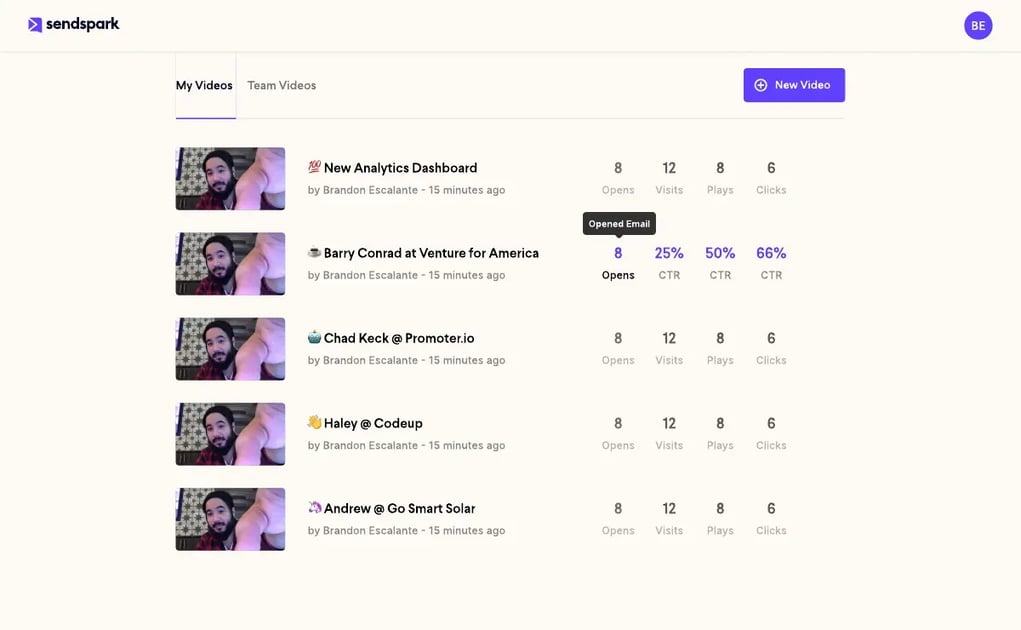
The video recap close is built for the reality that most B2B deals involve stakeholders who never joined a single call. It fits squarely into deal progression, the mid-funnel stage where a deal either keeps moving or quietly stalls. After the final conversation, record one short video summarizing the deal, the agreed value, and the next step. Then use an AI video personalization platform like Sendspark to personalize that recording for every stakeholder by name, in your own AI-cloned voice, instead of retyping the same recap email five times.
Sendspark’s Combined Videos feature makes this practical at scale: record a short personalized intro that says the recipient’s name and their specific role in the decision, then attach the same core recap segment everyone needs to see. The buyer who missed the call gets a version of the pitch made for them, not a forwarded email thread with no context.
Pro tip
Send the video recap to every stakeholder individually, not just your champion. Sendspark’s video analytics show you exactly who opened and watched it, so you know which stakeholders are actually engaged before the final decision meeting. See Sendspark’s pricing page for which plans include combined-video personalization, and our comprehensive guide to video prospecting covers how to use video across the rest of the sales cycle, not just the close.
Record One Video. AI Personalizes Thousands.
Sendspark is the AI video personalization platform for B2B sales. Record once, and AI voice cloning generates thousands of individually personalized videos with dynamic backgrounds and personalized thumbnails — each prospect hears their name, sees their website, in your voice. Sales teams see 2-3x more replies.
Get Started NowHow to Choose the Right Closing Technique for the Deal
Choose your closing technique based on two things: how many stakeholders are involved, and what’s actually blocking the decision. A single-buyer deal with a warmed-up prospect calls for a fast assumptive or sharp angle close. A five-person buying committee with a quiet non-participant calls for multi-threading and a video recap, not a single well-timed question.
Stakeholder count matters more than most reps assume. Gong’s analysis of 1.8 million new business deals found that multi-threading — engaging more than one stakeholder — boosts win rates by 130% in deals over $50K. Gong’s sales research also found the chance of closing is 258% higher on calls with multiple people from the selling side than when a rep goes in alone, and that enterprise deals are 233% less likely to close if the decision-maker isn’t directly involved. A closing technique aimed at one person in a five-person committee is solving the wrong problem.
Objection type is the second variable. A price objection calls for the sharp angle or takeaway close. A “we don’t see the urgency” objection calls for cost-of-inaction. A silent, unstated objection calls for the question close first, before you try to close anything. Diagnose before you pick the technique, not after.
| Deal Scenario | Recommended Technique(s) |
|---|---|
| Single buyer, strong buying signals | Assumptive Close, Summary Close |
| Multi-stakeholder deal, not everyone on the call | Video Recap Close, Question Close with each stakeholder |
| Price is the last objection | Sharp Angle Close, Takeaway Close |
| Buyer sees no urgency | Cost-of-Inaction Close, Now-or-Never Close (only if genuine) |
| Analytical buyer comparing options | Ben Franklin Close, Summary Close |
| High-stakes purchase, buyer needs proof | Puppy Dog (Trial) Close |
“The close isn’t about pressure or manipulation. It’s simply confirming the decision they’ve already made. When done right, it feels natural and mutually beneficial.”
— Brian Will, business expert, writing for Entrepreneur
That’s the throughline across every technique on this list. None of them work as a way to talk someone into a decision they haven’t made. They work as a way to remove the friction, confusion, or missing information standing between a real “yes” and a signature — which is exactly why matching the technique to the actual blocker matters more than picking a favorite and using it every time.
Frequently Asked Questions
What is the most effective sales closing technique?
There isn’t one universally best technique. The assumptive close works well when a buyer has given strong signals, while the cost-of-inaction close works better on a buyer who sees no urgency. Matching the technique to the buyer’s actual objection beats defaulting to one favorite close.
How do you close a B2B deal without sounding pushy?
Use techniques that respond to a real signal instead of manufacturing pressure, like the summary close or question close. Avoid manufactured urgency (a fake deadline) unless the deadline is genuinely real, since buyers who catch one fabricated close stop trusting everything else you say.
What is the assumptive close technique?
The assumptive close treats the sale as already decided and moves the conversation to logistics, like start dates or onboarding steps, instead of asking directly for a yes. It works best after a buyer has already shown strong buying signals, such as asking about implementation timelines.
How many touchpoints does it take to close a B2B deal?
Most B2B deals require multiple touchpoints across a multi-week cycle, not one closing conversation. Because the average deal involves five decision-makers, per HubSpot, closing usually means reaching several stakeholders individually rather than one call with a single buyer.
What’s the difference between a hard close and a soft close?
A hard close asks directly and immediately for a commitment, like the now-or-never close. A soft close moves the buyer toward a decision more gradually, like the question or summary close. Hard closes suit warmed-up buyers; soft closes suit hesitant or analytical ones.
How do you close a deal with multiple decision-makers?
Multi-thread the deal: engage more than one stakeholder directly instead of relying on a single champion to relay information. Gong found multi-threading boosts win rates by 130% in deals over $50K, and a personalized video recap reaches stakeholders who missed the live call.
Can a personalized video help close more B2B deals?
Yes, particularly for stakeholders who weren’t on the final call. A short, AI-personalized video recap addressed to each decision-maker by name gives a buying committee a version of the pitch they can watch on their own time, which a single call or generic follow-up email can’t replicate.
Sources & References
- HubSpot Blog, “97 Key Sales Statistics” — “The average sales win rate is 21%” and “five decision-makers are involved in every sale on average” (2025)
- Gong, “30 Mind-Blowing Sales Stats” — “The chance of closing a deal on calls with multiple participants from the seller’s organization is 258% higher”; “SMB deals that don’t involve DMs are 80% less likely to close”; “Enterprise deals are 233% less likely to close if the DM isn’t involved” (2025)
- Highspot, State of Sales Enablement Report — “Go-to-market teams with AI-guided sales coaching programs see an average win rate of 36%” (2025)
- Entrepreneur, Brian Will — “The close isn’t about pressure or manipulation… it’s simply confirming the decision they’ve already made” (2025)
- Gong, “Data shows top reps don’t just sell, they orchestrate with AI”: “multi-threading boosts win rates by an average of 130% in deals over $50K” (analysis of 1.8 million new business deals closed in 2024)
- RAIN Group, Center for Sales Research — further reading on what separates top-performing B2B sellers
Published September 2026
Record One Video. AI Personalizes Thousands.
Sendspark is the AI video personalization platform for B2B sales. Record once, and AI voice cloning generates thousands of individually personalized videos with dynamic backgrounds and personalized thumbnails — each prospect hears their name, sees their website, in your voice. Sales teams see 2-3x more replies.
Get Started Now