Most sales roleplay programs die within a month of onboarding. Not because the exercises don’t work, but because live sessions need two calendars to line up every single week, and that friction kills consistency faster than any objection ever will. The real question isn’t whether to run roleplay. It’s which method actually survives contact with your team’s schedule: live manager-led practice, an AI roleplay simulator, or video-recorded self-practice reps do on their own time.
Published September 2026
Key Takeaways
- Live manager-led roleplay, AI roleplay simulators, and video-recorded self-practice each solve a different bottleneck — pick based on scheduling friction, budget, and how realistic the practice needs to be.
- 91% of sellers say keeping a buyer’s attention virtually is hard, and roleplay is the only training format that lets reps fail at that safely before a real call, according to RAIN Group.
- Reps who rate their coaching highly are 50% more likely to hit quota — but coaching only works once reps have already rehearsed the moment being coached.
- The most reliable cadence mixes weekly, low-friction video self-practice with monthly live or AI-simulator sessions for the hardest scenarios — not one method alone.
- Recording roleplay attempts as shareable video removes the number one blocker to consistent practice: finding two calendars that line up every week.
What Is Sales Roleplay Training (and Why Do Most Programs Fizzle Out)?
Sales roleplay training is structured practice where reps act out real sales conversations — cold calls, objections, multi-stakeholder demos — before they face an actual buyer. It works because it turns abstract product knowledge into rehearsed, safe-to-fail conversational reps. Most programs still fail within a few months, and the reason is almost never the exercises themselves. It’s the operational drag of running them.
The goal of roleplay is simple: let reps stumble in a simulation so they don’t stumble in front of a paying prospect. A rep can know every feature on the pricing page and still freeze the first time a buyer says “we’re already using a competitor.” Roleplay is the only training format that puts that exact moment in front of a rep before it costs a real deal during live sales prospecting. It builds the reflexes that a slide deck or a certification quiz never will. Our guide to building a sales training and coaching program covers the broader framework roleplay sits inside — training loads the knowledge, roleplay activates it, and coaching corrects it.
So why do most programs quietly stop after the first month? Two reasons, almost every time. First, scheduling friction: a live roleplay session needs a rep and a manager (or two reps) free at the same time, and in a distributed sales org, that’s harder to pull off weekly than it sounds. Second, a missing feedback loop: a roleplay session without specific, actionable notes is just rehearsal. If nobody tells a rep what to fix, they repeat the same mistake on the next ten real calls, and the training budget quietly evaporates.
Live Roleplay vs. AI Simulators vs. Video Practice: Quick Comparison
The three practical ways to run sales roleplay training are live manager-led sessions, AI roleplay simulators, and video-recorded self-practice with async review — and none of them is right for every scenario. Live roleplay gives you the most realism but the most scheduling friction. AI simulators give you infinite, on-demand repetition but flatter dialogue. Video practice removes the scheduling problem almost entirely and scales to a distributed team, at the cost of losing real-time back-and-forth.
How we evaluated: we compared the three methods on four criteria sales leaders actually care about when choosing a training cadence — realism (how closely it mirrors an actual buyer interaction), cost (platform spend plus manager or peer time), scheduling friction (how hard it is to actually get a session to happen), and feedback speed (how long a rep waits to learn what to fix).
| Method | Best For | Realism | Cost | Scheduling Friction | Feedback Speed |
|---|---|---|---|---|---|
| Live manager/peer-led roleplay | High-stakes deal prep, complex negotiation | High | High (manager time) | High | Immediate, but easy to skip |
| AI roleplay simulators (e.g. Hyperbound, Quantified, Second Nature, Gong Enable) | High-volume drilling, objection reps | Medium | Medium-high (new platform) | Low | Instant, automated |
| Video-recorded self-practice + async review | Weekly reinforcement, distributed teams | Medium | Low | Very low | Fast (within a set SLA) |
Live roleplay is still the gold standard for the highest-stakes conversations — a multi-stakeholder enterprise negotiation, a procurement redline call — because a manager can read tone and body language in real time and redirect on the spot. It’s just too expensive in manager hours to run every week for every rep, which is why it works best as a monthly or as-needed escalation, not the weekly default.
AI roleplay simulators like Hyperbound, Quantified, and Second Nature solve the availability problem: a rep can drill a cold-call opener or a pricing objection at 9pm with no manager involved, as many times as it takes. Gong has moved into this territory too with Gong Enable’s AI-generated practice scenarios. The tradeoff is dialogue that still reads a little scripted, and a new tool for your enablement stack to license and roll out.
Video-recorded self-practice sits between the two. A rep records a two-minute attempt at a scenario, exactly the way they’d record an AI-personalized video for a real prospect, and shares it for a manager to review whenever they get a free ten minutes. There’s no simulator to buy and no calendar to coordinate — just a recording and a review, which is why it’s the method most teams can actually sustain every week.
8 B2B Sales Roleplay Scenarios (With Scripts)
A good sales roleplay scenario is specific, realistic, and tied to a skill gap you can actually see in your team’s real calls — not a generic “practice objection handling” prompt. Below are eight B2B scenarios worth rotating through, each targeting a distinct moment reps consistently struggle with, from the first five seconds of a cold call to a renewal conversation with a customer who’s gone quiet.
1. Cold Call Opener
Scenario: You’re calling a mid-level manager cold. No prior relationship. They pick up sounding busy and slightly annoyed.
Skill: Hooking attention in the first five seconds without sounding like every other cold call they’ve had this week. See our comparison of cold calling and video prospecting for how this opener changes when the “call” is a personalized video instead. For the full hook-solution-proof-CTA structure behind that opener, see our B2B sales elevator pitch examples.
“Hi [Name], I know I’m catching you out of nowhere. We helped [similar company] cut onboarding time by a third in about six weeks — got thirty seconds, or should I just send it over?”
2. Discovery Call Past a Gatekeeper
Scenario: You’re trying to reach the VP of Ops. Their assistant answers and asks what this is regarding.
Skill: Earning an internal transfer without sounding like a pitch the gatekeeper has heard a hundred times.
3. Price/Discount Objection
Scenario: The buyer is interested but asks for a 20% discount to match a cheaper competitor’s tier.
Skill: Defending value without immediately conceding. Our sales objection handling scripts cover seven more objection archetypes worth rotating in alongside this one.
“I hear you on budget. That price includes [specific feature] — teams tell us it saves about ten hours a week. If we strip it out to match their tier, that’s the tradeoff. Is that ten hours worth the difference to your team?”
4. Competitor Comparison Objection
Scenario: The prospect already uses a well-known competitor and says it’s “good enough.”
Skill: Differentiating without bashing the incumbent — naming a real gap, then asking a question instead of asserting one.
5. Multi-Stakeholder Buying Committee Demo
Scenario: You’re presenting to four people at once — the end user, their manager, a finance lead, and the CTO — and they’re each asking a different question mid-demo.
Skill: Triaging competing questions live without losing the room. Our guide to multi-threading a buying committee goes deeper on mapping each stakeholder’s priority before the call even happens.
6. Procurement or Legal Redlines
Scenario: The deal is nearly closed, but procurement sends back a contract with twenty redlines, including an indemnification clause.
Skill: Staying collaborative under pressure while keeping the deal moving instead of stalling it.
7. Renewal Conversation With Dipping Usage
Scenario: Six months out from renewal, the account’s usage has quietly dropped and they seem hesitant to commit.
Skill: Surfacing the disengagement directly instead of waiting for the renewal call to force the conversation.
8. Silent, Disengaged Virtual Buyer
Scenario: You’re on a video call. The prospect’s camera is off, or they’re nodding without saying anything.
Skill: Naming the disengagement out loud and offering a graceful off-ramp instead of talking louder into the silence.
“91% of sellers find it challenging to gain buyers’ attention and keep them engaged virtually.”
— RAIN Group, 114 Essential Sales Statistics to Improve Performance
That statistic is exactly why scenario 8 belongs in every rotation. RAIN Group also found that 71% of sellers now conduct more than half their sales virtually, a 163% jump from pre-pandemic levels — which means the skill of reading (and rescuing) a disengaged video call isn’t a niche skill anymore. It’s close to the default selling environment for most B2B reps.
Record One Video. AI Personalizes Thousands.
Sendspark is the AI video personalization platform for B2B sales. Record once, and AI voice cloning generates thousands of individually personalized videos with dynamic backgrounds and personalized thumbnails — each prospect hears their name, sees their website, in your voice. Sales teams see 2-3x more replies.
Get Started NowHow to Build a Roleplay Training Cadence That Sticks
A roleplay cadence that survives past onboarding needs to be a lightweight weekly habit, not a quarterly event that requires a calendar invite three weeks out. The five-step framework below is built around that constraint: pick one skill gap at a time, make weekly practice nearly frictionless, and reserve manager and simulator time for the scenarios that actually need it.
- Pick the skill gap from real call reviews, not a guess. Pull five recent calls. Find the one moment reps consistently fumble — a specific objection, a specific stakeholder type — and build this week’s scenario around exactly that.
- Assign one short video scenario reps record solo. Keep it to two or three minutes. The goal is reps rehearsing the moment, not producing something polished.
- Set a 48-hour manager review SLA. Feedback that arrives a week later has already lost its usefulness — the rep has moved on and forgotten the exact moment they were unsure about.
- Escalate the hardest scenarios to live or AI-simulator sessions monthly. Use the weekly videos to flag which reps and which scenario types need real-time, higher-stakes practice, then spend manager time there instead of everywhere.
- Track completion and improvement, not just attendance. A simple log of who submitted this week’s video and whether their delivery is improving does more for accountability than a mandatory-meeting policy ever will.
The weekly layer is where most programs actually break down, and it’s also the easiest one to fix. A rep records a roleplay attempt the same way they’d record an AI-personalized video for a live prospect (our comprehensive guide to video prospecting covers that recording workflow in detail) — one take, no scheduling — and shares the link. The manager watches it whenever they get ten free minutes and leaves feedback. No calendar invite required on either side. Our guide to sales leadership coaching frameworks covers how to structure the feedback itself once the video’s in front of a manager, and our 1:1 coaching session guide shows where a monthly live review fits into that same cadence.
Pro tip
Rotate scenarios every week instead of repeating the same one. If reps drill the identical objection twice, they start memorizing a script instead of building the underlying skill — and the script falls apart the moment a real buyer phrases it differently.
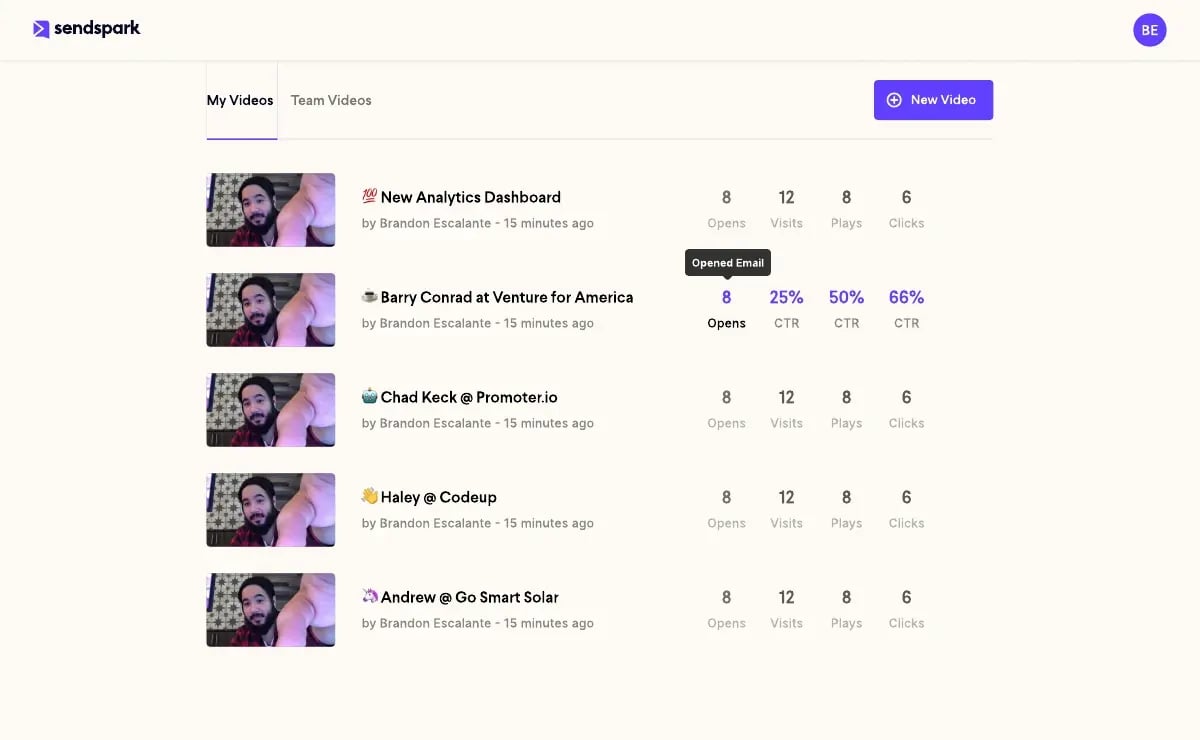
Video review also has an advantage live roleplay doesn’t: a manager can pause, rewind, and point to the exact ten-second stretch where a rep’s tone dropped or they talked over an objection instead of addressing it. That’s a level of precision that’s hard to replicate from memory right after a live session ends. Tracking who’s actually watching and finishing reviews is its own visibility problem — video analytics that show watch percentage and completion make it obvious when a manager’s review queue is backing up before it becomes a habit nobody follows.
Common Sales Roleplay Training Mistakes to Avoid
Most roleplay programs don’t fail because the scenarios were wrong. They fail because of a handful of repeatable process mistakes — a missing feedback loop, scenarios too sanitized to matter, or a manager workload nobody accounted for. Fixing these is usually cheaper than any new training platform. The same mistakes show up right after a sales kickoff, where a burst of practice energy fades within weeks without a follow-up cadence — see our guide to sales kickoff reinforcement for a structured fix.
| Mistake | Fix |
|---|---|
| No feedback loop after the roleplay | Set a 48-hour review SLA and require at least one specific, timestamped note per submission. |
| Unrealistic or sanitized scenarios | Pull scenarios from real call recordings and actual buyer language, not a generic template. |
| Treating roleplay as onboarding-only | Keep a standing weekly slot for every rep, regardless of tenure — top performers need new-objection reps too. |
| Grading performance instead of building skill | Ask “what would you try differently?” instead of scoring the attempt — reps disengage the moment practice starts feeling like an exam. |
| Ignoring manager bandwidth | Route routine drilling to an AI simulator or async video review; reserve live manager time for escalated scenarios only. |
Common mistake
Don’t let roleplay turn into a compliance checkbox. The moment reps sense it’s tracked for attendance rather than actually reviewed, they’ll go through the motions and stop taking the feedback seriously.
The payoff for getting this right is measurable, not just anecdotal. Reps who rate their coaching as “excellent” or “very good” are 50% more likely to hit or exceed quota, and reps who hit quota are 50% more likely to have received external coaching in the first place, according to compiled research from MySalesCoach and Aircall. Roleplay is what makes that coaching concrete — a manager can only coach a specific moment if a rep has actually rehearsed it first.
Frequently Asked Questions
What is sales roleplay training?
Sales roleplay training is structured practice where reps act out realistic sales conversations, such as cold calls, objections, or multi-stakeholder demos, in a low-stakes setting before facing an actual buyer. The goal is to build conversational reflexes and surface skill gaps through repetition and feedback, not to memorize a script.
How often should sales teams run roleplay?
Weekly is the cadence that actually sticks. Short, frequent sessions reinforce a skill before it fades, while occasional quarterly workshops tend to be forgotten within weeks. A weekly video-recorded scenario paired with a monthly live or AI-simulator session for harder scenarios covers both ends of that need.
What makes a good sales roleplay scenario?
A good scenario is specific, realistic, and tied to a skill gap you’ve actually seen in recent calls — not a generic “handle an objection” prompt. It should use real buyer language and real constraints, like a distracted stakeholder or a time-pressured procurement call, rather than a sanitized textbook version of the conversation.
Are AI roleplay simulators worth the investment?
AI roleplay simulators are worth it for high-volume, repetitive drilling, like mastering a cold-call opener or a common pricing objection, where reps benefit from unlimited on-demand reps without tying up a manager’s time. They’re best treated as a complement to live coaching and video review, not a full replacement for either.
How do you give feedback after a sales roleplay?
Effective feedback is specific, timestamped, and fast — ideally within 48 hours, while the rep still remembers exactly what they were unsure about in the moment. Focus on one or two concrete changes per session rather than a long list, and frame it around what to try next time rather than what went wrong.
How long should a sales roleplay session be?
Keep the practice itself short, around two to five minutes for a single scenario, with a similar amount of time for feedback. Longer sessions lead to fatigue and diminishing returns; several short, focused reps beat one long roleplay marathon for actual skill retention.
Can video-recorded roleplay replace live manager coaching?
No, and it isn’t meant to. Video-recorded roleplay handles the weekly volume of low-stakes practice that live coaching doesn’t scale to, while live sessions stay reserved for the highest-stakes scenarios, like a multi-stakeholder negotiation, where a manager needs to read tone and body language in real time.
Sources & References
- RAIN Group — “91% of sellers find it challenging to gain buyers’ attention and keep them engaged virtually” and “71% of sellers now conduct more than half their sales virtually, a 163% increase from pre-pandemic levels” (2026)
- HubSpot, citing MySalesCoach/Aircall — “Sales reps who rate their coaching as ‘excellent’ or ‘very good’ are 50% more likely to achieve or exceed their quota” and “sales reps who hit quota are 50% more likely to receive external coaching” (2026)
- Highspot — “9 sales role plays and exercises that boost skills,” used to inform scenario structure and skill-mapping in this guide (2026)
- Hyperbound — Multiparty AI sales roleplay scenario design for buying-committee practice (2026)
- Gong — Gong Enable’s AI-generated practice scenarios built from real call context (2026)
Record One Video. AI Personalizes Thousands.
Sendspark is the AI video personalization platform for B2B sales. Record once, and AI voice cloning generates thousands of individually personalized videos with dynamic backgrounds and personalized thumbnails — each prospect hears their name, sees their website, in your voice. Sales teams see 2-3x more replies.
Get Started Now