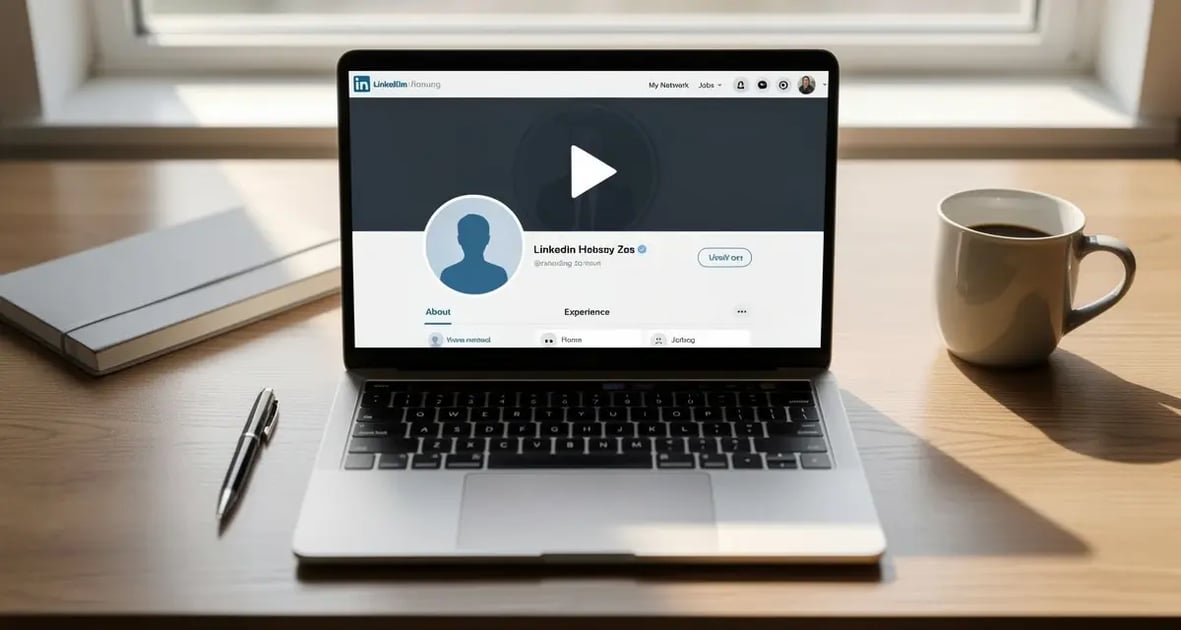
Recruiters, buyers, and prospects check your LinkedIn profile before they ever reply to your email or take your call. If your "About" section reads like a résumé or, worse, like it was generated by ChatGPT in ten seconds, you have already lost some of that reader before they scroll past the fold.
In 2026, that first impression has gotten harder to win. LinkedIn's algorithm now actively suppresses profiles that read as AI-written, and 67% of B2B buyers say they'd rather research and buy without ever talking to a rep if they can help it. Your summary may be the only real "sales conversation" a prospect has with you before they decide whether to reply.
This guide gives you eight ready-to-adapt LinkedIn summary templates for different sales roles, the tactics that make them work, and a genuinely new angle for 2026: why a short pinned video now does more for your credibility than another paragraph of text.
Updated August 2026
Key Takeaways
- LinkedIn's 2026 authenticity update can cut reach for AI-generated profile copy by up to 47%, so sounding like a real, specific person now matters for visibility, not just tone.
- Gartner found that 67% of B2B buyers prefer a rep-free buying experience, which raises the stakes on the few "reps" a prospect does see, including your LinkedIn profile.
- Your summary has a hard 2,600-character limit and only the first 2-3 lines show before "see more," so the opening line is doing most of the work.
- LinkedIn posts with video average 5.1% engagement versus 2.8% for text-only posts, which is why pinning one short video can outperform another paragraph in your Featured section.
- The eight templates below cover eight different sales roles, from SDR to founder, so you can adapt one instead of staring at a blank "About" box.
What Is a LinkedIn Summary and Why It Still Matters for Sales in 2026
Your LinkedIn summary is the "About" section beneath your headline, and it's the first place a prospect goes to decide whether you're worth a reply. In 2026 it has to do two jobs at once: read as unmistakably human to LinkedIn's own authenticity algorithm, and convince a skeptical buyer that you're not another templated pitch showing up in their inbox.
That second job has gotten harder. Buyers now do most of their own research before they'll agree to a conversation, and Gartner's 2026 sales survey found that 67% of B2B buyers would prefer a rep-free buying experience if they could get one. When a buyer does click through to your profile, your summary is competing with every other rep's profile they've seen that week, and most of those now sound the same because they were drafted by the same three AI writing tools.
A strong summary still does the fundamentals well: it names who you help, what result you deliver, and why someone should choose you specifically. What's changed is that it also has to prove a real person is behind it, which is exactly what the fresh-angle section below covers.
8 LinkedIn Summary Examples for Sales Reps
Every sales role needs a slightly different summary, because the buyer reading it is looking for different proof depending on whether you're an SDR booking the first call or a founder closing the deal yourself. Below are eight templates built around real sales roles, with the reasoning behind each choice so you can adapt the structure instead of copying the words.
1. The SDR / BDR Summary
"I help [ICP, e.g. 'RevOps leaders at 200-2,000 person SaaS companies'] cut the busywork out of [problem, e.g. 'pipeline reporting'] so their team spends more time selling. Before [Company], I [one credibility line -- prior role, quota attainment, or a specific number]. If [ICP] sounds like you and you're curious what that actually looks like, my calendar link is below -- no deck required for the first chat."
- Names the exact buyer instead of "professionals" or "businesses," which is the single biggest gap in early-career summaries.
- One credibility line beats a list of soft skills -- a number or a former employer does more work than "hardworking and driven."
- Ends with one specific next step, not a vague "feel free to connect."
2. The Account Executive Summary
"I close deals for [ICP] by showing them how [Company] solves [specific, named problem] -- not by pitching every feature we have. In the last [timeframe], I've helped [number] teams get to [outcome, with a number]. I'm not interested in a demo that wastes your time; I'm interested in figuring out fast whether we're a fit."
- Leads with outcomes for the buyer, not a job title or years of tenure.
- A concrete number (deals closed, percentage lift, dollar figure) reads as more trustworthy than an adjective every time.
- The closing line signals respect for the buyer's time, which is itself a differentiator against generic AE profiles.
3. The Sales Manager Summary
"I lead a team of [number] reps selling [product category] to [ICP]. My job is making sure my reps show up prepared, not scripted -- which is also how I expect the people I hire to sell. Before managing, I carried a bag myself for [X years], so I still know what a bad month feels like. Open to connecting with reps looking for a team that coaches instead of just tracking a dashboard."
- Speaks to two audiences at once: prospects evaluating the team, and candidates evaluating the manager.
- "I still know what a bad month feels like" is a small, specific, human detail -- exactly the kind of line LinkedIn's authenticity update rewards over generic leadership language.
4. The VP of Sales / Sales Leader Summary
"I've built and scaled sales orgs from [starting ARR] to [ending ARR] at [prior companies]. At [Company], I'm responsible for [specific mandate -- e.g. 'doubling our mid-market segment']. I write occasionally about [specific topic, e.g. 'compensation design for hybrid AE/CSM roles'] -- see the Featured section below if that's useful to you."
- Real numbers (ARR growth, team size) carry more weight at this seniority level than any adjective could.
- Pointing to the Featured section turns the summary into a doorway rather than the whole pitch, which keeps it scannable.
5. The Founder Selling Directly Summary
"I started [Company] because [specific problem you personally experienced], and I still do a chunk of our sales calls myself. If you're [ICP] dealing with [problem], I'd rather hear about it directly than have you go through a form. My calendar's open -- no SDR gatekeeping, just me."
- Founders selling directly should lean into that fact instead of hiding behind formal sales-org language; it's a genuine differentiator buyers notice.
- The origin story only works if it's specific -- a vague "I saw a gap in the market" reads as filler and gets skipped.
6. The Customer Success Manager Summary
"I work with our existing customers at [Company] to make sure they're actually getting the result they bought us for -- and to catch it early when they're not. I've kept renewal rates above [number]% across my book for [timeframe]. If you're a current customer and something isn't working, message me directly rather than waiting for the next check-in."
- CSM summaries are often skipped entirely in "sales" advice, but a strong one directly supports renewals and expansion, both revenue outcomes.
- Inviting direct messages signals accessibility, which matters more for retention-focused roles than a hard sales pitch would.
7. The Sales Engineer / Solutions Consultant Summary
"I sit between our product and sales teams at [Company], which means I'm the one in the room when a technical buyer asks the hard question. I've supported [number]+ technical evaluations and know where deals actually stall -- usually integration questions nobody asked upfront. Happy to jump on a technical call before you're ready to talk pricing."
- Technical buyers respond better to specificity about process ("where deals actually stall") than to generic sales enthusiasm.
- Offering a no-pressure technical call removes the perceived risk of "getting sold to," which is the main objection this role exists to solve.
8. The Fractional / Agency Sales Consultant Summary
"I run outbound and sales process for [number] B2B companies at a time, usually [ICP description]. Most of my clients come to me after [common failure mode, e.g. 'their in-house SDR hire didn't work out']. I post a breakdown of what's working in outbound roughly [frequency] -- worth a follow if you're building a sales motion from scratch."
- Naming the common failure mode that brings clients to you does more qualifying work than a list of services.
- A specific posting cadence gives the reader a reason to follow instead of just connect, which builds the audience this role depends on.
Pro tip
Your summary is capped at 2,600 characters, but only the first 2-3 lines show before a reader has to click "see more." Write your strongest, most specific sentence first -- not a title or a greeting -- and treat everything after it as optional reading for someone who's already interested.
Record One Video. AI Personalizes Thousands.
Sendspark is the AI video personalization platform for B2B sales. Record once, and AI voice cloning generates thousands of individually personalized videos with dynamic backgrounds and personalized thumbnails — each prospect hears their name, sees their website, in your voice. Sales teams see 2-3x more replies.
Get Started NowHow to Write Your Own LinkedIn Summary
These templates work as a starting point, but a summary you copy word-for-word will read as generic the moment a prospect notices the same phrasing on a colleague's profile. Use the six tactics below to make whichever template you pick sound like you.
Lead with a hook, not a title
Since only your first couple of lines show before "see more," open with a specific claim, a number, or a short question -- never with your job title, which the reader can already see in your headline above it.
Make it actionable with one clear ask
Give the reader exactly one next step: book a call, reply with a question, or check your Featured section. A summary that lists five different ways to reach you asks the reader to do the work of choosing, and most won't.
Include social proof, ideally on video
A testimonial in someone else's words carries more weight than a claim in your own. If you can, get a customer to record a short video testimonial and ask for it the easy way -- then pin it to your Featured section next to your summary, where it backs up every claim you just made.
Use hard numbers over adjectives
"Results-driven" tells a reader nothing they can verify. A specific figure -- deals closed, percentage lift, years at a named company -- does the same job in fewer words and reads as more credible because it's checkable.
Optimize for LinkedIn search, not just human readers
LinkedIn's search ranks profiles partly on keyword match, similar to any other search engine. Include the exact terms your buyers would type when looking for someone in your role or industry, not just the internal job title your company uses.
Show one specific, human detail
A single concrete detail about how you got into sales, what you do outside of it, or a genuine opinion you hold does more to make you memorable than a paragraph of polished corporate language -- and, as the next section covers, it's also what LinkedIn's algorithm is now built to reward.
Common mistake
Pasting your resume bullet points into your summary, or asking an AI tool to "write me a professional LinkedIn summary" and publishing the first draft unedited, both produce the same generic voice LinkedIn's 2026 authenticity update is specifically built to detect and suppress.
Why a Video Beats an AI-Written Summary on LinkedIn in 2026
A short pinned video now does more to prove you're a real person than any amount of careful wording, because LinkedIn's 2026 authenticity update specifically targets text that reads as AI-drafted, while video is much harder to fake convincingly and much easier for a reader to trust at a glance.
LinkedIn itself has been unusually direct about this shift. In "Keeping conversations real on LinkedIn," the platform confirmed it is actively reducing the reach of generic AI-generated content and rewarding posts that show genuine human perspective. Forbes reported that this authenticity push can cut the reach of AI-drafted content substantially, which raises the cost of a summary that sounds machine-written far beyond just looking generic.
The format shift favors video too. According to Sprout Social's 2026 LinkedIn benchmarks, video posts average 5.1% engagement compared to 2.8% for text-only posts -- nearly double, and with far less risk of reading as AI-polished.
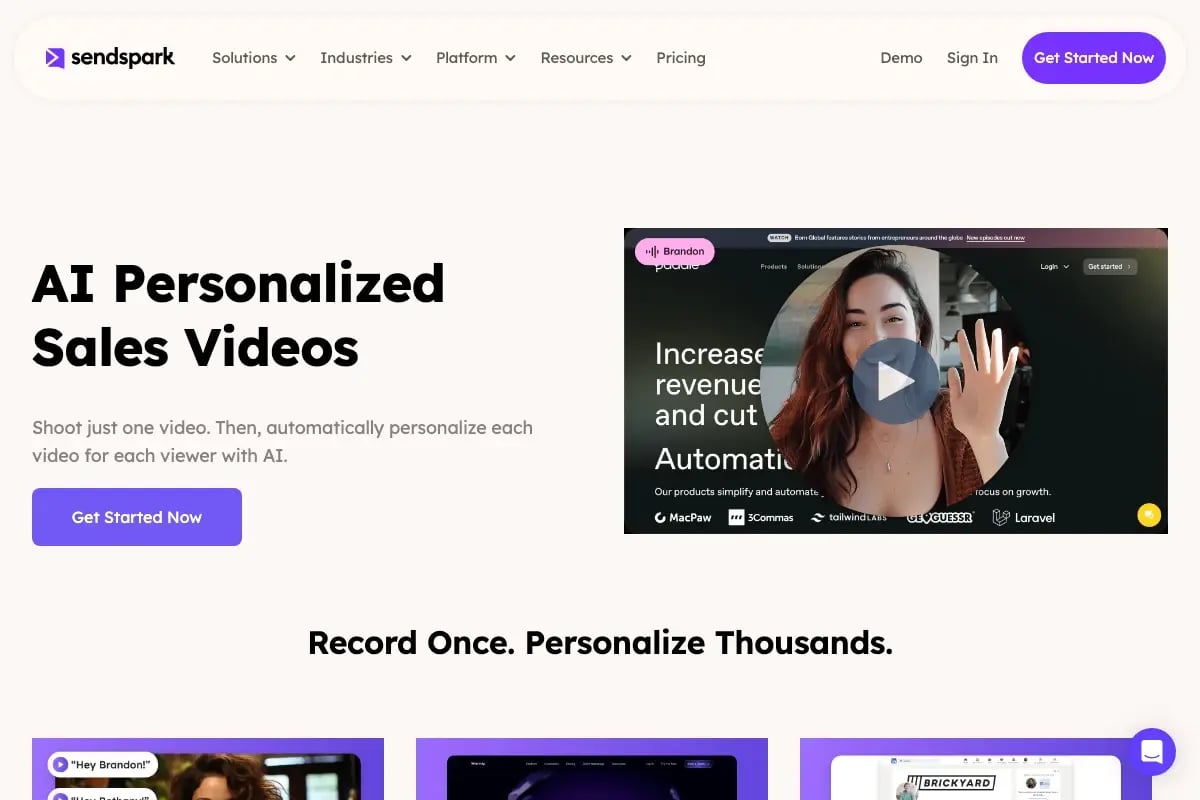
Here's the practical version: record a 30-60 second video of yourself explaining who you help and how, using the same basic approach to posting video on LinkedIn that works for any B2B rep. Pin it to your Featured section, right next to your summary. Sendspark's AI video personalization platform for sales prospecting makes this reusable: record that one introduction, then let AI voice cloning and dynamic backgrounds turn the same base video into personalized clips for social selling outreach -- each one addressing a specific prospect by name, without you re-recording a single take. You can build the same personalized-background technique directly from your prospects' LinkedIn profiles, so a connection request video looks like it was made specifically for that one person, because it was.
Follow up the same way once someone replies. Best practices for LinkedIn video outreach and a solid LinkedIn follow-up message sequence both perform better on video than on text alone, for the same reason your summary does: a real voice is harder to ignore than another paragraph.
LinkedIn Summary Checklist: 2022 vs. 2026
What counted as a strong LinkedIn summary in 2022 is now, at best, neutral and, at worst, a signal that actively hurts your reach under LinkedIn's 2026 authenticity update. The table below lines up the old default against the current best practice for each element, so you can audit your own profile element by element in a few minutes.
| Element | 2022 default | 2026 best practice |
|---|---|---|
| Opening line | "Highly motivated sales professional with a proven track record" | A specific hook: a number, a named result, or a direct question |
| Format | One dense paragraph | Short paragraphs, bullets, and white space for scannability |
| Proof | A line claiming "trusted by top brands" | A pinned video testimonial or a real, named result |
| Keywords | Internal job titles and buzzwords | The exact terms your buyers search for on LinkedIn |
| Voice | Polished, AI-assisted corporate tone | One specific human detail LinkedIn's algorithm rewards |
| Call to action | "Feel free to reach out" | One specific next step, ideally to a pinned video |
Frequently Asked Questions
What makes a good LinkedIn summary example for sales reps?
A strong LinkedIn summary example for sales reps names a specific buyer, states one clear result you deliver, backs it up with a real number, and ends with a single next step. Generic phrases like "results-driven professional" do the opposite of what a summary is supposed to do.
How long should a LinkedIn summary be for sales professionals?
LinkedIn caps the About section at 2,600 characters, but you don't need to use all of it. Aim for 3-5 short paragraphs, since only the first couple of lines display before a reader clicks "see more," and most readers won't click if those first lines are vague.
What's a LinkedIn summary example for a sales manager?
A sales manager's summary should speak to both prospects and potential hires: name your team size, your product category, and one specific, human detail about your management style, such as a lesson you carried over from your own quota-carrying days.
Should account executives write their LinkedIn summary differently than SDRs?
Yes. SDR summaries should focus on booking a low-commitment first conversation, while AE summaries should lead with outcomes you've closed and respect for the buyer's time, since AEs are usually talking to someone already further along in evaluation.
Can I use AI to write my LinkedIn summary in 2026?
You can use AI to brainstorm structure, but publishing an unedited AI draft is risky in 2026: LinkedIn's authenticity update is designed to detect and deprioritize generic AI-written content, so an unedited draft can actively hurt your visibility rather than just look unoriginal.
How do I optimize my LinkedIn summary for LinkedIn search?
Include the specific terms your buyers would type into LinkedIn's search bar when looking for someone in your role, industry, or specialty, not just your official internal job title, since LinkedIn's search algorithm weighs keyword match alongside your broader activity.
Should I add a video to my LinkedIn summary?
You can't embed video directly inside the summary text, but you can and should pin a short video to your Featured section right below it. LinkedIn video posts average nearly double the engagement of text-only posts, and a video is a far stronger authenticity signal than more written copy.
Sources & References
- Gartner — "67% of B2B buyers prefer a rep-free buying experience" (2026)
- LinkedIn (Laura Lorenzetti) — "Keeping conversations real on LinkedIn," on reducing reach for generic AI-generated content (2026)
- Forbes (William Arruda) — "LinkedIn Just Changed The Rules. Here's How To Stay Visible" (2026)
- Sprout Social — LinkedIn video posts average 5.1% engagement vs. 2.8% for non-video posts (2026)
- Dale Carnegie — "3 Reasons Why Trust Is the Most Important Tool for Driving Profitable Sales" (2024)
Writing a strong LinkedIn summary is one part of a bigger B2B sales strategy on LinkedIn. From here, it's worth reviewing how to use LinkedIn Sales Navigator to find the buyers your new summary is written for, and checking out our comprehensive guide to video sales enablement for how video fits into the rest of your sales process, not just your profile.
Record One Video. AI Personalizes Thousands.
Sendspark is the AI video personalization platform for B2B sales. Record once, and AI voice cloning generates thousands of individually personalized videos with dynamic backgrounds and personalized thumbnails — each prospect hears their name, sees their website, in your voice. Sales teams see 2-3x more replies.
Get Started Now